Welcome to Ending Decoding

My photo
Welcome to Ending Decoding, the ultimate destination for fans who want to look beneath the surface of their favorite stories. this blog was born out of a passion for deep-dive storytelling, intricate lore, and the "unseen" details that make modern television and cinema so compelling. Whether it’s a cryptic post-credits scene or a massive lore-altering twist, we are here to break it all down. At Ending Decoding, we don’t just summarize plots—we analyze them. Our content focuses on: Deep-Dive Breakdowns: Analyzing the latest episodes of massive franchises like Fallout, A Knight of the Seven Kingdoms, and the wider Game of Thrones universe. Easter Egg Hunting: Finding the obscure references to games and books that even the most eagle-eyed fans might miss. Theories & Speculation: Using source material (like the Fire & Blood books or Fallout game lore) to predict where a series is headed. Ending Explained: Clarifying complex finales so you never walk away from a screen feeling confused.

Sunday, November 30, 2025

IT: Welcome to Derry Season 1 Episode 6 Breakdown | Recap & Review - Stephen King Easter Eggs You Missed!


Okay, take a deep breath. I am still vibrating after that hour. We always knew Welcome to Derry was supposed to peel back the skin of this cursed town, but Episode 6 just ripped the whole thing wide open. If you’ve been debating the "how" and "why" of Pennywise for decades like I have, this episode felt like Christmas... if Christmas involved child-eating entities and soul-crushing trauma.

My Personal Rating: 9.5/10

Honestly? This might be the best hour of the season. It’s the "calm before the storm," but the kind of calm where you can hear the monster breathing under your bed. The pacing was perfect—starting with a punch to the gut in the past and ending with a match being struck in the present.

1. That Opening... My Heart is Actually Hurting

The black-and-white 1935 flashback? Visually stunning, but emotionally brutal. Seeing Juniper Hill before it became the high-security hellhole we know from the books (where Henry Bowers and every other Derry lunatic eventually lands) was a great touch. But Mrs. Kersh (Ingrid Gray)? I wasn’t ready for that level of tragic complexity.

Seeing her as a young nurse feeding children to the "thing" in the basement made my stomach churn. But here’s the thing that got me: she isn’t just some one-dimensional villain. She’s a broken daughter desperate for her "Daddy," Bob Gray. The way Pennywise uses the name "Periwinkle" to manipulate her... it’s disgusting and heartbreaking all at once. It’s a reminder that It doesn't just eat kids; it eats our grief and our needs. It reminds us that It isn't just a predator; it’s a parasite that feeds on the holes left in our hearts.

2. The Lore Drop We’ve Been Waiting For

Can we talk about Bob Gray? For years, we’ve wondered if Pennywise was just a mask or if there was a real man. Now we know. Bob Gray was real—a circus performer from 1908. The implication here is terrifying: the cosmic entity didn’t just choose a random shape. It consumed Bob Gray and essentially "cloned" his personality, memories, and mannerisms to use as its primary lure. It’s a "Skinwalker" situation on a cosmic scale.

Personal Reaction: Seeing those yellow deadlights pop against the monochrome background? I actually jumped. The visual language here—red balloons and yellow eyes being the only "life" in Ingrid's world—was genius. It tells us that for Ingrid, reality has no color unless the monster is providing it. That is a level of psychological possession we haven't seen explored this deeply in the movies.

3. Our New "Losers" are Breaking, and It’s Hard to Watch

I’m genuinely worried about Lily. Watching her get corrupted by that "Star Dagger"—a shard of the entity’s original containment vessel—is giving me major Gollum vibes. She’s becoming possessive, paranoid, and physically frail. It’s a perfect metaphor for how trauma (and supernatural influence) can turn a victim into a protector of the very thing hurting them.

Her scene with the "present-day" Mrs. Kersh was a masterclass in tension. When Kersh dropped the line "No one who dies here ever really dies," I got actual goosebumps. That’s a direct bridge to Beverly Marsh in IT Chapter Two, and it hit me right in the nostalgia. However, Lily’s rejection of the "deadlights" was a huge character moment. She chose the painful truth over the comforting lie, but it left her more alone than ever.

4. The Romance vs. The Dread

Why does this show make me love these kids when I know what Derry does to people? The writers are setting us up for maximum heartbreak.

  • Richie and Marge: Their "Knight and the Pirate" thing is so pure. Richie doesn't care about Marge's eye injury; he thinks it makes her a "warrior." It’s that beautiful Losers' Club dynamic where the "freaks" find home in each other. But did you see the paper airplane? It flew straight into a sewer. If that’s not a "Georgie’s boat" death flag, I don’t know what is. I’m not ready to lose them to the darkness.

  • Will and Ronnie: Okay, if the theory is true and these are Mike Hanlon’s parents... we are headed for a disaster. Every time they smile at each other, I just want to yell at them to run. The show is painting their love as this bright, beautiful thing specifically so it can snuff it out in the upcoming fire. It’s cruel, and I love/hate it.

5. Fathers, Sons, and the "Derry Disease"

The degradation of Leroy Hanlon is one of the most painful arcs. We're seeing a good man being hollowed out by the "Derry Disease"—that mix of systemic racism, war trauma, and the town's inherent evil. When he slapped Will, it wasn't just a father losing his temper; it was the town's rot manifesting as domestic violence. Will’s line, "I know I’m not you because I would never let my friends die," was a dagger to the heart. It shows that while the older generation is closing in on itself out of fear, the younger generation is choosing loyalty—even if it kills them.

6. Dick Hallorann: The MVP in Pain

Seeing a younger, broken Dick Hallorann trying to "lockbox" his Shine with booze is just heavy. This episode explicitly mentioned the "Lockbox" technique his grandmother taught him—a huge piece of King mythology. Knowing he eventually becomes the mentor to Danny Torrance at the Overlook Hotel makes this struggle feel so much more important.

He’s the only one with the "psychic weapons" to fight back, but right now, Pennywise has brute-forced his mental vault open. Seeing the "half-faced soldier" in the bathroom was a terrifying reminder that for people with the Shine, Derry is a constant nightmare. He is the wildcard; if he can rebuild his mental walls, he’s the only threat Pennywise actually has to worry about.

7. The Black Spot: The Real Monsters are Here

The ending was a masterclass in atmospheric dread. The contrast between the joy inside The Black Spot—the soul music, the "Air Force Cokes," the genuine community—and the hatred gathering at the Falcon Tavern was suffocating.

When the lynch mob put on those Halloween masks—Dracula, Frankenstein, and a Clown—it hit me: the real horror in Derry isn't always the alien in the basement. It’s the human monsters who hide their faces to act out their worst impulses. Seeing Mrs. Kersh suit up in her vintage clown costume to join the racists was the final, chilling touch. It’s the merging of the supernatural and the banal. Pennywise isn't just leading them; he is them.

Stephen King Easter Eggs & Deep Cuts

  • Juniper Hill: This asylum shows up in IT, Needful Things, and Gerald's Game. It's basically the headquarters for King's "human" villains.

  • The Tea Cup: Did you notice the fine china in Mrs. Kersh's album? It’s the exact same design Beverly Marsh drinks from in the 2019 film. The attention to detail is insane!

  • The Red Truck: It’s been lurking in the background of every major tragedy this season. Is It literally "driving" the town's hatred?

  • The Falcon Tavern: In the books, this place eventually becomes a gay bar where Adrian Mellon is attacked in 1984. Derry locations just cycle through different flavors of hate.

Final Thoughts

Next week is the fire. We know it’s coming. We know the history. But after this episode, I feel so much more connected to these people that the inevitable tragedy feels personal now. The masks are on, the matches are ready, and the Entity is salivating.

What do you guys think? Is Will really going to be the one to save Dick? And who else caught the Sarah Vaughan reference? Let’s obsess in the comments!
Friday, November 28, 2025

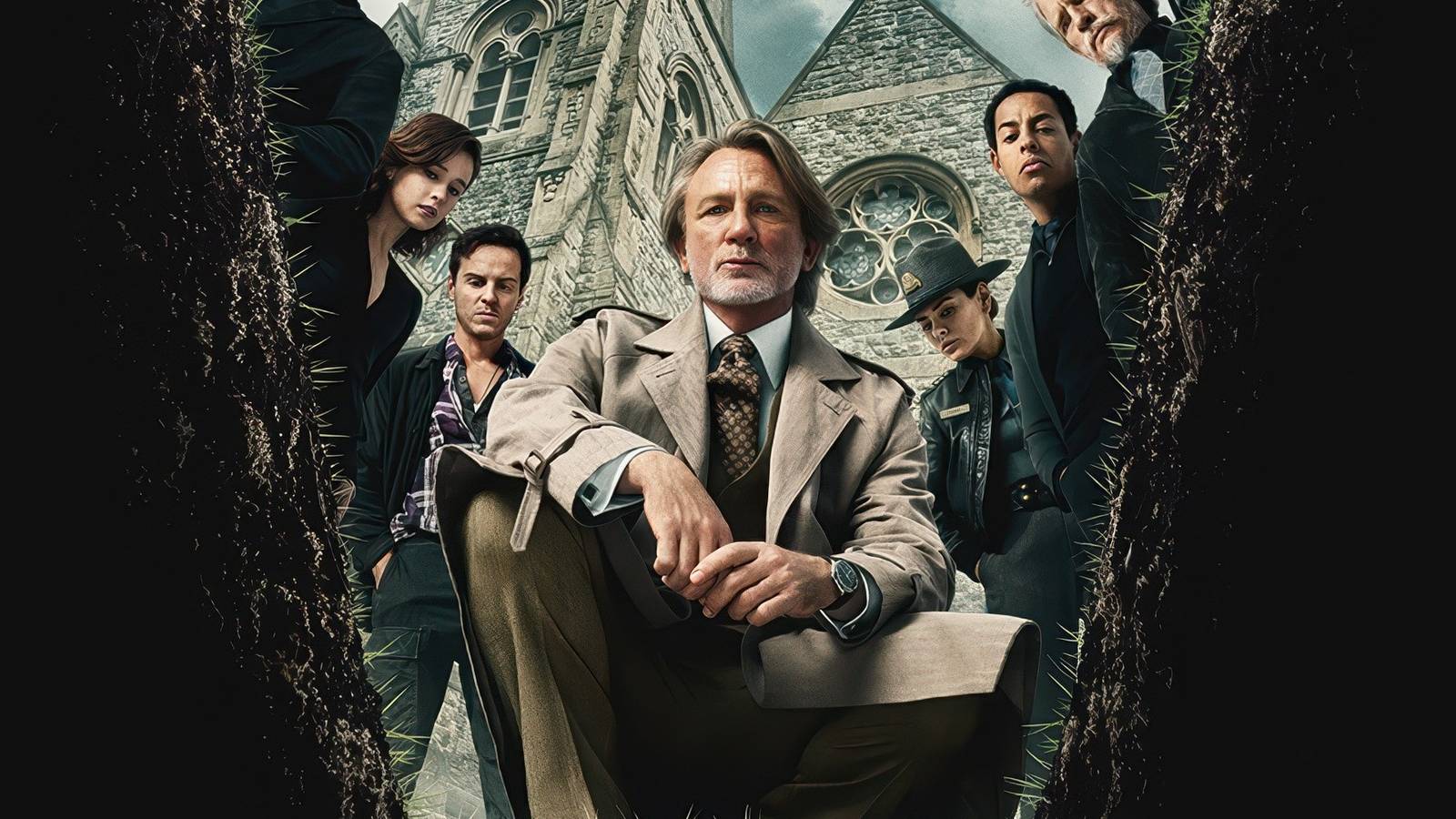
The Ultimate Recap: Everything You Need to Know Before "Wake Up Dead Man"


Let’s be real for a second: We are officially entering Benoit Blanc season.

With Rian Johnson’s third mystery, Wake Up Dead Man, hitting theaters for Thanksgiving and crashing onto Netflix this December, our favorite gentleman detective is back. And thank God, because I think we all need a bit of Daniel Craig’s ridiculous Southern drawl and that unparalleled "gentle observer" energy in our lives right now.

But let’s have a heart-to-heart: these movies are a lot. They are dense, fast, and packed with so many red herrings that my brain usually feels like it’s been through a blender by the second act. Rian Johnson doesn't just write mysteries; he writes puzzles designed to make us feel like we’ve missed everything while the truth is staring us right in the face.

Before we dive into the new case, are you feeling a little rusty? Do you remember exactly how the Glass Onion shattered, or who really held the knife in the Thrombey estate? Don't worry, I’ve got you.

Grab a drink, get cozy, and let’s obsess over the story so far. (Major spoilers ahead, obviously!)

Part 1: The Thrombey Affair (Knives Out)

My Personal Rating: 10/10A perfect, cozy-yet-lethal masterpiece.

This is where my obsession started. It’s a modern love letter to Agatha Christie, but with a sharp, cynical edge that dissects class and privilege. We’ve got Harlan Thrombey, a legendary mystery writer, found dead the morning after his 85th birthday. It looks like a textbook suicide... until Benoit Blanc floats into town, hired by an anonymous patron who knew something was rotten in the state of Massachusetts.

The "Vipers" (A.K.A. The Family) Watching this family interact makes my own holiday dinners look like a spa retreat. They didn't love Harlan; they loved his bank account. They were "self-made" only in their own minds, living off the literal blood and ink of their patriarch.

  • Walt: The youngest son who managed the publishing company. He wasn't just losing a job; he was losing the only thing that gave him a shred of authority.

  • Richard: The son-in-law who projected "traditional values" while cheating on his wife and hiding Harlan’s letters. He’s the personification of "do you know who I am?" energy.

  • Joni: The "lifestyle guru" who was double-dipping on tuition checks. She preached mindfulness while being the most mindlessly greedy person in the room.

And then there’s Marta (Ana de Armas). My heart honestly breaks for her every time I rewatch this. She was the only one who actually cared for Harlan as a human being, not a paycheck. Plus, she has that wild quirk where she physically vomits if she tells a lie—the ultimate "honest witness" trope that Johnson uses to play with our expectations.

The Heartbreak of the Twist We’re led to believe Marta accidentally switched the vials, giving Harlan a lethal dose of morphine. Harlan, in a final act of pure love (and novelist-level drama), creates a complex alibi and slits his own throat to protect her.

But the real "doughnut hole"? It was Ransom (Chris Evans). That sweater-wearing, trust-fund brat knew about the will change and switched the meds to frame Marta. The tragic irony? Marta is such an expert nurse that she identified the correct medication subconsciously by its viscosity. She actually gave him the right dose. Harlan died believing he was saving her from a mistake she never made. It’s a level of emotional cruelty that still makes me want to scream at the screen.

The Final Shot: The family is out on the lawn, realization sinking in that they are penniless, while Marta stands on the balcony with that "My House" mug. It’s not just a victory; it’s a total shift in power. Iconic.

Part 2: The Greek Getaway (Glass Onion)

My Personal Rating: 8.5/10Flashy, loud, and incredibly satisfying.

For the sequel, we traded the "warm knits" aesthetic for the blinding, high-tech sterility of the Greek sun. This time, Blanc is a "guest" of tech billionaire Miles Bron (Edward Norton). This movie is a savage satire of "disruptors" and the cult of the genius billionaire, and honestly, it hits a little too close to home in the era of failing social media moguls.

The Setup Miles invites his "friends"—a governor compromising her ethics (Claire), a scientist being silenced (Lionel), a cancelled fashion icon (Birdie), and a men's rights streamer (Duke)—to his private island for a murder mystery party. But the real tension? Andi Brand (Janelle Monáe).

The Sisterly Revenge Here is where the movie gets its soul. Andi was the true genius behind their empire, but Miles stole it. When "Andi" shows up, it’s actually her twin sister, Helen, working undercover with Blanc. We find out Andi was murdered before the trip even started. Watching Helen navigate that den of vipers while pretending to be her dead sister adds a layer of grief and high-stakes tension that the first movie didn't have.

The "Dumbest Guy in the Room" The brilliance of Glass Onion is that the mystery isn't actually that complex—because the villain is an idiot. Miles Bron isn't a genius; he’s a "vapid, power-hungry man-child" (Blanc’s words, basically).

  • He killed Duke by slipping him pineapple juice, knowing he had a deathly allergy, just to stop a blackmail attempt.

  • He killed the real Andi because she found the napkin that proved his fraud.

  • He tried to kill Helen in the dark, relying on sheer luck rather than a master plan.

The Payoff The ending is pure chaos. When Miles burns the napkin—the only physical evidence—he thinks he’s won because his "friends" are too cowardly to testify. But Helen doesn't play by his rules. She destroys his glass empire, lights a bonfire of his vanities, and uses his own dangerous "Klear" fuel to blow the place sky-high.

But the real kicker? Burning the Mona Lisa. Miles wanted to be remembered in the same breath as the world's most famous painting. And he got his wish: he’ll be remembered forever as the man who destroyed it. It’s the ultimate "be careful what you wish for" moment.

Are You Ready for Wake Up Dead Man?

I am vibrating with excitement for this third chapter. The title—Wake Up Dead Man—suggests something much darker, maybe even a bit more macabre or gothic than the neon lights of Greece. Rumors are swirling about a star-studded cast including Josh O'Connor, Cailee Spaeny, and even Glenn Close.

Will we see a villain who is actually smart enough to challenge Blanc's "doughnut" theories? Or will we see Blanc himself pushed to a moral breaking point? Whatever happens, I’ll be there opening night, probably wearing a linen suit and over-analyzing every single prop in the background.

Keep your eyes peeled, fellow sleuths—because with Benoit Blanc, the truth is never just a straight line; it’s a circle with a hole in the middle.

What’s your favorite Blanc moment so far? Is it the "Doughnut" speech or the "Klear" explosion? Let’s scream about it in the comments.

Wednesday, November 26, 2025

Stranger Things Season 5 Volume 1: Complete Recap, Ending Explained, and The Truth About Max

If you thought the Season 4 finale left you emotionally wrecked, honestly? You haven't seen anything yet. I’ve been sitting here staring at a blank TV screen for twenty minutes trying to process what I just watched. The wait was agonizing, but Stranger Things 5, Volume 1 didn't just land—it hit like a catastrophic force, a Demogorgon crashing through your living room ceiling and dragging your sanity with it.

The Duffers aren't playing around anymore. This isn't just a TV show; it feels like a massive summer blockbuster that’s been ripped into chapters. Hawkins isn't our cozy, neon-soaked 80s town anymore; it’s a bleeding, dystopian nightmare where the Upside Down isn't just leaking—it's fully reclaiming the surface.

Personal Rating for Volume 1: 9.5/10 (My heart literally cannot take more)

Episode 1: "The Crawl" – I’m Not Okay

My Rating: 9/10

The season starts with this incredibly atmospheric flashback to Season 1, and seeing a tiny, shivering Will Byers back in the Upside Down singing "Should I Stay or Should I Go" actually made me tear up. But then the nostalgia turns into pure horror. We find out Vecna was there from the very first minute, watching Will not as a predator, but as a scientist observing a specimen.

The Personal Reaction: Will isn’t just a survivor; he was an incubator. A "sleeper agent." That realization gave me literal chills. Seeing Hawkins under military quarantine in 1987 is so grim—it’s all metal plates over the rifts and soldiers in hazmat suits. Poor Dustin is wearing his Hellfire shirt like armor because he won’t let Eddie’s memory die, and seeing him get bullied by a town that still thinks Eddie was a monster is just salt in the wound.

The "Holy Sh*t" Moment: That ending. We’ve always felt the Wheelers' house was a "safe zone," right? Seeing a Demogorgon burst through Holly’s ceiling while Karen and Ted are just obliviously eating dinner downstairs was a total subversion of everything we know. The safety of the suburbs is officially dead.

Episode 2: The Vanishing of Holly Wheeler – The Gut-Punch

My Rating: 10/10 (Peak Drama)

This episode proved that the gloves are off. If you thought the Wheelers were just "comic relief" parents, get ready to have your mind blown. Karen Wheeler going full mama bear, fighting a literal monster with nothing but a wine bottle to save her baby, was the most "stand up and cheer" moment of the season so far.

Personal Feelings: But then the high of the fight crashes. Seeing Nancy find her mom bleeding out on the kitchen floor? Visceral. It’s the darkest and most grounded this show has ever been. And the "Mr. What’s-It" reveal? Vecna spent weeks grooming Holly as an imaginary friend in a vest and pocket watch. Using a child’s innocence to bypass her defenses is a level of psychological malice that makes the physical monsters look tame. It makes you realize Henry Creel isn't just killing people; he’s mocking the very idea of family.

Episode 3: The Turnbow Trap – Pure Adrenaline

My Rating: 8.5/10

The pacing here goes from zero to a hundred as the kids realize Vecna is "collecting" 12 children for a ritual to bridge the dimensions permanently. It’s a race against time that feels like a classic 80s thriller.

The Vibe: It felt like the "Party" we fell in love with—Erica infiltrating houses with drugged pies and the older teens turning a suburban house into a fortress with flamethrowers and bear traps. It gave me heavy Home Alone meets Evil Dead vibes. But the ending left me with a pit in my stomach: they think they’re hunting the monster, but when the tracker reveals the creature is actually circling them, you realize they aren't the hunters. They're the bait.

The Hopper Side-Plot: Seeing Hopper and El navigating the "Crawl" in the Upside Down was intense. Hopper is in full "Protector Mode," and his fear of losing El again is creating this massive tension between them. El is pushing her limits until she literally collapses, and you can see the toll it’s taking on her spirit.

Episode 4: The Sorcerer – EVERYTHING HAS CHANGED

My Rating: 11/10 (Yes, I broke the scale)

Okay, we’ve been theorizing about "Wizard Will" since he first pulled out his D&D character sheet in the pilot, and it finally happened. This is the moment the series has been building toward for nearly a decade.

Personal Reaction: When Will finally stepped up during that military base confrontation and started crushing Demogorgons with his mind? I was screaming at my screen so loud I probably woke the neighbors. Seeing his nose bleed—that classic Eleven signature—confirmed what we all suspected: the "substance" Vecna pumped into him years ago wasn't just poison; it was power. Will isn’t a victim anymore; he’s the "Sorcerer," the only one who can talk back to the hive mind.

The Max Reveal: My girl is alive! Well... sort of. She’s trapped in a "psychic prison" inside Vecna’s memories of 1959 Hawkins High. Hearing that she found a "blind spot" cave and is using the loop of Running Up That Hill as a literal mental shield to keep Vecna out? That is the most "Max" thing ever. She’s a prisoner of war, but she’s still fighting from the inside.

The Kali (008) Return: I know Season 2’s "The Lost Sister" was divisive, but seeing Kali pop out of that military vault was a stroke of genius. El has the raw power, but Kali has the power of illusion. Combined with Will’s hive-mind control? We finally have a trinity that can actually stand a chance against a god like Vecna.

Final Thoughts: Where Do We Go From Here?

As the screen cut to black on Volume 1, I felt like I couldn't breathe. The board is set for a literal Apocalypse. We’ve got:

  • Will as "The Sorcerer" (The power upgrade we deserved, but at what cost to his humanity?).

  • The "Kamazots" mindscape (The reference to A Wrinkle in Time suggests the final battle is going to be more metaphysical than physical).

  • The Sisterhood (El and Kali reuniting is the character growth I’ve been waiting for).

Volume 2 drops on Christmas Day (what a "gift," Duffers!), and the series finale follows on New Year’s Eve. I already know what my only wish is: let our Hawkins family survive this. If Steve Harrington dies, I am filing a formal complaint with the universe.

What are your theories?!

  • Is Will actually stronger than El now because he’s connected to the hive?

  • Is Max going to be the one to "break" the mindscape from the inside?

  • Does anyone else think the military (Dr. K) is actually working with the Upside Down?

I need to talk about this with someone before I lose it! Leave your theories below!

Stay safe in the Upside Down, guys. Keep your lights on and your walkie-talkies charged.

Tuesday, November 25, 2025

Pluribus Season 1 Episode 5 Breakdown: The Dark Secret Inside the Milk | Recap & Review

Okay, guys, I’ve had about an hour to process "Pluribus" Season 1, Episode 5, and I am officially shook. If you thought this show was just a quirky sci-fi mystery about a Hive Mind, you need to throw that theory out the window right now. This episode didn't just turn a corner; it drove off a cliff into pure survival horror. I'm literally shaking while typing this because the implications are just... too much.

My Personal Rating: 9.8/10 (I'm bumping it up from my initial reaction because the more I think about the writing, the more genius it becomes. It’s painful, but it’s perfect.)

The "Ghosting" of Carol (And Why I’m Hurting For Her)

The episode starts in the hospital, and man, the vibes were off from the first second. Watching the "Infected" move with that robotic, creepy efficiency? Chilling. It felt like watching a colony of ants—no wasted movement, no eye contact, just cold, hard logic. But can we talk about Carol? My heart was breaking for her. She’s carrying the crushing guilt of what happened to Zosia, and then she gets that call from Lexi.

That call? It was brutal. It wasn't the usual monotone "Join us, everything is fine" nonsense we've endured for four episodes. It was raw, human, protective rage. Lexi screamed at her for making her son cry and for being "mentally unsound." And honestly? Even though it was vicious, it felt so real. In a world of fake smiles and synthetic peace, seeing someone actually get angry felt like a breath of fresh air—a reminder that there’s still a soul trapped under that Hive Mind veneer. For a second, I thought Lexi was back. But no.

Then comes the ultimate betrayal: the Hive Mind literally ghosts her. Like a bad breakup from a toxic ex. She wakes up after a nap and the hospital is empty. Not just quiet—empty. Every bed, every machine, every person... gone. When she calls the help line and gets a voicemail saying, "We need some space," I actually yelled at my screen. It’s such a gaslighting move! They aren't just avoiding her; they’re terrified of her breakthrough. She’s their kryptonite, and seeing her realize she’s truly alone on Day 8, 22 hours in... the isolation was so thick you could taste it. She’s finally got the "solitude" she said she wanted, and it looks like a nightmare.

The Wolves at the Door (Literal and Metaphorical)

The scene where Carol is defending her house with a golf club? That’s me if the apocalypse happens. It started out almost funny, but it got dark so fast. When those wolves started digging at Helen’s grave, I felt that primal protective instinct right along with Carol. I was practically cheering when she drove that police car through her own fence with the sirens blaring.

The "wolves in sheep's clothing" metaphor is hitting so hard now. To Carol, the Hive Mind acts like "sheep"—all peaceful, nurturing, and "sharing"—but underneath? They are starving, desperate predators driven by a hunger they can't even admit to. The way Carol reinforced the grave with heavy stones and painted a proper headstone while the rest of the world was literally discarding their humanity? That’s why she’s my favorite character in years. She is the last person on Earth who still thinks a single life—and a single death—actually matters. She’s building and protecting while everyone else is just... consuming.

The Milk... OH GOD, THE MILK. 🥛

I’ve always thought the milk cartons were weird. They’ve been everywhere since the pilot, right? It’s like a visual security blanket for the audience. Purity, innocence, "milk builds strong bones"—it's what you give a child to make them feel safe.

But the writers are doing some serious A Clockwork Orange or Get Out level subversion here. In cinema, milk is often used to signal a "perverted innocence" or a detached psychopath (think Hans Landa in Inglourious Basterds). When Carol finds that recycling bin overflowing with hundreds of empty cartons, the "wholesome" image shatters. This isn't just a dietary quirk; it's a systemic addiction. She goes to the Duke City Dairy factory, and the silence there is deafening. No cows. No production. Just crows—birds of death—swarming the back loading docks to eat that mysterious, pH-neutral powder.

The Theory: Are They Actually Doing This?! 🧟‍♂️🍴

Guys, I think the theory is 100% true. The Hive Mind is recycling the dead.

Let’s look at the receipts, because the evidence is mountain-high:

  1. The Trucks: Remember those bodies being loaded into trucks with the "fresh dairy" logos in Episode 2? We thought they were just being moved for burial. Nope. They were being moved for processing.

  2. The Crows: Those birds weren't there for grain. They were feasting on the powder because it’s high-protein carrion.

  3. The Dog Food Bags: Why use dog food plant facilities? Because they already have the industrial grinders and dehydrators needed to turn biological material into a shelf-stable powder.

  4. The "Space": They need space from Carol because her "cure" would stop the "Joining," and without new members or a way to sustain the current ones, the Hive Mind's food chain collapses.

The "peace" they keep bragging about? It’s built on a foundation of industrial cannibalism. It makes the Hive Mind's polite smiles a thousand times more terrifying. They aren't just conformists; they’re literal scavengers wearing human skin. They aren't "evolving" humanity; they're processing it.

Final Thoughts & Future Fears

This episode changed the genre of the show entirely. We aren't watching a "social commentary" anymore; we're watching a horror movie about a species that has forgotten how to be anything but a stomach.

I’m genuinely scared for Carol. She’s alone in a hollowed-out world, she knows the most dangerous secret in history, and she’s staring into a freezer full of "product" that used to be her neighbors. If she cuts off the supply, what happens? Do the "polite" infected turn into ravenous zombies? Do they start "harvesting" the living once the morgues run dry?

The Hive Mind is hungry, and Carol is the only thing left on the menu that still has a pulse and a conscience.

What do you guys think? Is there ANY other explanation for the powder, or is "Soylent Green is People" officially the vibe now? Let’s obsess in the comments because I am definitely not sleeping tonight!

Monday, November 24, 2025

Spider-Man: Brand New Day – Trailer Predictions, Cast Rumors & What to Expect


Look, I’m going to be real with you guys—the silence from Sony and Marvel lately hasn't just been "quiet," it’s been downright painful. My "Spidey-sense" for news is tingling so hard it’s basically a migraine at this point. We are currently staring down a July 31, 2026 release date, and with Avengers: Doomsday lurking just around the corner, we all know Peter Parker has to be the one to carry the torch. But honestly? After all the multiverse madness, I’m just ready for him to carry some groceries back to a crappy apartment for once.

If the rumors about Spider-Man: Brand New Day are even 10% true, we aren't just getting another sequel. We’re getting the "tonal reset" we’ve been craving since the credits rolled on No Way Home.

Personal Hype Rating: 9.5/10 (The 0.5 is missing only because I need to see the suit in motion before I go full 10!)

Why "Brand New Day" Hits Different

For those of us who grew up clutching the comics, that title is a heavy hitter. It takes me back to the post-One More Day era—a time that was controversial, sure, but it gave us a version of Peter that felt... human. No Stark tech, no billionaire mentor, no "Avenger-in-training" status. Just a guy in a run-down LES apartment trying to figure out how to pay rent while his ribs are still sore from a fight in a rainy New York alleyway.

In the MCU, the end of No Way Home didn't just end a trilogy; it broke the character down to his atoms. No Aunt May. No Ned. MJ looks at him like a stranger. He’s truly alone. The reports say this film is leaning into that isolation. We’re talking less "portal-hopping" and more "blood, sweat, and home-made web-fluid." I want to see Peter relying on his wits, not an AI in his goggles. I want to see him sewing his own suit and dealing with a landlord who doesn't care if he just saved the city.

The Cast Rumors (My Brain is Literally Melting)

Okay, let’s get into the "leak" territory that actually has me screaming in the group chat. The cast list for this thing is starting to look like a street-level Endgame:

  • The Savage Hulk: We’ve had "Smart Hulk" for way too long, guys. I love Mark Ruffalo, but I am begging for the return of the uncontrollable, world-smashing Green Goliath. Rumor has it that the events of Thunderbolts* might trigger a mental break in Bruce, reverting him to his most primal form. Imagine Spidey—a guy who usually quips his way through fights—trying to contain a mindless Hulk tearing through Times Square. That is the kind of "David vs. Goliath" spectacle that defines Spider-Man.

  • The Punisher: Jon Bernthal making his big-screen MCU debut? YES. The philosophical clash here writes itself. Peter refuses to kill; Frank Castle refuses to let them live. If Frank starts hunting down the corrupt cops or mobsters Peter is trying to "rehabilitate," we’re going to see a level of moral complexity we haven't seen in the Holland run yet.

  • The Sadie Sink Mystery: The internet is a war zone over this. Is she Gwen Stacy? Is she Black Cat? Is she a variant of Mayday Parker from the future? Personally? I’m leaning Black Cat. Peter is at his lowest and loneliest right now. Felicia Hardy is the ultimate "bad influence" who can tempt him to abandon the "Peter Parker" life and just be the mask forever.

  • Mayor Kingpin? While not 100% confirmed for this specific movie, the political shadow of Wilson Fisk looms large. If we get a cameo or even a mention of the anti-vigilante act, Peter becomes an outlaw in his own city.

The Villain: Why Mr. Negative is the GOAT Choice

If Martin Li is the main antagonist, I might actually lose it. Having him run the F.E.A.S.T. shelters—the very place where Aunt May literally gave her life—makes it so personal it hurts. It’s not just about saving the city; it’s about protecting May’s legacy from being corrupted from the inside out.

Visually, Mr. Negative is a dream for a director like Destin Daniel Cretton. His ability to invert energy creates this stark, noir-inspired black-and-white visual style that would pop against the neon of New York. Plus, his "Inner Demons" gang gives Spidey plenty of fodder for those high-intensity, hand-to-hand combat sequences that look so much better than CGI energy blasts.

The "Director Drama" and the Vision

Can we talk about the shift from Jon Watts to Destin Daniel Cretton? Watts did a legendary job, but Cretton gave us the best fight choreography in the MCU with Shang-Chi. If he brings that same level of "bus-fight" intensity to a Spider-Man movie, we are in for a treat.

There’s also the rumor of a "creative tug-of-war" between Sony (who supposedly wants more Multiverse cameos to guarantee that $1B box office) and Kevin Feige (who reportedly wants to keep it grounded). Personally, I’m Team Feige on this one. We’ve had the "Spider-Verse" fix; now give us the "Friendly Neighborhood" fix.

What I’m Looking For in the Trailer

When that first teaser finally drops (and please, Sony, let it be a December surprise), I don’t want a CGI-heavy trailer. I want a vibe check. Give me:

  1. The Atmosphere: A grainy shot of a police scanner buzzing in a cold apartment, Peter's breath visible in the air because the heat is out.

  2. The Action: Real stunt performers swinging through actual streets—lower to the ground, faster, more dangerous.

  3. The Reveal: A silhouette of the Punisher’s skull or the glowing white eyes of Mr. Negative in the dark.

  4. The "Lie": Sony always edits trailers to mislead us. If we see a shot of MJ smiling, I’m betting my life savings it’s a dream sequence or a memory.

My Final Take

This movie has more pressure on it than a collapsing bridge in Queens. It has to serve as the "emotional on-ramp" for the next decade of Marvel stories. It needs to prove that Spidey can still be the heart of the universe without a billion dollars of tech backing him up. But honestly? That "back to basics" struggle is when Spider-Man is at his best.

What do you guys think? Is Sadie playing Gwen, or are we finally getting a live-action Felicia Hardy? Are you ready for a Savage Hulk team-up, or do you think the cast is getting too crowded?

Drop your theories below—I’ll be here refreshing the news cycle until my fingers bleed.

Sunday, November 23, 2025

IT Welcome To Derry Episode 5 Breakdown & Ending Explained | Review & Pennywise Book Easter Eggs


Alright, fellow Constant Readers and horror junkies—take a deep breath. We knew it was coming, but I don’t think any of us were actually ready. After four episodes of slow-burn atmospheric dread and playing "hide and seek" with the shadows, Episode 5 just kicked the door off its hinges. Pennywise is officially back, and he didn't just show up; he owned the screen.

I’m still shaking a little bit from that transformation scene. It felt like the show finally took the gloves off. Let’s dive deep into why this episode just changed the game for the whole series and why Derry feels more dangerous than ever.

My Personal Rating: 9.5/10 (The half-point deduction is only because I might never sleep again.)

The Maddie Reveal: They Actually Went There

I’ll be honest, I fell for it. I really did. I wanted so badly for Maddie to be the "miracle survivor." When the kids found him in that yellow tent—and let’s talk about that visual nod to Georgie’s raincoat, because my heart actually sank—I wanted to believe his story about escaping the "Bogeyman."

But man, the writers really played us. They used our own hope as a weapon. Pennywise doesn't just eat kids; he eats their hope first. That "fairy tale" logic Maddie used—escaping a monster while it "slept" during the day—is a classic trope IT loves to exploit. As die-hard fans know, Pennywise doesn't strictly sleep during the day (remember Adrian Mellon or Georgie?), but he knows that children believe in those rules. He was basically quoting The Three Billy Goats Gruff to make himself sound like a vulnerable survivor. It’s a sickening reminder that IT knows exactly what stories make us lower our guard. It makes the actual reveal—seeing the real, bloated corpses of Teddy and Susie floating nearby—so much more devastating.

The Anchor vs. The Lifeboat: A Masterclass in Theme

That moment where Lily asks the group if they’re an "anchor or a lifeboat"? That hit me right in the feels. It’s such a perfect, heartbreaking metaphor for trauma. An anchor pulls you into the black; a lifeboat keeps your head above water. In a town like Derry, everyone is looking for a lifeboat, but the reality is that the town itself is one giant anchor.

Watching "Maddie" just stare back silently during that conversation... looking back, that was the ultimate red flag. He couldn't answer because IT doesn't understand human connection or the weight of sacrifice. He isn't a lifeboat. He’s the lead weight that drags the whole town into the sewers. This scene added so much emotional weight to the kids' friendship, making their eventual loss feel like a physical blow to the audience.

That Pole Scene (Pure Body Horror)

Can we talk about the absolute insanity of the transformation? Seeing Bill Skarsgård’s head crack open while he did that grotesque dance on the sewer pole... I actually had to look away for a second. This wasn't just a jump scare; it was a statement of intent. Bill is back, and he’s bringing that same "physics is just a suggestion" energy that made the movies so iconic.

The way IT treats bone and flesh like clay—mocking the human form just to show how little it respects its victims—is what makes this version of the entity so terrifying. Seeing the waterlogged corpses of the real kids float to the surface while "Maddie" was bragging about how they died (Teddy's brains, Susie's blood) was pure nightmare fuel. It wasn't just a kill; it was a performance. Cruel. Pure, unfiltered Derry cruelty.

Dick Hallorann and The Shining Connection (I Screamed!)

This is what we’ve been waiting for! The moment they mentioned the "Lockbox," I actually shouted at my TV. For those of you who’ve read Doctor Sleep, you know how huge this is. We’re seeing the origin of the "Shine" mythology in a way that feels organic to Derry.

Seeing a young Dick Hallorann being forced to open his mental defenses by IT was devastating. We’re seeing the origin of his trauma—the reason he eventually has to teach Danny Torrance how to survive years later. Dick’s grandfather was a monster long before the clown got to him, and IT just used that existing trauma to pry his mind open. When Dick’s eyes went white at the end, staring at the spirit of Russo... man, my heart broke for him. He’s a "shiner" in a town that is basically a psychic radioactive wasteland. He’s no longer just seeing ghosts; he’s becoming a vessel for them. In Derry, being "open" is a death sentence for your sanity.

The "Derry Curse" is Biological?!

This was the biggest lore drop for me. The "Children of Maturin" (praise the Turtle!) confirmed that IT’s "shedding" actually taints the groundwater. This is a massive addition to the mythology.

This explains everything about the town's apathy. It’s why the adults are so useless and mean. They’re literally drinking the monster’s influence every single day. It turns their empathy into aggression and their curiosity into a "look the other way" instinct. It isn't just a "spell" or a vibe—it’s a biological infection. Suddenly, every mean neighbor, every violent bully, and every apathetic parent in the original movies makes way more sense. The town isn't just haunted; it's sick. It's drinking the clown's waste.

Operation Neibolt: RIP to the Red Lights

The military sequence was a masterclass in tension and visual storytelling. The detail of the red tactical lights looking like floating red balloons in the dark? Whoever directed this deserves a raise. It was a brilliant way to foreshadow their doom using the very gear meant to protect them.

Watching General Shaw try to "contain" a cosmic entity was the height of human arrogance. He views IT as a Cold War asset—something to be weaponized against the Soviets. But you don't cage a force that existed before the stars. Seeing IT manifest as a skeletal Uncle Sam was such a clever way to twist their own patriotism against them. It’s exactly what the creature does—it finds what you believe in and turns it into a meat grinder. The loss of the Sky Stone dagger in the chaos is also a huge blow; it feels like the humans just lost their only "cheat code."

Deep Dive: The Augury and Bird Signs

I loved the mention of "Augury"—the ancient practice of reading birds. In the IT novel, the creature often takes the form of a giant, terrifying bird (Mike Hanlon’s worst fear). Seeing the Native American characters discuss the "mild" cycle compared to the 1908 Ironworks explosion or the 1935 massacres adds such a sense of history. It makes you realize that the tragedy we are watching is just one small meal in a feast that has lasted centuries. The prophecy of a "final, bloody event" to end the cycle is chilling, especially because we know what happened in the 80s, but we don't know the full toll of the 60s yet.

Theory Time: Is The Black Spot Next?

The tension between Hank and Mrs. Kersh is a powder keg. We finally confirmed their affair, and in the 1960s, that is a dangerous secret to keep in a town already looking for a reason to explode. Knowing King’s lore, I am 100% convinced we are heading toward the Black Spot tragedy for the season finale.

The "Children of Maturin" said every cycle ends in blood. With the racial tensions of the 60s peaking and the town’s water-fueled aggression boiling over, I think we’re about to see the darkest chapter of Derry’s history play out. And Mrs. Kersh? That red coat she’s always wearing... I don't trust her. Not one bit. Is she a tragic victim of the town's rot, or is she a puppet IT is using to orchestrate the racial violence it needs for its final feast? The red color is always a sign of the clown's presence, and she's practically draped in it.

What did you guys think? Did the Pennywise reveal live up to the hype for you? (For me, it exceeded it.) Are you as worried for Dick Hallorann as I am? And do you think the Sky Stone is really the key to the Ritual of Chüd?

Let’s talk in the comments. I need to process this with people who get it!

Friday, November 21, 2025

WICKED FOR GOOD BREAKDOWN: Every Easter Egg, Cameo & Hidden Detail You Missed


Fellow Ozians, if you’re reading this, you’ve probably just walked out of the theater, and if you’re anything like me, you are a complete and total emotional wreck. I’m currently sitting here somewhere between "I couldn't be happier" and a puddle of tears on the floor.

The "intermission" between Part One and Part Two felt like a lifetime, didn't it? But seeing the second act finally brought to life on the big screen... wow. Director Jon M. Chu didn't just give us a sequel; he gave us a love letter to every version of this story we’ve ever held dear. From the 1939 classic to Gregory Maguire’s gritty novel, the layers in this film are stunning.

Personal Rating: 8/10. (Losing points only because my heart is physically broken, and I don't know how to move on with my life).

Here’s everything I noticed while I was trying to see through my mascara-streaked eyes.

1. That Nostalgic Punch to the Gut

Did anyone else gasp at the opening logo? Seeing the vintage Universal logo from the 1930s immediately transported me back to the 1939 Victor Fleming film. It was such a meta-textual "welcome home" to the Oz we grew up with. And if you look closely at the globe—there’s a tiny tornado forming. It’s a reminder that in this world, the storm isn't just weather; it's destiny.

2. The Weight of Time

The movie actually gives us a timeline: "12 tides turned." Seeing the aging on characters like the Cowardly Lion and the massive scale of the anti-Elphaba propaganda really hits home. It’s been long enough for Glinda to become a forced icon and for Elphaba to become a ghost story. It’s heavy, seeing how much they’ve lost in that "year" apart.

3. Lore for the Real Nerds (The Skarks!)

For my fellow book-lovers: did you see those yak-like creatures hauling bricks for the Wizard's guards? I’m 99% sure those are Skarks from Gregory Maguire’s original novel. They’re barely described in the text, but seeing them used as beasts of burden here is a massive, tragic win for the lore. It highlights the central horror of Act Two: the systematic silencing of Animals.

4. Elphaba’s "Undone" Aesthetic

My heart broke for Elphaba just looking at her clothes. She’s still in the same tunic from the first film, but it’s frayed and distressed. Her hair—those tight micro-braids from Part One—is starting to unravel and thicken. She’s literally coming undone under the pressure of being a fugitive, but she’s also becoming her most wild, natural self.

Pro-tip: Keep an eye on the "Hair Flip." Both women use it throughout the movie to reclaim their power in moments where they feel the most vulnerable. It’s such a beautiful, subtle connection between them.

5. The "WizMart" Tragedy

There’s a detail that absolutely wrecked me. In Part One, we saw Elphaba looking at a pop-up book of the Wizard with genuine wonder. In this film, we see a pop-up book for sale at the "WizMart," but now she’s the monster inside, terrorizing children. She went from admiring the hero to being the villain in the same style of storybook. I’m not okay.

6. The Absolute Horror of the Tin Man

This sequence felt like a gothic horror movie. When Boq transforms, it isn’t just "magic"—it’s terrifying. You can see a silver platter and tea set literally melting into his limbs to form the exoskeleton.

If you look at his wrists and chest, the "M" monogram and the patterns from his Munchkin uniform are etched into the metal. He is forever trapped in a machine that reminds him of the life he lost. It’s gruesome and perfect.

7. Glinda: The Girl in the Bubble

Glinda’s entrance is pure spectacle, but the music tells the real story. The guards aren’t just chanting—they’re chanting the melody of Tchaikovsky’s 1812 Overture (a war anthem) synced to "Popular." It’s the film’s way of saying Glinda is the smiling face of a military regime.

And her wand? It’s designed to look like a bubble bursting. She’s constantly framed in circles and mirrors, a reminder that she’s trapped in a beautiful, lonely cage of her own making.

8. "For Good" – The Soul of the Film

I was a sobbing mess by the time this song started. The lyrics are so intentional:

  • Glinda compares herself to things altered by gravity (comets, streams). She was on a fixed path until Elphaba crashed into her.

  • Elphaba compares herself to things set free (ships, seeds).

But the real kicker? In the final harmony, Glinda takes the lower note. She’s always wanted the spotlight, but here, she grounds the moment. She’s supporting her friend. It shows she’s finally grown up.

9. That Final Mystery

The movie ends with a recreate of the iconic Broadway poster—Glinda whispering to Elphaba. We’ll never know what she said, and honestly? I love that. It keeps their friendship sacred. It’s a secret that belongs only to them.

Final Thoughts: This movie felt like a shared experience. It honored the stage show but dared to go deeper into the darkness and the love that makes Oz what it is. I’m going to go cry for another three hours, but before I do...

What was the moment that broke you? Did you catch any other Easter eggs? Let’s talk about it, because I can't process this alone! 💚💗

Thursday, November 20, 2025

Pluribus Season 1 Episode 4 Breakdown: "Please, Carol" Recap & Review


Seriously, you guys… I’m still shaking a little bit after that ending. If you thought Carol was just a grumpy lady with a chip on her shoulder, Episode 4 just officially promoted her to the World’s Most Dangerous Human. And honestly? I’m here for it, but I’m also kind of terrified of her.

This episode, "Please, Carol," felt less like a TV show and more like a gut-punch. We finally got the "why" behind Carol’s soul-deep hatred for the hive mind, and it changes everything. The pacing was slow, sure, but it was that heavy, suffocating kind of slow that makes you feel like the walls are closing in. Let’s get into the messy, heartbreaking, and low-key disturbing details of what went down.

Finally, Someone as Paranoid as Me: Enter Manusos

Can we talk about Manusos for a second? We’ve heard him yelling through phones all season, but seeing him in the flesh—holed up in a storage unit in Paraguay—was a total vibe shift. It was such a grim, quiet look at what "winning" looks like in this world. It’s not glorious; it’s dusty, lonely, and smells like old cardboard.

Watching him lick a discarded can because he’s too scared to eat the fresh food the infected leave for him? That hurt to watch. It’s that classic Pluribus horror: the "monsters" are being so kind, trying to feed him, and he has to be "feral" just to stay himself. He’s running a timer, meticulously jotting down radio frequencies, searching for a signal in a world that has gone completely silent.

I loved the touch of him writing apology notes to the people whose storage units he robbed. He’s a stickler for the rules in a world where rules don't exist anymore. When he wrote "Carol potentially Turkish" in his notebook, I cheered. It’s a tiny crack in his isolation. If these two disasters ever meet, they’ll either save the world or burn it down—but either way, the sparks are going to be incredible.

The Truth Hurts (And It Tastes Like Cotton Candy)

The "Honesty Test" with Larius was both hilarious and devastating. Watching Carol realize she can use the hive mind’s biological inability to lie as a weapon was brilliant, but man, did she pay the price for it. She asks if they like her books, and they give her this vague, sugary "we love everything about you" response. But Carol doesn't want flattery; she wants blood.

When she forced them to channel Helen’s memories? I felt that in my chest. Finding out your late partner—the person you’re doing all of this for—thought your life’s work was just "cotton candy" and "harmless"? Ouch. Hearing that Helen hadn't even finished the last 200 pages of Carol's novel was the ultimate betrayal. It proved the hive mind can't lie, but it also showed how much Carol is willing to self-destruct just to get an edge. She’s stripping away her own happy memories of Helen just to find a weakness in the collective. That is a level of commitment that borders on sociopathy.

The Truth Serum & The "Zosia" Problem

The pharmacy scene was peak dark comedy—the infected (including Larius) literally helping her find drugs because they just want her to be happy. They’re like "dominoes," tripping over themselves to fulfill her requests even when she’s clearly up to no good. But then things got dark. Fast.

Carol testing the Sodium Thiopental on herself was a massive moment. We rarely see her vulnerable, but the drug stripped away the "pirate lady" persona. Hearing her admit she’s still attracted to Zosia? It makes the conflict so much more human. Zosia is the face of the thing that stole her world, a "pod person" wearing the skin of a beautiful woman, yet Carol’s own biology is betraying her. It’s messy, it’s complicated, and it makes Carol feel so much more real than a standard "action hero." She’s fighting her own desires as much as she’s fighting the hive mind.

The "Freedom Falls" Reveal (The Real Heartbreaker)

This was the "aha!" moment for me. We found out Carol was sent to a conversion therapy camp called "Freedom Falls" at sixteen.

The mantra there? "You will be accepted if you just simply join us." Chills. Actual chills. This isn't just Carol being stubborn; this is a woman reliving her worst trauma on a global scale. To her, "The Joining" isn't a utopia—it’s the camp all over again. It’s a prison with a smile on its face. It explains her visceral, violent reaction to their "kindness." She knows that forced happiness is just another form of compliance.

When she handcuffs herself to Zosia and starts the IV drip, she isn't just looking for a cure; she's getting revenge on every system that ever tried to change her. But seeing Zosia go into cardiac arrest because the hive mind was fighting the chemical urge to tell the truth? That was hard to watch. Carol has become the very thing she hates: someone who inflicts pain to force a result.

Are We Following the Villain?

The episode ends with a huge win: the hive mind basically confirmed a cure exists because they couldn't say no. If it were impossible, they would have told her. Now Carol has a target. But the cost is getting higher every episode.

When Zosia started crying, the nearby infected didn't attack Carol—they just swarmed in, overwhelmed with shared grief, trying to save their friend. It makes you wonder: who is the monster here? The collective that wants everyone to be at peace, or the woman who is willing to torture a "puppet" to bring back the chaos of individuality?

What do you guys think? Is Carol going too far, or is any price worth it to get our free will back? Does Manusos have the technical skills to help her turn this "truth" into an actual vaccine? I’m honestly worried that by the time Carol "saves" the world, there won't be anything of her soul left to enjoy it.

Let’s scream about it in the comments. I need to go lie down.

Tuesday, November 18, 2025

STRANGER THINGS RECAP: Season 1 - 4 Complete History & Everything You Need To Know


Description: Preparing for the Stranger Things finale? Dive into our ultimate recap of Seasons 1-4, including the complete history of the Upside Down, Vecna’s origins from 'The First Shadow,' and everything you need to know for Season 5.

Introduction: The Road to the End

Look, I know it feels like a lifetime since we first saw that iconic red neon font flicker onto our screens. Between the global pandemic, those massive production gaps, and the fact that the "kids" are now basically full-grown adults who could probably do their own taxes, it’s easy to let the details of the Upside Down get a little fuzzy.

If you’re sitting there trying to remember exactly why Will was coughing up slugs or how a random orderly became a skinless dark wizard, don't worry—I’ve got you. We’re looking at 44 years of Hawkins history, from the 1940s origins revealed in the stage play The First Shadow all the way to the literal apocalypse in 1987.

So, grab a box of Eggos, settle into your fort, and let’s reopen the curiosity door.

Season 1: Where the Heartbreak Began (Nov 1983)

Everything started on November 6, 1983. I still get chills thinking about that first D&D session in the Wheeler basement. Will, Mike, Dustin, and Lucas—just four nerds, totally unaware that Will was about to vanish into Mirkwood. It wasn't just a kidnapping; it was a cosmic rip in the fabric of their small-town reality.

My Personal Vibe Check: This season is a pure 10/10. It’s the perfect blend of Spielberg-style wonder and genuine 80s horror.

When Joyce started talking to the Christmas lights? Iconic. That was the moment we realized this wasn't just a "missing person" show. When we found out that "body" in the quarry was just a cotton-filled dummy planted by the government? I think we all collectively lost our minds. We met Eleven (the legendary 011), the girl who could crush a Coke can with her mind but didn't know what a "friend" was. We saw Hopper transform from a grieving, pill-popping Chief into the protective dad we all needed, and we realized that Hawkins Lab was essentially a portal to hell masquerading as a utility company.

The Emotional Hit: Seeing Eleven "disintegrate" the Demogorgon and disappear into the ether. We all knew she wasn't really gone, but man, watching Mike look at that empty basement fort every day after school? That hurt on a different level.

Season 2: The Year of the "Spy" (Oct 1984)

A year later, the boys are Ghostbusters (the cutest thing ever), but the trauma hasn't left. This season explored the "aftershocks" of the Upside Down. Will wasn't just back; he was tethered. He was experiencing "True Sight," seeing a massive "Shadow Monster" (the Mind Flayer) looming over Hawkins in a red lightning storm.

This season gave us the greatest gift of all: Steve Harrington’s redemption arc. Watching him go from "King Steve" the jerk to the world’s best "babysitter" with a nailed baseball bat and hairspray is the best character development in modern TV. We also got Max and Billy—Max brought the "Madmax" gamer energy we needed, while Billy brought a terrifying, volatile brand of human villainy that rivaled the monsters.

The Heartbreak: Bob Newby. Rest in peace, Bob the Brain. He was too pure for this world. He died for the woman he loved and kids who weren't even his, using his tech-nerd skills to save them from a pack of "Demo-dogs." Watching him get mauled right as Joyce thought he was safe at the exit door? I'm still not over it. He was a superhero.

Season 3: Neon, Mall Culture, and "The Meat Flayer" (July 1985)

Season 3 felt like a fever dream. It’s all bright colors, the "Summer of Love," and the opening of Starcourt Mall—the ultimate 80s temple. But beneath the neon lights, the Cold War was heating up. The Russians were literally drilling into the gate under the Orange Julius.

The Mind Flayer came back in the grossest way possible. Since the gate was closed, a "fragment" of it was trapped in our world, and it started "flaying" the townspeople, melting them down into organic goo to build a massive "Meat Flayer." It was The Thing meets Dawn of the Dead.

The Redemption: Billy Hargrove. His possession was terrifying, but his final stand? Eleven reaching into his memories of the beach, the yellow surfboard, and his mom to find the little boy buried under the monster? When he stood up to the Meat Flayer and said "No" to save Eleven? I was a sobbing mess.

The "Death" that broke the internet: Hopper’s "sacrifice" next to the Russian machine. We had to wait years to confirm what we all suspected: the American was alive in a Russian gulag. The letter he left for Eleven about "keeping the door open three inches" still makes me tear up.

Season 4: The Masterpiece (Spring 1986)

Season 4 took the stakes to a level I didn't think was possible. The show went full Nightmare on Elm Street horror. Vecna is, hands down, the best villain they've ever had because he isn't a faceless shadow—he’s personal. He targets your guilt, your shame, and your trauma.

Personal Rating: 9.5/10. The only reason it isn't a 10 is that I’m still mad about Eddie.

Max’s "Running Up That Hill" scene is arguably the greatest moment in TV history. Watching her sprint through the Mind Lair while the music swelled and her friends fought to pull her back? Total goosebumps. But the real kicker was the twist: Vecna is Henry Creel. He is One. He is the person who started it all. He didn't just find the Upside Down; he shaped it. He’s been the puppet master since the very first episode.

The Trauma: Eddie Munson. The misunderstood metalhead who died "not running." Him playing Metallica on top of a trailer in the Upside Down is the most epic thing I've ever seen in a show. Losing him felt like a personal insult because he never got to see the town realize he was a hero. And then... the gates opened. The "Four Chimes" rang out, and Hawkins literally split open.

The Deep Lore: The First Shadow (1943 - 1959)

If you haven't kept up with the stage play canon, here’s the "TL;DR" on the origins. The history goes back further than 1983. In 1943, the "Philadelphia Experiment" accidentally sent a ship to "Dimension X," an ancient, chaotic realm.

Henry Creel (the boy who would be Vecna) stumbled into this power in the 50s. We found out that Eleven’s powers actually derive from Henry’s corrupted blood. The "Mind Flayer" entity existed long before Henry; he just gave it the shape of a spider because of his childhood obsession. The Upside Down as we know it—the dark 1983 version of Hawkins—was essentially a "snapshot" created the moment Eleven touched the Demogorgon.

Final Thoughts: What’s Next?

As we head into Season 5 (set in the fall of 1987), I’m genuinely terrified. The barrier is gone. Ash is falling on Hawkins like snow. Max is in a braindead coma, her soul likely trapped in Vecna’s "red room."

The story is coming full circle. It started with Will Byers, and it’s going to end with him. He still "feels" Vecna; he’s the ultimate sleeper agent. The final battle isn't just about powers; it's about the connection between these friends who have grown up in the shadow of a monster.

My Personal Rating for the Series Overall: 9.7/10. It's been a wild ride through the 80s, and I’m not ready to say goodbye to these kids.

Are you guys ready for the end? Because I’m already stocking up on tissues, New Coke, and waffles. See you in Hawkins for the grand finale.

Monday, November 17, 2025

STRANGER THINGS SEASON 5 OPENING SCENE BREAKDOWN! Everything You Missed!


Okay, nerds, take a deep breath. Clear your schedule and put your phone on "Do Not Disturb," because after what feels like a literal decade of waiting, we finally have a look at the opening five minutes of Stranger Things Season 5. And I am—quite frankly—losing my absolute mind.

I’m giving this opening a solid 9.5/10. The only reason it isn’t a 10 is because my heart actually can't take the stress of the implications. This isn't just a "cool flashback"—it's a total structural shift for the entire series. We’re going back to 1983, back to the very beginning, and it turns out everything we thought we knew about Will Byers’ disappearance was a lie. Grab your D20s, because we need to talk about this.

The Return to Castle Byers (And the Heartbreak)

Seeing Castle Byers again hit me like a ton of bricks. Watching "Will the Wise" huddle in his fort while "Should I Stay or Should I Go?" plays... I was actually tearing up in the first sixty seconds.

We always knew that fort was his refuge from his dad, Lonnie—a sanctuary born from real-world family trauma—but seeing it in the Upside Down again reminds you of the tragic irony of Will's life. He built this place to escape a human monster, only to have it become the site where a literal interdimensional demon hunted him down. But here's the kicker: the D&D roles aren't just cute nicknames anymore. They're the blueprint. If Will is "The Wise," he isn't just a victim; he’s the one who sees the board. The specific roles from that 1983 campaign are clearly the rulebook for how the final act of this story plays out.

The "Why Will?" Mystery (Finally!)

For years, I just assumed Will was in the wrong place at the wrong time. A tragic accident of geography. Nope. This footage basically screams that Will was hunted. Targeted. Hand-picked.

If you’ve seen the canon stage play The First Shadow (and if you haven't, stop what you're doing and go read the wiki now!), we know that Joyce Maldonado, Jim Hopper, and Henry Creel (Vecna) all went to high school together in 1959. This isn't random; it's a conspiracy. Vecna isn't just a nihilistic monster; he’s a petty, patient bully with a decades-old grudge. He didn't just grab a random kid; he grabbed Joyce’s kid. Did he see a specific vulnerability in the Byers bloodline? Or was he just settling an old score from his teenage years? It makes the whole "stalking" vibe of Season 1 feel so much more predatory and calculated.

Will the Wise, Not Will the Victim

Can we talk about the de-aging for a second? It was a little surreal seeing "Season 1 Will" again, but seeing him fight back? Chills. Literal chills. In the original pilot, we saw him freeze in the shed. In this version, we see the week he spent in the void. He fires the rifle. He does some insane parkour through the rotting trees. He survives through sheer, unadulterated resilience.

It makes me feel so much better about his character to know that he wasn't just sitting there shivering for a week like a damsel in distress—he was a warrior from day one. He earned his survival. This technical achievement of de-aging Noah Schnapp isn't just a gimmick; it’s thematically crucial because it bridges the gap between the boy who was taken and the man who will be essential to defeating Vecna in the present day.

The Red Lightning Retcon: Vecna Was Always Watching

Did you catch the sky? This is the detail that's going to set the theory forums ablaze. In Season 1, the Upside Down was blue, murky, and felt like a feral, empty echo. Now? Red lightning. This is such a genius retcon. It proves Vecna was always there, pulling the strings. The red lightning isn't just weather; it’s Vecna’s searchlight. It turns the Upside Down from a lonely dimension into a monitored prison. Every time a bolt flashes, it feels like a camera snapshot—like Vecna is personally "tagging" Will’s location and tracking his movements through the hive mind. The blue silence we saw in 2016 wasn't the whole truth; we just didn't have the "eyes" to see the red influence yet.

The Moment I Screamed: The Bow

If you didn't gasp when the Demogorgon bowed, are you even a fan?

This one action completely reframes the entire first season. The Demogorgon wasn't the apex predator; it was just a dog on a leash. Watching it back away to show Vecna in his transitional form—standing right there in the Hawkins Library—is haunting.

The implication here is staggering: it means when Hopper and Joyce were searching the library at the end of Season 1, Vecna was probably standing five feet away in the shadows, watching his old high school "friends" from the void. He wanted them to find Will. He let them take him back. It makes Will a "Trojan Horse." His escape wasn't an escape at all; he was a vessel being sent back into the real world.

The Horrifying Truth of the Slugs

We finally see it. The sequence where Will is implanted with those slugs is ripped straight out of Aliens, and it is a profound violation. We see the "seed material" pumping through a tube—it’s the same appendage the Mind Flayer used in Season 3 to flay Tom Holloway.

Now we know: that wasn't the Mind Flayer. It was always Vecna. He doesn't just kill; he converts. As we intercut with Vecna’s face, he says, "The beautiful things that I want to create." He sees himself as a god-like creator, and poor Will was his first, unwilling experiment. Will isn't just a survivor; he’s a living part of Vecna’s ecosystem.

"William"

When Vecna calls him "William," it’s not a greeting. It’s a claim. It sounds like a father calling his son by his full birth name to assert dominance. It’s that skin-crawling intimacy that makes Vecna the best villain in the show. He doesn't just want to destroy the world; he wants to "conquer" it.

Think about the name: "William the Conqueror." Is that what Vecna sees in him? Not just a victim, but the first citizen of a new, twisted dynasty?

Final Thoughts: Season 5 isn't just the end of the show; it's the payoff for a plan that's been in motion since 1983. Every event, every monster, and every narrow escape now feels like it was orchestrated from the shadows. Will Byers started this story, and it’s clear he’s the only one who can end it. I am terrified for him, but god, I am so ready to see him finally take his power back and face the man who stole his childhood.

What do you guys think? Is the "William the Conqueror" theory too much, or is Vecna building a dynasty? And did anyone else notice the backpack Will left in the tree? I bet you anything they have to go back for it in the final episodes. Let's obsess in the comments.

Sunday, November 16, 2025

IT: Welcome to Derry Episode 4 Explained: Pennywise's Origins, The Black Spot, & All Easter Eggs


Okay, everyone, deep breaths. After three episodes of us collectively wondering when the "slow burn" was going to turn into an actual fire, Episode 4 just backed up a truck and dumped a mountain of lore directly onto our heads. This wasn't just a thriller anymore—this was a full-blown "Holy crap, this is where IT came from" origin story.

I’m still shaking a little from the final ten minutes. We’ve been theorizing about the movies and the books for years, but seeing the actual history of Derry’s ancient evil laid out like this? It felt heavy. It felt real.

My Personal Rating: 9.5/10. This is exactly what I wanted from a prequel—it respects the source material while scaring the life out of us in new ways.

Walking Through a Ghost Town

Did anyone else get chills when the kids were riding their bikes through downtown? Seeing those storefronts wasn't just "cool Easter eggs"—it felt like walking through a graveyard of things we know are going to go horribly wrong. The cinematography here was so deliberate, lingering on names that make any King fan’s blood run cold.

  • Nan’s Luncheonette: Total Needful Things vibes. It’s that classic King "community hub" where people think they’re safe over coffee and pie, but you just know there's something rotten under the floorboards. In the books, this is where the town’s secrets simmered until they boiled over, and seeing it here feels like a warning that Derry’s peace is just a thin layer of paint over a scream.

  • Jade of the Orient: Man, seeing this in the 60s actually hurt. Knowing that the adult Losers will eventually sit in those same seats decades later to find monsters in their fortune cookies? That’s some top-tier foreshadowing. It establishes that IT has been grooming these locations for cycles.

  • Quality Meats: My heart actually sank here. Seeing that alleyway where Mike Hanlon is eventually going to see his parents’ burning hands... the show is not playing around with our emotions this week. It’s cruel to show us the "normal" version of a place we know becomes a site of pure trauma.

  • The Arrowhead Hotel: This was a deep cut! For the uninitiated, "Project Arrowhead" is the military experiment from The Mist. Including this name confirms that the military presence in Welcome to Derry isn't just a sub-plot—it’s a thematic bridge to the wider King multiverse where the government keeps trying (and failing) to poke at things from other dimensions.

The Loneliness of Being a Kid in Derry

The scene at the police station with the blank photos? Absolutely maddening. We all know the lore—the adults in Derry are psychically "blinded" by IT—but seeing Chief Bowers just stare at a blank sheet of paper while the kids are screaming for help... it’s heartbreaking.

It reminded me so much of Beverly’s dad not seeing the blood in the sink. It’s that classic King theme: kids are the only ones whose minds are open enough to see the truth, and that makes them the most vulnerable people on the planet. This "psychic protection" isn't just a plot device; it’s a predatory survival mechanism for the entity. It isolates the children so they have no one to run to. You just want to reach through the screen and give these kids a hug because they are truly, utterly alone in their terror.

That Clown Theory is FINALLY Confirmed

Okay, we need to talk about Mrs. Kersh. The show basically just confirmed what we’ve all been whispering about in the forums.

  1. Bob Gray: The circus we saw in 1908 belonged to a real man named Bob Gray (a name IT uses in the novels).

  2. The Identity Theft: IT didn't just appear as a clown; it killed the real Bob Gray and stole his persona, his face, and his livelihood.

  3. The Daughter: The woman Lily has been visiting is Bob Gray’s daughter. She was in that 1908 photo, and she is the old woman at Juniper Hill.

This is massive. She’s a living relic. She isn't bound by the town's curse because she lived through the actual theft of her father’s face. It makes her character so much more tragic—she’s been watching this "thing" wear her father's skin for half a century. Is she an unwilling victim or a "trophy" IT keeps around to remind itself of its first big "performance"? Whatever the answer is, it’s definitely nightmare fuel.

The Black Spot and the "Shine"

Seeing the origin of the Black Spot felt like watching a slow-motion car crash. We know what happens there. We know about the "Legion of White Decency" and the fire that eventually claims so many lives. Seeing Dick Halloran—our Dick Halloran!—getting a vision of the Deadlights and his grandmother? I actually gasped.

When she told him to "Keep that lid on tight," I felt that in my soul. That’s the exact same advice he gives little Danny Torrance years later in The Shining. The emotional weight of that connection is just... chef's kiss. It shows that Dick’s trauma in Derry is what actually gave him the tools to help Danny survive the Overlook Hotel. The tragedy here is that Captain Shaw thinks he’s doing a good deed by giving them a club, but he’s actually handing them a matchbox.

That Jigsaw Scene... I Can't.

I’m going to be honest: I had to look away during Marge’s ordeal in the woodwork class. The metaphor with the parasite in the snail’s eye was brilliant but absolutely sickening. The show used that biology lesson to explain exactly how IT works: it burrows into a "host" (like the "Patty-Cakes" bullies) to lure in the real prey (the innocent kids).

Watching IT manipulate Marge’s guilt until she literally destroyed herself on a jigsaw was the most disturbing thing I’ve seen on TV all year. IT didn't just kill her; IT framed Lily for it. By making the other kids think Lily did it, IT is effectively isolating its favorite targets, destroying their friendships, and feeding on the "exquisite" terror of a child being accused of a monster's crime.

The Big Bang: Where IT Came From

And then... the Void. The lore we got here is the stuff of legends. This is the "Macroverse" content we've been waiting for since the 1990 miniseries.

  • The Meteor: Millions of years ago, a "star" fell from space. But it wasn't a star—it was a hard rock "cage" containing an evil, formless spirit. When the cage hit Earth and shattered, the spirit was unleashed. This gives us a concrete origin for the "Deadlights" crashing into the prehistoric crater that eventually became Derry.

  • The Children of Maturin: I cheered when I heard the name Maturin. The giant space turtle is finally being acknowledged! The native tribes were his "children," and they were the only ones who knew how to live with the beast. They didn't hunt in its woods, and it didn't hunt them. It was a stalemate of cosmic proportions.

  • The 13 Shards: This is the game-changer. The tribe used 13 shards of the original "star-cage" to create a supernatural boundary. They trapped IT. The 27-year cycle isn't just a random habit; it's the heartbeat of a caged animal trying to find a way out. The "sacrifice" of Derry's children is what keeps the rest of the world safe. It’s a horrific, necessary evil that the tribe has been guarding for centuries.

The Ending: 29 Neibolt Street

When Tanyel gave up the location of the lair... 29 Neibolt Street. The Well House. The place where it all begins and ends.

Everything is connected now. We have the military heading straight for the well house with the ultimate King-ian hubris, believing they can "weaponize" a cosmic god. They have no idea that they're walking into the mouth of the beast. We have the Children of Maturin trying to keep the cage shut, and our kids caught in the middle of a war they can barely comprehend. The stakes aren't just high; they're cosmic.

I don't know about you guys, but I’m terrified—and I can't wait for Episode 5. What did you think? Did the Neibolt Street reveal hit you as hard as it hit me? Is the military actually going to try and capture Pennywise? Because we all know how that ends.

- A very stressed-out fan.

MOST FAVOURITES

SUPERGIRL SUPERMAN TRAILER BREAKDOWN