
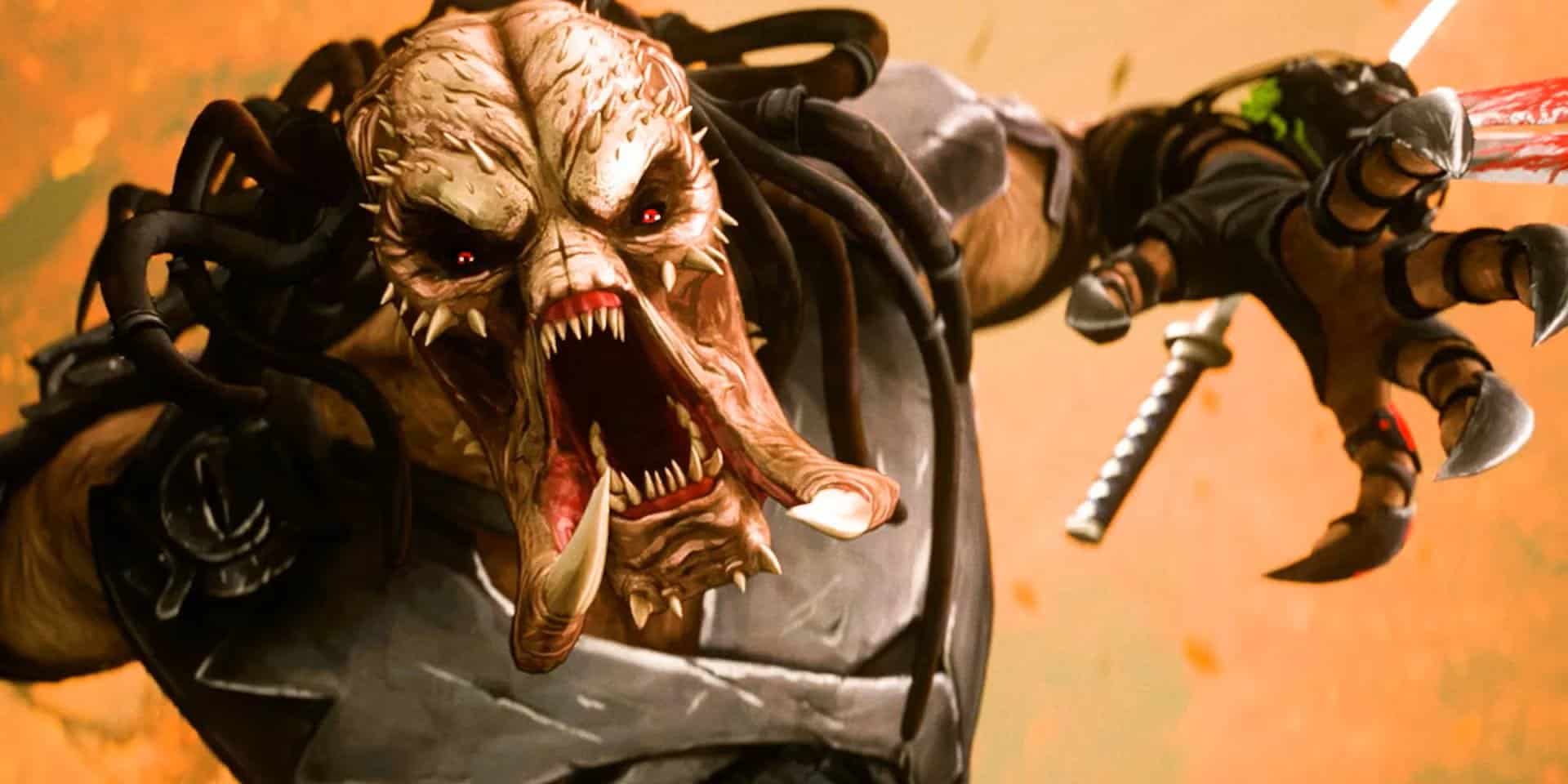
Predator: Killer of Killers just changed the entire franchise. Full breakdown of every animated segment, the Yautja Codex, the Adolini pistol connection, and what Naru in a cryo-pod means for the future of the saga.
Introduction: The Predator Franchise Just Had Its Best Moment Since 1987
Deep breath. Seriously.
Predator: Killer of Killers arrived without significant fanfare and proceeded to do something nobody quite expected — it delivered the most ambitious, most lore-rich, most emotionally resonant entry in the franchise since the original 1987 film. No qualifiers. No "for an animated project" softening. Just the best thing the series has produced in nearly four decades.
I was skeptical going in. The Predator franchise has a complicated relationship with its own mythology — flashes of genuine greatness surrounded by projects that couldn't quite figure out what made the original work. And the announcement of an animated anthology, arriving while most fans are counting down to Badlands, didn't immediately read as the priority project.
That skepticism lasted approximately twelve minutes into the first segment. Then it evaporated completely.
The medium isn't a limitation here. It's the creative liberation that makes this entire project possible. A live-action anthology spanning Viking-age Scandinavia, feudal Japan, and World War II aerial combat couldn't be made at any budget that would allow it to look right. Animation removes that constraint entirely and gives the filmmakers the freedom to build a scope that the franchise has never previously been able to attempt.
The result is a film that doesn't just add to the Predator mythology — it changes what that mythology is capable of being.
Personal rating: 9.8 out of 10. The missing 0.2 is owed entirely to the fact that I now have to wait for whatever comes next, and waiting is going to be very difficult.
Let's go through all of it.

The Animation Choice: Why This Was the Right Decision
Before the segments, before the lore, before the post-credits scene that made me genuinely shout — the medium itself deserves acknowledgment, because choosing animation for this project was a creative risk that paid off in ways that justify every moment of whatever skepticism anyone brought to it.
The Predator franchise has always been constrained by what practical effects and live-action production budgets can do with environments and scale. The original film works partly because the jungle setting is achievable — one location, sustainable resources, the contained geography of a single hunt. The best subsequent entries have worked within similar constraints. The worst have struggled precisely when they tried to expand the scope beyond what the production could support.
Animation removes that ceiling. The feudal Japanese castle in the second segment, rendered with the specific visual grammar of ink-wash painting and animated action, could not exist in live-action at any budget that a Predator film is realistically going to receive. The Viking longship sequences, the ice environment physics, the WWII aerial combat — all of it would require separate massive productions. Here, they exist in the same film, each with the visual specificity appropriate to its era and cultural context.
More importantly, animation allows the gore and the visceral physical language of Predator violence to operate at a scale that live-action either can't achieve or can't show. The franchise is built on a particular aesthetic of predatory hunting — brutal, precise, deliberately spectacular — and the stylized animation amplifies that rather than softening it.
This was absolutely the right call. And the fact that it took this long to make it is the franchise's loss in retrospect.

The Yautja Codex: Finally, Canon Lore
They said it. They actually put it on screen.
The word "Yautja" — the species designation that has existed in the Dark Horse comics and the extended novel universe for decades — has been canonized in this film. And if you've spent any significant time with the franchise's expanded literature, the specific weight of seeing that term acknowledged on screen is difficult to overstate. It's validation of a mythology that has been building outside the films for thirty-plus years.
But the Yautja Codex — presented here as something between a philosophical text and a religious document — is where the film does its most interesting lore work. The "sacred hunt" is framed not as sport in any casual sense but as a quasi-spiritual quest. The ultimate prey isn't just a trophy. It's proof of something about the hunter — that they have reached the apex of what their species values, that they have found and defeated the most dangerous version of whatever they've been seeking.
The hypocrisy baked into that framing is the film's most honest and most interesting observation about the Yautja. They have an elaborate, sophisticated honor code. They also hunt humans who are armed with wooden shields using invisibility cloaks, plasma cannons, and tracking technology that operates decades beyond anything their prey can comprehend.
The code is not a neutral framework. It's a cultural construct that justifies whatever outcome the hunter achieves. Win and the code is satisfied. Lose and you were apparently not worthy of the code's protections in the first place. It's "sport" in the same sense that a cat "plays" with a mouse — the result is predetermined by an enormous asymmetry of capability, and calling it sport doesn't change the actual power dynamic.
The film leans into this cultural arrogance rather than resolving it. The Yautja aren't being critiqued from outside. They're being shown as they actually are — which is far more interesting than either pure villainy or noble warrior mythology.

Part One: The Shield (841 AD) — Generational Vengeance and Its Cost
The Viking segment is the one that hit me hardest, and I want to be honest about why — it's because it's doing something the franchise has never really attempted before. It's using the Predator encounter as a backdrop for a genuinely complete emotional story about a human being, and the Predator becomes almost secondary to what that story is actually about.
Ursa is a shield-maiden defined by a blood curse she didn't choose and can't release. Her father's killers are still alive. Every choice she makes is organized around that fact — around the inherited obligation of vengeance that she has accepted so completely that she can't distinguish between who she is and what she owes. And she is actively trying to pass this down to her son Anders, framing the cycle of revenge as something precious and worth inheriting.
The Brute Predator of this era is designed to match the period — clunkier than later models, relying on raw physical power and a primitive sonic gauntlet rather than the sophisticated technology we've come to associate with the species. The environmental combat sequence on the ice is the segment's action peak: Ursa discovering that the freezing water masks her heat signature — a callback to Dutch's mud cover in the original that the film uses with complete awareness of its own reference — is the kind of tactical intelligence that the franchise's best human characters always demonstrate.
But the final exchange is what the segment is actually for.
Anders's last words — "Mother, did you kill the monster?" — are not asking about the alien. They are asking whether Ursa has finally let go of the defining hatred of her life. Whether the cycle ends with her. Whether she was able to become something other than the instrument of a vengeance she inherited rather than chose.
She doesn't answer.
That silence is the most human moment in the film. Not because of what it says about the Predator franchise, but because of what it says about what we pass down to the people we love and whether we understand what we're giving them until it's too late to give something else.

Part Two: The Sword (1609) — Visual Storytelling Without a Word
Feudal Japan. Minimal dialogue. The kind of sequence that trusts its visual language entirely and is rewarded for that trust.
The Oni Predator's design is the segment's first and most important creative decision. The elongated tusks, the facial spikes, the silhouette that maps onto Japanese folklore's conception of demonic presence — this isn't coincidental aesthetic choice. The Yautja, according to what the film is building, actively customize their appearance to exploit the specific cultural fears of their hunting territory. The Oni Predator doesn't just look terrifying. It looks like exactly the kind of terrifying that the culture it's hunting is specifically prepared to fear.
The patience of the hunt in this segment is something the franchise has rarely taken the time to show. This Predator is an observer before it's a hunter. It watches two brothers — Kenji and Kiyoshi — spend twenty years destroying each other over a broken family code, a dispute about honor and inheritance that has made enemies of people who should be allies. The Predator doesn't intervene because the hunt requires a specific kind of prey. Not someone at half capacity from twenty years of internecine conflict. The winner. The survivor.
The broken wooden railing — cracked by their father, the original source of the rift, finally collapsing under the weight of the brothers' final confrontation — is the segment's most elegant piece of visual storytelling. The thing that broke them is the thing that breaks under their final fight. The past doesn't just shape them. It physically gives way beneath them.
And the brothers' reconciliation, arriving in time to face the Oni together with the coordinated force that twenty years of separation had denied them, is the segment's thesis: the Predator's cultural arrogance about individual supremacy is the vulnerability that a reunited front can exploit. Two "lesser" warriors who remember how to trust each other defeat a single apex hunter who has spent centuries believing that individual supremacy is the ultimate truth.
The animation style in this segment — the specific palette, the deliberate pacing, the way violence is choreographed to look like art — is doing work that live-action couldn't do without losing either the beauty or the brutality. Both are present here because the medium allows them to coexist.

Part Three: The Bullet (1942) — Intelligence as the Variable That Changes Everything
The tonal shift into World War II is jarring in the best possible way. The emotional register is different — lighter, faster, built around a character whose relationship to danger is defined by enthusiasm rather than grief or obligation. John Torres is a gearhead. A speed freak. Someone who understands mechanical systems at an intuitive level and whose survival instincts are expressed through that understanding rather than through combat training.
The Pilot Predator is the franchise's most unexpected design choice, and the film clearly understands that it is doing something unusual by introducing it. Greenish skin. A metal eye patch. No dreadlocks. No standard equipment. This is not an elite hunter. This is what the lower strata of Yautja culture looks like — a bad blood, someone who hunts from the relative safety of their ship using technological advantages rather than direct confrontation. The specific disrepute this carries within Yautja culture gives the segment a political dimension that the others don't have.
The dogfight over Casablanca is pure kinetic joy. Torres going out onto the wing of a burning aircraft in active combat to repair the engine while a cloaked UFO pursues him is the "goofy-cool" end of the Predator tonal spectrum — something the franchise can do brilliantly when it gives itself permission to be fun. It's not trying to be the emotional weight of the Viking segment or the aesthetic beauty of the samurai one. It's trying to be a WWII action movie that happens to involve a disreputable alien hunter, and it succeeds completely at that specific thing.
The intellectual dimension of Torres's victory is the segment's thematic contribution to the film's larger argument. The Yautja can account for physical capability. They can account for training, for weapons, for environmental awareness. The variable they consistently fail to account for is the specific kind of creative problem-solving that humans produce under desperate circumstances — the improvisation that requires not knowing what's impossible.
Torres defeats his opponent not by being stronger or better trained or more technologically capable. He defeats him by being smarter in the specific moment that matters, using understanding of mechanical systems that a species hunting through a technological advantage never had to develop.

The Warehouse Finale: The Adolini Pistol and the Franchise Connection
The convergence of all three stories in the Grendel King's arena — which context and visual design strongly suggest is Yautja Prime — is where the film earns the "anthology" framing by proving that these stories were always one story.
The Rafael Adolini flintlock pistol is the moment that required pausing to process.
For anyone who knows the extended Predator mythology, that pistol is one of the franchise's most significant objects. It's the connective tissue between centuries of hunting — an artifact that ties this clan's history directly to the Greyback from Predator 2, establishing a lineage that runs from the 1700s through the modern era. Seeing it here, in this context, is not a casual Easter egg. It's the film confirming that the clan at the center of Killer of Killers has a specific identity within the larger Yautja mythology — a clan with a documented relationship to human prey that goes back further than any previous film has explored.
Ursa, Kenji, and Torres forming an impromptu fighting unit is exactly the kind of cross-cultural, cross-era alliance the franchise has never had the scope to attempt before. Kenji's sacrifice — giving up his arm to save Ursa — is earned precisely because the film has spent three segments establishing these as people with complete emotional histories, not action figures in period costumes.
Ursa's final choice — releasing the ship's chain, choosing a death that carries dignity over a life that would be defined by continued vengeance — is the character arc that the Viking segment's final silence made inevitable. She couldn't answer Anders when he asked if she'd killed the monster. Here, she answers. The monster was always the hatred, and she releases it with the chain.
The Post-Credits Scene: Everything Just Changed
I need to be direct about this: the post-credits scene is one of the most significant franchise developments the Predator series has ever produced.
Naru from Prey — the most complete and most praised human protagonist the franchise has had in decades — is in a cryo-pod aboard what appears to be the Grendel King's ship.
The implications compound immediately. The camera pulls back to reveal not one pod but thousands. The Yautja haven't just been hunting. They've been collecting. Every human who managed to defeat one of their hunters — every "Killer of Killers" who proved capable enough to be worth preserving — has been snatched and stored. Defeated hunters couldn't be allowed to return home having lost to prey. The prey was taken instead.
The suggestion that pods belonging to Dutch — Alan "Dutch" Schaefer, Arnold Schwarzenegger's character from the 1987 original — and Mike Harrigan from Predator 2 are somewhere in that collection is not a small claim. It retroactively explains disappearances that the franchise has treated as loose ends. Dutch walked out of that jungle. Where did he go? Here's a possible answer.
What the Yautja have created, through centuries of systematically collecting their most dangerous defeated prey, is something they absolutely did not intend: an intergalactic holding facility containing the most capable human warriors in recorded history, sorted and preserved and waiting.
If the next project finds a mechanism for those pods to open — if Naru and Dutch and the Viking shield-maiden and the samurai and the WWII pilot find themselves in the same place at the same time, with a common enemy and nothing left to lose — the Yautja will have assembled, through their own cultural arrogance, the single most dangerous force that has ever existed for the purpose of opposing them.
The franchise has been building to this without knowing it. And Killer of Killers is what makes that building visible.
Best Moments in Killer of Killers: A Quick Ranking
For viewers who want the highlight reel before a rewatch:
- Anders's final question and Ursa's silence — the franchise's most emotionally honest moment
- The ice water heat-signature sequence — the best tactical callback to the original film since Prey's mud cover
- The Oni Predator's cultural design — the strongest evidence yet that Yautja hunt preparation is more sophisticated than previous films suggested
- The brothers' reunion attack — the film's thematic argument made kinetic
- Torres on the burning plane wing — the most fun the franchise has been in years
- The Adolini pistol reveal — the moment longtime fans realized how deep the lore was going
- The cryo-pod pullback — the shot that changes everything
What Killer of Killers Gets Right That Previous Entries Missed
A few things worth naming specifically, because the franchise has struggled with them before.
The human characters are complete. All three protagonists have interior lives, motivations, and emotional arcs that exist independently of the Predator encounter. The alien hunter is a catalyst for stories that are actually about something else — about grief and inherited vengeance, about family and reconciliation, about intelligence as its own form of strength. Previous entries have occasionally managed one strong human character. This film manages three in separate segments.
The Yautja are treated as a culture rather than just a threat. The honor code's internal contradictions, the existence of social hierarchy and disreputable members, the strategic customization of appearance by hunting territory — all of this builds a species that has internal complexity rather than just external menace.
The anthology format serves the mythology rather than fragmenting it. By the final segment, the disparate stories have connected in ways that feel earned rather than forced. The convergence works because each segment has built characters worth bringing together.
FAQ: Predator Killer of Killers Explained
What does "Yautja" mean and why is its canonization significant? Yautja is the species name for the Predators, originating in the Dark Horse Comics and expanded novel universe. Its appearance on screen in Killer of Killers is the first time the main franchise has officially incorporated the extended mythology's terminology, validating decades of expanded universe lore.
Who is the Pilot Predator and what does his design tell us about Yautja society? The Pilot Predator — greenish, with a metal eye patch and no dreadlocks — represents the lower social strata of Yautja culture. His preference for hunting from a ship using technological advantages rather than direct combat marks him as a "bad blood" in Yautja terms — someone whose hunting methods are considered dishonorable by the species' own code.
What is the Rafael Adolini pistol and why does it matter? A flintlock pistol that connects this film's timeline directly to the Greyback elder Predator from Predator 2, establishing the clan's documented history of interaction with human prey going back to the 1700s. It's the franchise's primary continuity artifact and its presence confirms this clan's specific identity.
What does Naru being in a cryo-pod mean for the franchise? It suggests that the Yautja have been systematically collecting rather than killing the humans who defeat their hunters — an act of cultural arrogance that has inadvertently assembled the most capable human warriors in history in a single location. The implication for future projects is a potential mass breakout and alliance.
Is Dutch from the original Predator in the cryo-pod collection? The film strongly implies it without confirming it directly. The camera's suggestion that the collection contains everyone who has ever defeated a Yautja hunter, combined with Dutch's unresolved disappearance after the 1987 film, makes the inclusion plausible.
How does Killer of Killers connect to Prey? Naru's appearance in the post-credits sequence is the direct connection. Her presence in the collection establishes a timeline continuity between the 1719 events of Prey and the broader saga Killer of Killers is building toward.
Conclusion: The Franchise Has a Future Worth Being Excited About
Predator: Killer of Killers accomplished something the franchise has been trying and failing to do for decades. It found the scale that the Predator mythology has always implied without finding a way to show — a multi-generational, cross-cultural, genuinely epic scope to the Yautja's relationship with humanity.
It did it through animation, which was both a creative risk and the only format that could have made it work. It did it through human characters with complete interior lives. It did it through lore engagement that validated thirty years of expanded universe mythology. And it did it through a post-credits sequence that doesn't just tease a sequel — it restructures the entire franchise's history into something that was always building toward a confrontation that hasn't happened yet.
Naru is in a pod. Dutch might be in a pod. A Viking shield-maiden and a Japanese swordsman and a WWII pilot are in pods. And somewhere, a Grendel King's clan has assembled their own worst nightmare in a room they've never given anyone a reason to escape from.
If they give these characters a reason to escape, and I think they will, the Predator franchise is about to become something it's never quite been.
I cannot wait. And I'm genuinely angry about how long I'm going to have to.
Stay hungry. The hunt is just beginning, and for the first time in a long time, I believe it.
.png)


No comments:
Post a Comment