
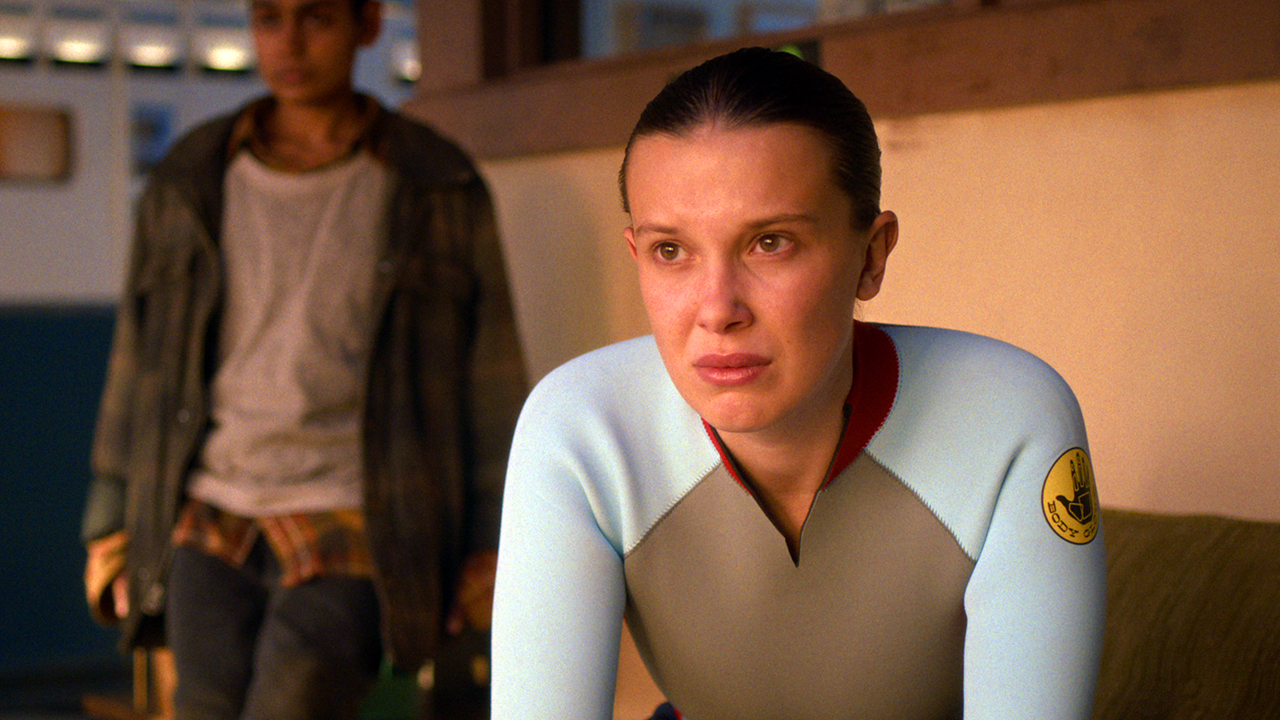
The Stranger Things series finale just aired — and there's a lot to process. Here's an honest, spoiler-filled breakdown of every major moment, every character's ending, and what it all really means.
Introduction: Saying Goodbye to Hawkins Felt Like Losing a Piece of Your Own Childhood
I've been sitting here for two days trying to figure out how to start this.
The Stranger Things finale didn't just end a TV show. It closed out a full decade of theories, midnight watch parties, rewatches, arguments about the Upside Down's internal logic, and genuine emotional investment in a group of fictional kids from a fictional Indiana town. Two hours and eight minutes to wrap up ten years. No pressure.
Here's the honest truth: it wasn't perfect. But it was something rarer than perfect — it was honest. It respected the characters. It paid off arcs that have been building since 2016. And in a few specific moments, it completely destroyed me.
So let's talk about all of it. Every major beat, every character's sendoff, and the questions that are still rattling around in my head days later.
Full spoilers from here on. You've been warned.
Eleven's Ending: A Miracle, a Mystery, or the World's Most Loving Lie?
What Actually Happened
Watching Eleven stand alone in the Abyss, physically holding the gateway together while everything around her fractured and tore apart, was one of the most viscerally affecting sequences the show has ever produced. The "Chosen One" burden she's carried since that first sensory deprivation tank back in Season 1 finally felt like it was going to demand its full payment.
When she disintegrated, I stopped breathing. I think a lot of us did.
And then — eighteen months later — Mike is telling a story.
His theory: Eight helped El fake her death using a coordinated psychic illusion, fooling the military, the Hivemind, and everyone watching. She's alive somewhere. A waterfall. Sunlight. Peace.
The Question the Show Deliberately Left Unanswered
This is where the finale makes its boldest creative choice — and depending on your personality, it will either feel beautifully poetic or maddening.
Is the figure in the distance real? Is El actually alive, quietly existing in some off-grid paradise, finally free from the lab and the monsters and the weight of everyone else's survival?
Or is Mike — sweet, stubborn, grieving Mike — constructing a story he needs to believe so he can keep getting out of bed every morning?
Both readings are completely supported by what we see on screen. That's intentional. It's a "reader's choice" ending in the truest sense, and I genuinely can't decide which interpretation wrecks me more.
If El is alive, then the world's mourning is built on a fiction she allowed.
If El is gone, then Mike's "waterfall paradise" is the most heartbreaking coping mechanism in the show's history — a man building a mythology around his grief so he doesn't have to call it grief.
I keep going back and forth. I don't think I'll ever fully land on one answer, and I suspect that's the point.
Will Byers, the Mind Flayer, and What the Finale Got Right About Trauma
The Villain Reveal We Needed
Here's a debate I've had on multiple Reddit threads over multiple years: Was Vecna the "real" boss, or was the Mind Flayer the actual threat with Henry as its instrument?
The finale's answer — that they were essentially a symbiotic system of malice, the beast providing raw cosmic power while Henry supplied the human spite and ambition to direct it — felt genuinely satisfying. It made the whole mythology click together in a way that honored both the creature-feature horror of the early seasons and the psychological depth of Season 4.
More importantly, it made the threat personal in a way that pure monster-horror never quite can.
Will's Redemption Arc Finally Lands
For seasons, Will Byers existed primarily as the show's wound — the boy who was taken, the absence that set everything in motion, the character defined by what happened to him rather than what he chose.
The finale changes that completely.
Watching Will use his lingering psychic connection to the Hivemind as a deliberate weapon — acting as an anchor to hold Henry in place long enough for the group to act — was the moment his entire arc crystallized. He took the worst thing that ever happened to him and turned it into the thing that saved everyone.
It's a "battle of Will" in the most literal sense, and the wordplay feels fully earned.
Joyce Byers: The Real Heart of the Series
Winona Ryder has been doing quietly extraordinary work since Season 1, and the finale gives her exactly the moment she deserves.
The woman who strung Christmas lights on a wall and chopped through drywall because she refused to accept that her son was gone — watching her be the one to finally extinguish the darkness that took him is poetic justice of the highest order. The collapse of the Upside Down wasn't just a sci-fi set piece. It was a mother finally, completely, taking her family back from the void that tried to swallow them.
I'm not crying, you're crying.
The Tragedy of Kali (Eight): The Debt the Show Never Fully Paid
I'm going to be honest about something: Kali's ending made me genuinely angry in a way I'm still processing.
When she returned — not just as a survivor, but as the group's most tactically essential asset, using her mastery of illusion to get everyone to the final battleground alive — it felt like the show was finally giving her the redemption arc she'd been owed since Season 2.
And then she's killed in the military raid. Quickly. Functionally. To give Eleven the emotional fuel for her final push.
This is the oldest trick in the book — a supporting character's death as a narrative tool for the protagonist's arc — and it stings especially hard here because of what Kali represents. She's the reminder that for the lab children, survival never came with a clean slate. Even after Vecna, even after the Upside Down collapses, the human institutions that created and weaponized these kids don't just dissolve.
Kali died a fugitive. She never got to stand in the sunlight without a target on her back.
Her sacrifice was meaningful within the story. But it deserved to be more than a plot mechanism. That's the one place the finale genuinely let me down.
The 45-Minute Epilogue: Every Goodbye That Actually Mattered
The finale did something that almost no modern blockbuster-scale TV show is willing to do anymore — it took its time with the aftermath. Almost forty-five minutes of it.
It could have been self-indulgent. It wasn't. Here's why each major sendoff worked.
Steve Harrington: The Most Satisfying Arc in the Entire Series
Let me just say it plainly: Steve Harrington's journey from self-obsessed hair-jock to the series' quiet moral center is the best character development Stranger Things ever wrote.
For years, the fandom theorized about Steve's romantic endgame. Nancy? Someone new? And the finale answers that question by making it irrelevant. Steve's fulfillment doesn't come from a relationship. It comes from becoming the mentor, the anchor, the steady adult presence that he never had growing up.
He became the man who shows up. That's the whole arc, and it's perfect.
Nancy and Jonathan: The Grown-Up Ending Nobody Wanted But Everyone Needed
This one hurt. Of course it did.
Two people who survived the literal Upside Down together, who loved each other through extraordinary circumstances, discovering that survival doesn't automatically mean compatibility — that's not a failure of their relationship. That's just adulthood, written with rare honesty.
Nancy's gravitational pull toward high-stakes journalism and Jonathan's return to his artistic, quieter self weren't incompatibilities that snuck up on them. They were always there, just obscured by urgency. When the emergencies stopped, they could finally see clearly.
Bittersweet is exactly right. But it's the kind of bittersweet that respects both characters enough not to force a happy ending they didn't actually earn.
Dustin: Carrying the Weight So the Next Generation Doesn't Have To
Of all the epilogue threads, Dustin's is the one that sat with me longest.
You can see it in his eyes throughout the finale's final act — he's carrying Eddie, carrying the trauma of the war, carrying the particular exhaustion of someone who grew up too fast in circumstances no kid should have to navigate. He's not broken. But he's marked.
Watching him mentor Holly Wheeler and her friends, passing down the knowledge and the resilience without passing down the nightmares, felt like the most realistic version of what surviving something like this actually looks like. You don't get to be unaffected. But you get to decide what you do with it.
What the "Abyss" and Exotic Matter Actually Meant (and Where the Lore Got Messy)
Full transparency: the introduction of "Exotic Matter" mechanics and the deeper cosmology of the Abyss in the final season occasionally felt like the show was playing catch-up on world-building it hadn't fully planned out.
The exposition got heavy. Some of the inter-dimensional physics required a level of patience that the kinetic pacing of the finale didn't always allow for. And anyone who was hoping for the grounded, shadows-in-the-hallway horror of Season 1 found those instincts sitting largely dormant throughout.
This is a genuine criticism, not a nitpick. The show's mechanics became complicated enough that it occasionally obscured the emotional stakes — the very thing Stranger Things has always done better than its genre peers.
But here's what I keep coming back to: we didn't fall in love with this show because of the lore. We fell in love with four kids on bikes and a girl with a bloody nose who didn't know her own name. We fell in love with the idea that friendship — real, loyal, show-up-no-matter-what friendship — is the only force capable of standing against the void.
The lore is the scaffolding. The characters are the building. And the characters held.
The Final Image: Why It Was the Only Possible Ending
Holly Wheeler. A new group of kids. A basement. A D&D campaign just beginning.
It's a cycle. It's always been a cycle.
Vecna is gone. The Upside Down is sealed. But the strange things don't stop — they never do. The specific monsters change, but the need for a Party to face them together is a permanent feature of being human. Every generation finds its own Hawkins, its own darkness at the edge of the ordinary world, and it needs its own group of people willing to show up for each other.
The finale understands this. It earns this image by treating the epilogue with the care it deserved rather than rushing to a credits roll. And it sends us out not with resolution, but with continuation — which is, honestly, the only honest ending for a story about how friendship outlasts every monster you'll ever face.
Tips for Rewatching the Finale (And What to Look For)
If you're planning a rewatch — and you absolutely should — here are a few things worth paying specific attention to:
- El's final moments in the Abyss: Watch her hands. The show is deliberately ambiguous about whether what we're seeing is psychic projection or physical presence.
- Mike's body language in the epilogue: There's a specific moment where his expression shifts that reads very differently depending on which El interpretation you've landed on.
- Will in the final battle: His arc recontextualizes every season. On rewatch, every moment where he's "passive" reads as someone quietly, painfully holding something back.
- The basement shot: Compare it frame-for-frame with the opening of Season 1. The parallels are intentional and specific.
- Joyce's face when the Upside Down collapses: Winona Ryder doesn't say a single word. She doesn't need to.
FAQ: The Questions the Finale Raised (and Left Open)
Is Eleven actually alive?
The show deliberately refuses to confirm this. Mike's epilogue monologue presents it as his sincere belief, but the framing leaves genuine room for the interpretation that he's narrating his way through grief.
Why did Kali have to die?
Narratively, her death provides Eleven with the emotional catalyst for her final effort. As a character decision, it's the finale's most debatable choice — particularly given how little resolution Kali received after Season 2.
What happened to the Upside Down after it collapsed?
The collapse appears to be permanent — the Shadow entity couldn't survive without Henry's consciousness directing it, and with that severed, the entire dimension destabilized. Whether any remnant exists is left open.
What does the ending mean for the next generation?
The Holly Wheeler framing suggests that "Stranger Things" aren't unique to this group — they're a recurring feature of the world. New Party, new threats, same fundamental need for loyalty and courage.
Was the lore too complicated by the end?
Honestly? A little, yes. The Exotic Matter mechanics and Abyss cosmology required a lot of exposition that occasionally slowed the finale's emotional momentum. But the character work more than compensated.
Conclusion: It Was Never About the Monsters
The Stranger Things finale wasn't perfect. The lore got heavy. Kali deserved better. The action sequences occasionally prioritized scale over the intimate, grounded horror the show built its reputation on.
But it was honest. It respected a decade of investment. It gave nearly every character an ending that fit who they'd become, not just who we wanted them to be. And it closed with an image that's stayed with me longer than any of the action sequences — a group of kids in a basement, starting a new story, not yet knowing what they're about to face.
That's Stranger Things. That's always been Stranger Things.
So — where are you landing on El? Team Waterfall, believing she got her quiet life? Or do you think Mike's epilogue is the most beautiful act of grief the show ever wrote?
Let's figure it out together in the comments. Friends don't lie. And friends definitely don't let friends process a series finale alone.
.png)


