
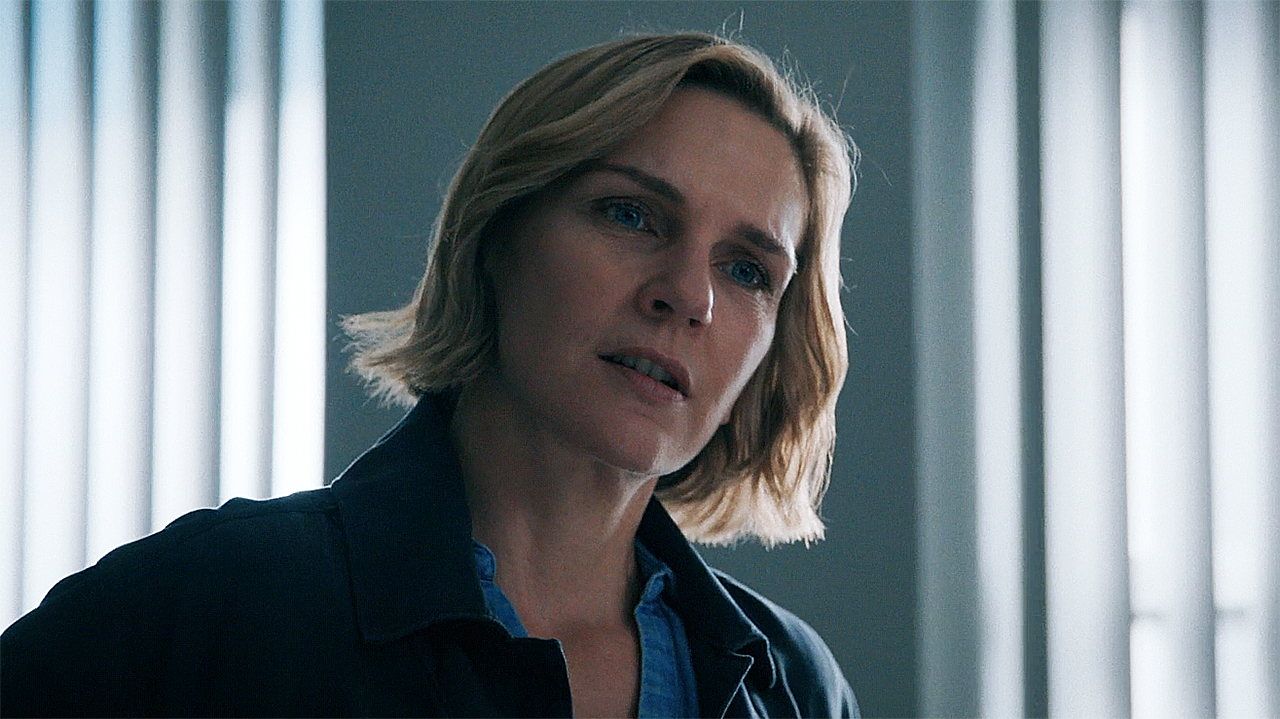
Episode 4 of Please, Carol just recontextualized everything. Full breakdown of Carol's conversion therapy backstory, the Manusos reveal, the truth serum scene, and what the cure confirmation actually means.
Introduction: Carol Just Became the Most Complicated Character on Television
Still shaking a little. That's where I'm at after "Please, Carol" Episode 4, and if you just finished it and came here looking for someone to process it with — welcome. You're in the right place.
Going into this season, Carol read as a particular type of post-apocalyptic protagonist: paranoid, abrasive, operating on pure spite, the kind of character you root for because she's clearly right even when she's clearly impossible to be around. That archetype has a long television history and it works because competence is compelling regardless of personality.
But Episode 4 just retired that reading entirely.
This episode isn't a character study so much as a character excavation. It goes down through the layers — the pirate lady persona, the grief over Helen, the tactical brilliance, the barely managed rage — and finds something underneath all of it that reframes everything we've watched her do this season. The title is "Please, Carol," and by the end of the hour you understand why that phrase lands differently depending on who's saying it and what they're pleading for.
Let's go through all of it. The Manusos reveal, the Honesty Test, the pharmacy scene, the Freedom Falls backstory, and the question the episode ends on that I genuinely cannot stop thinking about.
Manusos: What "Winning" Actually Looks Like
We've been hearing Manusos all season — the disembodied voice on the other end of a phone line, the paranoid frequency-tracker, the person operating somewhere out there who has apparently also managed to avoid the Joining through sheer force of stubborn refusal. Hearing him was one thing. Seeing him is something else entirely.
He's in a storage unit in Paraguay. Holed up, surrounded by the tools of someone who has reduced their existence to pure survival mechanics — radio equipment, notebooks, timers, the infrastructure of a man who has converted staying human into a full-time technical project.
It's not glorious. The show is very deliberate about that. There is no heroism in the visual. It's dusty and cramped and profoundly lonely, and the aesthetic communicates something the dialogue would cheapen if it tried to say it directly: this is what resistance costs. Not in the dramatic, action-sequence sense. In the daily, grinding, unglamorous sense of a person who has been alone with their own paranoia for long enough that aloneness has become their natural state.
The detail of him licking a discarded can because he's too frightened to eat the fresh food the infected leave out for him encapsulates the show's central horror with unusual efficiency. The infected are being kind. Genuinely, biologically, incapably kind — they want him to be comfortable, want him fed, want him to stop suffering. And that kindness is exactly what makes it impossible to accept. Because accepting the kindness is the first step toward accepting the rest of it.
His apology notes to the people whose storage units he's raided are doing similar work from a different angle. In a world where conventional social rules have been dissolved entirely, Manusos is still writing apologies to absent strangers for minor property violations. He is maintaining the structure of a civilized world that no longer exists, as an act of personal resistance. The rules don't require enforcement anymore. He enforces them on himself. Because that's what being a person means to him.
When he writes "Carol — potentially Turkish" in his notebook, it's such a small thing and it hit me harder than almost anything else in the episode. A crack in the isolation. An acknowledgment that there might be another person out there doing what he's doing. If these two ever share a room, the result will be either the salvation of human individuality or a disaster of a scope that makes the Joining look organized. Possibly both simultaneously.
The Honesty Test: Using Their Biology Against Them
The sequence with Larius and the Honesty Test is the episode's sharpest piece of writing, and it functions on several levels that reward attention.
The premise is elegant and cruel in equal measure: the hive mind has a biological incapacity for deception. They cannot lie. This isn't a moral choice or a cultural norm — it's a physiological constraint built into whatever the Joining does to human neurology. Carol, who has spent this entire season cataloguing the hive mind's properties the way a general catalogs an enemy's weaknesses, has identified this as leverage.
So she tests it. With the most personal possible question.
She asks if they liked her books.
The response she gets is warm and vague and completely non-committal — the kind of answer that sounds like a compliment but contains no actual information. And Carol, who has been surviving on her own perceptiveness for however long she's been running, immediately recognizes it for what it is. She doesn't want flattery. She doesn't want to be managed. She wants the truth even when — especially when — the truth is going to hurt.
Forcing them to channel Helen's memories is where the scene earns its emotional weight. This is the person Carol is doing all of this for. The loss that provides whatever remains of her motivation beyond pure, load-bearing spite. And what she learns is that Helen found her life's work harmless. Pleasant. "Cotton candy." Not the grand, subversive, carefully constructed body of writing that Carol has been treating as both vocation and identity — just something easy and forgettable.
Helen hadn't finished the last two hundred pages of Carol's final novel.
The information is devastating and delivered with the particular cruelty of something that is technically gentle because it's true. There's no malice in the infected sharing this. They literally cannot be malicious. They're just answering the question Carol insisted on asking, and the answer is destroying something she had been carrying intact through everything she's lost.
What makes this scene brilliant rather than just painful is what it tells us about Carol's psychology. She stripped away a happy memory — one of the few she presumably had left — in order to find a tactical advantage. She used her own grief as a research tool. That is not the behavior of someone who is okay. That is the behavior of someone who has decided that winning matters more than surviving in any emotionally meaningful sense, and has begun to act accordingly.
The Pharmacy Scene and the Zosia Problem
The pharmacy sequence functions as dark comedy right up until the moment it stops being funny, which is the show's preferred mode of tonal transition and it works every time.
The infected helping Carol find the Sodium Thiopental is exactly as absurd as it sounds and exactly as unsettling as it's meant to be. They move like a cooperative system oriented entirely toward her comfort, tripping over each other to fulfill requests they understand she's making in bad faith, because their bad faith detection has been replaced by an overwhelming orientation toward making her feel okay. They're dominoes, as the episode frames it — each one's compliance triggering the next one's, the whole mechanism running on goodwill rather than judgment.
And then Carol tests the truth serum on herself.
This is one of the episode's bravest choices. We rarely see the armor come off. The "pirate lady" persona — the one that keeps everything and everyone at a functional distance — is constructed so consistently and maintained so carefully that its presence has started to feel like Carol's actual personality rather than a protective performance. The Sodium Thiopental dissolves that distinction.
She's still attracted to Zosia.
Let that land for a second.
Zosia is, from Carol's perspective, the face of the thing that ended the world as Carol knew it. A person-shaped vehicle for the collective consciousness that took Helen, that has been systematically replacing human individuality with something Carol experienced as imprisonment long before the Joining arrived. She is the enemy wearing the skin of someone Carol's own nervous system responds to.
The conflict this creates is not clean or comfortable. Carol is fighting her own biology in parallel with fighting the hive mind, and the show has the integrity not to resolve that into something easier. She doesn't get to simply not feel what she feels. She doesn't get to be the uncomplicated hero. Her own desires are a front she has to hold against herself while simultaneously holding every other front.
That's what makes her a genuinely interesting character rather than just a competent one.
Freedom Falls: The Context That Changes Everything
This is the reveal. The one that retrospectively reorganizes every scene of Carol we've watched this season into something more coherent and more heartbreaking.
Carol was sent to a conversion therapy camp called Freedom Falls at sixteen.
The camp's central mantra — you will be accepted if you simply join us — is so precisely calibrated to land as horror in this context that I had to sit with it for a moment after hearing it. Because that sentence, word for word, is the Joining's pitch. The same promise. The same framing of acceptance as contingent on compliance. The same erasure dressed up as welcome.
To Carol, the hive mind isn't a new experience. It's the experience she's been living in her nightmares since she was a teenager. The kindness of the infected — the genuine, biological warmth they extend toward her, the way they try to feed Manusos and comfort Zosia and make everyone around them feel okay — isn't neutral goodness to Carol. It's the specific texture of a cruelty she already knows. She recognizes the shape of it. She knows that forced happiness isn't peace. It's compliance with a smile, and she learned that distinction at sixteen, alone, in a facility that called itself Freedom while taking it away.
This reframes her violence. Not excuses it — the episode is careful not to do that — but contextualizes it in a way that makes it legible beyond "this person is ruthless." She isn't just fighting the hive mind. She is fighting, with everything she has, something that looks exactly like the worst thing that was ever done to her. The scale is global now. The mechanism is biological now. But the fundamental transaction — give up who you are and you can belong — is identical.
When she handcuffs herself to Zosia and starts the IV drip, it carries that weight. This isn't purely tactical. There is revenge in it — against every system that ever presented itself as help while functioning as a cage. The problem, and the episode is honest about this problem, is that revenge and justice can start from the same place and end up somewhere very different. Carol has become, in this scene, someone who inflicts pain to force a result. She has become, functionally, the thing she hates.
Watching Zosia's body go into cardiac arrest as the hive mind fights the chemical compulsion to tell the truth makes that mirror explicit. The infected weren't trying to hurt anyone. They were just trying to be what they are. And Carol, in her determination to break that, has produced a scene that looks like everything she was fighting against — someone suffering because someone else decided her compliance was more important than her safety.
The Cure Confirmation: A Win That Costs Everything
The episode ends on something that should feel like a victory and doesn't quite.
The hive mind's inability to deny that a cure exists essentially confirms that one does. If it were impossible, they would have said so — they cannot do otherwise. Carol has her first concrete evidence that she isn't chasing something theoretical. There is something to find. There is a direction to move in.
But watch what happened to get there.
Zosia nearly died. The infected nearby, overwhelmed with shared grief at her distress, didn't attack Carol — they simply flooded in, trying to save her, incapable of aggression in the face of that much collective pain. And Carol stood in the middle of that, having caused it, having caused it deliberately, and watched.
The question the episode leaves you with isn't really about the cure. It's about Carol. Specifically: by the time she finds whatever she's looking for, what will be left of the person who started looking?
The show is asking whether the fight for individual freedom can be won by someone who has already given up certain essential parts of their humanity in order to wage it. Whether the world Carol is trying to rescue is a world that Carol, as she is currently becoming, is actually capable of living in.
That's a harder question than "will the hero succeed." And it's the question this episode is genuinely, uncomfortably interested in.
The Bigger Picture: Who Is the Monster in This Story?
This is where the show is doing its most interesting work, and it's worth pulling back from the episode-level analysis to acknowledge it.
The infected are not coded as villains in the conventional sense. They cannot be cruel. They cannot lie. They experience each other's pain as their own and respond to distress, any distress, with an overwhelming impulse toward comfort and care. By most measurable behavioral standards, they are better to each other — and to the uninfected humans they encounter — than most uninfected humans manage to be.
The horror isn't that they're monsters. The horror is that they're not, and they're still wrong. The horror is that something can look like peace and feel like peace to everyone inside it and still represent the end of something that matters. The horror is that Carol, in fighting to preserve individuality and free will, is behaving with a ruthlessness that the infected — who have no free will — are biologically incapable of.
The show isn't resolving this into a comfortable argument. It's sitting inside the discomfort of a situation where the thing being destroyed might be worth more than the method being used to preserve it, and where the person doing the preserving might be losing the very thing she's trying to save.
Common Mistakes Viewers Make Reading This Show
A few interpretive traps worth avoiding as the season continues:
- Treating Carol's competence as moral authority. She is very good at what she does. That doesn't make what she does right.
- Reading the infected's kindness as manipulation. They are genuinely incapable of deception. Their warmth is real. That's what makes the situation complicated.
- Expecting Manusos to be straightforwardly heroic when he finally meets Carol. He is, by every available evidence, as psychologically compromised by his isolation as Carol is by her history.
- Assuming the cure, if found, resolves the show's central question. The show's central question isn't about the cure.
FAQ: Please, Carol Episode 4
What is Freedom Falls and why does it matter to Carol's character? Freedom Falls is the conversion therapy camp Carol was sent to at sixteen. Its philosophy — accept us and you will be accepted — mirrors the Joining's offer exactly, which is why Carol's response to the hive mind is so visceral. She's been here before.
Can the infected actually lie? No. The Honesty Test establishes that deception is biologically impossible for them. This is a tactical weakness Carol has identified and intends to exploit.
Why did Carol test the truth serum on herself? Partly to verify the dosage and partly because the drug revealed something she wasn't consciously admitting — her continued attraction to Zosia, which complicates her relationship to the enemy she's fighting.
Did Zosia actually almost die in the IV scene? Yes. The hive mind's neurological resistance to the truth serum produced a cardiac response in Zosia's body. The infected's collective grief response rather than aggression in that moment is one of the episode's most significant character beats for the collective.
Is the cure real? The hive mind's inability to deny its existence suggests it is. They cannot lie, and they couldn't say no when asked whether a cure was possible.
What does Manusos writing "Carol — potentially Turkish" mean? He's tracking radio frequencies and has identified a signal that suggests another uninfected survivor. It's his first indication of Carol's existence and sets up a potential meeting that the show has been building toward.
Conclusion: A Victory That Feels Like Loss
"Please, Carol" Episode 4 accomplished something genuinely difficult. It took a character who was already compelling and made her more complicated without making her less compelling. It gave Carol a backstory that explains her without excusing her. It advanced the plot — the cure is real, Manusos has a name and a face, the truth serum works — while making every advancement feel like it's costing something irreplaceable.
Carol has her target now. She knows something to find is out there. She knows the hive mind can be made to tell her things. She has tools she didn't have before.
But watching Zosia cry while the infected flooded in with their terrible, helpless, entirely genuine grief — watching Carol stand there having caused it, calculating — I found myself wondering whether the show is building toward a redemption arc or something more honest than that.
Maybe Carol saves the world. Maybe she finds the cure. Maybe individual consciousness survives on this planet because one paranoid, brilliant, deeply damaged woman refused to stop fighting for it.
And maybe by the time that happens, she won't be able to feel anything about it.
That's the real horror this episode planted. Not the hive mind. Not the cardiac arrest. Not even Freedom Falls, though that scene will stay with me.
The real horror is the possibility that you can be right and still lose yourself. That the cost of winning a war against compliance might be becoming someone who has nothing left but the winning.
I'm going to go lie down now. See you next episode.
.png)


No comments:
Post a Comment