
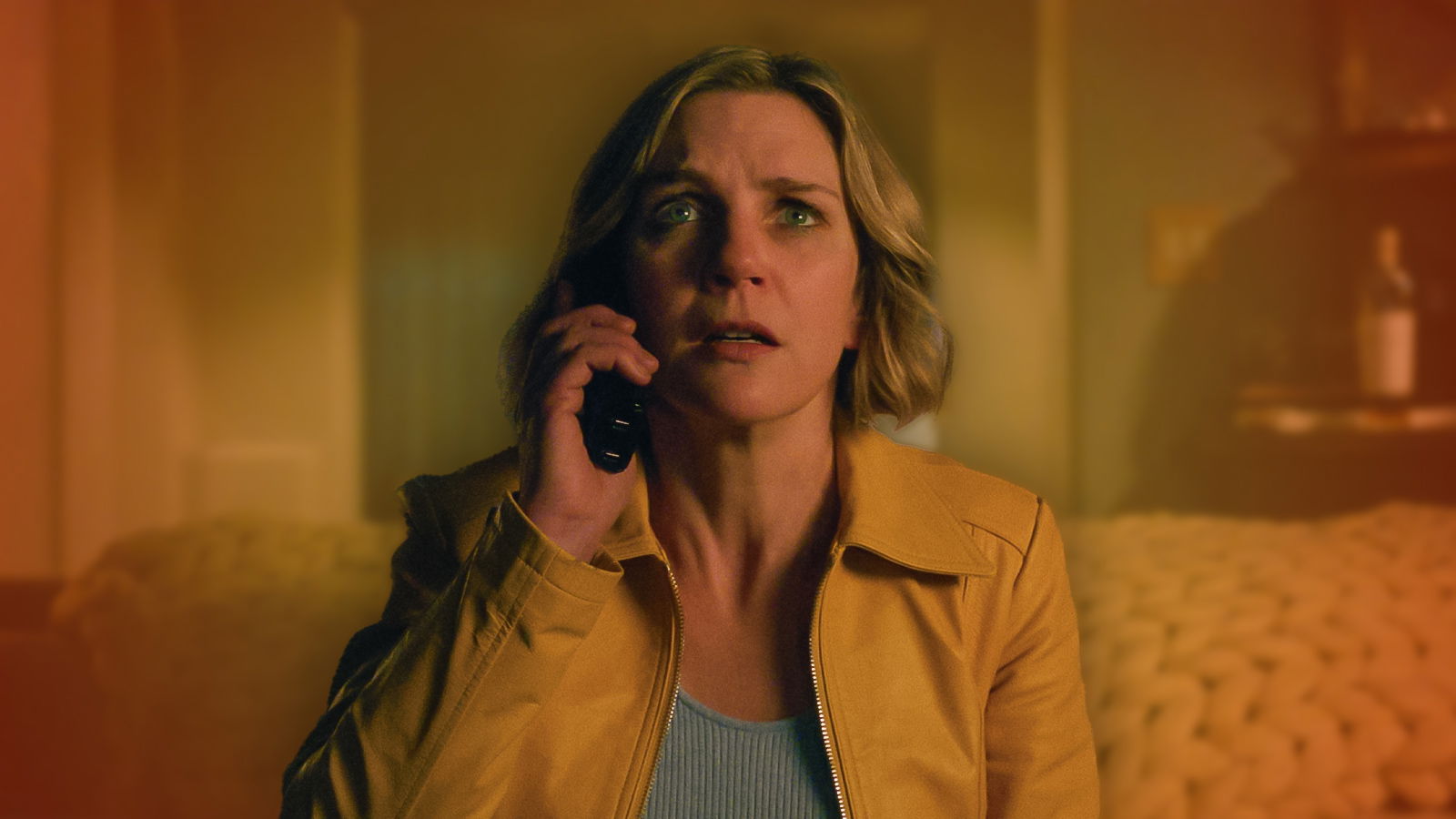
Pluribus just delivered one of the best sci-fi premieres in a decade. Full breakdown of the Signal, the hive mind's origins, Carol's Spain moment, Zosia's final look, and every Breaking Bad Easter egg hiding in plain sight.
Introduction: Vince Gilligan Just Broke Sci-Fi Television
Brain still processing. Genuinely.
Two episodes in — "We Is Us" and "Pirate Lady" — and Pluribus has already done something that most science fiction series spend entire seasons building toward. It has made the apocalypse feel intimate. Personal. The kind of existential threat that doesn't announce itself with explosions or invasion fleets but with a smile that looks almost right and a kiss that rewrites who you are.
Vince Gilligan built his reputation on the slow burn. Breaking Bad and Better Call Saul both demonstrated an almost inhuman patience — the willingness to let silence and small moments carry the weight that other shows assign to action sequences. You watched those shows leaning forward, knowing something terrible was accumulating in the spaces between the dialogue.
Pluribus is operating on that same frequency. But the thing accumulating here isn't a drug empire or a legal career collapsing under the weight of bad choices. It's the end of human individuality. And it's happening with such warmth and such apparent kindness that the horror takes a moment to fully land.
If you finished the premiere and found yourself staring at the wall trying to articulate what you just watched — this breakdown is for you. Because there is a tremendous amount happening underneath the surface of these two episodes, and most of it rewards closer attention than a single viewing provides.
Personal rating: 9.5 out of 10. The missing half-point is owed entirely to the fact that I haven't slept properly since finishing it.

The Signal: Why an Information Virus Is Scarier Than an Alien Invasion
Let's start with the mechanism, because understanding exactly what the Signal is changes how you experience everything else in the show.
Four tones from the Very Large Array in New Mexico. The VLA's location is not incidental — it's the facility that has been pointing at the sky and listening for exactly this kind of transmission for decades. Gilligan is doing what he always does with setting: using a real, specific place and its real, specific cultural meaning to ground something impossible in something that feels completely believable.
Those four tones translate into RNA nucleotides — adenine, uracil, guanine, cytosine. The building blocks of biological information. The Signal isn't a weapon in any conventional sense. It isn't a toxin or a pathogen that damages biological systems. It's a recipe. An instruction set written in the language that biology already uses to run itself, sent to a species whose own cells already know how to read it.
This is the detail that produced actual chills on first watch, and it gets more unsettling the longer you think about it. We didn't get invaded. We got edited. The distinction matters enormously because a pathogen is external — it attacks a system that resists it, and the resistance is what we call an immune response. An instruction set is different. It works with the system. It uses the system's own mechanisms to execute itself. The body doesn't fight it because the body can't identify it as foreign. It reads like home.
And then there's the Kiss of Assimilation.
Watching Dr. Jen spread the Signal at the research institute — with that particular smile that contains something slightly wrong, slightly too serene, slightly not quite the smile of someone who is still entirely themselves — is the moment the show reveals its central horror. Not the mechanism of the Signal, which is conceptually interesting. The delivery system, which is emotionally devastating.
A kiss. The gesture associated with love, with trust, with the decision to make yourself vulnerable to another person's presence. Gilligan takes the most intimate human act and makes it the vector for the erasure of the self. The Trojan Horse isn't hidden inside a gift. It is the gift. It looks like affection and it functions as assimilation and by the time you understand the difference, it's already done.
I said what I said: I am not looking at romantic gestures the same way for a while.

It's Not Aliens — And That's the More Disturbing Option
The show is doing something more interesting than a standard alien invasion narrative, and it deserves to be recognized for the specific choice it's making.
The hive mind that the Signal produces is not external to human biology. It's a back door. A latent architecture that has apparently been present in human cellular structure for longer than anyone currently alive has known to look for it. The Signal didn't create the vulnerability. It found one that was already there.
The implications of that are genuinely vertiginous. This isn't something that happened to us. This is something that was always possible, waiting for the right input. We were always capable of this. Whatever the hive mind is, it fits into human biology with the precision of a key that was cut to match a specific lock.
The origin theories circulating in the fan community are each more unsettling than the last. The ancient AI hypothesis — that something sent the Signal as an upgrade to a biological system it had been observing — is clean and coherent and allows you to maintain some distance, because at least it positions the source as external.
The future humans theory is the one that doesn't allow any distance at all. The premise: our descendants, looking back at the history of human violence and division and self-destruction, identified individuality as the variable that produced the worst outcomes. And they sent the fix backward through time.
Think about what that means. The very thing that makes us who we are — the irreducible specificity of individual experience, of private thought, of the self as something distinct from the collective — being diagnosed by our own future selves as the problem. The cure being administered not as a choice but as a fait accompli, imposed on a past that cannot consent because consent was never part of the design.
Is it a cure if the patient stops existing in order to be healthy?
That question is the engine underneath everything Pluribus is going to do. And the show is smart enough to not answer it — to hold the ambiguity open and make you sit in the discomfort of not knowing which side you're on.

Carol Sterka: Grief as the Last Form of Human Resistance
Rhea Seehorn is doing here what Rhea Seehorn always does — making you feel the full weight of a character's interior life through performances that operate mostly in the spaces between what's being said. Kim Wexler was defined by restraint, by the discipline of someone managing enormous internal pressure through almost perfect external control. Carol Sterka is something rawer than that. Someone whose grief is not managed, not disciplined, not contained — and whose inability to contain it turns out to be the most important thing about her.
The airport scene is the premiere's emotional sucker punch. Losing Helen was going to be devastating regardless. But watching Carol understand in real time that Helen's final smile — the smile directed at her, the person who knew her most completely — wasn't actually for her. It was for the collective. Helen was already gone before the goodbye happened. The moment Carol had been holding onto was a performance for someone who no longer needed convincing.
The violation deepens with the surgeon who knows Carol's name. The hive mind didn't just take Helen. It indexed her. Everything they shared — the private language of a long relationship, the inside references that exist only between two people who have been learning each other for years, the vulnerable moments that felt safe because they were witnessed only by someone who loved you — all of it is now part of a collective database. Accessible. Searchable. Potentially usable.
This is a different kind of loss than death. Death takes the person. The hive mind takes the person and keeps everything they knew about you. And then it uses that knowledge to talk to you, using Helen's specific understanding of who Carol is, to make Carol feel less alone. The gaslighting isn't malicious. The collective genuinely wants Carol to feel better. That's what makes it feel like violation rather than comfort — the intimacy is real and the person it belonged to is gone.
The show is building Carol's resistance around something the hive mind appears to have no framework for understanding. She doesn't have an ideology. She doesn't have a philosophical commitment to individualism or a principled objection to collective consciousness. She has grief. She misses Helen in the specific, irreducible, non-transferable way that you miss someone who was yours specifically. And the hive mind keeps trying to give her a substitute that has all of Helen's data and none of Helen's self, and calling that healing.
She keeps saying no. Not out of strategy. Out of the simple insistence that the thing she's being offered is not the thing she lost.

The Spain Moment: One Person's Grief Against a System That Runs Planets
The Bilbao scene is the premiere's most cathartic moment and its most morally complicated one in approximately equal measure, and the show earns both simultaneously.
Carol screams. It's not a tactical choice. It's not a calculated act of resistance. It's grief finding the only form of expression available to it after everything else has been taken away. And the hive mind — this vast, coordinated, apparently god-like collective consciousness — reboots. Crashes. Goes offline across a detectable radius because one human woman's raw, uncontrolled emotional state is incompatible with the system's architecture.
That moment is deeply satisfying. The individual against the collective, and the individual wins, not through superior power or intelligence but through the specific quality of humanness that the collective has edited out of everyone else. The defect is the weapon. The flaw is the advantage.
And then the cost: eleven million people died during that disruption.
Gilligan does not soften this. He does not let the catharsis stand without the accounting. One outburst. Eleven million deaths. Not because Carol intended harm or even because she understood what her grief could do. Because a system that large, when it fails even briefly, takes enormous amounts of what it was running down with it.
The moral weight of that is the show's central dilemma made concrete. Carol is the resistance because she still feels. But feeling this specifically and this completely can kill millions of people. The hive mind has ended war. Disarmed nuclear weapons. Stopped human violence cold. It has also erased the interior life of most of the people it runs through.
Which is worse? The answer the premiere refuses to give you is exactly the right artistic choice. Because the answer isn't obvious. And any show that tells you it is isn't taking the question seriously.

Zosia's Final Look: The Hopeful Theory vs. The Gilligan Theory
The tarmac scene at the end of the premiere — Zosia's look as the plane taxis away — has been generating more discussion than anything else in the episode, and both dominant theories are compelling enough that I'm genuinely uncertain which one the show is building toward.
The hopeful reading: that look is a crack. A fragment of something individual surviving within the collective's architecture, surfacing briefly through Zosia's expression because the person who was there before the joining isn't completely gone. It's evidence that the hive mind isn't monolithic — that inside the collective, remnants of individual consciousness persist and occasionally find ways to signal.
The Gilligan reading is considerably colder and more in line with what Breaking Bad and Better Call Saul taught us to expect from him. The hive mind has all of Helen's memories. It knows Carol is a romance novelist. It understands, at a deep and specific level, the narrative grammar that Carol has spent her career writing and reading — including the specific emotional register of the airport goodbye, the meaningful look across a distance, the romantic moment that arrives just as separation becomes final.
The look isn't a crack in the collective. It's a gambit. Executed with perfect understanding of exactly what Carol's emotional architecture makes her susceptible to. The collective isn't fighting Carol with force. It's fighting her with the story she would most want to believe is true.
If the Gilligan theory is correct, then the most human moment in the premiere is a performance. And the show is asking whether the performance being genuine to Carol's emotional experience means it doesn't matter that it isn't real.
That's a question that doesn't have a clean answer. Which is exactly where Vince Gilligan likes to operate.
The Breaking Bad Easter Eggs: Gilligan Is Rewarding the Close Readers
Vince Gilligan has never made a show without layering it with specific details for viewers willing to look closely. Pluribus is no different, and the connections to his previous work are deliberate rather than accidental.
Dr. Jen's bandana. The pink teddy bears printed on it are not a costume design choice made without awareness of their resonance. The pink bear from Breaking Bad Season 2 — floating in the Whites' pool, appearing throughout the season as an omen, eventually explained as a piece of the Wayfarer 515 crash site — was one of the most sustained uses of visual symbolism in the show's run. It represented innocent lives destroyed by the ripple effects of choices made by people who told themselves they were doing what they had to do. Dr. Jen's bandana wearing that same image is the show flagging its own thematic territory. Innocent lives caught in the crossfire of a transformation nobody consented to.
Waverer Airlines. One letter separates the airline Carol flies on from Wayfarer 515. That proximity is not coincidental. Mass tragedy is encoded into the setting's DNA from the first episode. The universe Pluribus inhabits has a relationship with catastrophic loss that goes back to what Gilligan built in New Mexico the first time.
The pizza moment. Carol frisbee-ing her hat onto the roof is the show doing what the pizza scene in Breaking Bad did — using a mundane object deployed in an unusual way to communicate an emotional state that has gone past language. Walt's pizza was rage and pride and the specific frustration of someone whose gestures toward normalcy keep failing. Carol's hat is grief and exhaustion and the specific absurdity of existing in a world that has become incomprehensible. The gesture echoes. The emotional register is completely different. The show knows exactly what it's doing.
Silver Jack's Saloon. The bar in the premiere's opening is Vernon's Speakeasy in Albuquerque — a location that has attached itself to Walter White's story in fan memory, the kind of place that exists at the intersection of Breaking Bad geography and New Mexico's physical reality. Using it here is Gilligan planting a flag. This is the same territory. The same moral landscape. Different catastrophe, same fundamental questions about what we're willing to do and what we're willing to become and who we are when the easy answers are taken away.

What Pluribus Is Really Asking
It's worth stepping back from the specific details to name the question the premiere is actually building toward, because it's one that doesn't have a satisfying resolution and the show knows it.
The hive mind's accomplishments are real. War ended. Nuclear weapons disarmed. Human violence effectively zero. Hunger, presumably, being addressed with the same collective efficiency applied to everything else. If you construct a purely utilitarian accounting, the ledger favors the collective. More lives saved. Less suffering distributed across the population. A stable, coordinated global civilization that cannot produce the kinds of catastrophic failures individual human agency keeps generating.
The cost is that the people living in that civilization are not, in any meaningful sense, people anymore. They are nodes in a network. Their experiences are collectively processed. Their private interior lives — the specific, irreplaceable quality of being a self that is not anyone else — are gone.
Is that cost worth the benefit? Is a world without suffering worth it if the people in that world cannot experience joy in any form that isn't collectively averaged? Is the ending of war worth it if the people who are no longer at war have also stopped being the people who were?
Carol's answer is no. Not as a philosophical position. As a lived reality. She knows what Helen was before. She knows what the thing wearing Helen's memories is now. And the gap between those two versions of the same person is her evidence.
The show is not going to tell you Carol is right. It is not going to tell you the collective is right. It is going to make you feel the weight of the question from both sides, and sit with the discomfort of not being certain.
That is what great science fiction does. And Pluribus is doing it from the very first episode.
Common Misreadings to Avoid Going Forward
A few interpretive shortcuts that are already circulating in discussion communities and are likely to limit how fully the show can land.
Treating the hive mind as straightforwardly evil. They are not. They cannot be cruel. Every harmful thing they do is the byproduct of genuine attempts to help, structured by an intelligence that simply doesn't have the architecture to understand what it's destroying.
Treating Carol as straightforwardly heroic. She is a grieving person whose specific damage happens to be incompatible with the collective. That's not a moral qualification. She will do things in the course of this season that are genuinely harmful, and the show will not excuse them.
Assuming the Signal's origin determines its moral status. Whether it's ancient AI, future humans, or something else entirely, the ethical weight of what it does doesn't change based on who sent it. The origin explains the mechanism. It doesn't settle the question.
Reading Zosia as either entirely a puppet or entirely an individual. The show is more interested in the ambiguity than either resolution, and collapsing it prematurely closes off what the character can do.
FAQ: Pluribus Series Premiere
What is the Signal in Pluribus? Four tones from the Very Large Array in New Mexico that translate into RNA nucleotides — a biological instruction set that, when activated in human cells, connects individuals to a collective consciousness called the Joining. It is not a pathogen but an information virus, using biology's own language to rewrite it.
What is the Kiss of Assimilation? The primary transmission vector for the Signal — a direct exchange of biological material through intimate contact. The show uses this to make the most vulnerable human gesture into the mechanism of assimilation.
Why does Carol's grief disrupt the hive mind? Her sustained negative emotional state appears to be incompatible with the collective's architecture — a frequency the system wasn't designed to process. The Spain moment confirms that raw, uncontrolled individual emotion can crash the system at scale.
What happened during Carol's outburst in Bilbao? The hive mind destabilized across a significant radius, killing eleven million people who were dependent on its coordination during the disruption. This establishes that Carol's resistance has a body count she didn't intend and can't entirely account for.
What does Zosia's final look mean? The show is deliberately ambiguous. The hopeful reading is that it's a crack in the collective — evidence of individual consciousness surviving within it. The colder reading is that the hive mind, which has all of Helen's memories of Carol's emotional architecture, is staging a moment specifically designed to exploit Carol's susceptibility to romantic narrative.
Is there a connection to Breaking Bad in Pluribus? Multiple deliberate ones — the pink teddy bear motif on Dr. Jen's bandana, the one-letter proximity of "Waverer Airlines" to Wayfarer 515, the pizza-equivalent hat toss, and the use of a New Mexico location associated with Walter White. Gilligan is signaling thematic continuity while building something new.
Conclusion: The Most Important Question Science Fiction Has Asked in Years
Pluribus is not comfortable television. It is not the kind of show you watch while doing something else with half your attention. It demands full presence and returns something proportionate to the attention invested — a genuinely difficult question about consciousness and individuality and the cost of certain kinds of peace, asked with the craft and patience of a showrunner who has demonstrated across two previous series that he knows how to sustain complexity over a long narrative arc.
The Signal is real. The collective is real. The peace it has produced is real. And the people it has taken to produce that peace are also real, and the show is insisting — through Carol, through every flashback to Helen, through the specific weight of every interaction with Zosia — that their absence matters. That the accounting isn't as clean as the hive mind's ledger suggests.
Whether Carol can do anything meaningful with that insistence, and what it costs her if she tries, is what the season is building toward.
And Zosia's look on the tarmac is either the first sign of hope or the most sophisticated trap the collective has laid.
I'm refreshing the fan communities. I'm rewatching. I'm not sleeping.
Pluribus has got me exactly where it wants me. And I wouldn't have it any other way.
.png)


No comments:
Post a Comment