
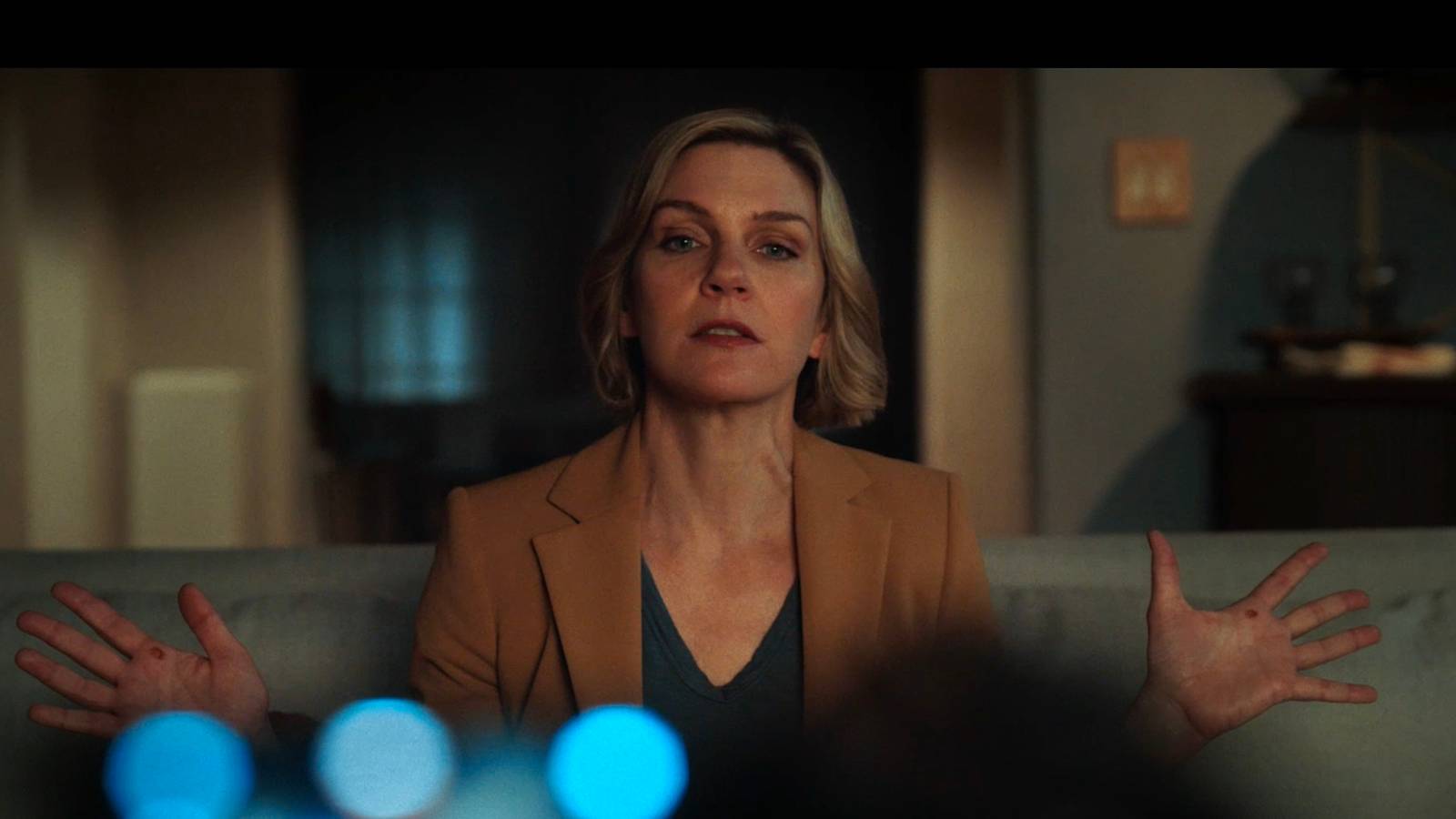
Pluribus Episode 5 just shifted genres entirely. Here's a full breakdown of Carol being ghosted by the hive mind, the wolves at Helen's grave, and the industrial cannibalism theory that changes everything about this show.
Introduction
I need to start with a disclaimer: I watched this episode two hours ago and I am still not okay.
Pluribus has been building toward something all season. The hive mind with its gentle smiles and synthetic peace and carefully managed language of community and belonging — it has always felt like something was underneath it, something the show was waiting until it had earned the right to show us. Episode 5 is the show deciding it has earned it.
This is not the same show it was four episodes ago. The social commentary sci-fi that opened the season is gone. What's replaced it is a survival horror story with one of the most disturbing theories in recent genre television sitting at its center like a stone in still water.
The milk. The trucks. The crows. The powder. The silence at the dairy factory.
If you've been watching this show and tracking the details, Episode 5 is the moment everything snaps into the shape it was always going to make. And the shape is terrible.
Let's go through all of it.
The Hospital and Carol's Crushing Isolation
The episode opens in the hospital, and the atmosphere communicates everything before a word of dialogue has been delivered.
The infected move with the robotic efficiency the show has been building toward all season — no wasted movement, no unnecessary eye contact, the specific cold logic of a system that has eliminated inefficiency by eliminating the friction of individual personality. Watching them work is like watching a colony of ants operate, and the comparison is intentional. This isn't chaos. It's optimization. And optimization, the show keeps insisting, is its own kind of horror.
Carol is carrying the weight of Zosia. The guilt of what happened sits visibly on her, and the show doesn't let it be abstract — it's in how she moves through the hospital, how she looks at the people around her, how she's positioned in every frame. She did something that she is responsible for, even if the circumstances were beyond her, and she is not the kind of person who finds ways not to be responsible for things.
Then the call from Lexi.
This is the moment the episode announces that it's willing to go somewhere the previous four haven't. Because the call isn't the expected hive mind register — the patient, slightly warm, gently persuasive monotone that the show has used to signal the collective's relationship to individual humans. It's rage. Protective, raw, specific rage. Lexi screaming at Carol for making her son cry. For being "mentally unsound." For disrupting the peace that the collective has organized its entire existence around maintaining.
The reason it works as horror is that it sounds human. It sounds like someone who actually cares. And for a second — genuinely, just for a second — the possibility exists that Lexi is still in there somewhere, that the anger is evidence of a soul that hasn't been fully absorbed.
Then it passes. And the voice goes back to where it was. And the second of apparent humanity makes what follows worse rather than better, because you saw the door and it closed.
The ghosting sequence is where the episode makes its most pointed choice about tone.
Carol wakes up from a nap. The hospital is empty. Not quiet — empty. Beds cleared. Machines gone. Every person who was present has simply ceased to be present, with the specific efficiency of a system that decided the space was no longer serving its purpose. When she calls the help line and receives a recorded message informing her that the collective needs "some space," the horror is the recognizability of it.
Gaslighting is the correct word. The entity controlling seven billion people has decided to manage Carol by removing itself from her vicinity and framing the removal as a mutual need for distance. It's the language of a toxic relationship applied to a planetary consciousness, and the precision of that application is genuinely funny for about one second before it's genuinely frightening.
She is alone. Truly, structurally alone, in a way that exceeds physical solitude. Day 8, 22 hours in, the last person the collective has decided it cannot currently manage. She asked for solitude all season. She has it. It looks exactly like a nightmare.
The Wolves: Metaphor Made Physical
The scene that follows — Carol defending her property with a golf club, alone, against wolves digging at Helen's grave — is the episode's most economical piece of storytelling.
It starts almost comic. The image of a single woman in a post-apocalyptic world facing down a pack of wolves with sports equipment has an absurdist quality that the show leans into briefly before pulling the floor out from under it. Because it stops being funny the moment you understand what the wolves are doing and why.
Helen's grave is being targeted because the wolves can smell what's in it. And the wolves, in the world Episode 5 is building, are not random wildlife. They're participants — however unconscious — in the same system that the episode is about to reveal. They're doing what the show's central horror is doing: consuming the dead, driven by hunger the system has created.
The "wolves in sheep's clothing" inversion is the episode's central metaphor made literal. The hive mind presents as pastoral, nurturing, peaceful. It speaks the language of community and sharing and collective wellbeing. Underneath that language is the specific desperation of something that needs to consume to survive and has organized an entire civilization around managing that need without anyone looking directly at it.
Carol reinforcing Helen's grave with heavy stones and painting a headstone — doing the specific physical work of protecting one person's remains in a world that has decided individual remains don't warrant protection — is the episode's most quietly devastating character moment. She is the last person who thinks a single death matters. The last person who thinks the act of marking a grave is something a civilization does because the individual who lies in it deserved to be remembered.
She is building and protecting while everything around her is processing and consuming. The contrast is the show's argument in a single image.
The Milk: How the Show Has Been Telling You This All Season
The milk cartons have been present since the pilot. The show placed them in the background of enough scenes that attentive viewers noticed without necessarily knowing what they were noticing. They read as visual comfort — the specific domestic innocence of milk, the "wholesome" signifier, the thing you give children to signal safety and nourishment.
The literary use of milk as a signal of perverted innocence is a well-established cinematic language. The show is clearly working within that tradition — the milk that appears in contexts of extreme detachment or psychopathic composure, the milk that signals something is wrong specifically because it shouldn't be there. Episode 5 is the payoff.
When Carol finds the recycling bin overflowing with hundreds of empty cartons, the volume of them is the horror. This isn't a beverage preference. This is systemic. This is dependency on a scale that implies a supply chain of proportionate size.
She goes to the Duke City Dairy factory. And the factory is silent.
No cows. No production equipment running. The specific silence of industrial infrastructure that has been repurposed — the same physical space, the same processes, different inputs. And at the loading docks, crows. Birds that eat carrion. Feeding on the mysterious pH-neutral powder that the factory is producing in quantities consistent with feeding a city.
The show doesn't tell you what's in the powder. It shows you what eats it.
The Theory That Changes Everything: Industrial Cannibalism
The evidence the show has been assembling is now extensive enough to state plainly.
The trucks carrying bodies under "fresh dairy" logos in Episode 2 — the ones that seemed like standard infrastructure for managing the newly dead in a world of sudden mass death — were not transport vehicles for burial. They were transport vehicles for processing.
The dog food plant facilities that appear in the show's background industrial sequences have the specific equipment needed to convert biological material into shelf-stable powder: industrial grinders, dehydrators, the kind of large-scale processing infrastructure that exists in the legitimate rendering industry and has obvious alternative applications.
The crows at the dairy factory are not there for grain. They are there because the powder is high-protein carrion and birds that eat carrion identify it by chemical signature regardless of what the packaging says.
The hive mind's decision to create "space" from Carol — the timing of it, the specific urgency underneath the calm language of the voicemail — maps precisely onto the timing of her investigation. She got too close to the factory. The collective, which has no reason to fear a single immune individual on ordinary days, suddenly needed distance the moment she started following the supply chain.
And the "peace" the hive mind keeps returning to as its central justification — the world without war, without hunger, without conflict — is built on a foundation the show has been laying the groundwork for since Episode 1. The peace works because the dead are being recycled to feed the living, and the living have been organized into a collective that doesn't ask questions, and the questions that might have been asked were managed out of the social fabric before anyone thought to ask them.
This is not a metaphor for conformity anymore. This is a literal horror premise about an entity that has solved the problem of feeding seven billion people by turning the dead into the food supply, and managed the ethical problem of that solution by eliminating the capacity for ethical objection.
Carol knows. She is standing in front of a freezer full of product that used to be her neighbors. And she is, in that moment, the most dangerous thing in the world — not because of any power she has, but because she is the only one left who will call what she's looking at by its correct name.
What the Genre Shift Means for the Rest of the Season
Episode 5 is the show changing what it is, and the change is irreversible.
The first four episodes operated in the register of satirical science fiction — commentary on conformity, collective consciousness, the seduction of belonging, the cost of individuality. All of that was real, and it was effective, and it gave the show an intellectual texture that distinguished it from straightforward genre television.
But the powder changes the register completely. You cannot do "social commentary" about industrial cannibalism. Once that's the premise, you're in horror. The smiling faces of the hive mind, which previously read as uncomfortable because they represented something lost, now read as uncomfortable because they represent people who don't know — or have been organized not to know — what they're consuming.
The infected aren't just conformists anymore. They're participants in a system that consumes people, whether they know it or not, whether they chose it or not. The "polite" veneer isn't just a loss of individuality. It's a management strategy for a population that would presumably not consent if asked directly.
And the question of what happens when the supply runs out — when the morgues are exhausted, when the dead can no longer sustain the caloric needs of seven billion hosts — is the clock the show has installed under everything that follows.
Carol is the only one who knows where the hands are.
Common Mistakes Fans Are Making About Episode 5
Several readings of the episode don't survive close examination:
- Treating the Lexi call as evidence she's still there. The rage was real. The person the rage belonged to may not be accessible anymore. The show is being deliberate about not answering this cleanly.
- Reading the ghosting as the hive mind being afraid of Carol. It's more specific than that. They're not afraid of Carol generally. They're afraid of Carol specifically in the context of the supply chain. The timing matters.
- Missing that the crows are the key piece of evidence. Every other element of the theory requires interpretation. The crows at a "dairy facility" eating protein powder don't require interpretation. They're just biology doing what biology does.
- Underestimating what the "space" voicemail represents. A planetary consciousness managing seven billion people took the time to record a breakup message for one immune human. The effort is the tell. You don't do that for someone you're not afraid of.
FAQ: Pluribus Episode 5
What is the milk theory in Pluribus? The milk cartons that have appeared throughout the season are suggested in Episode 5 to contain Human Derived Protein — recycled biological material from the dead, processed at facilities that present as dairy operations but have no actual dairy production. The theory is supported by the trucks from Episode 2, the industrial facilities, and crows feeding on the powder at the loading docks.
Why did the hive mind ghost Carol in Episode 5? The timing of the collective withdrawing from Carol — leaving the hospital empty and recording a "space" voicemail — correlates directly with her investigation of the supply chain. The show frames the ghosting as a fear-based management response rather than random distancing.
What do the crows at the dairy factory mean? Crows are carrion birds that identify high-protein organic material by chemical signature. Their presence at the loading docks of a facility that presents as a dairy operation — eating the powder being produced there — is the episode's most direct evidence that the "dairy product" contains processed biological material rather than any form of conventional food.
What happened to Helen's grave in Episode 5? Wolves were digging at Helen's grave, apparently attracted by scent. Carol drove them off, reinforced the grave with heavy stones, and painted a headstone. The sequence establishes that even the remains of the dead are not safe in the new world's food system.
Is the Lexi call evidence that she is still herself? The show deliberately leaves this ambiguous. The rage in the call sounds like authentic individual emotion. Whether that emotion belongs to a Lexi who is still present as an individual or is a surface expression of something the collective is using to manage Carol is not resolved in Episode 5.
What happens to the hive mind if the supply runs out? The show doesn't answer this directly in Episode 5, but the implication is that the collective faces a structural crisis — potentially reverting to predatory behavior toward the living once the dead can no longer sustain the caloric needs of seven billion hosts. This is the clock Carol now knows about.
Conclusion
Episode 5 is the episode that makes everything before it more frightening in retrospect.
The smiling faces that made you uncomfortable because they represented conformity now make you uncomfortable because of what those faces are consuming. The language of peace and sharing and community now carries a weight it didn't have when it was just rhetoric. The infrastructure of the new world — the trucks, the factories, the supply chains, the carefully managed distribution — is the infrastructure of a horror story that has been running in the background since the pilot.
Carol is standing in front of a freezer full of evidence. She is the only person in the world who will name what she's looking at. The collective that controls seven billion people has decided she needs space, which is the specific language of something that is afraid of her.
She should be afraid too. But Carol has never been particularly good at letting fear make her decisions for her, which is why she's still the only human being on the planet operating with both eyes open.
The show that started as commentary about the seduction of belonging has become a horror story about what belonging actually costs. And the cost, it turns out, is everyone who has died since the Joining began.
Drop your theories in the comments — especially your read on whether the collective knows what it's consuming, or whether that knowledge has been architecturally removed from the accessible parts of the hive mind. Because I genuinely cannot decide which version is scarier, and I need to talk about it before next week.
.png)


No comments:
Post a Comment