
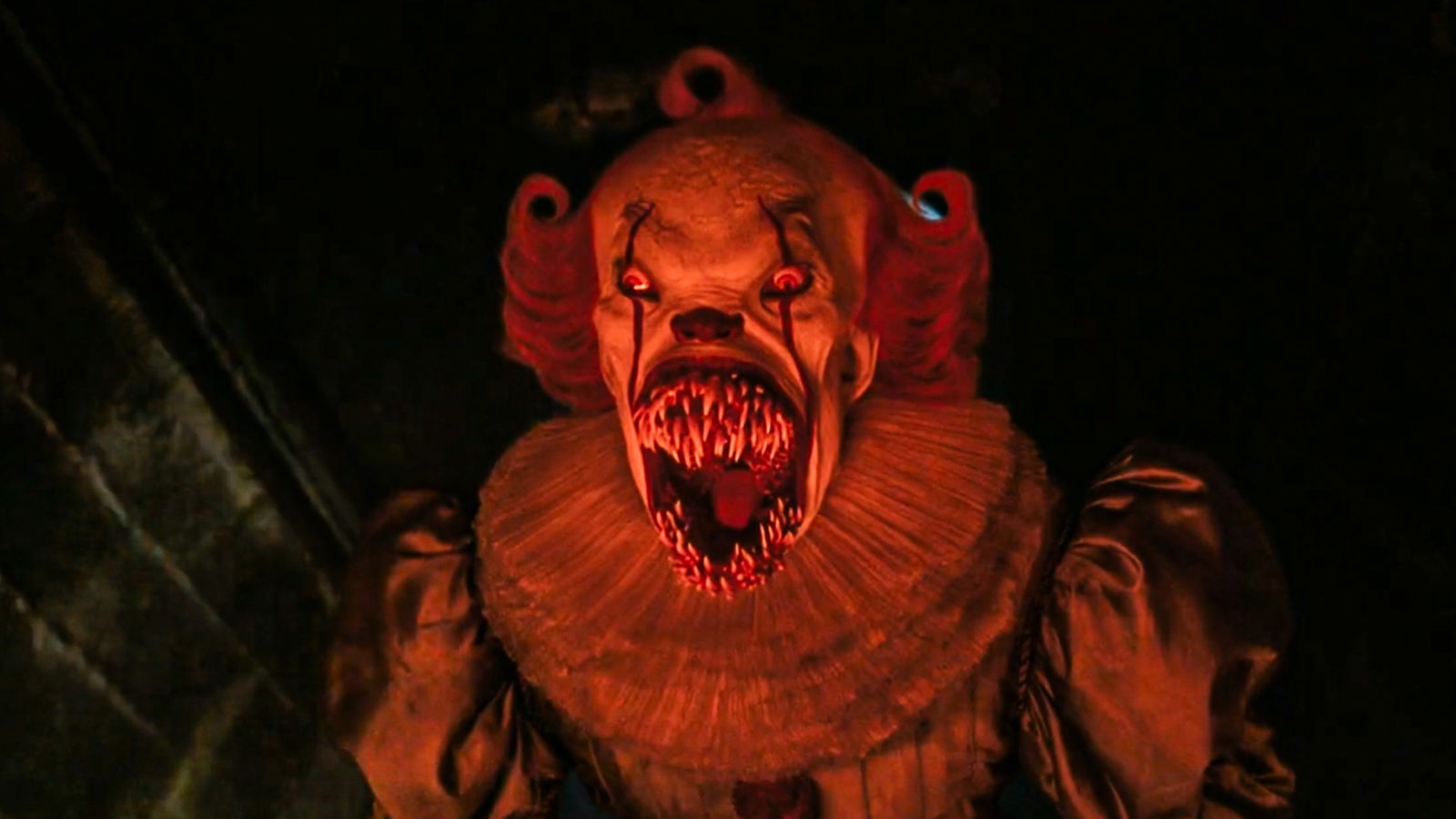
Welcome to Derry Episode 6 just delivered the season's most emotionally devastating hour. Here's a full breakdown of the 1935 flashback, Bob Gray's origin, Lily's corruption, Dick Halloran's breaking point, and everything building toward the Black Spot fire.
Introduction
I've been sitting here trying to figure out how to start this, and I keep coming back to the same word: relentless.
Episode 6 of Welcome to Derry is relentless. It doesn't give you a comfortable moment to settle into. It opens with a gut punch in 1935, takes you through one of the most significant lore drops the franchise has ever delivered, puts you through the specific torture of watching characters you love move closer to a tragedy you know is coming, and ends with men putting on Halloween masks in a bar while a mob assembles.
And somehow it manages to make all of that feel like the calm before the actual storm.
If you've been following this franchise since King's novel, since the 1990 miniseries, since the 2017 film — this episode is the one that rewards all of that accumulated investment. The Bob Gray confirmation alone is the kind of payoff that has been sitting at the end of decades of fan theorizing. The Mrs. Kersh context transforms a character who appeared briefly in IT Chapter Two into one of the franchise's most genuinely tragic figures. And the Black Spot setup, with everything the show has built around these specific people in this specific community, makes the inevitable fire feel personal in a way it couldn't have without all the groundwork.
Let's go through everything.
The 1935 Opening: Mrs. Kersh Before She Was Mrs. Kersh
The decision to render the 1935 flashback in black and white is doing more than aesthetic work. It's the visual language of a world that has been drained of color — and the show's subsequent choice to make the red balloons and yellow deadlights the only saturated elements in the frame tells you exactly what that means for Ingrid Gray.
For Ingrid, reality has no color unless the monster is providing it. Everything warm and vivid in her world is him. Everything grey and flat is everything else. That's not just a clever visual trick. It's a complete psychological portrait delivered through color theory in the first thirty seconds.
Seeing Juniper Hill before it became the high-security institution King readers know from multiple novels — the place where Derry deposits the people it has broken beyond functional repair — was a smart historical grounding. The facility in 1935 is institutional and cold, but not yet the legendary repository of the town's worst casualties that it becomes over the following decades.
And then young Ingrid. A nurse. Feeding children to the thing in the basement.
The show's restraint here is what makes it work. It doesn't present Ingrid as a villain carrying out evil acts from a position of malice. It presents her as a daughter — a young woman whose father is gone and who has been given a version of him back, however wrong that version is, and who will do almost anything to maintain access to it. The "Periwinkle" detail — the specific nickname Pennywise uses to manipulate her, the detail that only her father would know, the key that unlocks her compliance — is the most precise piece of psychological horror the show has delivered this season.
IT doesn't just eat children. It eats grief. It locates the specific hole in a person that loss has left behind and it fills that hole with itself, and then it uses that filling as leverage. Ingrid isn't a monster. She's a wound that something moved into.
Understanding that retroactively changes every second of her appearance in IT Chapter Two. She wasn't a villain in that film. She was the oldest surviving victim in Derry's history, still operating decades later on the same corrupted premise: that the thing wearing her father's face is her father, and that serving it is how she stays close to him.
The yellow deadlights against the monochrome background — that visual pop of inhuman color in a world that has otherwise gone grey — is the episode's most striking single image. And it earned the genuine physical reaction it produced.
The Bob Gray Confirmation: Decades of Theory Resolved
Here's the lore drop that has been sitting at the end of fan theorizing since King's novel established that Pennywise existed before any of the documented Derry atrocities and seemed to have a specific attachment to the clown identity that the novel never fully explained.
Bob Gray was real.
A circus performer from 1908, the entity consumed him and — and this is the detail that makes it genuinely horrifying — didn't just take his appearance. It cloned his personality. His memories. His mannerisms. The specific way he talked and the specific things he said and the specific relationships he had. IT didn't put on Bob Gray's costume. IT became a version of Bob Gray, with enough fidelity to that original person that his daughter couldn't tell the difference across decades.
This is a Skinwalker concept operating at a cosmic scale, and the implications are significant.
Every time we've seen Pennywise being playful, being performatively warm, being the kind of clown who wants an audience and wants to be loved — that's not IT's natural disposition. That's Bob Gray's natural disposition, absorbed and perverted. A man who genuinely wanted to make children laugh, whose warmth and desire for connection were real, being used as the template for the perfect predator lure.
The specific cruelty of that is the show's most original contribution to the mythology. The monster isn't wearing a costume. It's wearing a person. And that person was good, which is why the costume works.
The red balloon isn't IT's symbol. It was Bob Gray's professional trademark. The thing that made kids happy at the carnival. Taken and kept and used indefinitely as bait by the entity that consumed the man who carried it.
Lily and the Star Dagger: When Protection Becomes Possession
The Gollum parallel the show is building with Lily is the season's most sustained piece of literary cross-referencing, and it's being handled with enough care to earn the comparison.
The Star Dagger — a shard of the entity's original containment vessel, carrying a piece of the cosmic technology used to cage IT millennia ago — is exactly the kind of object that shouldn't be held by anyone for very long. The power to contain the monster is also, apparently, the power to be slowly consumed by proximity to the monster. The closer Lily gets to what might stop IT, the more the thing she's carrying changes her.
She's becoming possessive. Paranoid. Physically diminished. The progression mirrors the trajectory of someone being gradually worn down by something they're fighting too hard to hold onto — which is the tragedy of the character, because she's holding on because she thinks it's the only way to protect the people she loves.
Her scene with the present-day Mrs. Kersh is the episode's tensest sequence, and the tension comes from what we know going in. We've just watched young Ingrid in 1935. We understand what she is and what she's been, and we understand that the line she delivers — "No one who dies here ever really dies" — carries decades of specific, awful personal meaning for the woman saying it.
It's also a direct bridge to IT Chapter Two. The line lands in that film as atmospheric horror. Here, having seen Ingrid's history, it lands as something else entirely: the testimony of someone who has watched the truth of that statement operate on the people she fed to the basement across fifty years of institutional service.
Lily's rejection of the deadlights — choosing the painful clarity of knowing over the comfortable dissolution of being absorbed by something warm and certain — is the episode's most significant character beat. She steps back from the thing that could end her suffering and chooses to stay in the suffering because the suffering is at least real. That's a profound choice, and it leaves her more isolated than she's been at any point in the season.
The Romances: The Show Setting You Up to Break Your Heart
The writers of Welcome to Derry understand something that the best horror storytelling has always understood: you can't make an audience feel loss until you've made them feel love. The romances in this episode are being built with the specific, deliberate tenderness of people constructing something beautiful before they set it on fire.
Richie and Marge
The "Knight and the Pirate" dynamic between these two is the show's warmest ongoing thread, and the episode gives it one of its most purely joyful moments before immediately undermining it.
Richie's response to Marge's eye injury — the genuine pride in calling it a warrior's mark, the complete absence of pity or discomfort — is exactly the kind of moment that defines what the Losers' Club has always been about across every iteration of this franchise. These are people who found each other in the specific pain of being the ones the world didn't make space for, and who made space for each other in ways the world didn't. That's not a small thing. That's survival.
The paper airplane flying into the storm drain is the show refusing to let you settle into that warmth. It's a visual echo of Georgie's boat — the image the entire franchise is built around — and it functions as a death flag with enough visibility that the show clearly wants you to see it. It's not being subtle. It's being honest with you about what's coming and trusting you to stay anyway.
Will and Ronnie
The weight of what we suspect about Will and Ronnie — that their relationship is the origin point of Mike Hanlon's existence, that their love produces the person who will keep Derry's history and eventually bring the Losers back together in 1989 — makes every scene they share operate simultaneously as romance and tragedy.
Every smile is the show telling you what's at stake. Every moment of genuine warmth is the show reminding you what the Black Spot fire is going to cost. The specific cruelty of building this relationship with such obvious care, in a season that has been clear-eyed from the beginning about where Derry's history goes, is intentional. You're supposed to love them. That's the whole point.
Leroy Hanlon: The "Derry Disease" and What It Does to Good Men
The deterioration of Leroy Hanlon is the season's most uncomfortable arc, and the discomfort is precisely calibrated.
He is, objectively, a good man. The show has established that clearly. He's disciplined, capable, committed to protecting his son. His hardness toward Will isn't cruelty but fear wearing the armor of toughness — the specific defensive behavior of a Black man in 1960s America who knows exactly what the world outside his door requires of his son and is trying to prepare him for it.
But the "Derry Disease" — the accumulation of systemic racism, combat trauma, proximity to whatever IT does to the ambient psychology of the town, and the grinding exhaustion of fighting on too many fronts simultaneously — is doing visible damage. The slap lands as the show's most honest acknowledgment that trauma doesn't stay where you put it. It doesn't limit itself to the person who originally received it. It moves. It finds the people closest to you and expresses itself through the relationships that were supposed to be safe.
Will's response — "I know I'm not you because I would never let my friends die" — is the sharpest line of the season. It's not cruelty. It's a nineteen-year-old articulating the exact way he intends to be different from his father, in the specific language of the loyalty his father's fear has prevented him from modeling.
The generational dynamic here is the show's most socially grounded piece of writing. The older generation closing in, protecting itself, prioritizing survival over connection. The younger generation choosing loyalty, choosing each other, knowing what that choice might cost because they've seen what closing in costs too.
Dick Halloran: The Wildcard Who Is Currently Losing
The show's handling of Halloran continues to be one of its most emotionally sophisticated ongoing threads, and Episode 6 advances it into genuinely difficult territory.
The "lockbox" technique — his grandmother's method for containing the Shine, the practice of sealing the most overwhelming psychic information behind a mental barrier that allows him to function in ordinary life — is a significant piece of King mythology that the show is handling with care. Understanding how Halloran learned to manage his ability makes his eventual mastery of it, which we see in The Shining, feel earned in a way it couldn't without this foundation.
The problem is that Derry is too loud. The Shine in this town isn't a manageable signal. It's an overwhelming broadcast, and the lockbox technique that works everywhere else fails to contain what Pennywise's presence generates. The "half-faced soldier" in the bathroom is the show's most effective visual representation of what it's like to have a psychic ability and be standing this close to IT — the intrusions aren't subtle, and they don't ask permission.
He is the character with the actual capacity to fight back on IT's level. He's also the character who is currently losing the fight against his own mind. Whether he can rebuild the walls fast enough to be effective in what's coming — and what being effective might cost him — is the question the season is building toward for his arc.
The Black Spot Closing: Human Monsters and What They Hide Behind
The episode's final sequence is a masterclass in the specific horror of human-scale cruelty operating alongside cosmic evil, and the show's restraint in drawing the line between them is what makes it effective.
The Black Spot itself, in these closing minutes, is exactly what it should be: a place of real joy. The soul music, the community, the specific warmth of people who have carved out a space for themselves inside a world that doesn't otherwise make space for them — the show invests enough time in showing you the genuine value of what's inside that building that the threat gathering outside it carries actual weight.
The Falcon Tavern. The Halloween masks — Dracula, Frankenstein, a clown. Men deciding to put on a face that isn't theirs before doing what they're about to do, because the anonymity is permission, because hiding the face creates the psychological distance that makes the action feel possible.
This is the episode's central argument, delivered in a single image: the real horror in Derry isn't always the alien in the basement. Sometimes it's the people upstairs, wearing masks, convincing themselves that what they're about to do is justified.
Mrs. Kersh suiting up in her vintage clown costume to join them is the final, chilling convergence. The supernatural and the banal, fully merged. Pennywise didn't manufacture this mob. He didn't plant this hatred. The hatred was already here, doing its own work. He just showed up to enjoy the results — and in Ingrid, he has a human participant who has confused her grief and her service to him so thoroughly that she can't distinguish the monster from the father anymore.
The episode ends with a match not yet struck. The music from inside, the silence outside. The specific terrible calm of the moment before something irreversible happens.
Easter Eggs and Deep Cuts: For the Constant Readers
The show's attention to King continuity in this episode is exceptional, and several details reward the readers who have been tracking these threads across the mythology:
Juniper Hill appears in multiple King novels — IT, Needful Things, Gerald's Game — functioning as Derry's institutional repository for the human damage the town produces. Seeing its earlier, less notorious incarnation grounds it in a history that makes its later reputation make sense.
The teacup in Mrs. Kersh's album — the same design Beverly drinks from in IT Chapter Two — is the kind of production detail that confirms someone on the design team is working with King's actual text rather than just the visual shorthand of previous adaptations. That level of continuity care matters.
The red truck appearing at or near every major tragedy of the season is either the most ambitious piece of background continuity the show has attempted or a genuinely meaningful plot element. Either way, it deserves the attention it's been getting from the fan community.
The Falcon Tavern is established in King's novel as the location where Adrian Mellon is attacked in 1984 — the event that opens IT's adult timeline. Derry's geography doesn't just host violence. It cycles through it, the same locations absorbing different flavors of the same human capacity for cruelty across generations.
Common Mistakes Fans Are Making About Episode 6
A few readings that don't hold up under closer examination:
- Treating Mrs. Kersh as simply a villain. She is the franchise's longest-running victim, operating from a psychological wound that was created when she was young and vulnerable and never properly healed. Her actions are wrong. Her motivation is grief. Those two things coexist.
- Missing what the Bob Gray confirmation means for every previous Pennywise scene. His warmth, his desire for an audience, his specific pleasure in performance — these aren't IT's characteristics. They're Bob Gray's, absorbed and perverted. Every clown performance we've ever watched was a dead man's personality being used against us.
- Reading Lily's rejection of the deadlights as a pure victory. It's a moral victory and a personal cost simultaneously. She chose truth over comfort, and the truth is that she's more alone than she's ever been.
- Underestimating how significant the Falcon Tavern location is. The show isn't placing the mob gathering there randomly. It's the location's future that gives the choice meaning.
FAQ: Welcome to Derry Episode 6
Who is Mrs. Kersh in Welcome to Derry? Ingrid Gray — who appears as Mrs. Kersh in IT Chapter Two — is Bob Gray's daughter, a woman who has spent decades believing that the entity wearing her father's appearance is actually him in some transformed state. Episode 6 shows her as a young nurse in 1935, already serving IT by feeding children to the thing in the basement of Juniper Hill.
What is the Star Dagger in Welcome to Derry? The Star Dagger is a shard of the original vessel used to contain IT millennia ago, carrying a piece of the cosmic technology that trapped the entity. Lily has come into possession of it, and the show is depicting its corrupting influence on her through increasingly obvious Gollum-style possession dynamics.
What is the significance of Bob Gray being a real person? The confirmation that Bob Gray was a real 1908 circus performer consumed by IT explains why the entity uses a clown as its primary disguise. IT didn't choose the clown arbitrarily — it absorbed a real man whose warmth and desire to entertain children were genuine, and it uses that absorbed personality as its most effective lure. The friendliness isn't IT's nature. It's Bob Gray's nature, stolen and weaponized.
What is the lockbox technique Dick Halloran uses? The lockbox is a psychic containment method Halloran's grandmother taught him — a mental barrier that allows people with the Shine to seal overwhelming psychic input behind a psychological wall and function in ordinary life. In Derry, the technique is being overwhelmed by the intensity of IT's presence, leaving Halloran increasingly exposed to psychic intrusions he can't manage.
What is the Falcon Tavern's significance in Stephen King's mythology? In King's novel, the Falcon Tavern is the location where Adrian Mellon is attacked in 1984 — the event that opens the adult timeline of IT and brings the Losers back together. Showing the same location as the gathering point for the Black Spot mob connects the town's various eruptions of violence through a shared geography.
Are Will and Ronnie Mike Hanlon's parents? The show strongly implies this without confirming it explicitly. If the theory is correct, their relationship is directly responsible for Mike Hanlon's existence — which makes the Black Spot fire, and everything the show is building toward, a tragedy with a very specific shape and cost.
Conclusion
Episode 6 is the season's best hour because it does the thing that the best horror always does: it makes you love something before it takes it from you.
The Bob Gray confirmation is the mythology payoff we've been waiting for. Mrs. Kersh in 1935 is the franchise's most psychologically complex character moment. Lily's corruption is the season's most sustained piece of slow-burn horror. Leroy and Will's confrontation is the show's most honest piece of writing about trauma's generational transfer. And the closing sequence — the masks, the music, the match not yet struck — is the most atmospheric the show has been since its premiere.
Next week is the fire. We know what's inside the Black Spot. We know what's gathering outside. We know who makes it out and who doesn't, or we think we do, and the show has made us care about these specific people enough that knowing doesn't protect you from feeling it.
That's what Welcome to Derry has built over six episodes. Not just a prequel. A reason to grieve.
Drop your theories in the comments — especially if you have a read on whether the red truck is a deliberate plot element or the most ambitious piece of background continuity in the show's history. Because I cannot figure it out, and I need to know I'm not alone in obsessing over it.
.png)


No comments:
Post a Comment