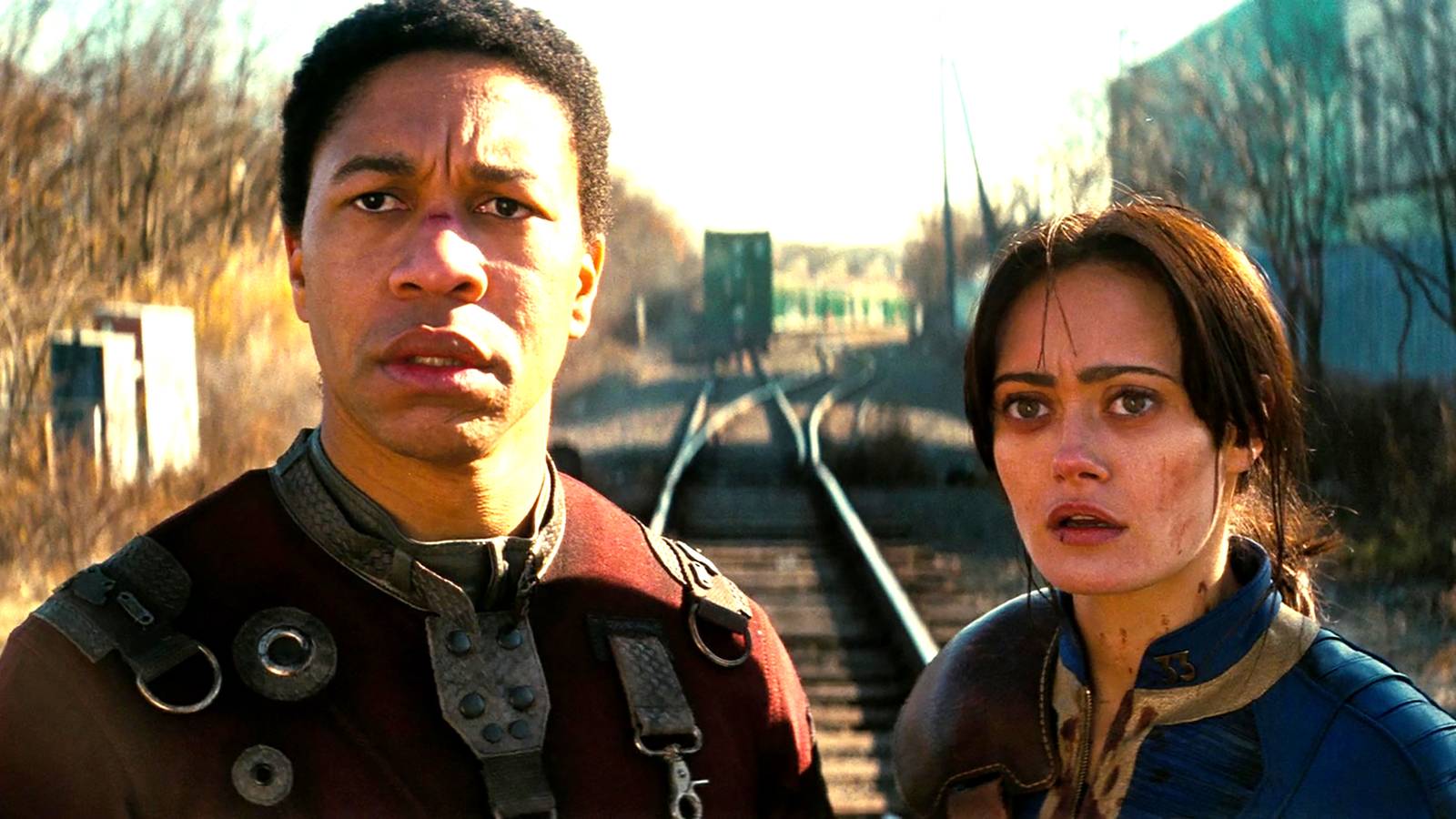
Description: A comprehensive deep-dive into Fallout Season 2 Episode 3. We analyze the return of Caesar’s Legion, the complex truth behind Mr. House, the disturbing implications of Thaddeus’s mutation, and the massive New Vegas Easter eggs that redefine the show's canon.
Introduction
If you thought the wasteland couldn't get any wilder or more morally complex, Fallout Season 2 Episode 3 just proved you wrong. This episode isn't just a continuation of the story; it is a love letter to the franchise's most beloved entry, finally cracking open the door to the iconic factions, locations, and political intrigue of Fallout: New Vegas. From the brutal, rigid hierarchy of Caesar’s Legion to the enigmatic, corporate shadows of Mr. House, the show is weaving the game's rich lore directly into its narrative fabric in a way that feels both nostalgic and dangerously new.
But beyond the fan service and the thrill of seeing familiar armor, we’re witnessing massive character shifts that challenge the very nature of heroism in the apocalypse. Thaddeus is evolving from a bumbling squire into a figure running a questionable empire, Maximus is battling the indoctrination of his own Brotherhood, and The Ghoul is forced to confront ghosts from a pre-war past that recontextualize his entire mission. Let’s break down the hidden details, the massive Easter eggs, and that explosive ending that changes the balance of power in the Mojave forever.
The Sound of the Mojave: Sam Cooke & The Chain Gang
The episode kicks off with a needle drop that is as thematically resonant as it is catchy: Sam Cooke’s classic Motown anthem, "Chain Gang". On a surface level, the rhythmic, clanging percussion of the track perfectly underscores the visual of forced labor we are immediately introduced to, creating a jarring juxtaposition between the soulful melody and the grim reality of the wasteland. However, for the eagle-eyed (and eagle-eared) Fallout: New Vegas veterans, this musical choice serves as a deep-cut reference that signals the showrunners' intimate knowledge of the source material.
While "Chain Gang" itself doesn’t play on the in-game radio station Radio New Vegas, the singer’s namesake is a direct nod to the game's lore. Samuel Cooke is a specific character found in the NCR Correctional Facility—a Powder Ganger convict you can interact with during the quest "Why Can't We Be Friends?". By evoking this name, the show subtly sets the stage for an episode heavily focused on imprisonment, the ethics of labor, and the blurry lines between distinct factions. It’s a masterclass in using sound to build world-building layers that reward longtime fans without alienating new viewers.
Thaddeus, Sunset Sarsaparilla, and the Super Mutant Theory
We catch up with Thaddeus, who has established a "kingdom" of sorts in what appears to be an abandoned bottling plant. But this isn't just any factory; the production line is dedicated to removing caps from Sunset Sarsaparilla bottles.
For those who missed it in the blur of action, Sunset Sarsaparilla is the premier root beer of the Mojave Wasteland, a fierce rival to Nuka-Cola that holds a special place in the hearts of New Vegas players. In the game, the drink is tied to a massive side quest where players scour the map for "Blue Star" bottle caps to win a mysterious prize at the Sunset Sarsaparilla Headquarters. Thaddeus’s operation here is a grim, real-world reflection of those game mechanics. He is essentially farming caps for currency, capitalizing on the wasteland's economy, but he has twisted the concept with a dark reality: the use of child labor to fuel his survival. It’s a biting critique of capitalism that echoes the franchise's long-standing satirical edge—productivity at the cost of humanity.
The FEV Theory: More Than Just a Ghoul?
Thaddeus’s physical state is deteriorating rapidly, but is he just turning into a ghoul? There’s a compelling and disturbing theory gaining traction that he might be undergoing something far worse. The "serum" he took last season healed his crushed foot instantly, a regenerative trait often associated not with ghoulification, but with the Forced Evolutionary Virus (FEV).
West-Tek’s pre-war experiments with FEV are what originally created the Super Mutants—hulking, biological weapons with immense strength and regenerative abilities. Given the show's specific mention of West-Tek’s "new biological products" in previous episodes, we might not be seeing a simple transformation into a ghoul. We could be witnessing the slow, painful birth of a Super Mutant right under our noses. Johnny Pemberton’s performance here is stellar, balancing the body horror of his transformation—the new mouth growing, the erratic behavior—with a bizarre, almost comedic tyrannical streak that masks a terrified young man losing his humanity. If this theory holds, Thaddeus could become a formidable threat or a tragic monster by the season's end.
The Legion Returns: Fortification Hill and a New Caesar?
One of the most jaw-dropping reveals of the series so far is Lucy’s capture by Caesar’s Legion. The production design team has outdone themselves, nailing the "football pads and lawnmower blades" aesthetic of the game’s armor. The location appears to be Fortification Hill (The Fort), a major game location and the seat of power for the Legion, situated strategically across the Colorado River.
The brutality of the faction is on full display—we see crucifixions, widespread slavery, and summary executions for minor infractions. This isn't a watered-down version of the villains; they are as terrifying as they were in 2010. But the real lore bomb drops when we meet the leader of this camp, played by Macaulay Culkin.
The Succession Crisis and Historical Parallels
The show confirms a major piece of post-New Vegas history that fans have debated for over a decade: Caesar is dead. Whether the original Edward Sallow died of his brain tumor or simply old age, his death has caused a massive schism. The Legion, once united under a single charismatic dictator, has fractured, leading to a bloody civil war between rival claimants to the title of Caesar.
Culkin’s character—who could be a version of the ruthless Legate Lanius or a new heir entirely—reveals they are fighting a rival faction for control of the Legion's remains. This mirrors real Roman history, specifically the period following the assassination of Julius Caesar, which led to a power vacuum and civil war between Octavian and Mark Antony. The showrunners are cleverly adapting this historical parallel to explain the chaotic state of the Mojave. It suggests that without the "Son of Mars" to guide them, the Legion is eating itself alive.
Side Note: The Legion pronouncing "Caesar" as "Kaiser" is a direct pull from the games and linguistic history. In Latin, the 'C' is hard, making "Kaiser" the correct pronunciation (and the origin of the German title). However, in the wasteland, it highlights how they are cosplaying as Romans without fully understanding the culture they mimic—something Lucy hilariously attempts to "Vault-splain" to them, pointing out their hypocrisies regarding Latin grammar and history.
Mr. House: The Man, The Myth, The... Puppet?
In the pre-war flashbacks, we get deeper insight into Cooper Howard (The Ghoul) as he attends a veterans' meeting and encounters a man introduced as Mr. House (played by Justin Theroux).
There is a massive theory circulating that the House we see here—and perhaps even the one we saw in the strategy meeting in Season 1—is not the real Robert House. In the games, House is a recluse heavily inspired by Howard Hughes, the eccentric billionaire who locked himself away in his later years. House was known to use proxies and screen projections to interact with the world, terrified of germs and outside contaminants.
The theory suggests Theroux’s character might be a body double or a "public face" for the RobCo corporation, while the true genius pulls the strings from the shadows. The way he speaks about control, the future, and his "autocratic" vision feels rehearsed, almost like a performance designed to distract. If this theory holds, Cooper’s vendetta might be directed against a phantom, while the real mastermind sits safely in his preservation chamber in the Lucky 38, waiting for the bombs to drop so his real game can begin.
Camp Golf, Victor, and the Fall of the NCR
The Ghoul’s journey takes him to a dilapidated location that fans will instantly recognize: Camp Golf. In New Vegas, this was a thriving NCR base converted from a luxury resort, home to the elite NCR Rangers and Chief Hanlon. Now, it stands as a ghost town, a symbol of a failed state.
Inside, we get a cameo that made fans cheer and simultaneously broke our hearts: Victor the Securitron. The friendly cowboy robot, known for his "Howdy, partner!" catchphrase, is rusting away, his memory banks failing and his personality glitching. Victor confirms that House "left" or locked himself away, further fueling the mystery of the tycoon’s fate.
The state of Camp Golf paints a bleak picture for the New California Republic (NCR). They appear broken, cut off, and engaged in a desperate stalemate with the Legion remnants. The "good guys" didn't win the Second Battle of Hoover Dam decisively enough to bring lasting order. This desolation reinforces one of the show's core themes: war never changes, and even the "civilized" factions like the NCR eventually crumble under the weight of their own bureaucracy and overexpansion. The "Dead Dead Dead" graffiti on the walls serves as a chilling tombstone for the Republic's ambitions in the Mojave.
Maximus vs. The Brotherhood of Steel: Knight or Pawn?
Back with the Brotherhood, the conflict between blind loyalty and moral duty comes to a head. Maximus and Xander track the "relic" (Thaddeus) to the factory, leading to a confrontation that defines Maximus's character arc.
This sequence gives us a brilliant action beat involving a Securitron Mark II. The robot, upgraded with soldier protocols (a nod to the Platinum Chip upgrade option from the game), puts up a fight reminiscent of RoboCop’s ED-209 battle. We see the Brotherhood struggle against pre-war tech that was designed to protect the very city they seek to conquer.
However, the real conflict here is ideological. Xander represents the Brotherhood’s worst traits: technology hoarding, rigid dogma, and zero empathy for "abominations," even if those abominations are children. Maximus, despite his desperate desire to belong and be a knight, cannot cross that moral event horizon. His decision to kill Xander to save Thaddeus and the kids is the turning point. He is no longer just a soldier following orders; he is a wild card who has realized that the Brotherhood's code of honor is a lie used to control them.
The Explosive Ending: A New War Begins
The episode concludes with a masterstroke of chaos orchestrated by The Ghoul. Realizing that the only way to save Lucy (and perhaps himself) from the Legion's grip is to disrupt the entire board, he rigs the dynamite at the Legion camp.
The resulting explosion doesn't just create a distraction; it seemingly reignites the hot war between the Legion factions and potentially drags the NCR remnants back into the fray. It’s a classic "wild west" ending—the drifter lighting a match and walking away as the world burns behind him. The Ghoul’s actions are tactical, but they are also deeply personal. He is willing to plunge the region into chaos to protect the one person who reminds him of his pre-war humanity.
Conclusion
Episode 3 succeeds by refusing to hold the viewer's hand. It drops us right into the messy, fractured politics of a post-game Mojave where there are no clear winners. We have a broken NCR, a headless Legion consuming itself, and a Brotherhood teetering on the edge of zealotry.
With Thaddeus surviving (and potentially mutating into something new), Lucy captured and exposed to the harsh truths of the wasteland, and The Ghoul playing all sides against each other, the stage is set for a confrontation that could rival the scale of the Second Battle of Hoover Dam. The show has successfully transitioned from introducing the world to actively expanding the history of Fallout, proving that the consequences of our choices in New Vegas are still rippling through the sands decades later.
What do you think is happening to Thaddeus? Is he a Ghoul or a Super Mutant in the making? And who is the real power behind the Legion now? Let us know your theories in the comments below!


