
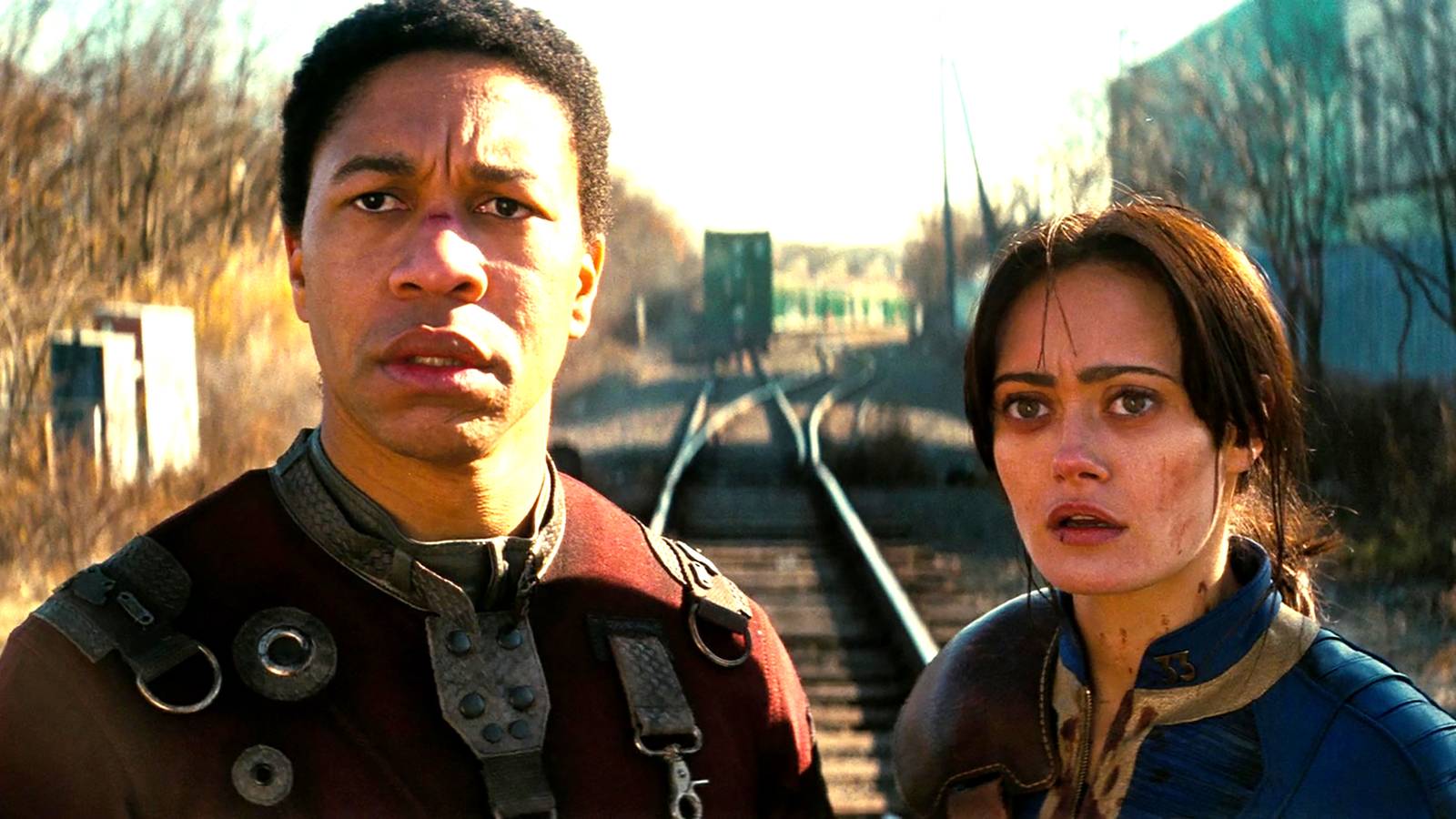
The Fallout TV show just delivered its most game-faithful episode yet — and it's a lot to process. Here's a full breakdown of every major moment, hidden reference, and fan theory worth talking about.
Introduction: This Is What a Real Love Letter to New Vegas Looks Like
There are episodes of television that entertain you, and then there are episodes that make you pause, put the remote down, and just sit with what you just watched.
This was the second kind.
For anyone who has spent real, meaningful hours wandering the Mojave in Fallout: New Vegas — hunting Blue Star caps, navigating the politics of Camp McCarran, making impossible decisions at the Hoover Dam — this episode wasn't just good TV. It was a homecoming. A carefully constructed, slightly devastating homecoming that knew exactly how to make a longtime fan feel both celebrated and completely blindsided.
The show has always been Fallout-adjacent — drawing on the games' aesthetics and lore while telling its own story. But this episode crossed a line into something more committed. It's not referencing New Vegas anymore. It's living in it.
And honestly? That makes the dark parts land even harder.
Let's break down everything — every reference, every character beat, every moment that had me genuinely yelling at my screen.
The Opening Needle Drop: Sam Cooke Was Never Just Background Music
Why "Chain Gang" Was the Perfect Choice
The decision to open with Sam Cooke's "Chain Gang" is the kind of detail that separates a show that cares from a show that's just going through motions.
On the surface, it fits perfectly — forced labor, clanging metal, the rhythmic grind of bodies made to work against their will. Exactly what we're seeing on screen.
But here's where it gets genuinely clever: Samuel Cooke is a named character in Fallout: New Vegas, connected to the NCR Correctional Facility questline. It's the kind of easter egg that plays as pure atmosphere to a casual viewer and as a quiet handshake to a fan who's done that particular quest.
The Fallout TV show has been full of these two-layer moments — details that work on their own terms for new audiences while meaning something additional to anyone who grew up with the games.
The Thematic Weight of That Choice
Beyond the reference, the song establishes the episode's central argument before a single line of dialogue is spoken.
Nobody in the Mojave is free. The chains just look different depending on who's wearing them. Some characters are in literal ones. Others are trapped by ideology, by trauma, by the psychological cage of belonging to a faction that demands everything and offers belonging as the only currency.
"Chain Gang" plays over all of it, and the show knows exactly what it's doing.
Thaddeus, Sunset Sarsaparilla, and the Ugliest Kind of Satire
When a Game's Fun Mechanic Becomes a Moral Horror
If you've played New Vegas, Sunset Sarsaparilla is comfort. It's the iconic root beer you've spent hours hunting Blue Star caps for, dreaming of whatever prize waits at the end of that particular obsession.
Seeing it in the show — seeing Thaddeus essentially running a child labor operation inside an abandoned bottling plant to farm those same caps — is the kind of gut punch that only works if you've played the game.
It's Fallout's satirical instinct at its sharpest: take something players engage with as entertainment and reveal the human cost of that exact system operating in a world where people are real and consequences are permanent.
The "Old World" Always Grows Back
What makes this scene more than just dark comedy is what it says about the Fallout universe's central tragedy. The pre-war world ended because its systems — corporate exploitation, resource extraction, the reduction of human beings to economic units — had reached their logical endpoint.
And here's Thaddeus, in the wreckage of that world, rebuilding the exact same architecture from scratch. Not because he's evil. Because these are the only systems anyone has ever shown him. The "old world" doesn't need bombs to come back. It just needs opportunity.
Thaddeus thinks he's building something. He's actually just weeding a garden that was never fully cleared.
Is Thaddeus Becoming a Super Mutant? A Serious Theory
The Evidence Is Stacking Up
Johnny Pemberton has been doing extraordinary work this season — holding a genuinely difficult tonal balance between manic comedy and raw, escalating dread. But set the performance aside for a moment and look at what's actually happening to the character.
That serum healed his foot at a speed that doesn't track with standard ghoulification. Ghouls don't regenerate — they decay slowly, radiation wearing down the rot. What we saw was rapid cellular repair. That's a different process entirely.
The behavioral shifts are matching the physical ones. The erratic decision-making. The "tyrant-lite" posturing. The sense of something underneath his personality that's becoming harder to suppress.
These are textbook early-stage FEV symptoms — Forced Evolutionary Virus, the mutagen responsible for Super Mutants throughout the Fallout universe.
What This Would Mean for His Arc
If Thaddeus completes that transformation by the season's end, the show will have done something genuinely difficult: made a Super Mutant's origin story feel tragic rather than monstrous.
We're watching a person disappear in real time, replaced by something that wears his face but thinks in increasingly alien ways. The comedy of his character has been making us love him. The horror of what's coming — if this theory is right — is that we'll recognize him in the monster even after there's nothing left to save.
I genuinely don't know if I'm ready for that. But I also can't look away.
Caesar's Legion Returns: More Dangerous, More Complicated
The Production Got It Right
The Legion's visual design was always going to be the hardest thing to translate from game to screen. Football pads and scrap metal wrapped in Roman aesthetic sounds absurd in concept and looks intimidating in execution — but only if the production commits fully to the internal logic of it.
This episode commits. The costume and production design team clearly understood that the Legion's aesthetic has to feel earned within the world — these are people who have built an identity from salvage and ideology, and both elements need to be visible simultaneously.
Caesar Is Dead. The Empire Is Eating Itself.
The reveal that Caesar himself is gone — whether from the brain tumor that haunted his New Vegas questline or simply from the passage of time — is exactly the kind of lore decision that rewards longtime fans without excluding newcomers.
It also opens the most interesting political storyline the show has attempted: a succession crisis inside a faction built entirely around the authority of a single figurehead. The Legion without Caesar is a body without a nervous system — capable of enormous destructive force, but without the strategic intelligence that made it genuinely dangerous.
Macaulay Culkin's Casting Is an Inspired Swing
Bringing Macaulay Culkin in as a potential heir to the Legion's leadership is the kind of choice that sounds inexplicable until you see it and immediately understand.
He brings a quality that the Legion desperately needs in this moment — a calm, unsettling intelligence that reads as charismatic rather than simply brutal. The character's energy suggests someone who has studied power rather than simply inherited it. Whether that's enough to hold a fractured empire together is the season's most interesting open question.
Lucy's Latin Lesson: Funny and Devastating Simultaneously
Lucy correcting the Legion's Latin while they're holding her captive is peak characterization — specific, absurd, completely in line with everything we know about her, and quietly devastating in what it reveals about the Legion itself.
These are people cosplaying a civilization they don't actually understand. The aesthetics of Roman power without any of the philosophical underpinnings, the institutional knowledge, or the actual historical context. They've built a religion around a surface reading of an empire they've only encountered through scraps of pre-war text.
Lucy, raised in a Vault with actual books, knows more about what they're supposedly worshipping than they do.
It's the funniest moment in the episode. It's also the episode's sharpest criticism of how ideology actually works in the wasteland.
Robert House in Flashback: Man, Machine, or Something Worse?
Justin Theroux Nails the Energy
The pre-war Robert House flashback is chilling in the specific way that only a well-cast scene can be. Theroux brings the exact quality this character requires — an intelligence so far beyond the room that it reads as a kind of casual contempt for everyone around him, even when he's technically being cordial.
The Body Double Theory
Here's where I'll put on my speculation hat: is the Robert House we're seeing in these flashbacks actually Robert House?
In the games, House was famously reclusive, conducting nearly all of his business through proxies and Securitrons. He understood better than anyone that the man and the brand serve different purposes — and that the most powerful people in any system are the ones nobody can see clearly.
What if the "House" in these pre-war scenes is a deliberate public face? A performance of the genius for boardrooms and cameras, while the real man is already retreating behind layers of corporate insulation, preparing his life-support chamber, waiting for the bombs he knows are coming?
It would make the Ghoul's mission feel even lonelier. He's chasing a ghost — a person who may have disappeared into the machine long before the war ever started.
Camp Golf in Ruins: The Saddest Two Minutes of the Episode
What That Location Meant in the Game
For New Vegas players, Camp Golf was a specific feeling. NCR power and relative stability. Rangers. The sense that, imperfect as it was, something like civilization was holding a line out there in the desert.
Seeing it ruined — genuinely, thoroughly ruined, with a glitching Victor Securitron delivering his cheerful "Howdy, partner!" to an empty ghost town — produced an ache that I wasn't prepared for.
What the "Dead Dead Dead" Graffiti Actually Says
It's not just set dressing. The writers are using that location to make the episode's darkest argument explicit: even the most organized, most democratic, most "civilized" attempt to rebuild the world eventually collapses under its own weight.
The NCR overextended. Its bureaucracy grew faster than its wisdom. Its ideals couldn't keep pace with its appetite for territory.
And in the end, the graffiti says what the game always implied but rarely stated so directly: nobody gets a permanent victory out here. Not the good guys. Not the bad guys. Not the ones with the best intentions and the most firepower.
The wasteland outlasts everyone.
Maximus Finally Chooses Humanity Over the Brotherhood
What Made This Moment Land
Maximus killing Xander to protect Thaddeus and the children is the moment his entire arc has been building toward — and the show earns it precisely because it doesn't let him have it cleanly.
He doesn't do it as a hero. He does it as someone who has run out of ways to avoid the choice that's been in front of him all season: be loyal to the Brotherhood's code, or be loyal to the people actually in front of him.
He picks the people. And it costs him everything the Brotherhood represented — belonging, identity, the only family he's ever known.
Why This Kind of Betrayal Is Actually Growth
The Brotherhood of Steel's defining characteristic, across every Fallout game and now this show, is the hoarding of technology as a substitute for actual human connection. The code isn't a moral framework. It's a leash — a way to ensure that Knights remain useful to the institution rather than to each other.
Maximus breaking that leash is the most genuinely radical thing he's done. Not because killing is radical, but because choosing empathy over belonging is extraordinarily difficult for someone who has never had any security except what the Brotherhood provided.
He's a wild card now. The most dangerous kind — someone who's decided that the rules don't apply when the rules require you to abandon people who need you.
The Ghoul's Final Move: Controlled Chaos as Love Language
The Dynamite Scene Is Peak Fallout
The Ghoul wiring the entire Legion camp with dynamite, then walking away while the whole thing went up, is exactly the kind of moment that makes this show feel like Fallout rather than just a show set in the Fallout universe.
It's tactically brilliant. It's wildly reckless. It almost certainly reignited a conflict between the Legion remnants and whatever survives of the NCR in that region. And he did it to give Lucy a window — thirty seconds of chaos in which to move.
What It Tells Us About Who He Is Now
Here's the thing about the Ghoul: Walton Goggins has been doing something subtle and extraordinary all season. He's playing a man who has spent two hundred years learning to need nothing and nobody — and who is now, against his will, discovering that he's failed at that project.
Lucy looks at him like a person. In a world that has spent two centuries treating him as a monster, a weapon, or a cautionary tale, that's not a small thing. It's everything.
So he set the Mojave on fire for her.
Not romantically. Not strategically. Just — he was willing to upend the regional balance of power on the chance that it might keep her alive long enough to matter.
That's 200 years of suppressed humanity surfacing in one spectacular, structurally irresponsible act of care.
Tips for Spotting Hidden References on Rewatch
The show rewards attention. Here's what's worth looking for:
- The Sunset Sarsaparilla label design matches the in-game asset almost exactly — the art direction team clearly had the game running on a second monitor
- Victor's dialogue glitches in the Camp Golf scene include partial phrases from his New Vegas questline before the static cuts in
- The Legion's camp layout mirrors the in-game settlement design from the Mojave Outpost region
- Thaddeus's first behavioral shift — the moment he raises his voice at the children — is the scene to rewatch once the FEV theory fully clicks
- House's office design in the flashback contains several visual callbacks to the Lucky 38's pre-war aesthetic from New Vegas loading screens
FAQ: The Questions This Episode Left Open
Is Thaddeus actually turning into a Super Mutant?
The evidence points that way — rapid cellular regeneration inconsistent with ghoulification, behavioral instability, increasing episodes of erratic decision-making. Nothing is confirmed yet, but the show is laying groundwork that points clearly in one direction.
Is the Robert House in the flashbacks actually House himself?
Unconfirmed, but the theory that we're watching a deliberate public persona while the real House prepares his isolation is consistent with the games' characterization of him as someone who understood that visibility is vulnerability.
Can the NCR recover from what we've seen?
The show seems to be arguing that institutional recovery at this scale isn't really the point — the question is whether something better can emerge from the wreckage, and whether anyone is positioned to build it.
What does Maximus do now that he's Brotherhood-less?
He's the most interesting character in the show's second half precisely because he's the only one without a faction. That kind of narrative freedom is either a gift or a death sentence, and Fallout rarely lets its wild cards survive comfortably.
Who is most likely pulling the strings behind the Legion's succession?
The show is pointing toward a figure operating from the margins — someone who understands both the Legion's internal power dynamics and how to exploit the chaos of the succession crisis. Whether that's connected to the larger House/Enclave thread remains the season's central mystery.
Conclusion: The Mojave Doesn't Offer Clean Answers. That's the Point.
The Fallout TV show's best episodes — and this is one of them — work because they understand the games' most important philosophical argument: there are no good endings, only better and worse choices made with incomplete information, by people who are doing the best they can with the damage they've accumulated.
The Ghoul lights a match and walks away. Maximus chooses compassion over code. Thaddeus loses himself incrementally to something he doesn't understand. Lucy corrects a dead empire's grammar while held at knifepoint.
None of these are victories. None of them are defeats. They're just people surviving in a world that has never made survival easy, finding meaning in choices that nobody outside their immediate situation will ever fully understand.
That's Fallout. That's always been Fallout.
And when a TV adaptation actually gets that — when it stops trying to simplify and just lets the moral complexity breathe — it earns the right to call itself a love letter to the source material.
What's your read on all of this? Is Thaddeus gone? Who's running the Legion from the shadows? And where does the Ghoul's story go from here? Let's figure it out in the comments — this is exactly the kind of episode that needs a community to fully unpack.
.png)


No comments:
Post a Comment