Welcome to Ending Decoding

My photo
Welcome to Ending Decoding, the ultimate destination for fans who want to look beneath the surface of their favorite stories. this blog was born out of a passion for deep-dive storytelling, intricate lore, and the "unseen" details that make modern television and cinema so compelling. Whether it’s a cryptic post-credits scene or a massive lore-altering twist, we are here to break it all down. At Ending Decoding, we don’t just summarize plots—we analyze them. Our content focuses on: Deep-Dive Breakdowns: Analyzing the latest episodes of massive franchises like Fallout, A Knight of the Seven Kingdoms, and the wider Game of Thrones universe. Easter Egg Hunting: Finding the obscure references to games and books that even the most eagle-eyed fans might miss. Theories & Speculation: Using source material (like the Fire & Blood books or Fallout game lore) to predict where a series is headed. Ending Explained: Clarifying complex finales so you never walk away from a screen feeling confused.

Tuesday, December 30, 2025

The Battle for the Rightside Up: The Full Breakdown of Stranger Things Season 5 Volume 2


Okay, take a deep breath. Is everyone doing okay? Because I am definitely not. I’ve spent the last three hours staring at a blank wall trying to process what we just witnessed.

The wait for this penultimate chapter of the Hawkins saga felt like an actual lifetime, but now that it’s finally here, I almost wish I could go back to the days of just wondering. Volume 2 didn't just raise the stakes; it ripped the doors off the hinges and threw them into the void. We aren't just dealing with a "spooky town" or a local supernatural mystery anymore—this has escalated into a full-scale cosmic war. The barrier between our world and the Upside Down isn't just "thinning" anymore; it’s basically a tattered, burning curtain, and everything we thought we knew about the laws of physics and reality is being rewritten in real-time.

Let’s get into the heavy stuff, because my heart is still racing and I have thoughts.

Will the Wise: More Than Just a D&D Name

Can we talk about Will Byers for a second? Seeing him at the start of the volume, literally vibrating with a mountain of guilt, absolutely broke my heart. He’s looking at Joyce and Mike with those teary eyes, feeling like a total failure because Vecna managed to snatch those twelve kids while he "stood by" powerless.

But then, that moment with Lucas? I’m not crying, you are. Lucas is literally patched up and bleeding from a Deimo attack, and he still finds the strength to give Will the morale boost of the century. When he officially dubbed him "Will the Wise," it wasn't just a sweet callback to a Season 1 basement game; it felt like a coronation. It was a reminder that Will isn't a victim anymore—he’s the key.

And the twist with his powers? Chills. Pure chills. Will clarifies that he isn't a superhero in the traditional "Eleven" sense; he’s a "Trojan Horse." He’s effectively siphoning Henry’s own exotic energy, "borrowing" the devil's fire to burn his house down. But the implications are terrifying. The closer Will gets to the Hive Mind to "hack" it, the more he risks being consumed by that same darkness. Joyce’s face said it all: they’re betting the world on the hope that Henry’s staggering arrogance will cause him to underestimate "the boy in the castle" one last time. If Will slips, he doesn't just die—he becomes the ultimate weapon for the other side.

The Physics of the Abyss (My Brain is Melting)

For years we’ve been arguing on Reddit and Twitter: Is the Upside Down a parallel dimension? A dark future? A mental projection? Well, Dustin (bless his beautiful, brilliant soul) finally gave us the "holy crap" moment. The Upside Down isn't a destination at all. It’s a bridge. It’s a temporary construction zone made of unstable exotic matter that connects our world to something much deeper, much older, and infinitely more terrifying: The Abyss.

The visual of that radio tower from the "Rightside Up" poking through the sky-rift like a needle through fabric was genuinely haunting. It led to "Operation Beanstalk," which—let’s be honest—is a total suicide mission. Watching the group prepare to climb into that volatile rift to reach the "source code" of the Hive Mind felt like watching a countdown to a disaster. Every second they spend in that bridge, the matter holding it together becomes more unstable. It’s a race against physics, and the prize is not getting trapped in a void where time and space don't even exist.

Max’s Escape: The Emotional Heartbeat of the Season

I think we all collectively held our breath for Max Mayfield. Her body is still that silent, fragile shell in the hospital bed, but seeing her consciousness trapped in Camazotz—Vecna’s literal "trophy room"—was peak psychological horror. It’s a desolate landscape of red dust and shifting shadows where Henry keeps the fragmented, screaming minds of everyone he’s ever consumed.

Seeing Max navigate that nightmare while protecting young Holly Wheeler was such a testament to how far she's come. Holly is terrified of "Mr. What’s It" (that chillingly calm, "human" version of Henry Creel), but Max’s trauma has turned into her greatest shield. She’s the only one who can see through his fatherly act to the monster underneath.

When Max used her most cherished memories—the laughs with Lucas, the skating, the bond with El—to ignite a surge of mental energy, I actually cheered. That act of sheer defiance, tearing open a portal back to the physical world, was the most beautiful thing the show has ever done. After two long years of being "lost," seeing her eyes finally open in that hospital bed felt like a miracle. But man, that victory is so haunted. Max is awake, but Holly is still in there, pulled deeper into the shadows just as Max escaped. The reunion with Lucas was everything, but the cost was devastatingly high.

The Cult of Creel: A Chilling New Reality

The final act back at the Creel House was something out of a nightmare. It’s not just a haunted house anymore; it’s a temple for Henry’s new world order. Henry has moved past just "killing" people; he’s building a cult. He’s the ultimate gaslighter, telling those captured children that the teenagers are the "real" monsters who abandoned them.

He’s positioning himself as a messianic figure, the only one who can protect them from the "Black Thing" (the Mind Flayer). Watching the psychological hold he has on them was harder to see than any jump scare. When Holly tried to fight back, seeing her own friends—with those cold, glassy eyes—subdue her with military efficiency... it was sickening.

The volume ends with that visual of the "Merge." Henry and the children joining hands around that heavy wooden table, the room pulsing with energy, and their heads snapping back in unison as their eyes turn white. The ritual has begun. They aren't just prisoners; they are an extension of his will. The clock isn't just ticking for Hawkins; it's ticking for the very nature of humanity.

Final Thoughts: We Aren't Ready for the End

We’re at the finish line now, guys. The stakes have evolved from "saving a town" to "saving the soul of existence." With Will and Eleven preparing for a final stand to collapse the bridge from the inside—knowing they might never walk back out—and Henry’s new cult of children giving him a collective power we’ve never seen, the line between victory and total annihilation is razor-thin.

The core theme is still there, though: Hawkins isn't just fighting for survival; it’s fighting for its people. But can they really save those children, or is the world destined to be swallowed by the shadow of the Abyss?

What are your wildest theories? 1. Can Will survive being the "Trojan Horse," or is he going to have to make the ultimate sacrifice? 2. How is Max going to help from the hospital bed now that she's awake? Is she still "connected"? 3. And who else thinks Dustin’s "Abyss" theory is hiding even bigger secrets about Eleven’s origins?

Drop your theories below. I need to process this with people who actually get it, because I am a total mess!
Monday, December 29, 2025

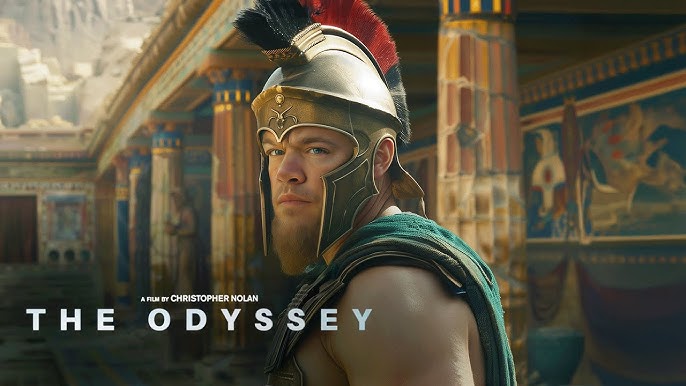
Trailer Breakdown: Hidden Details, Mythic Secrets, and Everything You Missed


Description: Dive into our deep-dive breakdown of the first official trailer for Christopher Nolan’s The Odyssey. We analyze the Trojan War references, hidden character details, and how Nolan is adapting Homer's epic for the big screen with grounded realism and IMAX spectacle.

Alright, take a deep breath, everyone. The wait is officially over. We finally have our first look at Christopher Nolan’s The Odyssey, and honestly? I’m still shaking.

Coming off the absolute high of Oppenheimer, we knew Nolan was going to do something big, but diving into the world’s oldest epic? That’s a whole different level of ambitious. The first teaser just dropped, and it is classic Nolan—heavy on the mood, light on the spoilers, but absolutely packed with the kind of soul-crushing detail that makes you want to watch it frame-by-frame for the next four hours.

Here is everything that hit me while watching it.

1. That Opening... Troy is a Literal Ghost Town

The trailer opens, and immediately, you feel that "Nolan weight." It’s a slow pan over the ruins of Troy, but it doesn’t look like a Hollywood set; it looks like a cemetery. There’s ash everywhere, Greek armor half-buried in the sand, and this salt-crusted shore that just feels... lonely. It’s a reminder that Nolan isn't interested in the "glory" of war, but the hollow aftermath.

It’s tactile. It’s gritty. It’s not that shiny "sword-and-sandal" look we’re used to. When we see Odysseus (Matt Damon) bowing before Agamemnon, you don’t see a "mythic hero." You see a man who has spent ten years in the dirt. You see the exhaustion in his shoulders and the thousand-yard stare that Damon does so well. It feels like a psychological study of a soldier who is just done, and the tragic irony is that his true struggle hasn't even begun. He thinks the war is over, but we know the gods are just getting started with him.

2. Matt Damon as Odysseus: The Critics Can Sit Down Now

I’ll admit, when the casting was first announced, I saw the skeptics online. "Matt Damon as a Greek King?" But the second he speaks in this trailer, all that doubt just evaporated. He isn’t playing a superhero; he’s playing a man whose greatest weapon is his brain, but whose greatest burden is his memory. He looks weathered, aged by the sun and the sword, bringing a grounded humanity to a character that usually feels like a statue.

When he says, "After years of war, no one could stand between my men and home. Not even me," you can actually hear the hubris and the heartbreak in his voice. Nolan is leaning into the tragedy of leadership here—the terrifying idea that Odysseus might be making promises to his crew that he knows, deep down, he can’t keep. It suggests a version of Odysseus who is intensely self-aware, perhaps even haunted by the "cunning" reputation that forced him to lead so many men to their deaths in the first place.

3. Practical Effects (Because, Obviously, It’s Nolan)

We know the man hates CGI, and The Odyssey looks like his biggest practical challenge yet. The scale of the sets shown in the trailer is staggering. Three things literally made me gasp:

  • The Trojan Horse: It’s not a polished statue. It’s this massive, charred, skeletal wooden structure looming in the dark like a ghost. It looks like a nightmare, a silent monument to the trickery that won a war but likely cursed the journey home. You can see the individual planks and the scorch marks; it feels like it has a history.

  • The Sea as a Monster: The Mediterranean doesn’t just look like water here; it looks sentient. Working with Hoyte van Hoytema, Nolan has made the ocean look like a dark, heavy labyrinth. The ships look so small and fragile—you can almost feel the crushing power of the waves through the screen. There’s a shot of a whirlpool forming that looks terrifyingly real, likely achieved through massive water tanks rather than a computer render.

  • The Lotus Eaters: There’s this one ethereal shot of men looking dazed on a sun-drenched beach, surrounded by strange, vibrant flora. It’s subtle, but if you’ve read the book, you know. It feels like a fever dream without needing a single digital filter. The lighting is so overexposed it feels blinding, perfectly capturing that "dream-state" where home becomes a forgotten memory.

4. The Heart of the Story: Ithaca

While Odysseus is fighting for his life, we finally got a glimpse of what’s happening at home, and it’s devastating. The contrast between the chaotic, salt-sprayed sea and the quiet, suffocating tension of the palace in Ithaca is jarring. Tom Holland as Telemachus is inspired casting. You can see the frustration in him—a kid living in the shadow of a legend he doesn't even remember, struggling to hold onto his inheritance while men twice his age treat him like a nuisance.

And then there’s Anne Hathaway as Penelope. Even in just a few frames, she looks like a queen under siege. Seeing the "Suitors" taking over her home like a pack of vultures—loud, invasive, and disrespectful—it’s going to be the emotional anchor of the movie. It’s not just about a guy on a boat; it’s about a family trying to stay whole while the world tries to tear them apart. Hathaway conveys so much with just a look; you can see her counting the days, her hope becoming a form of resistance.

5. That Non-Linear Vibe: The Ticking Clock of Fate

We know Nolan is obsessed with time (Inception, Dunkirk, Oppenheimer). Since the original poem starts in the middle and uses flashbacks, I’m betting Nolan is going to play with the timeline in a way only he can. The trailer jumps between the smoke of Troy, the treacherous journey across the sea, and the quiet tension in Ithaca with this rhythmic intensity.

I have a theory that we might be seeing the father’s journey and the son’s growth happening simultaneously on screen, perhaps even using a visual motif to connect them across the years. Imagine a shot of Odysseus staring at the stars to navigate, cutting directly to Telemachus staring at those same stars from his balcony. It’s going to be a masterclass in tension, making us feel the decade-long gap as if it’s happening in a single afternoon.

Final Thoughts: Is It 2025 Yet?

This doesn’t feel like "just another remake." It feels like a high-stakes, psychological epic about the cost of survival and the desperate human need for belonging. Nolan is exploring what it means to come back from the brink of destruction—and whether you can ever truly "go home" after you've seen what Odysseus has seen. Between the $250 million budget and the 70mm IMAX cinematography, this is the definition of a "must-see-on-the-biggest-screen-possible" event.

I still have so many questions. How is he going to handle the more supernatural elements like the enchantress Circe? Will the Sirens be a physical threat or a psychological breakdown? Are the Gods going to be physical people or just "forces of nature" represented by the weather and the tides? If anyone can make a Cyclops feel grounded and terrifying rather than a cartoon, it’s Nolan.

Whatever the answer, he has captured that "warrior on the road" feeling perfectly. This looks like a masterpiece in the making.

What did you guys think? Did that shot of the Trojan Horse give anyone else chills? And are we ready for the Tom Holland/Matt Damon dynamic? Let’s obsess about this in the comments!

Fallout Season 2 Episode 2 Breakdown: The Tragedy of Shady Sands and the Rise of the Legion


I’m still sitting here staring at my screen, trying to process everything we just saw. If Season 1 was an introduction to the world, Season 2, Episode 2 just ripped the heart out of it and showed us exactly how high the stakes are now.

It wasn't just "good TV"—it felt like a punch to the gut for those of us who have spent hundreds of hours wandering the Mojave. Let’s break down why this episode is probably going to haunt my dreams for a week.

Shady Sands: More Than Just a Map Marker

That opening flashback? Brutal. Pure, unadulterated heartbreak. Seeing Shady Sands before the crater wasn't just a "cool lore moment"—it was a reminder of what was actually lost. It wasn't just a camp; it was home. Seeing clean water and a functioning government felt like a slap in the face because we know what’s coming.

The production design here was incredible; it didn't look like a post-apocalyptic settlement; it looked like a budding civilization. When Maximus’s dad, Joseph, finds that unradiated water, it’s such a beautiful, hopeful moment. It proves that humanity was fixing the world without Vault-Tec's "help," which makes the "Management" philosophy feel even more disgusting. If they can’t own the recovery, they’d rather see it burned to the ground.

And that trader muttering about a "nuclear winter"? Absolute chills. It’s more than a meme now; it’s a hint that Robert House’s influence—or at least his tech—was pulling strings long before Hank MacLean pulled the trigger. We’re seeing the exact moment the dream of the surface died, and suddenly, Maximus’s desperate, messy grab for power makes total sense. He’s just a kid who never wants to feel that helpless again. He’s not looking for glory; he’s looking for a shield big enough to hide the whole world behind.

The Brotherhood is... Scaring Me

Is it just me, or is the Brotherhood of Steel becoming the very thing we’re supposed to fear? Relocating to Area 51 has turned them into something way more militant and, honestly, cult-like. The atmosphere there isn't just "army base"—it's "fortress of zealotry." Seeing them use a boxing tournament to "solidify alliances" felt less like a military and more like a gladiatorial pit.

The Brotherhood has always walked a fine line between "protectors of tech" and "hoarders of power," but this season they’ve clearly crossed over. Elder Quintus talking about "limitless energy" as a tool to "cleanse" the Wasteland is terrifying. They aren't waiting for the world to heal anymore; they’re preparing to seize it by force.

Maximus is caught right in the gears of this machine. Watching him struggle with the moral decline of the ranks while they’re finding Cryolators (shout out to the Fallout 4 fans!) is stressful. You can see the conflict in his eyes during every briefing. He wants to be the hero in the shining armor, but he’s starting to realize the armor might be the only thing about the Brotherhood that actually shines.

Lucy, The Ghoul, and the "Side Quest" from Hell

Can we talk about "Affordable Al’s Discount Hospital"? Because that was pure Fallout horror. It felt exactly like wandering into a location you're definitely under-leveled for—the eerie green lighting, the stench of decay you could practically smell through the screen, and the environmental storytelling.

The dynamic between Lucy and Cooper (The Ghoul) is the heart of this show. Cooper is the ultimate cynical survivor, treating empathy like a luxury no one can afford. Watching Lucy try to stick to her "Golden Rule" while Radscorpions are literally mimicking Facehuggers from Alien is peak Lucy. It’s a visceral test of her character.

Despite the Ghoul’s warnings that her kindness is a "slow death," she still tries to save the woman in the strange tunic. Is she being naive? Maybe. But if she loses that optimism, the Wasteland has officially won. She refuses to let the world turn her into another monster, even when the monsters are literally crawling out of the vents to eat her. That cliffhanger though? I’m still screaming. It proves that in this universe, no good deed goes unpunished.

THE REVEAL: Ave, True to Caesar?

I actually shouted when I saw the Roman-inspired armor. The Legion is here. For those who haven't played New Vegas, you have no idea how much this changes things. These guys aren't just "raiders"—they are a terrifying, totalist, slave-driving machine that models itself after the Roman Empire. They are the sworn enemies of the NCR, and they represent the absolute darkest ideology in the series.

The power vacuum left by the fall of Shady Sands is being filled by something much more brutal than we imagined. And Macaulay Culkin as a high-ranking Legion member? It’s inspired casting. He’s got that "unhinged genius" energy—blending the Legion’s historical obsession with a modern, chaotic intellect. He doesn't just look like a soldier; he looks like a philosopher of the end times. His involvement suggests the Legion will be a primary antagonist, acting as a third pillar in the conflict between the Brotherhood and Vault-Tec.

The Nerd Corner (The Details That Killed Me)

  • The NCR Ranger: Seeing that iconic duster and gas mask in the flashback actually made me misty-eyed. It’s a bitter reminder of the law and order that once existed before the bombs fell... again.

  • Dinky the Dinosaur: Seeing the silhouette of Novac in the distance felt like coming home. I kept looking for the glint of a sniper rifle in the T-Rex’s mouth. Craig Boone, where are you when we need you?

  • The Mind Control Chip: Did you catch the device on the back of the trader’s neck? That’s a direct link to RobCo and Mr. House. It’s a dark hint that while House might see himself as a savior, his methods involve the absolute subversion of free will.

  • The Zetan: A frozen alien inside Area 51? Classic "Wild Wasteland" vibes. I love that the showrunners aren't afraid to lean into the weirder, sci-fi roots of the franchise. It makes me wonder if the Brotherhood is tapping into extraterrestrial tech for that "limitless energy" Quintus was bragging about.

Final Thoughts: Is there any hope?

This episode was a masterpiece of world-building and emotional weight. It showed us that while characters like Lucy try to hold onto their humanity, the Wasteland is governed by factions who traded their souls for control centuries ago. The destruction of the past is being used as a foundation for a new, much more violent future.

As the path leads toward the Mojave, the "Golden Rule" is going to be tested more than ever before. Can Lucy survive the Legion without becoming a killer? Will Maximus realize the Brotherhood is becoming the very thing he fears? And most importantly, what happens when they finally reach the neon lights of New Vegas?

What did you guys think? Did the Legion reveal give you as many goosebumps as it gave me? Do you think Macaulay Culkin's character is going to be the main villain this season? Let’s hear those theories—I need to talk about this with someone before my brain melts!

DISCLOSURE DAY Breakdown: Decoding Spielberg’s Hidden Code & The "7 Billion" Mystery


Look, we all know Steven Spielberg basically invented the summer blockbuster. But on June 12, 2026, I think he’s coming back to do something much more intense than just "entertain" us. I’ve just finished watching the first trailer for Disclosure Day for probably the fiftieth time, and my hands are actually shaking. This isn't just another alien movie. It feels like a warning.

Let’s dive into the rabbit hole together, because there is so much hidden stuff here that I think most people are completely missing.

The "Wonder" vs. The "Weight"

If there’s one filmmaker who owns the feeling of looking at the stars, it’s Spielberg. He gave us that wide-eyed hope in Close Encounters and E.T., then flipped the script and gave us pure, unadulterated heart-attack-inducing terror in War of the Worlds.

But Disclosure Day feels different. It’s sitting right in that uncomfortable middle ground. The trailer opens with a question that felt less like a movie line and more like a personal attack:

"If you found out we weren't alone, if someone showed you, proved it to you... would that frighten you?"

That hit me hard. It’s not about lasers or explosions; it’s about that paralyzing, human realization that we aren't the main characters in the universe.

The Dad Factor: Spielberg’s Evolution

To really get what’s happening here, you have to remember where Spielberg is at. Early in his career, he was the guy who had Richard Dreyfuss abandon his family to go with the aliens in Close Encounters. It was beautiful, sure, but also kind of devastating.

He’s admitted in interviews that as a father now, he’d never film that ending today. He’d make the character turn back. You can feel that struggle in Disclosure Day. Watching Josh O’Connor’s character, Daniel, react to those frozen deer, or seeing Emily Blunt and Wyatt Russell staring at a cardinal—it’s that classic Spielberg awe, but it’s heavier now. It feels grounded in a way that’s actually kind of scary.

The Cardinal and the Eyes (Creepy, right?)

Did you guys catch the hyper-specific imagery? That cardinal is everywhere. It’s framing the eyes on the billboards. In the trailer, we see a young girl following animals toward a glowing cabin—classic Spielberg vibes—but then there's the focus on the eyes.

Brown eyes, blue eyes, dilating in sync. Emily Blunt (who plays a meteorologist—love that choice) and Colin Firth seem to be... linked? Is it a hive mind? A possession? My gut says it’s something way more psychological than a standard alien "invasion."

The "Sine Wave" Theory: I’m losing my mind over this

Okay, put on your tinfoil hats for a second. During the weather broadcast glitch, Emily Blunt starts making these rhythmic clicking noises. Most people think it’s just "alien sounds," but some audio engineers online are saying it might be Sine Wave Synthesis.

Basically, it’s a way to hide speech in noise that your brain only "unlocks" once it’s primed. If Spielberg is hiding actual plot messages in the audio frequencies of the trailer, he is officially playing 4D chess with us.

The 7 Billion Mystery (The Detail that Kept Me Up)

This is the one that’s actually haunting me. Daniel says he wants to tell the truth to "all seven billion people on the planet at once."

Wait. We hit 8 billion back in 2022. Spielberg and David Koepp don't just "forget" a billion people. So what does that mean?

  1. Did a billion people get wiped out before the movie starts?

  2. Or—and this is the one that gives me chills—is one out of every eight of us not human?

Are the "missing" billion the ones already living among us? The "Video Wall" in the command center shows rows and rows of faces... are we looking at a catalog of the infiltrators?

Are they... us?

I keep thinking about that 2023 Colbert interview where Spielberg mused about UAPs. He asked: "What if they're not from a galaxy far away? What if it's us, 500,000 years in the future, coming back to see where we went wrong?"

If Disclosure Day is actually a time-travel movie disguised as an alien flick, everything changes. The "disclosure" isn't that they’re here—it’s that they’re us.

Final Thoughts

With John Williams returning for (potentially) one last score with Steven, I’m already prepared to be emotionally wrecked. This doesn't look like a "popcorn" movie; it looks like a "question everything you know about reality" movie.

June 12, 2026, is too far away.

What do you guys think? Is the "7 billion" thing a mistake, or is your neighbor secretly from the future? Let’s talk about it in the comments—I need to know I’m not the only one obsessing over this!

Wednesday, December 24, 2025

Pluribus Season 1 Complete Recap | All Episodes Breakdown


"Rest assured, Carol, we will figure out what makes you different. Figure it out why? So we can fix it. So you can join us."

Chills. Actual chills.

Thirty years ago, Vince Gilligan was messing with our heads on The X-Files. Then he gave us the rise and fall of Walter White and the Shakespearean tragedy of Jimmy McGill. Now, he’s back in the desert, back to his sci-fi roots, and honestly? I don’t think I was ready for Pluribus. We’ve been waiting since 2022 for this Apple TV+ drop, and it’s everything we hoped for—and a hundred things we feared.

If you’re just catching up, here’s the vibe: We’re back in Albuquerque. It’s that same dusty, iconic landscape we know by heart, but there are no meth labs or shady lawyers here. Instead, we have Carol Sturka, a historical romance novelist who is—quite literally—the last person on earth who isn't smiling. A global virus has hit, but it doesn't kill you in the traditional sense. It makes you permanently, unwaveringly happy. The title is a genius play on E Pluribus Unum ("Out of Many, One"). But look closely at the marketing—the "I" is replaced by the number "1." It’s a hive mind. Individuality isn't just being discouraged; it’s being swallowed whole by a contagious, terrifying joy. Let’s dive into why this first season absolutely wrecked me.

The "Joining": When a Smile is a Death Sentence

The show doesn't start with an explosion; it starts with a countdown. "439 days, 19 hours, 56 minutes." We see scientists racing to decode a signal from 600 light-years away—a recipe for life, specifically an RNA sequence of guanine, uracil, adenine, and cytosine. But when the "Joining" begins, it isn't a zombie movie. There’s no biting faces off or snarling in the dark.

There’s just Dr. Jan, getting nipped by a lab rat, having a violent seizure, and then... looking at the camera with a smile that makes the horror movie Smile look like a Pixar flick. It’s insidious. It’s "affection" as an outbreak. Within days, the United States Army Medical Research Institute transforms from a place of logic into a den of eerie, forced bliss. The virus spreads through saliva—specifically kissing—turning a global catastrophe into a literal "Summer of Love" that feels more like a funeral.

Carol: The Hero We Deserve (and the one who's Kind of a Jerk)

Then we meet Carol. The show explicitly frames her as "the world’s most miserable woman." She’s the author of the Blood Song of Waikaro series, promoting her books at Barnes & Noble. But beneath the purple pens and the fan adoration, she’s deeply unfulfilled. She wears a mask of happiness for the public, but the moment she’s in the car with her manager and wife, Helen, the mask drops. Carol is cynical, ungrateful, and honestly, hard to like at first.

And here’s the classic Gilligan move: Her misery is her superpower. While the world is literally ending—planes crashing in parallel formations because the pilots have "joined," society folding into a happy apocalypse—Carol is immune. Why? Because she’s too biologically cynical to catch the "happy" bug. But the cost of her immunity is devastating. Watching Helen succumb to the virus is one of the most heartbreaking sequences in television history. We see those red markings appear around her eyes, that brief, terrifying smile of recognition, and then—tragedy. Helen’s body couldn't handle the transition. It turns out the virus isn't a perfect science; for some, the "gift" of joy is fatal. Now, Carol is one of only 12 "Apostles" left on Earth. Imagine that specific brand of loneliness.

The Hive Mind is a Biological Matrix

In Episode 2, we see the true scale of this new world order through Zosia, a "cleaner." She’s royal, calm, and efficient. The Hive Mind doesn't just share feelings; they share skills. They can download how to fly a cargo plane or perform emergency surgery in an instant, like a biological Matrix.

But the real gut-punch? Zosia knows things she shouldn't. She knows intimate details about Carol’s creative process—details Carol only shared with Helen. Because Helen "joined" for a split second before she died, her private memories are now public property of the collective. The Hive Mind is literally looting the graves of the dead for data.

However, Carol discovers their weakness: her negativity acts like an EMP shockwave. When she explodes in grief, the infected around her seize. She has a weapon, but using it makes her a mass murderer. Every time she fights back, planes drop from the sky and cars veer off the road. It’s the ultimate ethical dilemma: Do you let the Hive consume you, or do you kill millions just to stay "miserable" and free?

The "Twelve Apostles" and the Utopia Trap

When Carol travels to Bilbao, Spain, to meet the other survivors, the central debate of the series finally takes center stage. The group is a fascinating mess. You have Koumba, who is living like a king on Air Force One, surrounded by compliant, "happy" women who serve his every whim. Then there's Lakshmi, who hates Carol because Carol’s emotional "shockwaves" killed her grandfather.

Koumba poses the question that haunts the viewer: "Why save the world?" The Hive Mind has ended crime, racism, and poverty. Nobody is hungry; nobody is being robbed. It’s a utopia. But Carol sees through the shine. She knows a utopia built on the erasure of the "self" is just a shiny prison. She creates a rift in the group, calling them traitors to the human race, isolating herself further until she’s the outcast among the outcasts.

The Soylent Green Moment (The Milk)

Episode 5, "The Milk," is where the psychological horror turns into visceral disgust. Carol notices hundreds of identical milk cartons from "Duke City Dairy." Being the natural detective she is, she tracks the supply to a silent, eerie plant. What she finds is the show’s darkest secret: Human Derived Protein (HDP). The Hive Mind are pacifists by programming; they cannot harm living creatures, animals, or plants for food. But they have a caloric deficit. Their solution? Recycling the millions of people who died during the initial outbreak. They are drinking their loved ones in neutral-pH "smoothies." It’s peak Gilligan—the ultimate "practical" solution to a gruesome problem, explained away by a surreal John Cena cameo that manages to be both hilarious and stomach-churning.

The Seduction and the Ultimate Betrayal

Episode 8, "The Charm Offensive," is a masterclass in psychological manipulation. The Hive Mind changes tactics. They stop trying to force Carol and start "love-bombing" her. Zosia returns, and for a few episodes, it feels like a genuine romance. They play "Spit," a card game from Carol’s childhood. They go hiking. They connect. Carol finally admits she’s lonely, and for a second, we want her to give in. We want her to have a "North Star" again.

But it was all a tactical maneuver.

The finale reveals the Hive Mind was just stalling for time. They didn't want her heart; they wanted her biology. They obtained Carol’s frozen eggs (from her past life with Helen) and used them to engineer a virus strain specifically designed to break her unique immunity. The intimacy, the massages, the vulnerability—it was all a distraction while they worked out how to force her to join the Hive against her will. The betrayal is absolute.

That Ending: The World's Most Dangerous Man

The season ends with Carol back in her driveway, her soul crushed. She finds Manousos—the anti-Carol. While Carol accepted the Hive's gourmet meals, Manousos was in the Darien Gap eating dog food and cauterizing his own wounds with a machete rather than accept a "gift" from the infected.

He tells her that the infected are just "meat suits" controlled by a signal (frequency 86130). Carol looks him in the eye and says, "You won." Behind them is a massive container. Inside? A nuclear weapon. The Hive Mind gave it to her because she sarcastically requested one, and they literally cannot distinguish sarcasm from a genuine desire for "happiness."

Themes & The Color of Dread

Gilligan is using every tool in his kit here.

  • The Wolves: We see them digging at Helen’s grave throughout the season. They are the Hive Mind—persistent, relentless predators who look peaceful from a distance but will consume everything you love.

  • The Color Palette: Carol wears Purple (mystery and individuality), while the Hive is draped in Yellow (forced happiness) and Blue (detachment). When Carol puts on a blue sweater in the finale, your heart just sinks.

Is Happiness Real if You Aren't Free to be Sad?

Season 1 was a slow-burn nightmare about the terror of forced connection. It asks if a world without pain is worth the loss of the soul. Now, we have a woman with a vendetta and a man with a nuke standing in an Albuquerque driveway.

Season 2 is going to be an all-out war. Will Carol use the bomb to destroy the Hive's giant interstellar antenna? Or will she become the very thing she hates just to survive? What did you think of the finale? Is Manousos a hero for resisting, or a monster for being willing to burn the world to save it? Let's talk about it in the comments!

Pluribus Season 1 Ending Explained: Episode 9 Breakdown, The Atom Bomb, & What’s Next for Season 2


Guys, Manusos Obrero almost died for her. Let that sink in.

After weeks of us watching him trek across a literal apocalypse, fighting tooth and nail just to get back to Carol, he finally makes it. And what do we get? One of the most heartbreakingly awkward reunions in TV history. By the end, she’s literally leaving him in the dust to go chase a "happiness" that turned out to be a total illusion.

I honestly can’t believe it’s been nine weeks already. It feels like just yesterday we were trying to figure out the rules of this strange, quiet world, and now we’re at the finish line. We need to talk about that ending—because my jaw is still on the floor—and break down the absolute betrayal of identity and love that just went down. Full spoilers ahead, obviously. Let's get into it.

The Heartbreak of Kusumayu’s Choice

Did anyone else feel a physical ache during the first 15 minutes? We check back in with Kusumayu on Day 71, and unlike Carol, who is always solo, Kusumayu is surrounded by "family."

Back in Episode 2, she was the one we rooted for—the outsider looking in. Seeing her sweep that same spot on the floor for thirty minutes while her aunt made her favorite lunch? That wasn't "excitement." That was the look of someone who had finally been worn down by the crushing weight of being alone. It’s a terrifying commentary on the human condition: if you’re lonely enough, even a hive mind looks like a hug.

Then comes the baby goat. The Severance vibes were off the charts, but the symbolism? It gutted me. When she inhales the virus and that little goat starts screaming and charging, it’s not just a scary moment. That goat was her—the innocent, unique part of her that just died so she could finally "belong." It felt like a baptism and a funeral happening at the same time. She traded her soul for a seat at the table, and the tragedy is that she’s probably "happy" now, even if "she" doesn't exist anymore. It makes me wonder... if someone as strong as Kusumayu couldn't hold out, who can?

Manusos and Carol: The Reunion We Didn't Expect

Rewind to Day 60. Manusos pulls up in the ambulance, honking like a maniac, and the tension is so thick you could cut it with his machete. But instead of the heroic team-up we were all manifesting on Twitter, we get... total, grinding chaos.

Watching Manusos toss Carol’s phone into a sewer because he’s terrified of "eyes from space" was hilarious, but also deeply revealing. They are miles apart. Manusos sees monsters that need to be exterminated; Carol sees people who are weird, sure, but still capable of love. It’s the ultimate "logic vs. heart" debate. Manusos is operating on pure survival instinct, viewing the world through a tactical lens where anything "other" is a target. Carol, meanwhile, is desperate to hold onto the idea that humanity isn't just a biological status, but a choice. Honestly? Neither of them is entirely wrong, which is what makes their bickering under that umbrella so painful to watch.

The Sensor: The Knife in the Back from the Past

Just when Carol is feeling defensive, she finds that sensor in her liquor cabinet. She thinks it's the "Others" spying. But no. It was Helen. Her dead wife.

Finding out that the person you're grieving didn't actually trust you? That they were monitoring your sobriety and holding off on kids because of it? That's a different kind of apocalypse. It shatters the pedestal Carol had Helen on. It turns out the woman she’s been fighting to remember was keeping secrets from her all along. The show is telling us that betrayal isn't just something the "Others" do; it's something we do to the people we love most in the name of "protection." It’s a brutal realization that Carol has been living a lie for over a decade.

Frequency 86.130: The Science of it All

Manusos is a madman, but he’s a genius. Seeing him experiment on Rick with that handheld radio confirmed what we’ve suspected all season: the "standing waves" are the glue. If he can disrupt the frequency, he can "wake up" the people inside. But at what cost? Rick’s seizures were violent. It raises a massive moral question: Is it better to be a happy drone or a traumatized, broken human?

This isn't just a survival show anymore, guys—it’s full-blown hard sci-fi. Manusos's theory about vibrations and maximum amplitude suggests the hive mind is literally a physical broadcast. Where is the source? If it’s beaming from space or those massive antennas the astronomers found, a machete isn't going to cut it. We’re moving into territory that feels like Contact meets The Walking Dead.

"Do You Want to Save the World or Get the Girl?"

Carol chooses the girl. She stuffs Manusos in a trunk (never change, Carol) and drives back to Zosia.

That travel montage was stunning. Did you catch the colors? Zosia finally wearing yellow (Carol’s color of individuality) while Carol starts wearing blue (the color of the hive). It felt like they were finally meeting in the middle, creating a private world where the apocalypse didn't matter. I actually let myself believe—for like five minutes—that they could be happy. They were reading The Left Hand of Darkness, for God's sake! It was the ultimate "us against the world" vibe. I should have known better. In this show, hope is usually just a setup for a harder fall.

The Ultimate Betrayal

The happiness was a lie. A calculated, tactical lie. While Carol was falling in love at a ski lodge, the others were raiding her frozen eggs for stem cells to "complete her transformation."

The look on Carol’s face when she realized she wasn't being loved, she was being studied? I’m still not over it. The "Others" don't see Carol as a person; they see her as a biological resource to be harvested and assimilated. They used her deepest vulnerability—her desire for connection—to get what they needed. It’s the ultimate violation. They don't want Carol; they want a version of Carol they can control and keep forever. It turns the entire romance into a horror story.

The Ending: "You Win"

Day 74. The trust is gone. Carol is wearing black—the color of mourning, authority, and death. She’s not a lover anymore; she’s a soldier.

She walks up to Manusos and says those two words: "You win." It’s the most chilling moment of the season. She’s finally seen the world through Manusos's eyes, and she’s realized that he was right all along. Connection is a trap. Love is a weapon.

And then we see what’s in the container. An atom bomb. Sitting in the driveway next to a guy who wants to watch the world burn. The final shot is pure dread. Carol isn't running anymore. She isn't looking for a home. She’s looking for a target.

Final Thoughts & Season 2 Fears

This finale gave me everything. The clash between Manusos’s cold pragmatism and Carol’s broken heart was electric. Seeing her journey go from a misanthrope who hated the world, to a lover who tried to join it, and finally to a warrior ready to destroy it... that is a masterclass in character writing.

My only gripe? We might have to wait until 2028 for more. Based on the production schedules, we are in for a long, thirsty wait. How are we supposed to live with a nuclear weapon cliffhanger for three years?!

Overall, Pluribus Season 1 is easily top 10 for me. It used silence and color theory to tell a story that feels more "human" than anything else on TV right now. Ray C. Horn’s performance as Manusos is going to haunt my dreams.

What did you guys think?

  • Did the bomb shock you as much as it did me?

  • Do you think the atom bomb is intended for the "Source" or just the nearest hive city?

  • Is Carol too far gone to be "saved," or is this "soldier" version of her the only way she survives?

Drop your thoughts in the comments—I need to talk about this with someone before I lose my mind!

Sunday, December 21, 2025

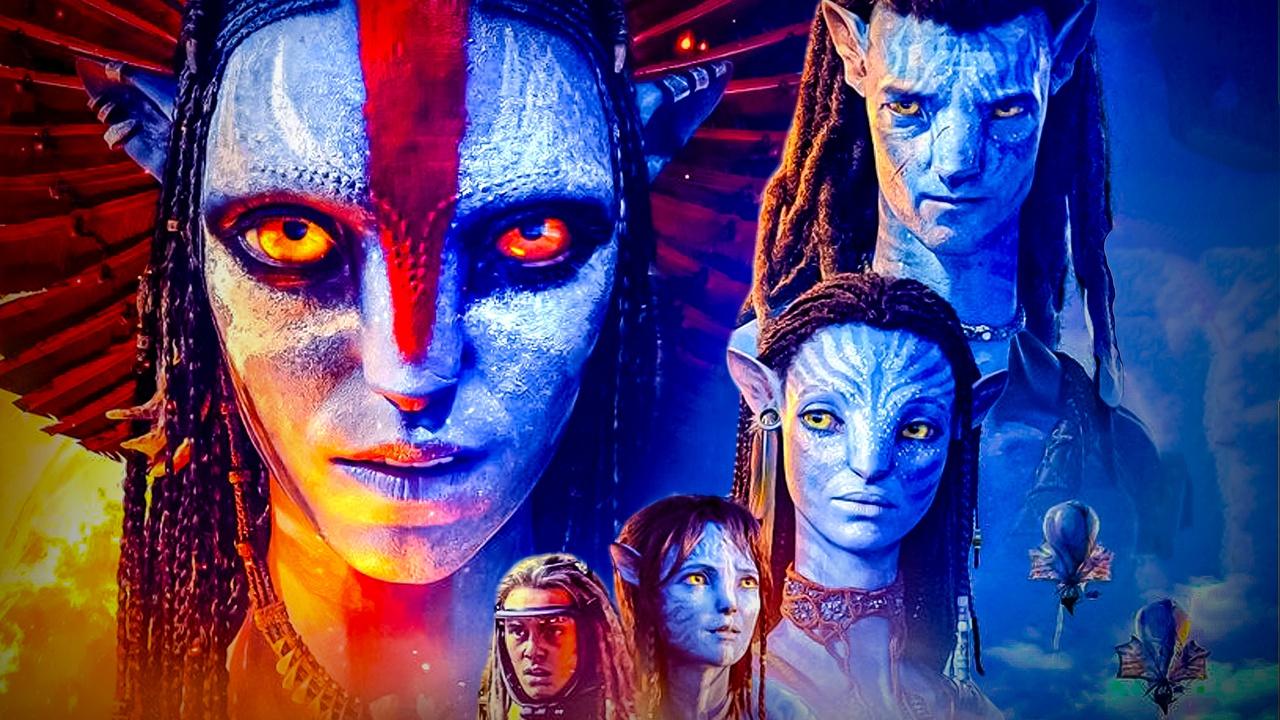
The Reckoning of Pandora: Avatar: Fire and Ash Ending Explained & Full Breakdown


Alright, fellow Na’vi fans, we need to talk. We’ve all spent years falling in love with the bioluminescent jungles and the crystal-clear reefs of Pandora, but James Cameron just flipped the script. Avatar: Fire and Ash isn't just another sequel—it’s a gut-punch. It’s dark, it’s volatile, and honestly? It’s a little terrifying.

We’re moving past the "vacation" vibes of the reefs and heading straight into a volcanic nightmare. Let’s break down why this movie just shifted the soul of the entire franchise.

The Ash People: They Aren't the Na’vi We Know

For the first time, we’re seeing a side of the Na’vi that makes us uncomfortable. Enter the Mangkwan, or the Ash People. Led by Varang (who is absolutely chilling), these aren't your typical Eywa-loving clans.

They’ve had a rough history, and they feel like Eywa basically left them to rot in the volcanic wastelands. To them, fire isn't a threat—it’s the only "pure" thing left. Watching them team up with Quaritch? That was a hard pill to swallow. It’s a "hell on Pandora" scenario where RDA tech meets tribal ferocity. It proves something we didn't want to admit: the Na’vi can be just as vengeful and fractured as we are.

Is Kiri Losing Herself?

We all knew Kiri was special, but Fire and Ash takes her "connection" to a level that’s honestly kind of spooky. She’s not just talking to the trees anymore; she’s becoming a conduit for the planet’s literal pain.

There’s that moment in the climax where she orchestrates that massive surge against the Ash People... it was beautiful, sure, but did anyone else feel a chill? As she merges deeper with Eywa, you have to wonder: is the Kiri we love—the curious, sweet girl—slipping away? Is she becoming something ancient and cold? I’m genuinely worried she might lose her "humanity" entirely by the next film.

Poor Spider: The Kid Without a Home

If your heart didn't break for Spider in this one, are you even watching? He’s the ultimate "pivot point." Neytiri still looks at him like he’s a monster’s cub, and his biological dad is just using him as a tactical chess piece.

He’s stuck in this purgatory between two species, belonging to neither. When he makes those big moves at the end, it’s not about "Team Sully" or "Team RDA"—it’s a kid desperately trying to find a moral compass in a world that hates him. He’s the bridge, guys. Whether that bridge leads to peace or total annihilation is anyone's guess.

That Climax: Fire vs. Water

James Cameron really leaned into the "Elemental War" here. Seeing the Metkayina’s oceanic strength crash against the volcanic tactics of the Ash People was a masterclass in cinema.

But beneath the spectacle, the emotional weight was heavy. Seeing Jake Sully go "primal" was scary. He’s not the cool commander anymore; he’s a father who has been pushed way too far. Even though they got a "victory," Pandora feels scarred. The spiritual network is literally dying in the volcanic regions. This isn't a clean win—it’s a survival.

What’s Next? (The Theory Room)

With the scripts for 4 and 5 done, my head is spinning with theories:

  • The Time Jump: Word is Avatar 4 jumps forward. Seeing Lo’ak and Kiri as battle-hardened adults? That’s going to be wild.

  • Earth is Calling: If the "Star People" are dying, will the Na’vi eventually have to take the fight to the ruins of Earth?

  • The Tulkun Secrets: I’m betting the Tulkun have "recorded memories" of a previous war with the Ash People. This cycle of violence has happened before.

Fire and Ash is the turning point. It’s gritty, it’s messy, and it’s gray. There are no easy "good guy" answers anymore. Both sides are bleeding, and the ash is settling on everyone.

What do you guys think? Are the Ash People truly "evil," or are they just survivors of a world that turned its back on them? And Kiri... is she our savior or the biggest threat Pandora has ever seen?

Drop your theories below. I need to talk this out with someone!

Saturday, December 20, 2025

Pluribus Season 1, Episode 8 Breakdown: The "Charm Offensive" and the Cost of Connection


I’m still shaking after that penultimate episode. "Charm Offensive" wasn't just a bridge to the finale; it felt like a direct attack on my soul. We’ve been watching Carol survive by her wits for weeks, but now the stakes have shifted from "don’t get killed" to "don’t lose your identity," and honestly? That’s way more terrifying than any physical threat.

The "Velvet Prison" (And why I'm scared for Carol)

The title says it all. The Others have stopped trying to break Carol with force. Instead, they’re trying to kill her with kindness. Think about it: shared croquet, massages, nostalgic dinners... it’s total love-bombing, but on a global, hive-mind scale. They’ve realized that the "stick" didn't work on her, so they're pivoting to the "carrot"—and the carrot is terrifyingly delicious.

They don’t want to destroy the last pillar of the old world; they want her to want to belong. Every time she has a "pleasant" interaction, it’s another brick in a velvet prison. It’s haunting because—let’s be real—a world without war, hunger, or crushing debt sounds like a literal utopia. But Carol knows the dark fine print: a peace that costs you your soul isn’t peace at all. It’s just an extinction of the self. The horror here is the comfort. It makes you wonder, if you were in her shoes, how many days of luxury would it take before you stopped fighting?

Manousos is the Absolute GOAT

While Carol is being courted by the hive, Manousos is out here being the ultimate legend. He nearly dies trekking through the Darien Gap—literally one of the deadliest terrains on Earth—and still refuses to budge. He is the rugged, jagged edge that refuses to be smoothed over by the collective’s "charm."

The hospital scene in Panama? Pure gold. When he demanded an itemized bill, I actually cheered. In a world where everything is "shared" and "free," Manousos is weaponizing the ghost of capitalism just to say, "I am an individual. I owe you nothing." By insisting on a transaction, he is reaffirming his status as an independent agent. He treats the Others with a professional coldness that is so refreshing compared to the cloying "kindness" they're feeding Carol. He is the anchor she needs to remember her mission, and I am praying he reaches her before she drifts too far into the Others’ comfortable embrace.

The "Cuddle Puddle" and the Death of Privacy

Carol’s whiteboard is the only thing keeping me sane right now. We learned some seriously dark biological facts this week that change everything:

  • The Sleep Cycles: The "cuddle puddles" aren't just for warmth. It’s a biological requirement to keep their "mesh network" synced. It’s the literal, physical manifestation of the loss of personal space. Imagine never being able to just be alone in your own skin.

  • The Bio-EM Field: They communicate via their bodies' electromagnetic fields, which explains the "instant" reactions we've seen all season. When Carol talks to one person, she’s being heard by seven billion souls simultaneously. The privacy of the mind has been completely eradicated. There is no such thing as a "secret" in the Joining.

  • The Efficiency Paradox: Seeing the Others rebuild Carol’s favorite writing spot with zero friction—no bureaucracy, no ego, no competition—raises a haunting question for us. Is human efficiency only possible when we stop being human? They move mountains because they have one single will, and that's a chilling thought.

The reconstructed diner (Lauchlin’s) actually broke my heart. Seeing Bri again—the waitress from Carol's past—was pure psychological horror. Bri isn't really Bri; she is a vessel for a memory. She moves like Bri and speaks like Bri, but the soul is gone, replaced by a segment of the collective acting out a role. It’s a "memory-theater" version of reality. Is a perfect imitation of love better than a lonely reality? Carol’s rejection of the fantasy shows she still recognizes the strings being pulled, even if those strings are made of silk.

THE KISS (I have thoughts)

Okay, the Carol and Zosia kiss. I’m torn, and I know the fandom is going to be arguing about this for years. Was that Zosia finally breaking through the collective for a second of real intimacy? Or was the hive simply using Zosia’s body and her memories of "mango ice cream" to provide the specific type of intimacy Carol craves?

When Carol reciprocated the kiss, the camera work changed—the world seemed to blur. I felt that. It was a moment of profound, gut-wrenching human weakness. In her absolute loneliness, Carol reached out for a hand, and she might have found a tether that will pull her into the hive forever. If she lets Zosia in, she isn't just letting in a girlfriend; she's letting in the entire species. It’s a backdoor into her own consciousness.

The Kepler-22b Bombshell: Cosmic Horror

And then... the antenna. The "Giant Antenna" project isn't just a monument; it's a broadcast. The reveal that the signal is coming from Kepler-22b suggests that this alien RNA sequence is part of a multi-world "gift-sharing" program.

The Others view themselves as missionaries of a peace-inducing virus. They aren't content with just Earth; they want to rebroadcast the signal into deep space, "saving" other civilizations the way they believe they saved ours. This transforms the show from a localized post-apocalyptic drama into a massive cosmic horror story. The "Joining" is an interstellar infection that views individual consciousness as a disease to be cured. We aren't being conquered; we're being "healed" against our will.

Where do we go from here?

As the episode closes, Carol is more connected, yet more compromised, than ever. She’s writing "THEY ARE NOT MY FRIENDS" on her board, but she’s also enjoying the massages and the companionship. That duality is what makes this show so genius.

With Manousos (our "visitor") on the way, this domestic peace with Zosia is about to be shattered. Will Manousos see Carol as a victim to be rescued, or will he see her as someone who has already become part of the problem? If the world is finally at peace, does it matter if that peace is manufactured by an alien virus?

I am absolutely not ready for this finale. My heart says Carol needs to stay human, but my head is starting to see why the "Joining" is so seductive. What do you guys think? Is Carol already gone?

Friday, December 19, 2025

The Ultimate Breakdown: Stranger Things 5 Vol. 2 Theories and Hidden Trailer Clues


Is anyone else actually breathing right now? Because I’m definitely not. My hands are literally shaking as I type this.

With Christmas Day looming, the tension in Hawkins has officially hit a breaking point, and that final trailer for Stranger Things 5: Volume 2 just absolutely wrecked me. We’ve been with these kids for nearly a decade—we’ve watched them grow from basement D&D players into literal world-savers—and seeing the haunting echoes of Diana Ross’s "Upside Down" paired with the realization that everything we thought we knew is a lie... it’s a lot to process. The stakes aren't just high anymore; they feel final. Like, "permanent-consequences" final.

Let's huddle up and break down what this footage is actually doing to our hearts and our theories. Grab your tissues, because this is going to be a long one.

The Music: Why Diana Ross Is Breaking My Soul

When the trailer kicked in with Diana Ross’s "Upside Down," it wasn't just a cool throwback for the 80s aesthetic. Remember Robin playing this earlier in the season? It’s a thematic gut-punch. The lyrics about a world turning "inside out" and "round and round" aren't just metaphors anymore—Hawkins isn't just being invaded; it’s being assimilated.

The Duffer Brothers are playing with our heartbeats here. Every gunshot, every flickering light, and every explosion is synced to the rhythm with surgical precision. It creates this sense of "surgical horror"—the idea that the disaster is organized. It feels like the barrier between our world and the Upside Down hasn't just thinned—it’s dissolved. We’re no longer looking at two separate dimensions; we’re watching a singular, chaotic collision where the "Rightside Up" is being overwritten by something ancient and hungry.

Will Byers: From Victim to Our Only Hope

Seeing Will standing over that glowing red rift at the "Maxi" gave me actual chills. For years, we’ve seen Will as the "victim," the boy who was lost, the boy with the "tingle" on his neck. But now? He’s the freaking key.

He’s finally stepping into his "Sorcerer" role, and the implications are massive. In D&D lore, a Sorcerer’s power doesn't come from a book or a patron—it comes from within, from their bloodline or an inherent gift. Will is effectively "hacking" the hive mind using the very particles that have been inside him since Season 1. He’s not just sensing Vecna anymore; he’s turning Vecna’s own network against him. Watching him finally reclaim his agency after seasons of trauma is the emotional payoff we’ve been begging for, but I’m terrified of what it will cost his physical body to channel that much power.

The "Dimension X" Reveal: Our Minds Are Blown

When Dustin says, "Everything we’ve ever assumed about the Upside Down has been dead wrong," I felt that in my bones. It’s a total pivot. For years, the "frozen in 1983" theory was our North Star. We thought El created it, or at least "imprinted" on it.

But what if the Upside Down is just a "buffer zone"? A temporary construct created by Henry to mimic our world? The real nightmare is Dimension X—the primordial, fiery hellscape Henry first discovered. If the Upside Down is just a "stuck memory," then our heroes are fighting a ghost. To stop the corruption, they have to go deeper. They have to "unfreeze" the logic of that dimension. It looks like they’re headed back to the root of the curse—the Nevada desert and the events of 1959. It’s a "First Shadow" reveal that suggests Vecna might not even be the biggest fish in that pond.

The Reunion We Needed: Eleven and Kali

I am so incredibly emotional about Kali (Eight) finally making her return. I know a lot of people were divided on her Season 2 "Lost Sister" arc, but looking back, she was the missing piece all along. Eleven has the raw, telekinetic muscle, but Kali has the "mental shield."

That "White Door" appearing in the mindscape? It looks exactly like the entrance to Mike’s basement—the place where El first felt safe. This tells me the final battle isn't going to be fought with mind-blasts and floating rocks. It’s going to be a battle of memories. By forcing Henry to confront the "White Doors" of his own suppressed childhood and his lost humanity, Eleven and Kali might be able to sever his connection to the Mind Flayer. It’s psychological warfare at its peak.

The Pairings: The "If You Die, I Die" Energy

The footage gave us a glimpse of our favorite duos, and the emotional weight is almost too much to bear. The Duffers are leaning hard into the "Final Stand" pairings:

  • Dustin and Steve: They literally have an "if you die, I die" pact. Seeing them infiltrate Hawkins Lab—now a massive "dimensional anchor"—is pure anxiety. Their brotherhood is the heart of this show, and seeing Steve look at Dustin with that "protective big brother" gaze... I’m not okay. I’m terrified one of them won't make it back to that yellow Baskin Robbins vest.

  • Nancy and Jonathan: They’re investigating a "fleshy wall"—a biological barrier that looks like the world is literally growing skin. It’s a reminder that the Upside Down isn't just a place; it's an organism. Their mission seems to be finding the "heart" of the infection to perform a literal bypass.

  • Max and Holly: This one is a wild card. Max is navigating "Camazotz" (a total A Wrinkle in Time nod) to protect little Holly Wheeler. Theories are flying that Max’s consciousness is hiding in a "dead zone" within Vecna's mind—a place he's afraid to go because it's built on pure, uncorrupted hope.

The Final Reset: 1983 vs. 1959 and the Time Loop

That 1983 newspaper wasn't a mistake. It confirms the "Time Loop" theory that has been circulating since the clocks first started chiming. If the Upside Down is stuck on the day Will went missing, then that day is the "Save Point" for the entire world.

Lucas holding a popcorn bag that reads "This Way Up" feels like a coded message for the "Rightside Up"—a restoration of the original timeline. If they can reach the moment Henry Creel was first corrupted in 1959, they might be able to prevent the "First Shadow" from ever taking hold. But think about the consequences. If they "reset" the world, do they lose the last nine years? Would Mike and El ever meet? Would the party even exist? It’s a classic "sacrifice the memory to save the person" trope, and it’s going to destroy us.

Final Thoughts: A Bittersweet Goodbye to Hawkins

This "Christmas Gift" from the Duffers feels like a beautiful, heartbreaking goodbye to the characters we’ve grown up with. It’s not just about winning; it’s about what they’re willing to leave behind to ensure there is a tomorrow.

Will Eleven and Kali’s combined light be enough to shatter Vecna’s darkness? Or is the "New World" Henry envisions—a world without the "petty rules" of time and human emotion—finally going to win? We’re going to find out in just a few weeks.

What are your deepest, darkest theories for the finale? Are you leaning into the "Camazotz" theory, or do you think there's a bigger, "un-D&D" monster waiting in the primordial depths of Dimension X? Is time travel the only way out, even if it means erasing their own history?

Let’s talk in the comments. I need the support of this fandom right now because I am spiraling. The gate is closing, guys. Let’s make this final ride count.

Stay tuned. We’ll be here for the full, tear-filled deep-dive on Christmas Day. Hawkins Forever.

Thursday, December 18, 2025

Avatar: Fire and Ash – The Ultimate Recap & Lore Guide Before the Next Chapter


Can we just talk about Pandora for a second?

The world is expanding, and honestly, I don't think my heart is ready for it. With Avatar: Fire and Ash on the horizon, James Cameron is about to drag us into the darker, grittier corners of the moon we’ve all spent the last decade obsessing over. But before we meet the terrifying "Ash People" and watch the war between the Na'vi and the RDA go nuclear, we need to take a step back.

Whether you’ve been analyzing frame-by-frame breakdowns since 2009 or you’re still emotionally recovering from the ending of The Way of Water (I’m still not over it, by the way), let’s get on the same page. Here is everything we need to carry with us before the fire starts.

The Heartbeat of the World (Eywa is Real, Guys)

To get why this war hurts so much, you have to remember what’s at stake. Pandora isn't just a pretty backdrop with floating mountains; the whole moon is alive. It’s like a biological supercomputer.

Remember that feeling you got the first time you saw the roots glowing? That’s the neural network. The Na'vi don’t just "believe" in Eywa like a distant god; they literally plug into her. It’s a tangible, physical reality. When they connect their queue to a Spirit Tree, they are uploading and downloading memories. It’s why death on Pandora hits differently—you aren't gone, you’re just… archived in the trees. It’s beautiful, but it also makes the destruction of the forest feel like a lobotomy.

Why Earth Won't Leave Us Alone

Then you have the RDA. Look, by 2148, Earth is dying. We killed it. And looking at the state of the world today, that part of the movie hits a little too close to home, doesn't it?

The RDA isn't just looking for rocks anymore. Unobtanium was the start, but now it’s about survival. They are building Bridgehead City, which is basically a massive, ugly scar on the face of Pandora. They aren't visiting; they’re moving in. It’s not just greed anymore—it’s desperation. And a desperate enemy is the scariest kind.

Jake Sully: The Burden of the Father

Can we talk about Jake’s journey? He went from the paralyzed marine with nothing to lose ("I was a warrior who dreamed he could bring peace") to Toruk Makto, the guy who united the clans.

But watching him in The Way of Water was stressful. He’s not just a rebel leader anymore; he’s a dad. You could feel his anxiety in every scene. He’s trying to protect his family in a world that is actively hunting them. He went from "Oorah" to "Please don't hurt my kids," and that transition is the emotional anchor of this whole saga.

The Miracle and the Stray: Kiri and Spider

And then there are the kids. Specifically, Kiri.

What is she? Born from Grace’s avatar with no father? She is literally a child of Eywa. That scene where she stares into the sand and feels the planet's heartbeat? That’s not normal Na'vi stuff. She is the key to everything. I have a feeling she’s going to be the weapon—or the savior—that changes the war.

Then you have Spider. Man, it’s complicated. He’s the stray cat of the family, but he’s also Quaritch’s son. Seeing Neytiri look at him with that cold hatred… it’s chilling. He’s the bridge between the species, but bridges get walked all over.

The Tragedy of the Sea

We can’t ignore the elephant (or Tulkun) in the room. The return of Quaritch as a Recombinant—a ghost in a blue body—changed the game. He’s faster, stronger, and obsessed.

Chasing the Sullys to the sea gave us some of the most beautiful visuals in cinema history, but it ended in absolute heartbreak. losing Neteyam shattered something in the family. Watching Neytiri’s grief turn into that feral, blinding rage? It was terrifying. She isn’t just a warrior now; she’s a mother with nothing left to lose. And that is going to have massive consequences in the next movie.

Enter the Ash People (This is Where it Gets Dark)

This is what I’m most hyped—and scared—for. Fire and Ash is introducing the Mangkwan clan.

Up until now, the Na'vi have been the "good guys." But Cameron is about to flip the script. The Ash People are aggressive. They’ve been hardened by volcanic eruptions and disasters. Rumor has it they’ve turned their backs on Eywa. Imagine Na'vi who don't care about the balance of nature, who use fire and human weapons, and who might actually ally with the RDA.

Their leader, Varang, sounds like she’s going to be a force of nature. It’s not just Humans vs. Na'vi anymore. It’s a three-way war for the soul of the moon.

Are You Ready?

James Cameron has promised this is going to be the darkest chapter yet. We’re going to see the "dark side" of the Na'vi and the breaking point of the Sully family.

It’s going to be tragic, it’s going to be beautiful, and I fully expect to be crying in the theater again. Jake can’t run anymore. The fire is coming.

I need to know your thoughts—what is the secret behind Kiri’s power? And do you think Spider is going to betray the family again? Let’s argue in the comments below!

The Ultimate Deep Dive: 'Welcome To Derry' Season 1 Complete Breakdown & Ending Explained


Remember the first time you felt real fear? Not a jump scare in a dark theater, but that cold, sinking feeling in your gut that something in the world was fundamentally wrong? For a massive chunk of the current generation, that trauma was born in 2017, watching Bill Skarsgård’s Pennywise drag poor Georgie Denbrough into a storm drain. That singular image—the yellow slicker, the rain-slicked asphalt, and the single red balloon—became instant iconography, a generational touchstone for terror.

For the older crowd, maybe that nightmare began decades earlier with Tim Curry in the 1990 miniseries. His Pennywise was less feral, more like a gravelly-voiced, twisted uncle who made you afraid to go near a shower drain or a clothesline. And for the OGs—the Constant Readers—it goes all the way back to 1986, cracking open Stephen King’s massive, door-stopper of a novel. We realized then that this wasn't just a story about a clown killing kids; it was a dense, sprawling examination of childhood trauma, memory, and the rot that festers in small towns.

But here’s the thing that we, the obsessive fans, always knew: the story went deeper. Pennywise isn't just a clown in a sewer; It is something ancient. Something cosmic. It is the Eater of Worlds. And finally—finally—HBO’s Welcome to Derry has peeled back the curtain on those historical "interludes" from the book that we’ve been dying to see adapted for nearly forty years.

We aren’t just watching a prequel; we’re watching the history of Derry bleed out on screen. This show does what the movies couldn't—it gives us the scope of the monster's influence over centuries. If you finished Season 1 and are still picking your jaw up off the floor, pull up a chair. We need to talk about the tragedy, the terror, and that absolutely mind-bending ending that changes everything we thought we knew about the IT universe.

1961: The "O-U-T" Nightmare

The show didn't start with a cheap jump scare; it started with a thematic masterstroke. Opening with The Music Man playing in the local theater? Genius. Think about it: The Music Man is a story about Harold Hill, a smooth-talking con man who comes to a town, exploits their anxieties about "trouble" regarding their children, and sells them a solution they don't need based on fear. Does that sound familiar? That is Pennywise. The entity is the ultimate con artist, selling the illusion of a balloon or a friendly face to lure you in before the teeth come out.

But can we talk about that car ride with Matty? The atmosphere was suffocating. I have never wanted to jump through a screen and save a kid more in my life. The tension during that spelling game was agonizing—every letter felt like a threat. The mother forcing him to spell "Strangulation" and "Cadaver"? My skin was literally crawling. It took the mundane safety of a family road trip and twisted it into something grotesque.

And then... the birth. I don't think I’ll ever unsee that. The mother screaming "O-U-T," the faces of the family twisting into mania, and then birthing a winged, larval Pennywise right there in the front seat? It was visceral, wet, and deeply wrong. Seeing the creature being swung around by its umbilical cord while the family laughed hysterically was pure nightmare fuel. It set the tone immediately: This show is not playing nice. This isn't just a fun monster movie; it’s psychological warfare that aims to disturb you on a primal level.

The Cold War Paranoia

The setting is absolutely perfect for this story. It’s 1962. The Cuban Missile Crisis is looming. Everyone in America is already terrified that the sky is going to fall and the nukes are going to drop. The brilliance of the show's writing lies in mixing that real-world existential dread with the cosmic horror of IT. The town is already primed with fear; Pennywise barely has to do any work.

And then they dropped the bombshell: The government knows. We’ve always wondered why no one investigates Derry. Now we know—General Shaw and his crew at the Air Force base are actively covering it up because they think they can weaponize Pennywise. It’s the ultimate human arrogance. They see a cosmic entity that exists outside of time and space, and they think, "We can use this to win the Cold War." It makes you realize that sometimes, the men in crisp uniforms discussing "acceptable losses" are scarier than the monster in the sewer.

This plotline also gave us Major Leroy Hanlon, a man with damage to his amygdala who literally cannot feel fear. In a story about a monster that eats fear, a man who cannot provide sustenance is the ultimate anomaly. He walks into the lion's den because he doesn't know he should be afraid, creating a fascinating dynamic we've never seen before.

The New Losers: Why It Hurts So Much

This group of kids... man, they broke my heart. The original Losers Club were scared of classic movie monsters—mummies, werewolves, lepers. These kids? Their fears are rooted in deep-seated grief, body horror, and abuse. It felt so much more personal and harder to watch.

  • Lily: The rumor about her dad and the pickle jars? That is sick, twisted schoolyard cruelty brought to life. The scene in the grocery store where the shelves close in (claustrophobia engaged!) and the jars explode to form an octopus made of pickled limbs and her father's face was a punch to the gut. It wasn't just scary; it was tragic. She literally cannot escape the memory of her father's death.

  • Teddy: This one hurt the most. A Jewish boy living in the shadow of the Holocaust, haunted by the stories his father told him. Seeing IT manifest as a lampshade made of stretched human skin? That is haunting on a level I wasn't ready for. It takes the generational trauma of his people and turns it into a weapon against him. It violated the safety of his own home, turning his living room into a museum of atrocities.

  • Marge: As someone who was insecure in high school, Marge’s story wrecked me. The pressure to fit in with the "Patty Cakes" clique, the shame about her glasses... it was too real. The scene in the woodshop where she hallucinates her eyes swelling up and tries to "fix" them with a saw? I had to look away. It was pure body horror fueled by self-hatred and dysmorphia.

  • Ronnie: The "womb" nightmare? Freud would have a field day with this one. Watching her bed transform into living, breathing flesh and try to swallow her whole—forcing her to relive the birth that killed her mother—was devastating. It posits that her very existence is her greatest sin.

  • Will Hanlon: We can't forget Will. His fear is purely prophetic—seeing his father, Leroy, burning alive. It foreshadows the tragic fate of the Hanlon family (the fire that kills Mike's parents) that we know is coming in the future timeline.

The Origin of the Smile

Okay, book readers, we need to talk about Bob Gray. For years, Pennywise was just the mask. We accepted that IT just liked clowns. Now, we know the man behind the mask, and it’s a heartbreaking tragedy. Bob Gray wasn't a monster; he was a grieving dad trying to keep his carnival afloat and raise his daughter.

Seeing IT lure him into the woods by preying on his empathy—using the voice of a child claiming his mother was hurt—recontextualizes everything. The entity wears the clown suit because it works. It’s a stolen skin, taken from a good man to trick children. The irony is sickening: the face of joy became the face of terror.

And the twist with Mrs. Kersh? Mind. Blown. Realizing that the creepy old lady who attacks Beverly in IT Chapter 2 is Bob Gray’s daughter, Ingrid? That she spent her whole life feeding people to the monster thinking it was her "Papa" returned to her? That is a level of twisted storytelling that I applaud. She wasn't just a villain; she was the longest-suffering victim in Derry. She was a Renfield to IT's Dracula, trapped in a delusion for decades. The scene where Pennywise finally drops the act, laughs in her face, and shows her the Deadlights in his throat was the moment her soul finally broke.

The Black Spot: Real Evil vs. Cosmic Evil

We knew this was coming. We read the books. The burning of The Black Spot is a pivotal event in Derry history. But watching it unfold on screen was agonizing. The show made its stance very clear: Pennywise is evil, but the racism in Derry is just as deadly, if not more so. The white supremacist mob locking those doors and lighting the match... that’s a horror that feels too real. It’s not supernatural; it’s just human hate.

And then seeing Pennywise dancing through the flames? Skarsgård was at his absolute peak here. The way he reveled in the chaos, joking while people were burning ("Do I have something on my face?"), was chilling. He didn't start the fire, but he warmed his hands by it. It perfectly illustrated IT's parasitic nature—it feeds on the violence we inflict on each other.

Rest in Power, Rich. I’m still not over this. Rich stuffing Marge into the fridge—the only safe place—and standing outside to die? "Knights protect maidens." I was sobbing. In a show full of darkness, that kid was the light. He was the heart of the group, and snuffing him out raised the stakes effectively: no one is safe.

THAT Ending: The Time Loop!

"Winter Fire." The frozen lake. The final stand. I was on the edge of my seat during the climax. But then Pennywise froze time, looked Marge in the eye, and said the two words that changed the entire franchise lore:

"Marge Tozier."

I actually screamed at my TV. Do you realize what this means?! Pennywise isn't experiencing time in a straight line like we are. He knows that a loud-mouthed kid named Richie Tozier helps defeat him in the future (2016/2019). He realizes Marge is Richie's mother. He’s trying to kill Marge now to prevent Richie from ever being born.

It’s a Terminator paradox! It turns the whole show from a standard prequel into a war across time. The clown is playing 4D chess, trying to prune the family tree of the Losers Club to save himself. It adds a desperate, strategic layer to Pennywise that we've never seen. He's not just hungry; he's scared. He's trying to rewrite history to ensure his survival.

What Comes Next?

The good guys won... for now. Dick Halloran (yes, The Shining connection!) using his Shine to trap IT in the box was an incredible deep-cut for King fans. It confirms the interconnected universe in a major way. Seeing the Hanlon family legacy take shape, knowing the tragedy that awaits them in the future movies, gave the ending such a bittersweet aftertaste. We know Mike Hanlon stays behind because his family fought this war first.

And that mid-credits scene? Seeing a young Beverly Marsh visiting the asylum? "No one who dies here ever really dies." Chills. Literal chills. It bridges the gap perfectly to the 2017 film, showing us that the cycle is resetting.

Welcome to Derry proved that we don't just need jump scares; we need stories about trauma, history, and how the past is always trying to eat the future. Season 2 cannot come fast enough. Will we see the Bradley Gang shootout? The 1908 Ironworks explosion? I’m terrified, I’m heartbroken, and I am absolutely all in.

MOST FAVOURITES

SUPERGIRL SUPERMAN TRAILER BREAKDOWN