
Stranger Things Season 5 Vol 1: The Beginning of the End Explained
It has felt like 84 years, but we are finally back in Hawkins. Stranger Things Season 5 has arrived with its first volume, and it wasted absolutely no time plunging us into the apocalypse. With Netflix making the controversial decision to split the final season between a Christmas and New Year's release, the tension is agonizingly high. We have a lot to chew on before the finale drops, and frankly, we might need that extra time to emotionally recover.
The first four episodes have completely shifted the tone of the series. Gone are the days of localized threats; the "earthquake" from Season 4 was merely the opening salvo. The Upside Down is now actively bleeding into the Right Side Up, infecting the town like a virus. Max is still lying in a coma, but her spiritual presence looms larger than ever. Meanwhile, the surviving residents are entrenched in a conflict that feels less like a sci-fi adventure and more like a gritty war drama.
If you are reeling from that mid-season cliffhanger and the sheer density of lore dropped in these episodes, you aren't alone. Let’s dive deep into the Easter eggs, the profound Wrinkle in Time connections, and what Will’s awakening as "The Sorcerer" actually means for the endgame of the entire saga.
The Apocalypse is Here: Vietnam Tactics and Jungian Psychology
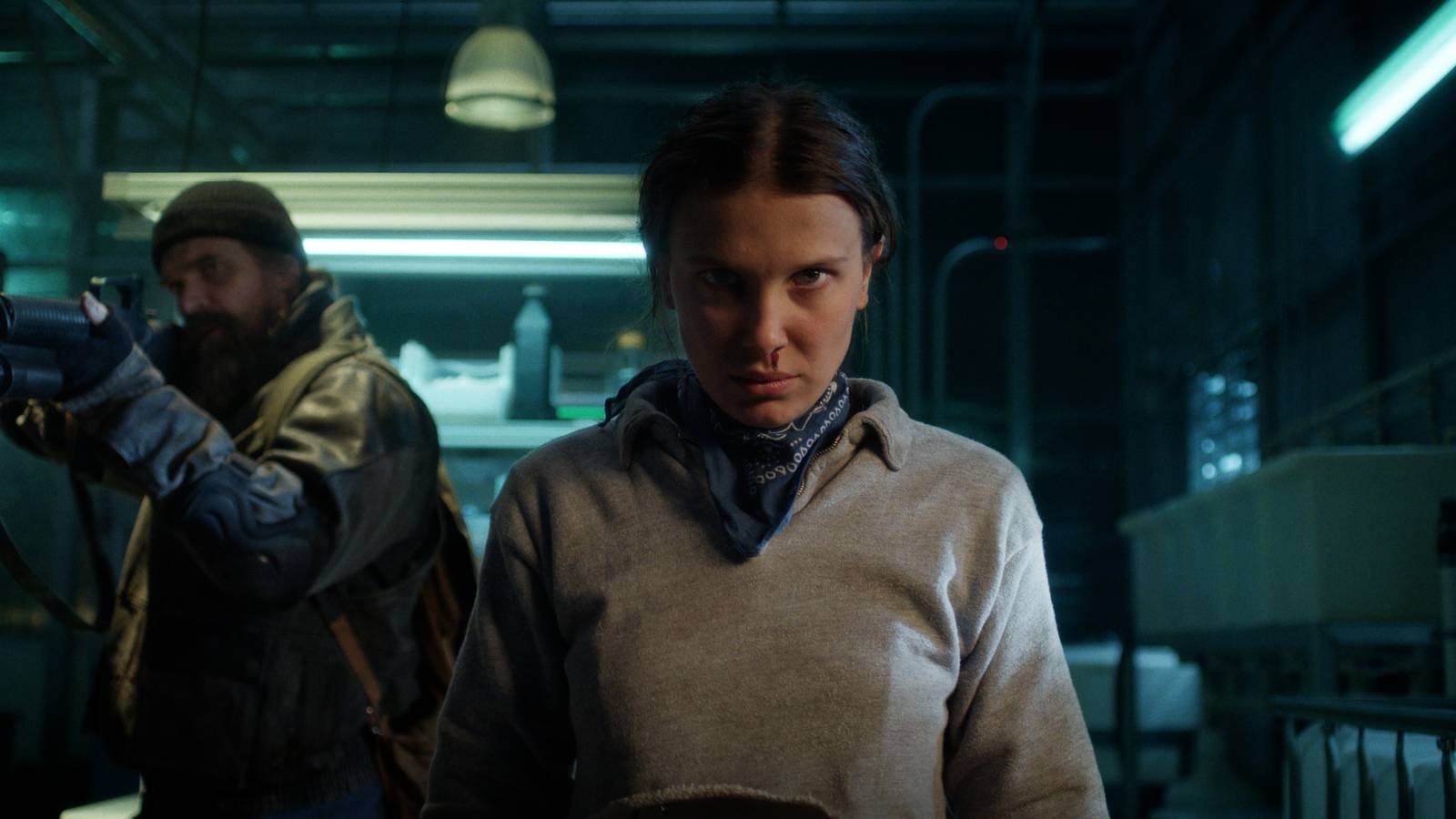
The season opens with a grim reality that sets the stage for a darker narrative. The separation between worlds is dissolving, and the show is leaning heavily into 1970s and 80s war movie tropes to depict it. Chief Hopper’s arc this season is particularly fascinating and terrifying. He is no longer just the town sheriff; he is a soldier fighting a guerrilla war.
Hopper is utilizing the tunnels beneath Hawkins much like the Viet Cong did during the Vietnam War. This is a deliberate tactical choice. He understands that in terms of raw power, humanity is outmatched by Vecna’s hive mind. The only way to survive is to stay hidden and strike from beneath. The script even references the "Tiger Force"—a real-life long-range reconnaissance patrol division infamous for war crimes in Vietnam—adding a layer of historical darkness to Hopper's mindset. He mentions the brutality of war, specifically the taking of "trophies" like ears, highlighting how desperate and primal his need to protect Eleven has become. This over-protectiveness is clearly fueled by the unhealed trauma of losing his daughter, Sara, driving him to extreme lengths.
But the battle isn't just physical; it's psychological. We see Robin and Will discovering what Robin identifies as a "mandala." In Carl Jung’s psychology, mandalas are geometric configurations that represent the creator's state of mind or the "self." This is a massive clue regarding the nature of the Upside Down this season. It suggests that the hellscape isn't just a random alien dimension, but a psychic projection that is shifting according to Vecna's—or perhaps someone else’s—mental state. The environment itself is a reflection of the psyche, hinting that the key to winning isn't blowing things up, but healing the mind that created the nightmare.

Holly Wheeler: The Key to Vecna’s Castle
One of the biggest surprises of Volume 1 is the sudden, pivotal narrative importance of Holly Wheeler. For years she was just the silent younger sister, but we’ve known since a resurfaced tweet from the writers back in 2017 that they had long-term plans for her. This season finally pulls the trigger on those plans.
Holly is taken beyond the boundary wall to a location that visually mirrors "Vecna’s Castle" or Citadel. This ties directly back to the "Vecna Lives!" Dungeons & Dragons campaign released in 1990, where players must travel to Vecna’s citadel to defeat his cult. However, the show subverts our expectations. Unlike his previous victims, Vecna isn’t using trauma and fear to break Holly. He is using love.
He constructs a fake, perfect world for her—a "Garden of Eden" scenario where the grass is green, the sun is shining, and he appears not as a monster, but as the friendly "Mr. Wotsit" (Henry). The psychological horror here is palpable. It feels incredibly reminiscent of the simulated reality in The Matrix or the sheltered ignorance of M. Night Shyamalan’s The Village. He keeps her compliant with comforts: huge breakfast spreads, chocolate chip pancakes, and a boombox playing 80s pop hits like Tiffany’s I Think We’re Alone Now.
This musical choice is a brilliant, layered Easter egg (and perhaps a nod to The Umbrella Academy), but it also underscores her isolation. Why Holly? Vecna reveals later that he targets children not just because they are vulnerable, but because they are "malleable." They are perfect vessels for his consciousness, uncorrupted by adult cynicism. He is grooming her to be a part of his new world, which makes her plight significantly more disturbing than a simple kidnapping.
A Wrinkle in Time & The 1987 Time Jump
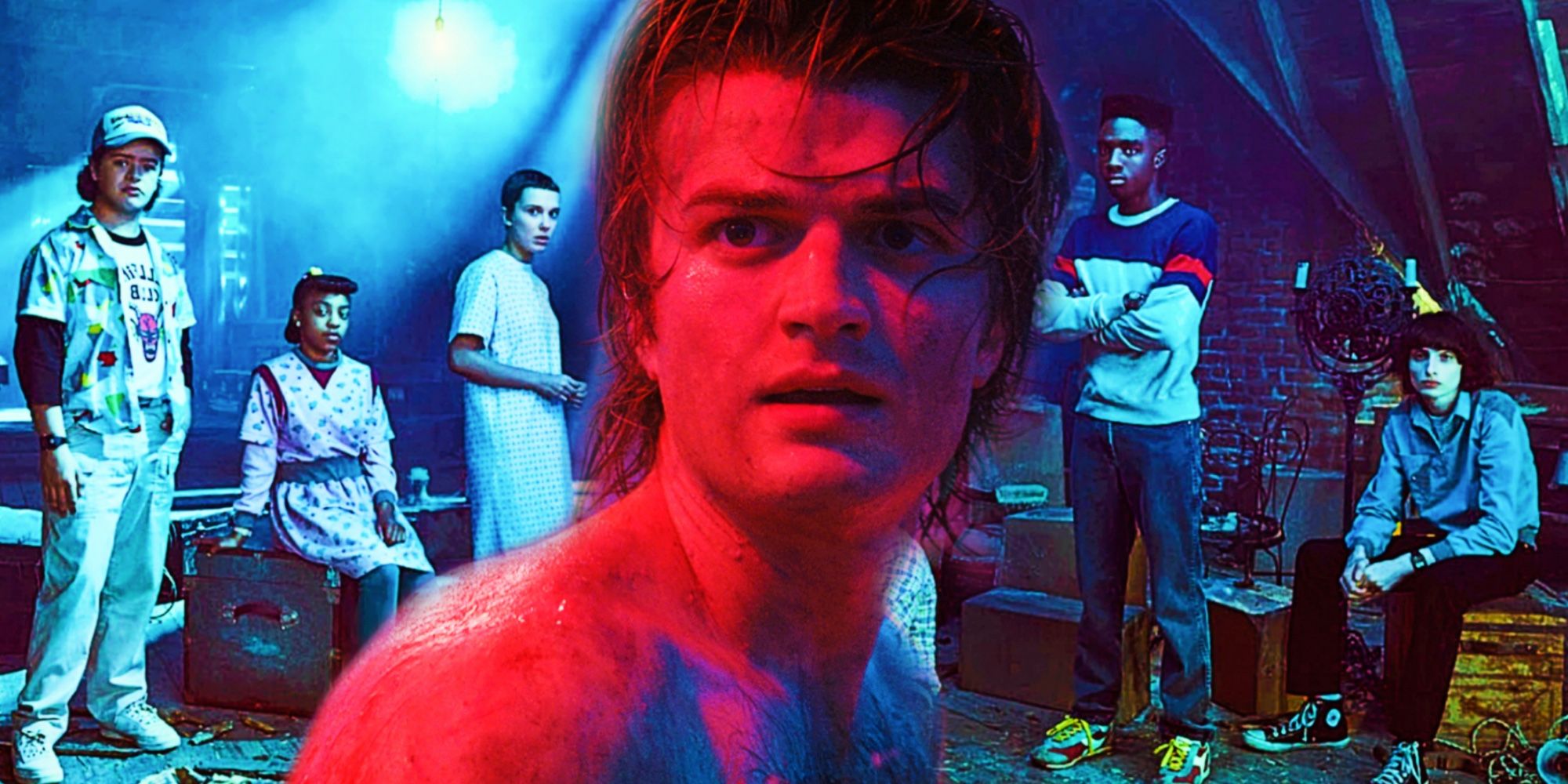
The show jumps forward to November 3rd, 1987. While the actors have visibly aged (Erica looks ready for a corporate job, let alone high school), the time jump serves a specific thematic purpose by aligning the timeline with key 1987 pop culture touchstones.
The primary literary anchor for this season is Madeleine L'Engle's A Wrinkle in Time. In the show, we explicitly see characters studying the book, and the narrative parallels are screaming at us. In the novel, the protagonist Meg Murray searches for her missing father while battling "The Black Thing," a darkness consuming the universe. In Stranger Things, we have Holly (serving as our Meg figure) and the party dealing with the spreading darkness of the Upside Down.
The connections go deeper than just plot summaries. The book features three celestial beings: Mrs. Whatsit, Mrs. Who, and Mrs. Which. In the show, Holly calls Henry "Mr. Wotsit." This is not a coincidence. It implies that this season is fundamentally about tesseracts (folding space and time). We even see Derek holding a model of a tesseract—a 4th-dimensional cube. Mr. Clarke, the forever MVP of exposition, brings up wormholes and dimensional folds, suggesting that the Upside Down isn't just "under" Hawkins, but folded into it.
Furthermore, the concept of Camazotz from the book is crucial. Camazotz is a planet of absolute conformity ruled by a disembodied brain known as "IT." The layout of the Upside Down territory, with its central "brain" and hive mind, maps perfectly onto Camazotz. Vecna is trying to turn Earth into his own version of that planet—a world of perfect, controlled order under his absolute rule.
Will Byers: The Sorcerer Awakens
This is the moment we have been waiting for since the very first episode of Season 1. Will Byers is finally shedding the role of the perpetual victim to become the ultimate weapon.
Throughout Volume 1, the show uses clever editing to mirror Season 1. We get a flashback to November 12, 1983, but from a new perspective: showing Will in the Upside Down while Eleven was in the lab. This visual storytelling confirms that their journeys have always been parallel lines destined to intersect. Will has a realization that changes everything: because Vecna is part of the hive mind, the connection is a two-way street. If Vecna can control the hive to spy on Will, Will can theoretically hijack the hive to control Vecna's forces.
The climax of Episode 4, titled "The Sorcerer," delivers on this promise in spectacular fashion.
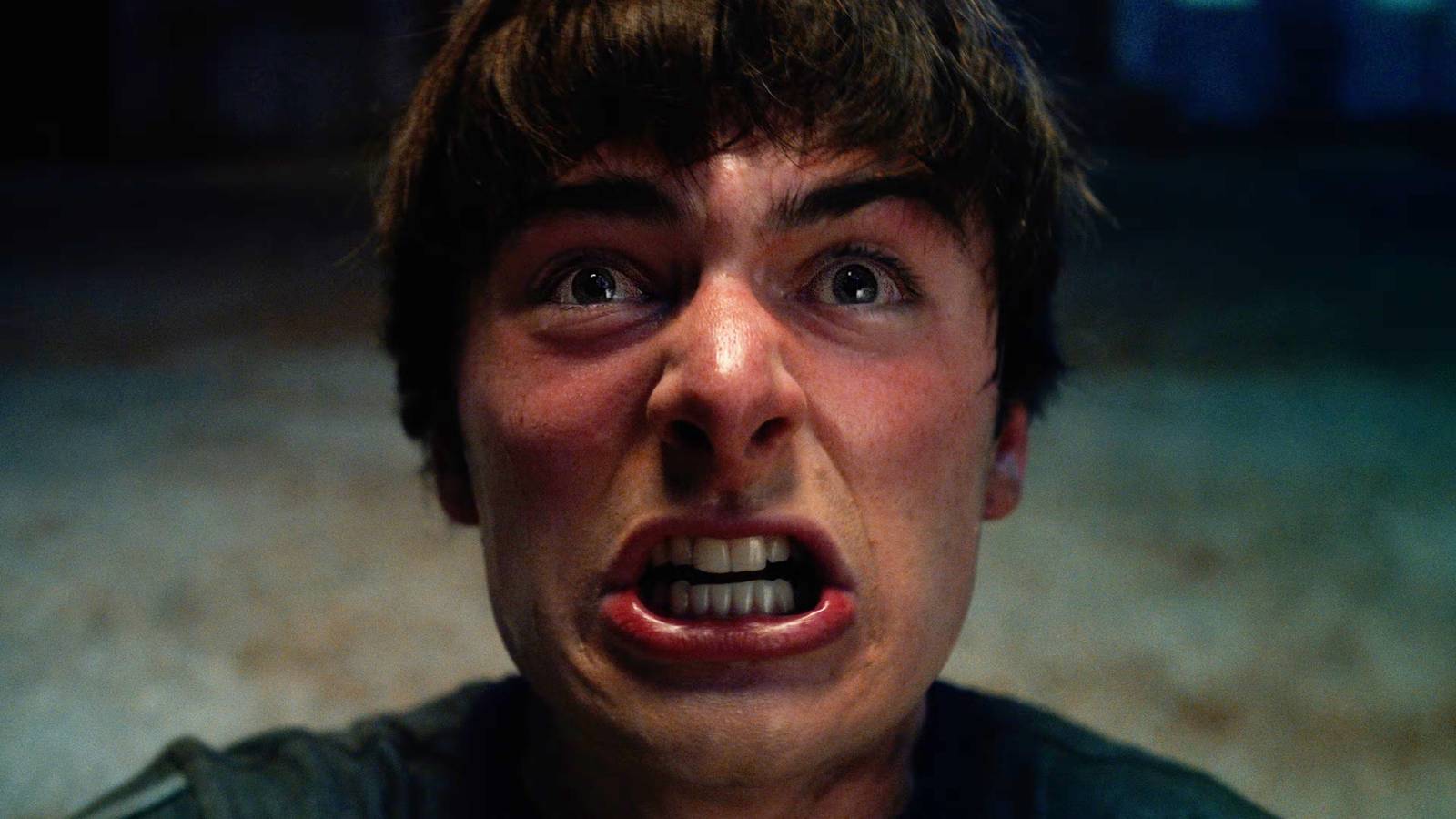
When Vecna’s forces attack the military base (in a high-octane sequence that feels like Aliens meets The Great Escape), Will steps up. Vecna dismisses him as weak, leaving him behind to deal with the Demogorgons. That is his fatal mistake—arrogance. Will taps into his connection, and for the first time, he doesn't cower. His eyes roll back, turning a milky white (mirroring Vecna/Henry’s own trance state), and he snaps.
He destroys the Demogorgons with his mind. This isn't just telekinesis; it's dominion over the dimension itself.
This confirms the biggest theory for the finale: Will is going to control the Mind Flayer. If Vecna is the "Lich" or the "Wizard" (an undead spellcaster), Will is the Sorcerer (a magic user with innate, natural power). The Mind Flayer is a chaotic cloud of particles that Vecna shaped, but Will might be the only one capable of wresting control of that raw power and turning the army against its general.
Easter Eggs You Might Have Missed
The Duffer Brothers packed this volume with references to 80s culture, their own previous works, and deep lore. Here are the most significant ones expanded:
Captain Midnight & The First Shadow: In the Creel house, we see a young Henry’s spyglass labeled "Captain Midnight." This is a deep cut to the stage play The First Shadow. In the play, Henry explores the Nevada caves and first encounters Dimension X while holding this spyglass. It ties the show's lore directly to the theatrical production, confirming that the "Shadow" entity predates Henry.
The Great Escape: The plan to smuggle the kids out of the military base via tunnels uses the code names "Tom, Dick, and Harry." These are the exact names of the tunnels dug by the POWs in the classic film The Great Escape. The show even mirrors the suspense of the film, where the escape is threatened by a discovery mid-operation.
Ferris Bueller’s Day Off: When Dustin hijacks Steve’s BMW to escape, he drives through backyards, smashing through fences. This visually mirrors the famous scene of Ferris running through the neighborhood to beat his parents home. To make the reference undeniable, the song "Oh Yeah" by Yello plays earlier in the season.
Nightmare on Elm Street 3: Dream Warriors: The season is directed partly by Frank Darabont, who wrote A Nightmare on Elm Street 3: Dream Warriors. The influence is undeniable. Vecna attacking through dreams, the concept of "dream logic," and the "perfect world" construct he builds for Holly are massive nods to Freddy Krueger’s tactics in the third film, where the kids had to learn to control their dream powers to fight back.
The X-Men/Dark Phoenix: Will’s power surge has major Dark Phoenix energy. The nosebleed, the white eyes, the sheer destructive force—it’s classic Jean Grey. This foreshadows a potential danger: if Will uses too much power, could he be consumed by it just like Jean?
The Clash: The song "Should I Stay or Should I Go" returns as the "safety song" for the characters, grounding them in reality against Vecna's illusions. It’s a beautiful callback to Season 1 where the song first connected Will to his brother Jonathan.
Steve’s Dad: We finally get a glimpse of Steve Harrington's father, and he is just as unpleasant as we imagined—dismissive and cold. This brief appearance contextualizes Steve's entire character arc, showing us exactly the kind of toxic masculinity he had to unlearn to become the "Mom" of the group.
The Ending Explained: What Comes Next?
Volume 1 ends with the board set for a catastrophic final battle. The military base—supposedly the safest place in Hawkins—has fallen. The "safe" zone is gone. Vecna has evolved physically; he is no longer just a burnt humanoid but a hulking, biological horror reminiscent of William Birkin's final forms in Resident Evil 2. This transformation proves that physical weapons like flamethrowers and guns are now completely useless against him.
The reveal that the "wall" around the Upside Down territory is actually a circle wrapping around a central point—Camazotz—is the critical strategic intel. The military tried to use sonic cannons to suppress Eleven and the creatures, but they failed. The solution isn't technology; it's biology and magic.
Will has realized his power, but the cost is high. Hopper and El are battered, the town is overrun, and the separation between dimensions is dissolving. As we head into the finale on New Year’s, the question isn't just if they can stop Vecna, but what they will have to sacrifice to do it. Will seems poised to become the new anchor of the Upside Down—or perhaps, he must stay behind to close the door forever, fulfilling his role as the true "Cleric" or "Sorcerer" of the party.
What did you think of Volume 1? Do you think Will is going to turn dark, or is he the savior Hawkins needs? Let me know your theories in the comments below!


No comments:
Post a Comment