
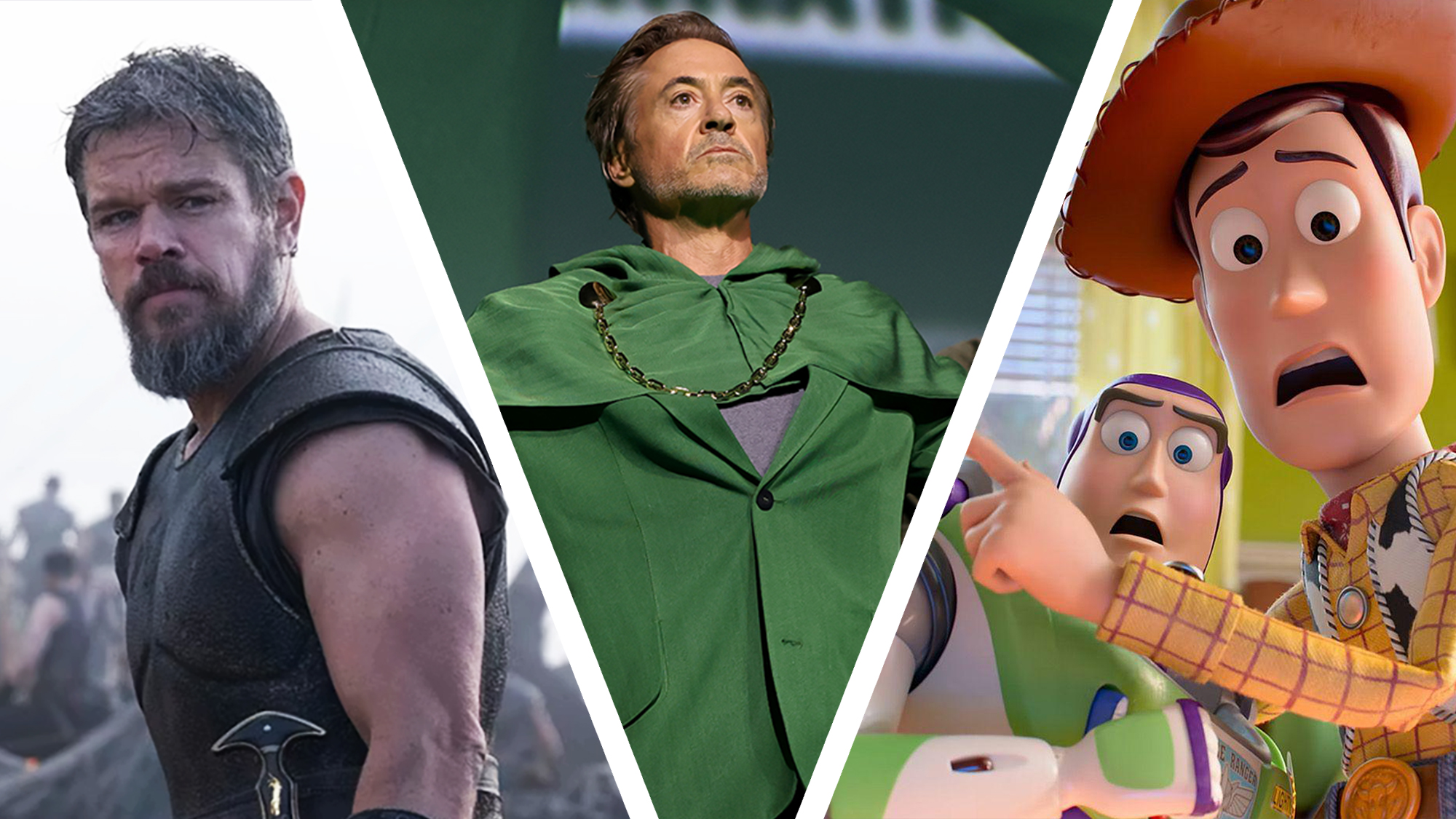
2026 is the biggest entertainment year since 2019. From Avengers: Doomsday and Christopher Nolan's The Odyssey to The Boys finale and A Knight of the Seven Kingdoms — here's your complete month-by-month guide to every must-watch film and show this year.
Introduction: The Content Drought Is Officially Over
If 2025 felt like you were rationing your enthusiasm — watching trailers for things still two years away, rewatching shows you'd already finished just to fill the gap — you were reading the situation correctly. The combined effect of industry strikes, production delays, and a general recalibration of the theatrical landscape meant that 2025 simply didn't deliver at the scale audiences had been conditioned to expect.
2026 is the correction. And it's a dramatic one.
This isn't just a "solid year" for entertainment. By any reasonable measure, 2026 is shaping up to be the most densely packed release calendar since 2019 — which was itself considered almost unsustainably stacked. The difference is that 2026 doesn't just have volume; it has genuine heavyweight events distributed across every month, every platform, and every genre.
A new Star Wars film in theaters for the first time in seven years might not crack the top five most anticipated summer releases. That's the kind of year we're talking about.
What follows is a month-by-month breakdown of the releases worth planning around — the ones worth rearranging your schedule for, booking advance tickets on, and clearing your weekend calendar to watch without interruption. Some are certainties. A few are wild cards. All of them have a legitimate claim on your time.
January 2026: The Dump Month That Isn't
Hollywood has historically used January to quietly release projects it doesn't know how to market. That's less true than it used to be — streaming has given platforms a genuine incentive to launch strong in January, when subscription renewal decisions get made — and 2026's January is one of the strongest opening months in recent memory.
Spider-Noir (MGM+/Prime Video)
Nicolas Cage. 1930s New York. Black-and-white. A hard-boiled detective story wrapped around a Spider-Man who has never heard of SHIELD or the Avengers.
This is the year's first genuine wild card. The concept is either a stylistic triumph or a very expensive eccentricity, and the gap between those two outcomes is wide enough to drive a city bus through. What tips the scales toward optimism is the involvement of Terry Matalas, who turned Picard Season 3 into the best Star Trek television in decades by understanding exactly what that specific audience needed. If he applies the same structural instincts to a noir Spider-Man story, this could be the WandaVision of 2026 — the unexpected, niche-appeal project that becomes the year's most-discussed show.
The visual aesthetic alone is going to generate screenshots. Plan for it to dominate your timeline for at least the first two weeks of January.
The Pitt Season 2 (HBO/Max — January 8)
If you didn't watch Season 1, fix that before this launches. The Pitt brought back the urgent, chaotic energy of peak hospital drama — the kind that made ER appointment television — and Noah Wyle is doing some of the best work of his career in it. The "chaos of the week" structure feels genuinely unpredictable in a way that most procedurals don't manage.
Season 2 picks up that momentum. Essential viewing for anyone who misses the days when medical dramas felt like they had actual stakes.
A Knight of the Seven Kingdoms (HBO/Max — January 18)
The Westeros universe has always had two modes: epic war and intimate character drama. House of the Dragon operates firmly in the first mode — massive dragons, political maneuvering at the dynastic level, consequences measured in bloodlines. A Knight of the Seven Kingdoms is the second mode.
The "Dunk and Egg" stories follow a hedge knight and his unlikely squire navigating a Westeros that's recognizable but less grand — smaller stakes, more human, more concerned with individual people than the fate of kingdoms. For audiences who love the world but find the constant political scheming exhausting, this is the Westeros show they've been waiting for. It functions as comfort viewing in the best possible sense: the setting is familiar, the scale is manageable, and the emotional register is warmer than anything in the main Game of Thrones or House of the Dragon timeline.
Wonder Man (Disney+ — January 27)
Marvel's binge-drop approach here is a signal. When Disney releases all episodes simultaneously rather than weekly, they're betting that audiences will devour it in one sitting and that the conversation will compress into a single intense weekend rather than building slowly over weeks. That's a strategic choice, and it tells you something about the confidence level in the material.
A Hollywood satire centered on a stuntman who acquires powers, with Yahya Abdul-Mateen II leading, and presumably plenty of self-aware commentary on the MCU's own industrial machinery — this has a clear tonal lane and enough talent behind it to execute well within that lane.
In Theaters: January Films Worth Your Money
28 Years Later: The Bone Temple (January 16): The return of Danny Boyle and Alex Garland to the universe they created with 28 Days Later is genuinely significant. The original is one of the most important horror films of the 2000s. After 23 years, bringing back the creative team — not just the franchise — to a story set three decades after the outbreak suggests a sequel that has something to say rather than just something to sell. The concept of a Britain that has been completely isolated from the rest of the world for nearly three decades is haunting before the first frame.
Greenland: Migration (January 9): The original Greenland worked because it stayed focused on one family rather than trying to be a disaster-movie epic. Following that family into a post-impact Europe, navigating the long aftermath rather than the immediate crisis, sounds like exactly the kind of grounded survival story the genre needs more of.
February 2026: Super Bowl, Trailers, and Scream
What the Super Bowl Actually Means for Movie Fans
Super Bowl 60 (February 8) is less a sporting event than a trailer delivery mechanism for anyone who cares about cinema. Studios spend the kind of money on Super Bowl spots that smaller countries allocate to infrastructure, and the 2026 slate gives them extraordinary material to work with. First proper looks at James Gunn's Superman and Toy Story 5 are expected. The MCU slot — if Avengers: Doomsday takes it — will generate the kind of immediate online reaction that makes server infrastructure visibly struggle.
Watch the game live or have a very good DVR setup. The trailers are the show for a lot of us.
Scream 7 (February 27)
Neve Campbell's return to the Scream franchise after her very public departure from Scream VI is the development that makes this feel like a genuine event rather than another sequel entry. Sidney Prescott back where she belongs, in a film that the internet suggests is designed to bring the full legacy cast together one more time — if the execution matches the concept, this is the horror event of the first quarter.
The Scream franchise has always worked best when it's commenting on itself and the genre simultaneously. A legacy ensemble finale has a lot of material to work with.
Monarch: Legacy of Monsters Season 2 (Apple TV+ — February 27)
While the theatrical Godzilla films handle the large-scale creature battles, Monarch does the work the films don't have time for: the human stories, the institutional history, the long-term consequences of living in a world where Titans occasionally emerge and reshape the landscape. Season 2 expands the Hollow Earth mythology and brings in more Titan sightings, but the character drama is the real draw. Genuinely underrated show.
March 2026: The Month That Will Break Your Social Life
March 2026 has a flagship release or major premiere on nearly every night of the week across multiple platforms. Social plans will suffer. Sleep will suffer. The water cooler conversation at work will become completely unmanageable.
Daredevil: Born Again Season 2 (Disney+)
Matt Murdock versus Wilson Fisk as Mayor of New York City — the stakes are political, the moral landscape is genuinely complex, and the fight choreography rumors suggest this season is pushing the long-take corridor sequence aesthetic from the original Netflix run into something even more ambitious. The first season of Born Again established that this version of the character can carry the weight of the Netflix era's best work. Season 2 tests whether that standard holds at higher stakes.
The Boys Season 5 (Prime Video)
This is the finale. After years of escalating transgression — pushing harder against the boundaries of what prestige television will show and say — The Boys arrives at its endgame with Homelander and Butcher on an irresistible collision course and a cast where literally no one is guaranteed to survive.
The show has functioned as the sharpest media satire on television for half a decade. How it ends — whether it can stick an actual landing at the scale it's built to — is one of 2026's most genuinely interesting questions. Nobody is safe. That's not promotional hype; it's a structural fact about how the show has always operated.
Project Hail Mary (March 20)
The dark horse pick of the entire year, and I'll stand by that assessment confidently.
Andy Weir's novel is, among people who have read it, considered one of the great science fiction books of the 21st century — a story about an astronaut waking up alone on a spacecraft with no memory of how he got there, facing a mission that may be humanity's last option. The central relationship at the book's heart is one of the most unexpected and emotionally resonant in recent sci-fi fiction.
Ryan Gosling in the lead role, directed by Phil Lord and Christopher Miller (who made Spider-Man: Into the Spider-Verse and 21 Jump Street), is a combination that sounds almost too good on paper. Lord & Miller's ability to find genuine warmth and comedy in high-concept material, combined with Gosling's capacity for understated emotional depth, maps almost perfectly onto what the book requires.
If you haven't read the novel, go in blind. Genuinely. Don't look up plot summaries, don't watch extended trailers, don't let anyone tell you what happens. The experience of discovering this story fresh is something worth protecting.
One Piece Season 2 (Netflix — March 13)
The first live-action One Piece season should not have worked. The source material is a 25-year manga with hundreds of characters, a tonal range that swings between broad comedy and genuine emotional devastation, and a visual language that translates awkwardly to live-action. Season 1 worked anyway — through careful attention to character, respect for the source material, and production design that committed fully to the world's inherent absurdity.
Season 2 brings Chopper and the Alabasta Saga, which means the emotional scale increases significantly. If the production handles the desert kingdom arc with the same care Season 1 brought to the East Blue saga, Netflix has its biggest hit of the year.
April and May 2026: Spring's Heavy Hitters
Euphoria Season 3 (HBO — April 12)
It's been years, and the time jump that takes these characters out of high school into their early 20s is exactly the creative decision the show needed. Rue and her friends as adults — navigating addiction, identity, and consequence without the structural container of high school — is the story Euphoria has always been moving toward. The fashion influence will be immediate and significant, and the cultural conversation will be unavoidable from April through June.
Michael (April 24)
The Michael Jackson biopic is going to be 2026's most discussed and most divisive theatrical release in the spring window. Antoine Fuqua directing, Jaafar Jackson — MJ's nephew — in the lead role, and a production that reportedly pursues full immersion rather than a conventional biographical approach. Regardless of where you stand on the surrounding conversations, this will be one of the year's largest box office events and will generate more column inches, social media discussion, and genuine argument than almost anything else on this list.
The Mandalorian & Grogu (May 22)
Star Wars returns to theaters for the first time in seven years, and the vehicle for that return is the story that reinvigorated the franchise's emotional credibility. Mando and Grogu in IMAX is an event regardless of where the hype cycle currently sits — the bond between these two characters is the most genuinely affecting thing the Disney Star Wars era has produced, and seeing their story conclude (or expand) on the largest possible screen will be a significant moment for the fanbase.
The Devil Wears Prada 2 (May 1)
The original Devil Wears Prada has aged into a genuine classic — a film that understood the fashion industry, workplace power dynamics, and female ambition with more sophistication than it got credit for at release. The sequel's angle — Miranda Priestly navigating a world where print publications are dying and influence has migrated to platforms and algorithms — is the rare premise that justifies the sequel's existence rather than just cashing in on it.
Meryl Streep and Emily Blunt operating in a version of that world, with the added complication of 20 additional years of dynamic between their characters? Day-one ticket. Absolutely.
Summer 2026: The Season You Won't Spend Outside
The Disclosure Day (June 12)
Steven Spielberg returning to alien contact science fiction for the first time in decades, with a premise centered on a simultaneous global revelation — 8 billion people finding out the truth about extraterrestrial life at the exact same moment — is the kind of high-concept event that only Spielberg can execute at the scale it deserves. He invented the cinematic language of first contact with Close Encounters and E.T. What he does with that material in 2026, with modern production capabilities and a distinctly different cultural moment, is genuinely unpredictable.
Toy Story 5 (June 19)
Pixar's ability to generate the deepest possible feelings about animated plastic toys is, at this point, almost supernatural. Whether Toy Story 5 was creatively necessary is a separate question from whether it will be emotionally devastating — the answer to the second question is almost certainly yes, regardless of your position on the first. Technically, this will be a showcase. Narratively, expect something about how toys (and perhaps their owners) reckon with a world increasingly mediated through screens.
Supergirl: Woman of Tomorrow (June 26)
The James Gunn DCU's first major test of whether its cosmic ambitions can match its earthbound ones. Milly Alcock in a space epic that's been described as closer in visual language to Dune than to a conventional cape film — cold, vast, visually austere — represents a deliberate choice to differentiate from the MCU's approach to space-based storytelling. If it works, it establishes the DCU's cosmic register as genuinely distinct. The risk is significant. So is the potential.
The Odyssey (July 17)
The summer's centerpiece. Probably the year's centerpiece.
Christopher Nolan shooting a futuristic interpretation of Homer's Odyssey on 100% IMAX cameras, with a cast that includes Matt Damon, Tom Holland, and Anne Hathaway, in what's being described as a practical-effects driven space epic — this is the kind of release that justifies the theatrical experience in ways that no streaming platform can replicate.
Nolan has made a habit of doing exactly what people think is impossible: making blockbusters that are intellectually demanding, visually unprecedented, and enormous commercial successes simultaneously. There's no reason to bet against that record. The Odyssey is the film of the year until proven otherwise.
Spider-Man: Brand New Day (July 31)
Tom Holland's return in what's reportedly the most grounded Spider-Man story the MCU has attempted — no Avengers, no Stark technology, no universe-ending stakes. Just Peter Parker, Matt Murdock, Wilson Fisk, and a street-level war for the soul of New York City.
This is the Spider-Man film the character has needed since Homecoming established how much Holland's interpretation works best at human scale. Pairing him with the Daredevil corner of the MCU — which has consistently been the franchise's most grounded and morally complex material — is the logical next step.
Lanterns (HBO — August)
The most intriguing DCU entry on the 2026 calendar. Kyle Chandler as a veteran Hal Jordan. Aaron Pierre as a younger John Stewart. The format is a murder mystery — True Detective in tone and structure — that happens to involve people with power rings. HBO doing prestige drama with DC characters rather than spectacle-first superhero content is a bet worth taking seriously. HBO has earned the benefit of the doubt with this kind of material.
Fall and Winter 2026: The Road to Awards Season
The Social Reckoning (October 9)
Aaron Sorkin writing a sequel to The Social Network — covering the Facebook Files era, the misinformation crisis, and the moment when Silicon Valley's failures became visible to everyone — with Jeremy Strong as Mark Zuckerberg is the awards season launch event. Strong playing Zuckerberg after Jesse Eisenberg's iconic original interpretation is one of 2026's most fascinating casting decisions. The dialogue will be rapid, the moral positioning will be pointed, and it will be impossible to look away.
Chronicles of Narnia (Netflix — November)
Greta Gerwig's Narnia is the film that reveals whether the Barbie moment was a peak or a baseline. Gerwig directing a major fantasy epic for Netflix — with a reported theatrical window that suggests the platform is taking this seriously as a cinematic event rather than a streaming premiere — brings the sensibility that made Barbie and Little Women work to material that has never found a fully successful screen adaptation.
C.S. Lewis's world has been waiting for a filmmaker who understands both the scale of its imagination and the specificity of its emotional register. Gerwig might be that filmmaker.
Avengers: Doomsday (December 18)
The year's closing event, and almost certainly its highest-grossing theatrical release. The Russo Brothers returning to the MCU. Robert Downey Jr. back — not as Tony Stark, but as Doctor Doom, the franchise's new central antagonist. The Fox-era X-Men integrated into the main timeline. The beginning of the end of the Multiverse Saga.
This is the rare film where the expectations are almost impossibly high and the assembled talent is genuinely capable of meeting them. Doomsday will own the box office through the holiday season and will continue generating conversation well into 2027. Clear your December 18 calendar now.
The Five Releases Worth Moving Your Schedule Around
For those who can't follow the full calendar, these are the five where the combination of creative talent, source material, and execution potential puts them in a different category:
- The Odyssey — Christopher Nolan has never made a bad film. He's made a few that divide audiences, but none that can be called failures of ambition or craft. This is his most ambitious project yet.
- Project Hail Mary — The novel is exceptional. The talent assembled to adapt it is ideally suited to the material. This could be Arrival-level science fiction.
- The Boys Season 5 — The finale of the most consistently challenging show on streaming. The ending will be discussed for years.
- Avengers: Doomsday — The scale of what the Russo Brothers are reportedly assembling puts this in event-cinema territory. Whatever else 2026 brings, this is the theatrical event of the year.
- A Knight of the Seven Kingdoms — The wild card pick. Sometimes the smaller, quieter entry in a massive franchise is the one that reminds you why you fell in love with the world in the first place.
Frequently Asked Questions About the 2026 Entertainment Calendar
What is the biggest movie of 2026? By box office projection, Avengers: Doomsday (December 18) is the overwhelming favorite. Toy Story 5 and Spider-Man: Brand New Day are the closest competition. By creative ambition, Christopher Nolan's The Odyssey is the most significant release of the year.
Is Star Wars back in theaters in 2026? Yes. The Mandalorian & Grogu (May 22) is the first Star Wars theatrical release in seven years, following The Rise of Skywalker in 2019. It's based on the Disney+ series and brings the Mando and Grogu story to the big screen.
What is Project Hail Mary about? Without spoiling the story: Ryan Gosling plays an astronaut who wakes up alone on a spacecraft with no memory of how he got there, facing a mission of critical importance to humanity's survival. The film is directed by Phil Lord and Christopher Miller and is based on Andy Weir's novel of the same name. Going in with minimal prior knowledge significantly improves the experience.
When does Avengers: Doomsday come out? December 18, 2026. Directed by the Russo Brothers and starring Robert Downey Jr. as Doctor Doom, alongside a cast that reportedly integrates the Fox-era X-Men characters into the MCU's main timeline.
What is Lanterns on HBO? Lanterns is a DC Universe series on HBO framed as a prestige murder mystery rather than a conventional superhero show. Kyle Chandler plays Hal Jordan and Aaron Pierre plays John Stewart, two Green Lanterns investigating a case that takes on increasing cosmic significance. It premieres in August 2026.
What new shows are coming to HBO in 2026? The major 2026 HBO launches include The Pitt Season 2 (January 8), A Knight of the Seven Kingdoms (January 18), Euphoria Season 3 (April 12), and Lanterns (August). The network also has Daredevil: Born Again Season 2 through its Disney+ relationship.
Conclusion: Clear Your Calendar for All of It
2026 is the year the content pipeline refills completely. The backlog of projects delayed by strikes and production disruptions, combined with an already aggressive development slate, has created a calendar that is genuinely historic in its density.
The challenge isn't finding things worth watching — it's making decisions about what to prioritize when three things you've been anticipating for years release within the same week. That's a good problem to have. After 2025's relative lean period, it's a very good problem to have.
The practical advice: build your calendar now. Identify the non-negotiables — the releases you're not willing to experience through secondhand social media spoilers — and protect those dates. Everything else can fill in around them.
2026 is going to be exhausting in the best possible way. See you in the dark.
.png)


No comments:
Post a Comment