
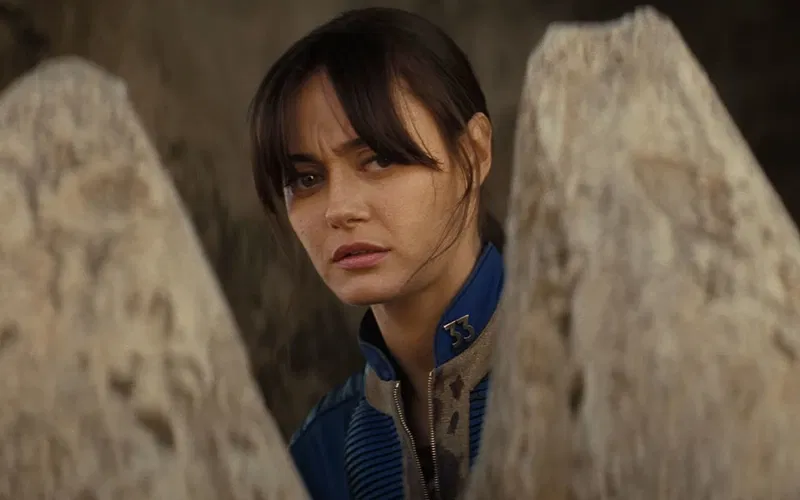
Fallout Season 2 Episode 6 just rewrote wasteland history. From the Water Chip conspiracy and Mr. House's cold fusion deal to Ron Perlman's cameo and Lucy's biggest moment yet — here's a full breakdown of every major reveal.
Introduction: That Was Not a Normal Episode of Television
Take a breath. Seriously.
Fallout Season 2 has been building toward something big, but Episode 6 didn't just deliver on that promise — it detonated it. This wasn't a mid-season pivot or a table-setting hour designed to connect plot points. This was the kind of episode you pause three times because you need a moment to process what you just saw.
For people who've been playing these games since the nineties, the lore drops alone were enough to cause a minor crisis. For newer fans who came in through the show, it was probably still deeply unsettling in the best possible way. Either way, the writers just fundamentally rewired the history of the wasteland — and there's no going back to the version of the story we thought we knew.
Let's go through every major moment, what it actually means, and why this episode might be the most important hour of Fallout storytelling outside the games themselves.
The Water Chip Reveal: Vault-Tec Knew Exactly What They Were Doing
If you played the original Fallout — the 1997 isometric classic — then the water chip wasn't just a game mechanic. It was a source of genuine psychological distress. That ticking clock, that desperate scramble through the wasteland, the creeping dread that you might run out of time before your entire vault died of thirst.
Episode 6 just recontextualized all of that as something far darker than a technical failure.
The scene is almost mundane in how it's delivered: a pre-war Vault-Tec scientist, eating a burger, casually explaining that water chips were engineered with a 30% failure rate. Not as a flaw. Not as an oversight. As a feature.
A desperate, dehydrated population is a controllable one. That was the logic. And the people making that decision weren't cackling supervillains — they were mid-level corporate employees treating human survival as a project management variable. That particular flavor of evil — bureaucratic, detached, spreadsheet-justified — is the most honest thing the Fallout franchise has ever said about how atrocities actually happen.
The "VIP Freeway" Is the Detail That Should Haunt You
Buried within the same sequence is something that deserves more attention than it's probably getting: the VIP Freeway system. For the right price, the ultra-wealthy received a 30-minute advanced nuclear warning above what the general public got.
Thirty minutes. That's the monetary value they placed on having slightly more time to say goodbye to everything.
It's darkly funny. It's also perfectly in keeping with the franchise's satirical DNA — the idea that even at the literal end of the world, someone found a way to monetize the experience for premium customers. More importantly, it proves something the games always implied but rarely stated outright: the vault dwellers weren't saved by Vault-Tec. They were harvested by it.
Mr. House, Cold Fusion, and Hank MacLean's Most Disturbing Belief
New Vegas fans, the show finally gave us what we've been waiting for — and delivered it wrapped in something deeply uncomfortable.
The exchange at the center of Episode 6 is this: Vault-Tec hands over brain-control technology to RobCo representatives operating under the shadow of Robert House, and in return, they receive cold fusion. It's the kind of deal that sounds almost logical in a pre-war boardroom — two corporations trading proprietary assets — until you think carefully about what each side is actually acquiring.
Vault-Tec gets the power to control human cognition. House's people get unlimited, clean energy. Both are, in their own way, the keys to dominating whatever world comes after the bombs fall.
Why Hank MacLean Is More Frightening Than Any Raider
What makes this storyline land so hard is how the show handles Hank's perspective. He isn't portrayed as a man who knows he's the villain. He genuinely believes what he's selling.
To Hank, free will is the Great War waiting to happen again. He looks at human history — the conflicts, the tribalism, the self-destruction — and concludes that the only path to survival is removing the variable that keeps causing the crashes. That variable is human autonomy. His vision of the "Automated Man" isn't a dystopian nightmare to him. It's a cure.
That makes him far more dangerous than someone who simply wants power for its own sake. People who think they're saving the world are capable of justifying almost anything. And the show earns that discomfort without letting him off the hook for a single decision he's made.
The Enclave Returns — And Barb Howard Changes Everything You Thought About Her
Here's your confirmation, for anyone who still needed it: the Enclave is the shadow institution running the levers behind every major pre-war corporation. They're not fringe. They're not a rogue faction. They were baked into the power structure from the beginning.
But the smarter creative choice in Episode 6 isn't the confirmation — it's what the show does with Barbara Howard.
A Villain Gets a Human Face
Barb has read as a cold, calculating corporate operator for most of the season. Someone comfortable in the language of acceptable losses and long-term strategy. Easy to dislike. Easy to categorize.
Episode 6 complicates all of that.
She isn't at that table because she believes in the Enclave's mission. She's there because they have leverage over her daughter, Janey. The atrocities she's facilitating — the planning, the complicity, the agreements that will shape how millions of people die — aren't happening because Barb is a monster. They're happening because she's a mother backed into a corner with no clean exits.
That doesn't absolve her. But it asks you a question the show has the confidence to leave unanswered: how many lives would you allow to end to protect the one person you cannot bear to lose? It's the hardest moral question in the wasteland, and the writers put it in the mouth of a character we were prepared to write off.
Lucy vs. Hank: The Scene That Earned Everything
The emotional center of Episode 6 is the confrontation between Lucy and Hank inside the simulation vault — a facsimile of safety built from nostalgia and artificial sunshine. It's a perfectly constructed stage for the conversation they've needed to have all season.
Their argument over All Quiet on the Western Front is the kind of writing that reminds you TV can do things other mediums can't. Hank weaponizes the novel's themes — war's pointlessness, human beings' inability to learn from suffering — as justification for removing the human element from future decision-making. If people can't stop destroying each other, the logical solution is to stop letting people decide.
Lucy's counter isn't an eloquent philosophical rebuttal. It's something messier and more honest than that.
The "Oki-Dokie" Moment Is the Scene of the Season
This is the moment. If you weren't fully paying attention before, this is where the episode demands everything you have.
Lucy's signature catchphrase — the cheerful, reflexive "oki-dokie" she's carried with her since the very first episode — turns out to be a conditioned response. A behavioral modification built into vault culture specifically to produce compliant, agreeable residents. Happy non-player characters who don't ask difficult questions or create friction in the system.
Watching that land on Lucy in real time is gutting. Because the show has spent two seasons letting us hear that phrase. We associated it with her optimism, her resilience, her particular brand of stubborn goodness. And now it's been revealed as a cage disguised as a personality trait.
Her rejection of it — her choice to walk away from the simulated safety of her father's world into the blood and dirt and genuine danger of the real one — is the culmination of her entire arc. She's not just escaping a room. She's breaking her own programming, and doing it consciously, which is the hardest version of that choice.
Ron Perlman's Cameo: The Soul of the Games Shows Up
Let's be honest: the Super Mutant saving Cooper was already a great moment. FEV lore getting direct screen time is something the fandom has wanted for a long time, and the show handled it with real care.
But then that voice. Ron Perlman — the man whose narration opened almost every mainline Fallout game, whose delivery of "war never changes" became one of gaming's most iconic phrases — voicing a Super Mutant standing in a ruined church next to a Ghoul.
It's fan service in the best possible sense. Not a hollow Easter egg, but a genuinely meaningful casting choice. Perlman's voice carries the entire history of the franchise with it. Having it come out of a creature that the Enclave considers a failed human — something to be exterminated rather than counted — while that creature stands in a space meant for spiritual community, is quietly one of the most pointed images the show has produced.
Two groups that the old world created and then tried to destroy, standing together in the wreckage of civilization. That's the actual wasteland. That's been the point all along.
Vault Chaos, Hidden Lore, and the Production Team's Love Letter to Fans
While the major dramatic confrontations were happening, the social fabric of Vaults 32 and 33 was unraveling in ways that felt very true to how communities actually fall apart.
The use of "Uranium Fever" during the rebellion sequence was a tonal masterstroke — that manic, desperate energy of people throwing a party because they've run out of better ideas. When you can't fix the water supply, apparently the next move is unsanctioned dancing. It's bleak and very human.
The Easter Eggs Are Doing Real Work This Season
The production team's commitment to the source material goes well beyond surface-level nods:
- Grognak the Barbarian comics on Bud's desk — a franchise staple since Fallout 3
- The "Ninja Club" flyer using the exact perk icon from Fallout 3's skill system
- Chet's storyline with Steph reading like a classic Fallout side-quest with genuinely high stakes — because Steph's almost certainly a Vault 31 sleeper agent, which makes the "arranged marriage" subplot considerably less funny in retrospect
These aren't just rewards for longtime fans. They're doing narrative work. They're establishing that the world of the show and the world of the games are operating by the same rules, which matters enormously for where the story goes next.
The Cold Fusion Ending: When the MacGuffin Becomes Something Else
Season-long chase narratives live and die by their central object — the thing everyone's pursuing and nobody can quite reach. Cold fusion has been the theoretical prize hanging over Season 2's plot structure, and the reveal of where it actually lives is one of the more inspired choices the writers have made.
It wasn't in a vault. It wasn't in a secure Enclave facility or a hidden RobCo cache. It was inside Hank MacLean himself. The key to unlimited energy — the resource that could reshape whatever civilization manages to rebuild — was literally embodied in the antagonist.
Cooper extracting it physically from Hank turns the season's MacGuffin into something visceral and alive. The future of the wasteland isn't sitting in a briefcase. It had to be taken from a person. That's very Fallout.
What Comes Next: Reading the Board Before the Finale
The episode leaves every major player in a position that sets up an ending with genuine consequences:
- Lucy is almost certainly moving toward the New Vegas strip. The yellow dress isn't subtle — the show knows what it's doing with that visual.
- Cooper now possesses cold fusion, which means he's carrying the one thing Mr. House would do almost anything to acquire. That conversation is going to be one for the ages.
- Maximus and Thaddeus are back on a converging path, with Dogmeat doing more reliable navigational work than most human characters managed this season.
The pieces are in place. Whether the show sticks the landing or not, Episode 6 has given it everything it needs.
Tips for Getting the Most Out of Re-Watching This Episode
If you're planning a second watch — and you should be — here's what's worth paying closer attention to:
- The background signage in the pre-war sequences. The production design team hides corporate logos and product names that connect to in-game lore.
- Barb's body language throughout the Enclave meeting. Once you know what's driving her, you'll see her perform being calm in a completely different way.
- Every time Lucy says "oki-dokie" before the reveal. It recontextualizes each previous use significantly.
- The church architecture in the Ron Perlman scene. There's specific iconography in what's been destroyed versus what's been left intact.
Frequently Asked Questions
Is Ron Perlman actually in Fallout Season 2? Yes — he voices the Super Mutant in Episode 6. Perlman is the narrator of the mainline Fallout game series, so his appearance is a significant moment for longtime fans.
What is the Water Chip, and why does its reveal matter? In Fallout 1, the water chip was a critical component that regulated the water supply in Vault 13. Finding a replacement before it failed was the entire premise of the game. The show revealing it was designed to fail — by Vault-Tec — reframes that game's entire story as a manufactured crisis.
Who is Robert House, and what does his appearance mean for the show? Robert House is the founder of RobCo and the de facto ruler of New Vegas in Fallout: New Vegas. His shadow appearing in Season 2 confirms that the show is moving toward the Mojave as a central location — which the yellow dress foreshadowing already suggested.
What is the Enclave in Fallout? The Enclave is a secretive faction composed of pre-war government and corporate elites who believe they are the legitimate continuation of the United States government. They've appeared as antagonists in Fallout 2, Fallout 3, and Fallout 76. Season 2 confirms they were operating behind the scenes before the Great War even happened.
What is the FEV, and why does it matter? FEV — Forced Evolutionary Virus — is the bio-weapon responsible for creating Super Mutants in the Fallout universe. Its appearance in Episode 6, alongside the Ron Perlman cameo, gives the show its most direct connection yet to the deep lore of the games.
Is Steph from Vault 31 a sleeper agent? The show hasn't confirmed this explicitly, but the signs are pointing strongly in that direction. Vault 31 has been established as something other than a standard residential vault, and Steph's behavior throughout the season is consistent with someone operating under specific long-term instructions.
What does cold fusion mean for the Fallout universe? Cold fusion represents unlimited, clean energy — the resource that could theoretically allow a civilization to rebuild from scratch without the limitations of scarce fuel. In the wasteland context, whoever controls it controls the future. That's why it's been the central prize of the season, and why Mr. House's interest in it is so significant.
Conclusion: Twenty-Five Years of Lore Paying Off at Once
What makes Episode 6 exceptional isn't any single moment — it's the weight of everything the episode carries simultaneously. The water chip reveal rewrites the emotional memory of a decades-old game. Barb Howard's backstory turns a villain into a tragedy. Lucy's character breakthrough earns every conversation that led to it. And Ron Perlman's voice in a ruined church feels less like fan service and more like the franchise's own origin story walking into the room.
Fallout has always been about the gap between the civilization humanity thought it was and the one it actually built. Between the clean, bright optimism of the Vault-Tec aesthetic and the contaminated reality underneath. Episode 6 doesn't just illustrate that gap. It measures it, in human cost, across every storyline running simultaneously.
War never changes. But episodes this good don't come around very often.
.png)


No comments:
Post a Comment