
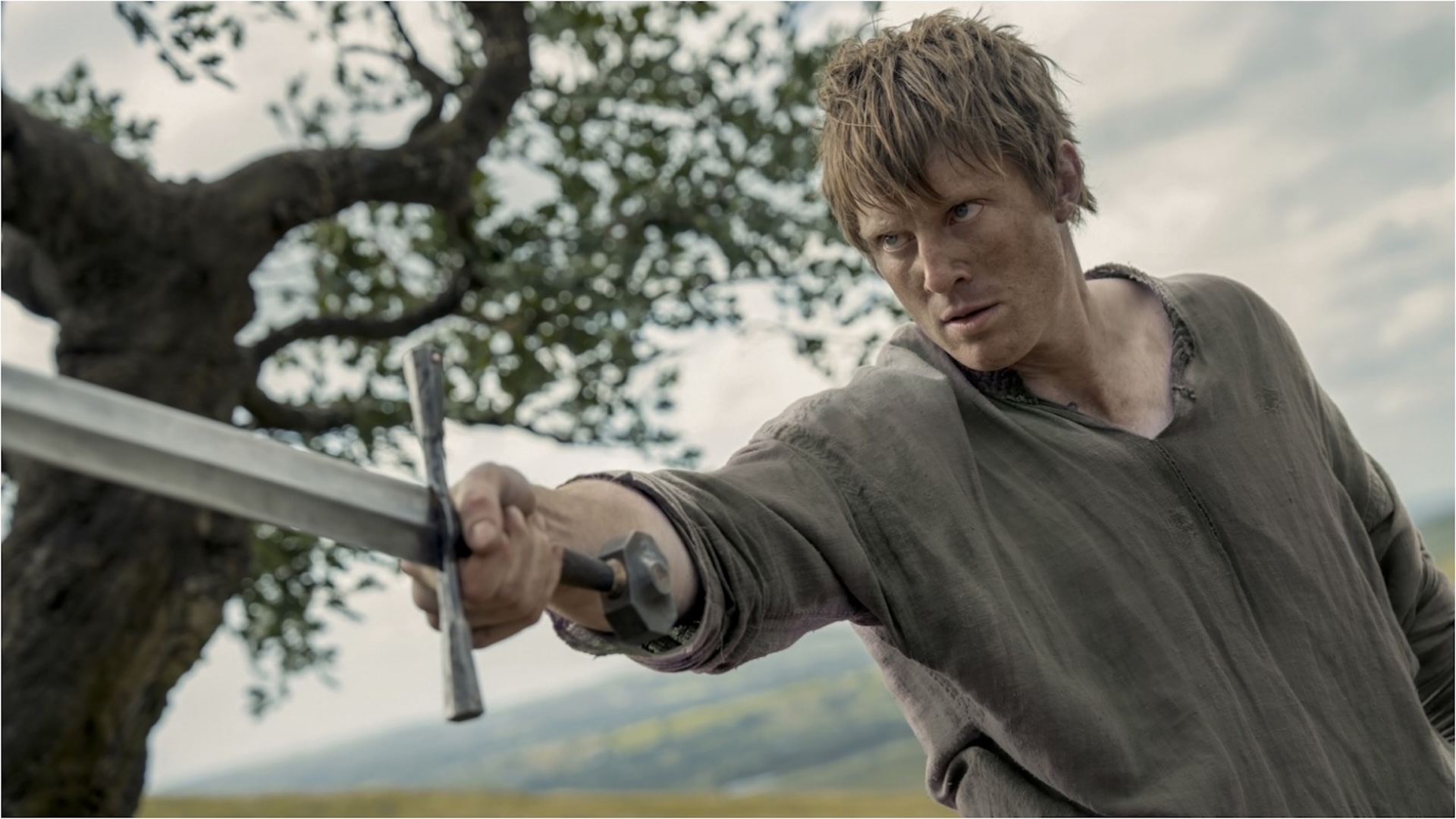
Guys, take a deep breath. We are finally back.
But let’s be real—this isn’t the Westeros we’ve been traumatized by for the last decade. A Knight of the Seven Kingdoms just dropped, bringing George R.R. Martin’s beloved novella The Hedge Knight to life, and honestly? It’s the breath of fresh air I didn’t know I needed.
Think about it: for years, we’ve been conditioned to expect the apocalypse. We aren’t watching the White Walkers march on the Wall to end humanity. We aren’t watching dragons burn entire cities to ash or political heavyweights play 4D chess for the Iron Throne while casually murdering their relatives. This is… quiet. It’s funny. It’s got heart. If you were worried this franchise was running out of steam after the heavy, grimdark war drama of House of the Dragon, let me stop you right there.
The premiere is fantastic. It feels less like a war documentary and more like A Knight’s Tale meets a classic western. It captures that specific, whimsical feeling of a squire just trying to find his place in a massive world. The visuals are brighter, the grass is greener, and the summer sun is actually shining. The stakes aren’t "Who sits on the Throne?"—the stakes are "Can Dunk get a meal? Can he find a warm bed? Can he keep his honor in a world that barely has any left?"
Let’s dive into Episode 1—the timeline, the deep lore, the Easter eggs that made me scream at my TV, and what that ending actually means for our boys.
Wait, When Are We? (The Timeline Check)
To really get the vibe, you have to know when we are, because the era dictates the atmosphere. This is 209 AC. It’s this weird, beautiful little pocket of peace in history, but it’s a fragile peace.
77 years AFTER House of the Dragon: The Dance of the Dragons is ancient history. It’s a bloody memory that grandparents tell their grandkids. The dragons are gone, and the Targaryen dynasty has had to pivot from ruling through fire and fear to ruling through politics and marriage.
89 years BEFORE Game of Thrones: No Robert’s Rebellion yet. The Starks are chilling up North, the Baratheons are loyalists, and the Targaryens are everywhere. There are so many Targaryen princes running around that they are tripping over each other.
The biggest mood setter? The opening scene. We see that dragon skull surrounded by three eggs. It hit me right in the chest—it’s a reminder that the magic is fading. The Targaryens aren’t gods riding monsters anymore; they’re just people. Messy, political, vulnerable people.
King Daeron II (The Good) is on the throne. But the realm is recovering from two major traumas. First, the Blackfyre Rebellion, a civil war where the realm was split in half between the Red Dragon (Targaryen) and the Black Dragon (Blackfyre). It pitted brother against brother, and those wounds haven't fully healed. Second, the "Great Spring Sickness," a plague that wiped out tens of thousands, including the previous king. So while it looks sunny and peaceful at Ashford, you can feel the tension simmering underneath. Everyone is just trying to recover, and one wrong move could tear the scab off these old wounds.
The Heart of the Show: The Hedge Knight
So, what even is a "Hedge Knight"? The show explains it, but there’s a tragic romance to it that I love. It’s a class struggle we rarely see in this universe.
Dunk (Ser Duncan the Tall) isn’t Jaime Lannister. He isn’t Loras Tyrell in gold armor with a castle to go home to. He’s basically homeless. Hedge knights are the gig workers of Westeros—wandering warriors with no master and no land, sleeping "in the hedges" or under the stars because they can’t afford an inn. They are looked down upon by the high lords and feared by the peasants.
This is why I love Dunk immediately. He’s an underdog in the truest sense. Most hedge knights turn into bandits ("robber knights") when they get hungry enough, but Dunk? He holds onto the code of chivalry tighter than the high lords do. He’s got holes in his boots, his tunic is threadbare, and his stomach is growling, but his honor is ironclad.
He inherited that from Ser Arlan of Pennytree, the old man we see him burying in the opening scene. That moment was so quiet and somber. It established Dunk’s isolation perfectly. He didn't just lose a master; he lost his father figure, his only link to the world.
He’s got nothing but some battered armor that doesn't quite fit, three horses (Thunder, Chestnut, and Sweetfoot—I love that they kept the names!), and a dream to compete at Ashford. He could have sold the horses and lived easy for a year. He could have given up. But he didn’t. That refusal to take the easy path tells you everything you need to know about him. He is the definition of "Oak and Iron."
Enter Egg: The Duo We Deserve
Then, at the inn, we meet Egg.
The chemistry? Instant.
While Dunk is this towering, gentle giant who is a little naive and slow to anger, Egg is this tiny, bald, sharp-tongued kid who knows way too much about heraldry and history. It flips the usual script—usually, the knight is the wise mentor and the squire is the bumbling student. Here, Dunk is the muscle and the moral compass, but Egg is the brains.
When Dunk tries to leave him behind because he can’t afford a squire, it’s out of kindness. He barely has enough food for himself. But Egg’s persistence—and sneaking along for the ride—is the start of the most iconic friendship in this universe. You can see Egg studying Dunk, analyzing him, trying to figure out if this huge man is actually as decent as he seems.
Quick Easter Egg: Did you catch Dunk looking at the shooting star and calling it luck? In Westeros, comets usually mean disaster (remember the Red Comet in GoT season 2?). Here, it’s a symbol of a legend rising. A star is born, literally. It connects the heavens to the dusty road Dunk is walking.
The Ashford Tourney: Fan Service Done Right
The Tourney at Ashford Meadow was a feast for lore nerds. The production design here is insane—the heraldry is everywhere. Seeing these houses in their prime was incredible.
The Laughing Storm: Lyonel Baratheon! Did you see him laughing while he fought? The charisma was off the charts. You can see exactly where Robert and Renly got their personalities. He treats Dunk like a person, not a peasant, which is such a Baratheon move—valuing strength and spirit over strict protocol. He represents the best of the storm lords.
The Fossoways: The apple puns! "Rotten to the core!" Seeing the tension between the cousins that leads to the "Red Apple" vs. "Green Apple" split was a deep cut for the book readers. It’s a small family drama playing out in the background of the larger story.
The Puppeteer: Dunk falling for Tanzelle was sweet, but the puppet show about Serwyn of the Mirror Shield was the thematic heavy hitter. It’s about a hero defeating a dragon by using his shield as a mirror so the dragon would only see itself. This mirrors exactly what Dunk has to do. Not a literal dragon, but the "dragons" of the royal family—specifically the monstrous vanity of Aerion.
Baelor Breakspear: We also got a glimpse of Prince Baelor Targaryen, the Hand of the King. He is everything a Targaryen should be: dark-haired (from his Dornish mother), just, strong, and noble. He stands in stark contrast to his nephew, Aerion. Baelor is the hope of the realm, the man everyone expects to be the greatest King since Aegon the Conqueror.
The Twist and The Ending (SPOILERS!)
Okay, we have to talk about the ending. Major Spoilers incoming.
If you haven’t read the books, that reveal might have floored you. The "stable boy" Egg? That’s Prince Aegon Targaryen, the youngest son of Prince Maekar.
And the drunk guy at the inn? Prince Daeron, Egg's older brother. His "dream" about Dunk wasn’t the booze talking; it was a Dragon Dream. He foresaw a great knight and a dead dragon, which terrified him into a bottle of wine.
Egg shaved his head to hide his Valyrian silver hair. He’s hiding because he wants to see the real world—not the high walls of the Red Keep. This is why Egg is going to be special. He’s learning what it means to be smallfolk. He’s seeing the hunger, the cold, and the injustice up close. This journey is his education.
The Villain: Aerion Brightflame
God, I hate this guy. Prince Aerion is the anti-Dunk. He is a monster dressed in silk and bright enamel. He thinks his dragon blood makes him a god among insects. When he broke Tanzelle’s fingers just because a puppet dragon "died"? My blood was boiling. It was petty, cruel, and showed exactly what happens when power goes unchecked.
But when Dunk stepped in? When he struck a royal prince to save a commoner? I cheered. It was the most satisfying punch in Westerosi history. Dunk didn't think about the consequences; he just saw injustice and stopped it.
But now, the reality sets in. Striking a royal is a death sentence. Dunk should be losing a hand or his head. But because Egg intervened and revealed himself, the game changed. Aerion, being the coward he is, demanded a Trial of Seven.
This isn’t a normal duel. It’s seven knights against seven. It’s ancient, it’s bloody, and it’s insanely dangerous. The last time this happened was during the reign of Maegor the Cruel. The season is setting up Dunk’s desperate race to find six other men willing to bleed for a hedge knight against the royal family. Who in their right mind would fight against the King's own grandsons?
Final Thoughts
This show successfully stripped away the grand politics and gave us heart. It’s a smaller story, but it feels massive because we care about the people involved.
If you were looking for the magic of early Game of Thrones without the cynicism, this is it. We are witnessing the origin story of a future King (Egg) and his Lord Commander (Dunk), and I am fully strapped in for the ride. The road ahead is long, and if the books are any indication, it's going to be one of the best stories ever told on TV.
Can next week get here already?
.png)


No comments:
Post a Comment