
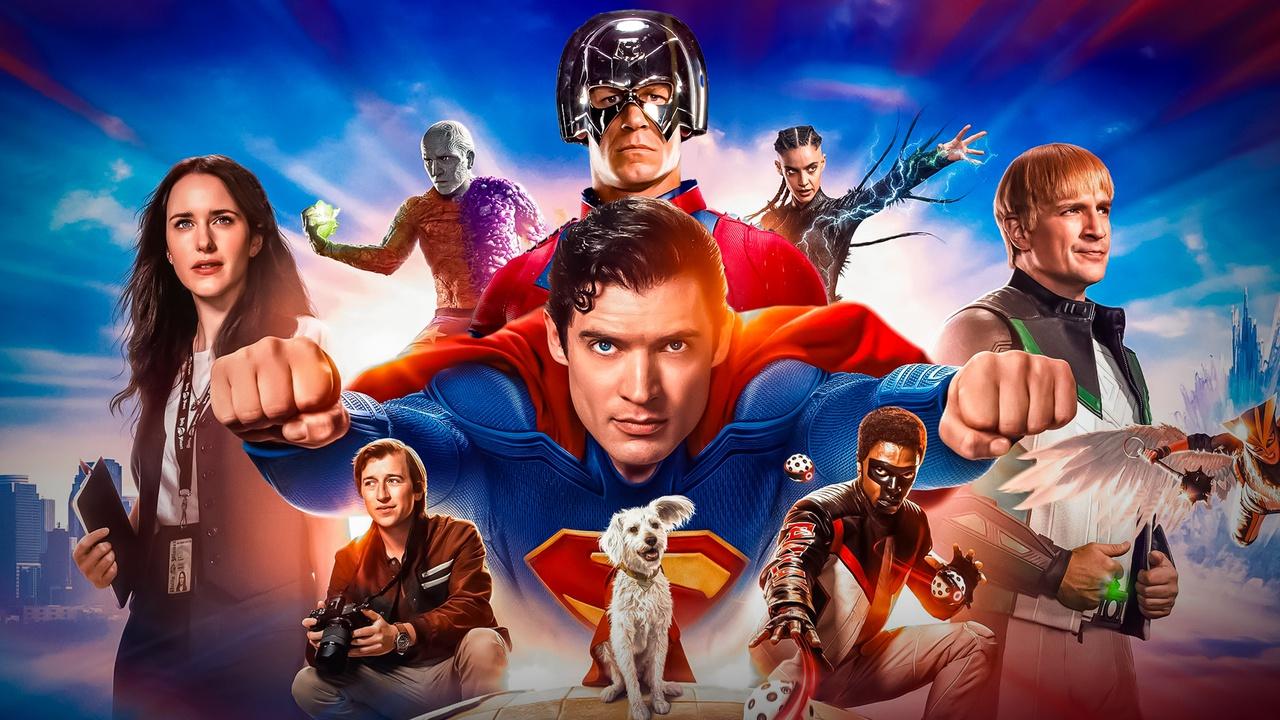
Peacemaker Season 2 Episode 7 is the best episode of the series — here's a full breakdown of Earth-X, the Good Auggie twist, Vigilante's catastrophic mistake, and what the ending sets up for the finale.
Introduction: I Was Not Prepared for This
There are episodes of television that entertain you. There are episodes that surprise you. And then there are episodes that do something more uncomfortable — they sit down next to you, look you in the eye, and ask you to think seriously about grief and regret and the versions of our lives we never got to live.
Peacemaker Season 2 Episode 7 is that third kind.
I went in expecting the show I know: the irreverent humor, the genuinely excellent action choreography, the strange and winning combination of crude comedy and emotional sincerity that James Gunn has turned into his signature. All of that is here. But Episode 7 uses it as scaffolding for something genuinely devastating, and by the time the credits rolled I was sitting in the kind of silence that only comes when a piece of entertainment has reached somewhere it didn't announce it was going.
Let's go through all of it — Nazi Earth, the conversation that shouldn't have worked but completely did, Good Auggie, and the moment Vigilante crashed through a window and made everything so much worse.
My rating: 9.5/10. The only reason it isn't a perfect score is that my soul requires a recovery period before I can be fully objective. I needed a moment to just stare at the wall before writing this.
Full spoilers for Episode 7. Everything.
Welcome to Earth-X: The Horror Is in the Details
The cold open on Nazi Earth — Earth-X — is effective precisely because of what it chooses not to do.
The easy version of this scene would be all spectacle: giant swastikas, military formations, the unmistakable visual grammar of fascism rendered in maximum dramatic scale. And yes, there's a Hitler mural in the Capitol building that, in retrospect, is comically conspicuous to miss. Harcourt calling Chris out for not catching it is one of the episode's best character moments — a perfect distillation of their dynamic compressed into a single exasperated look.
But what lingers isn't the monumental imagery. It's the texture of the world underneath it.
The absence of rock and roll. The cultural void where decades of creative output simply never happened because the conditions that produced it were eliminated. German-style bratwurst vendors where there should be hot dog carts. The strange, suffocating silence of a world that never developed the slang, the music, the popular culture that we use — without thinking about it — to signal who we are to each other.
Think about what that means in practice. The Beatles don't exist on Earth-X. Not because they were censored or banned, but because the cultural ecosystem that produced them, the particular combination of postwar Britain and American blues and the specific creative freedom of that era, was extinguished before it could generate them. Whole genres of music, whole categories of human expression, simply absent.
The episode uses this detail to make a point about what fascism actually destroys, which isn't primarily buildings or institutions. It's the conditions in which people make things. The creative spark that requires a certain kind of freedom to ignite.
The fight choreography in this setting deserves its own acknowledgment. The whip-pan transition from Harcourt taking down a guard to Peacemaker clotheslining another is the kind of technical filmmaking that this show has always done well — action that feels frantic and desperate rather than choreographed, which is exactly right for characters who are massively outnumbered in the worst possible environment.
Adebayo and Judo Master: The Conversation Nobody Expected
Here is a sentence I didn't anticipate writing: the most emotionally grounded scene in this episode takes place between Adebayo and Judo Master, eating what are apparently called "Flamin' Hot Cheetohs" with an H on Earth-X, and it's one of the best character moments of the entire season.
Adebayo has been carrying something this season — a particular kind of relational blindness that the show has been building patiently, the way she's been so focused on her own perspective within her marriage that she's missed what the dynamic actually looks like from the outside. It's the kind of thing that's easy to miss from inside a relationship and obvious from outside it.
Judo Master being the one to name it is a genuinely funny structural choice that the episode earns because it commits to the tenderness underneath the comedy. This is not a character we associate with emotional insight. But the show has always understood that wisdom doesn't require a prestigious source — it requires someone willing to say the thing nobody else is saying, regardless of context.
And what he says lands because it connects directly to Chris's arc in the same episode.
Both Adebayo and Chris are realizing, in different ways and through different circumstances, that they have been the primary architects of their own suffering. That the story they've been telling themselves about why things went wrong is accurate in some ways and conveniently incomplete in others. That "being a hero" — or believing yourself to be the protagonist of your own story — is not the same as being a good person, and confusing the two creates specific and recurring damage.
The parallel between their journeys is the episode's structural backbone, and it makes their friendship feel like the most real relationship in a show that involves interdimensional portals and Nazi Earth. They are going through the same thing in different registers, which is exactly how genuine friendship usually works.
Good Auggie: The Weight of What Could Have Been
This is the scene I keep coming back to, and I think it's the best thing the episode does.
When the show introduced Earth-X's version of Auggie Smith, every narrative instinct said he would be worse. That Earth-X, a world shaped by fascism, would produce a version of Chris's father who made the original look reasonable by comparison. White Dragon amplified. The monster behind the monster.
Instead, he's calm. Reasonable. Kind in the specific, undemonstrative way of someone who learned kindness through difficulty rather than taking it for granted.
John Cena's performance in the scene where Chris processes this is the best work he's done in the role. The emotion isn't performed — it's excavated. You can see Chris running through the implications in real time: this man is his father. The same genetic material, the same foundational starting point, shaped by a completely different set of choices and circumstances into someone Chris has never encountered before. Someone he might have loved, if things had been different.
What Chris is looking at isn't just a good version of a bad man. He's looking at the childhood he didn't get to have. The father who would have told him the right things, the household where he would have grown up without the specific damage that defines him. He's looking at a ghost — not of a person, but of a version of his own life.
Auggie's speech about trying to do right in a broken world, delivered with the quiet conviction of someone who has actually thought it through rather than adopted it as an identity, hits differently because of everything that precedes it. He looks at his own Earth-X with the same horror we do. When he tells Chris that killing that world's Auggie was a mercy, it functions as genuine absolution — not because Chris needs someone to tell him he did the right thing, but because he needed to hear, from a version of his father, that his father could see the truth of what he was.
That moment of grace is real. And then Vigilante comes through the window.
Vigilante's Catastrophic Mistake: The Tragedy of Absolute Loyalty
I love Vigilante. The show loves Vigilante. His function as comic relief is genuine and earned, and his absolute, unthinking devotion to Chris is one of the series' most consistent sources of warmth.
But unthinking devotion is still unthinking. And Episode 7 puts that quality in the worst possible context to show you exactly what it costs.
When Vigilante crashes through the window and kills Auggie — not the Earth-X Auggie who deserved consequences, but the good one, the kind one, the one who just gave Chris something he'd been waiting his whole life for — it's a moment of pure narrative devastation. One second of action, motivated entirely by loyalty, turning a moment of healing into a bloodbath.
The firefight that follows is technically impressive. It's also one of the most emotionally coherent action sequences the show has produced, because Peacemaker's behavior during it makes complete psychological sense. He stands there and takes the gunfire. He doesn't fight back with the intensity the situation demands. He absorbs punishment without fully trying to prevent it.
Because in his mind, this is what he does. He destroys things. He arrived in a world where a good version of his father existed, and within minutes of finding that person, he was involved in his death. The specific detail of who pulled the trigger doesn't change the pattern Chris has identified in himself: everything he touches ends badly, and the appropriate response to that is to stop protecting himself from the consequences.
He's not a superhero in that moment. He's a kid watching his brother die again, convinced that the correct response is to let the punishment land.
The episode doesn't editorialize about this. It shows you Chris's face and trusts you to understand what's happening. That's the kind of writing that distinguishes Peacemaker from the average superhero property.
Keith as a Villain: The Setup That Hurts
The episode's title — "Like a Keith in the Night" — functions as both a pun and a thesis statement, and the longer you sit with it the more uncomfortable it becomes.
Keith is alive. He's injured and furious and fueled by the specific, righteous hatred of someone who has been genuinely wronged and has no reason to contextualize that wrong within Chris's larger arc of growth. From Keith's perspective, his brother's associates showed up and killed someone — and Keith doesn't have access to the "this is the man who could have been your good father" framing that makes the scene legible as tragedy.
He just has the fact of what happened.
The implication the episode is building toward is genuinely dark: Chris may have to kill his brother. Not the evil version from another universe. His actual brother, from his actual world, who has every emotional justification for the path he's now on. If that's where the finale is heading, it's a choice that will test how much growth Chris has actually achieved — and whether growth is enough when the cost of your past keeps presenting new invoices.
The Post-Credits Scene: Halperston and What's Coming
The Halperston post-credits scene is playing a longer game than it initially appears.
The "dirty websites" framing is intentional misdirection. Someone with access to ARGUS resources and interest in "unstable dimensional detritus" is not browsing the internet for personal entertainment. The Lex Luthor loyalist thread — if that's where this is heading, and the framing strongly suggests it is — positions the dimensional instability of this season as raw material for something much larger.
James Gunn is building a DCU that is genuinely interconnected at the narrative level, not just through cameos and shared imagery. The dimensional detritus from Earth-X doesn't get introduced and then disappear. It becomes a resource, or a weapon, or a problem — probably all three — and whoever is collecting it has a specific purpose in mind.
The finale needs to close out the immediate Keith and Auggie storylines. But the post-credits scene is reminding you that the larger architecture is still being constructed.
What This Episode Gets Right About Grief
Underneath all of the action and the interdimensional travel and Vigilante's catastrophic window entrance, Episode 7 is fundamentally about the grief of unlived lives.
Chris has spent this entire series processing his father — the damage Auggie Smith did, the specific ways that damage shaped his worldview and his relationship to violence and to himself. He's been doing the work, in the inarticulate, frequently counterproductive way that people actually do the work. And the show gave him, briefly, the impossible gift of seeing who his father could have been.
And then it took it away. Immediately. Before he could do anything with it except feel it.
That's not cruel storytelling. That's honest storytelling. Because that's how this kind of grief actually operates — in glimpses that close before you can hold them, in brief windows of understanding that don't come with enough time to process what they're showing you. Chris doesn't get to have a long conversation with Good Auggie. He doesn't get to ask the questions he's been carrying his whole life. He gets a few minutes and a speech, and then it's over.
The episode trusts its audience to sit with that without resolving it. Which is, ultimately, what makes it the best episode of the series so far.
Tips for Getting More From a Rewatch
If you're planning to go back through Episode 7, here's what hits differently the second time:
Watch Harcourt's reaction during the Good Auggie scene specifically. She's not the focus, but her response to watching Chris process what he's seeing adds a layer to her character that the episode doesn't underline.
Pay attention to Adebayo's body language during the Judo Master conversation. The moment she actually hears what he's saying — rather than waiting for him to finish — is a small physical shift that's easy to miss in real time.
The fight choreography in the Earth-X sequences is designed to feel asymmetrical. Chris and Harcourt are not operating efficiently — they're improvising under pressure, and the camera work reflects that in ways that become clearer once you're not tracking the story for the first time.
FAQ: Peacemaker Season 2 Episode 7 Questions Answered
What is Earth-X in the DC universe? Earth-X is a designation for an alternate reality where the Axis powers won World War II. It appears in various DC comics and animated adaptations. The show's version is consistent with that premise while adding its own specific texture through cultural details rather than relying solely on visual iconography.
Why did Vigilante kill Good Auggie? Vigilante's loyalty to Chris is absolute and largely unfiltered by strategic thinking. He identified Auggie Smith as a threat based on the Earth-Prime version of the character and acted without gathering enough context to understand the difference. It's a tragic function of his most defining characteristic.
Is Keith going to be the finale's main antagonist? The episode positions him as a significant threat going into the finale, with both the emotional stakes and the practical danger clearly established. Whether he's the primary antagonist or one element of a larger finale structure remains to be seen.
What does Chris surrendering the key mean for his character? It's the clearest evidence of his growth across the season. The Chris from The Suicide Squad was willing to sacrifice anyone to maintain his own freedom of operation. Choosing to return to Belle Reve — voluntarily, to protect his team — represents a fundamental shift in what he values and who he's willing to be.
What is the Halperston post-credits scene setting up? The scene implies a Lex Luthor connection and interest in the dimensional instability created by the Earth-X incursion. It's likely setup for a larger DCU story thread rather than something that resolves within this season.
Conclusion: The Ghost of a Happy Childhood
Episode 7 of Peacemaker Season 2 earns its emotional weight because it understands something that superhero storytelling frequently forgets: the most painful thing you can show a damaged person isn't more damage. It's the version of their life where the damage never happened.
Chris got to see that version. He got a few minutes with a man who wore his father's face and carried none of his father's cruelty, and he got to feel, briefly, what it would have been like to be the son of that man instead of the one he actually had.
And then Vigilante came through the window, and the moment was over, and Chris stood in a firefight absorbing bullets because some part of him agreed with the universe's verdict that he didn't deserve what he'd just found.
That's a lot to carry. It's the kind of episode that makes you appreciate what this show, at its best, is actually doing underneath all the cursing and the chrome helmets and the butterfly mythology. It's telling a story about a person trying to become something better than what he was made to be — and showing you, honestly and without sentimentality, how hard that actually is.
What's your take on where the finale is heading? And is there any version of the Keith situation that doesn't end in tragedy? Tell me in the comments — I genuinely need to talk this through with someone.
Peacemaker Season 2 Episode 7 is the best episode of the series — here's a full breakdown of Earth-X, the Good Auggie twist, Vigilante's catastrophic mistake, and what the ending sets up for the finale.
Introduction: I Was Not Prepared for This
There are episodes of television that entertain you. There are episodes that surprise you. And then there are episodes that do something more uncomfortable — they sit down next to you, look you in the eye, and ask you to think seriously about grief and regret and the versions of our lives we never got to live.
Peacemaker Season 2 Episode 7 is that third kind.
I went in expecting the show I know: the irreverent humor, the genuinely excellent action choreography, the strange and winning combination of crude comedy and emotional sincerity that James Gunn has turned into his signature. All of that is here. But Episode 7 uses it as scaffolding for something genuinely devastating, and by the time the credits rolled I was sitting in the kind of silence that only comes when a piece of entertainment has reached somewhere it didn't announce it was going.
Let's go through all of it — Nazi Earth, the conversation that shouldn't have worked but completely did, Good Auggie, and the moment Vigilante crashed through a window and made everything so much worse.
My rating: 9.5/10. The only reason it isn't a perfect score is that my soul requires a recovery period before I can be fully objective. I needed a moment to just stare at the wall before writing this.
Full spoilers for Episode 7. Everything.
Welcome to Earth-X: The Horror Is in the Details
The cold open on Nazi Earth — Earth-X — is effective precisely because of what it chooses not to do.
The easy version of this scene would be all spectacle: giant swastikas, military formations, the unmistakable visual grammar of fascism rendered in maximum dramatic scale. And yes, there's a Hitler mural in the Capitol building that, in retrospect, is comically conspicuous to miss. Harcourt calling Chris out for not catching it is one of the episode's best character moments — a perfect distillation of their dynamic compressed into a single exasperated look.
But what lingers isn't the monumental imagery. It's the texture of the world underneath it.
The absence of rock and roll. The cultural void where decades of creative output simply never happened because the conditions that produced it were eliminated. German-style bratwurst vendors where there should be hot dog carts. The strange, suffocating silence of a world that never developed the slang, the music, the popular culture that we use — without thinking about it — to signal who we are to each other.
Think about what that means in practice. The Beatles don't exist on Earth-X. Not because they were censored or banned, but because the cultural ecosystem that produced them, the particular combination of postwar Britain and American blues and the specific creative freedom of that era, was extinguished before it could generate them. Whole genres of music, whole categories of human expression, simply absent.
The episode uses this detail to make a point about what fascism actually destroys, which isn't primarily buildings or institutions. It's the conditions in which people make things. The creative spark that requires a certain kind of freedom to ignite.
The fight choreography in this setting deserves its own acknowledgment. The whip-pan transition from Harcourt taking down a guard to Peacemaker clotheslining another is the kind of technical filmmaking that this show has always done well — action that feels frantic and desperate rather than choreographed, which is exactly right for characters who are massively outnumbered in the worst possible environment.
Adebayo and Judo Master: The Conversation Nobody Expected
Here is a sentence I didn't anticipate writing: the most emotionally grounded scene in this episode takes place between Adebayo and Judo Master, eating what are apparently called "Flamin' Hot Cheetohs" with an H on Earth-X, and it's one of the best character moments of the entire season.
Adebayo has been carrying something this season — a particular kind of relational blindness that the show has been building patiently, the way she's been so focused on her own perspective within her marriage that she's missed what the dynamic actually looks like from the outside. It's the kind of thing that's easy to miss from inside a relationship and obvious from outside it.
Judo Master being the one to name it is a genuinely funny structural choice that the episode earns because it commits to the tenderness underneath the comedy. This is not a character we associate with emotional insight. But the show has always understood that wisdom doesn't require a prestigious source — it requires someone willing to say the thing nobody else is saying, regardless of context.
And what he says lands because it connects directly to Chris's arc in the same episode.
Both Adebayo and Chris are realizing, in different ways and through different circumstances, that they have been the primary architects of their own suffering. That the story they've been telling themselves about why things went wrong is accurate in some ways and conveniently incomplete in others. That "being a hero" — or believing yourself to be the protagonist of your own story — is not the same as being a good person, and confusing the two creates specific and recurring damage.
The parallel between their journeys is the episode's structural backbone, and it makes their friendship feel like the most real relationship in a show that involves interdimensional portals and Nazi Earth. They are going through the same thing in different registers, which is exactly how genuine friendship usually works.
Good Auggie: The Weight of What Could Have Been
This is the scene I keep coming back to, and I think it's the best thing the episode does.
When the show introduced Earth-X's version of Auggie Smith, every narrative instinct said he would be worse. That Earth-X, a world shaped by fascism, would produce a version of Chris's father who made the original look reasonable by comparison. White Dragon amplified. The monster behind the monster.
Instead, he's calm. Reasonable. Kind in the specific, undemonstrative way of someone who learned kindness through difficulty rather than taking it for granted.
John Cena's performance in the scene where Chris processes this is the best work he's done in the role. The emotion isn't performed — it's excavated. You can see Chris running through the implications in real time: this man is his father. The same genetic material, the same foundational starting point, shaped by a completely different set of choices and circumstances into someone Chris has never encountered before. Someone he might have loved, if things had been different.
What Chris is looking at isn't just a good version of a bad man. He's looking at the childhood he didn't get to have. The father who would have told him the right things, the household where he would have grown up without the specific damage that defines him. He's looking at a ghost — not of a person, but of a version of his own life.
Auggie's speech about trying to do right in a broken world, delivered with the quiet conviction of someone who has actually thought it through rather than adopted it as an identity, hits differently because of everything that precedes it. He looks at his own Earth-X with the same horror we do. When he tells Chris that killing that world's Auggie was a mercy, it functions as genuine absolution — not because Chris needs someone to tell him he did the right thing, but because he needed to hear, from a version of his father, that his father could see the truth of what he was.
That moment of grace is real. And then Vigilante comes through the window.
Vigilante's Catastrophic Mistake: The Tragedy of Absolute Loyalty
I love Vigilante. The show loves Vigilante. His function as comic relief is genuine and earned, and his absolute, unthinking devotion to Chris is one of the series' most consistent sources of warmth.
But unthinking devotion is still unthinking. And Episode 7 puts that quality in the worst possible context to show you exactly what it costs.
When Vigilante crashes through the window and kills Auggie — not the Earth-X Auggie who deserved consequences, but the good one, the kind one, the one who just gave Chris something he'd been waiting his whole life for — it's a moment of pure narrative devastation. One second of action, motivated entirely by loyalty, turning a moment of healing into a bloodbath.
The firefight that follows is technically impressive. It's also one of the most emotionally coherent action sequences the show has produced, because Peacemaker's behavior during it makes complete psychological sense. He stands there and takes the gunfire. He doesn't fight back with the intensity the situation demands. He absorbs punishment without fully trying to prevent it.
Because in his mind, this is what he does. He destroys things. He arrived in a world where a good version of his father existed, and within minutes of finding that person, he was involved in his death. The specific detail of who pulled the trigger doesn't change the pattern Chris has identified in himself: everything he touches ends badly, and the appropriate response to that is to stop protecting himself from the consequences.
He's not a superhero in that moment. He's a kid watching his brother die again, convinced that the correct response is to let the punishment land.
The episode doesn't editorialize about this. It shows you Chris's face and trusts you to understand what's happening. That's the kind of writing that distinguishes Peacemaker from the average superhero property.
Keith as a Villain: The Setup That Hurts
The episode's title — "Like a Keith in the Night" — functions as both a pun and a thesis statement, and the longer you sit with it the more uncomfortable it becomes.
Keith is alive. He's injured and furious and fueled by the specific, righteous hatred of someone who has been genuinely wronged and has no reason to contextualize that wrong within Chris's larger arc of growth. From Keith's perspective, his brother's associates showed up and killed someone — and Keith doesn't have access to the "this is the man who could have been your good father" framing that makes the scene legible as tragedy.
He just has the fact of what happened.
The implication the episode is building toward is genuinely dark: Chris may have to kill his brother. Not the evil version from another universe. His actual brother, from his actual world, who has every emotional justification for the path he's now on. If that's where the finale is heading, it's a choice that will test how much growth Chris has actually achieved — and whether growth is enough when the cost of your past keeps presenting new invoices.
The Post-Credits Scene: Halperston and What's Coming
The Halperston post-credits scene is playing a longer game than it initially appears.
The "dirty websites" framing is intentional misdirection. Someone with access to ARGUS resources and interest in "unstable dimensional detritus" is not browsing the internet for personal entertainment. The Lex Luthor loyalist thread — if that's where this is heading, and the framing strongly suggests it is — positions the dimensional instability of this season as raw material for something much larger.
James Gunn is building a DCU that is genuinely interconnected at the narrative level, not just through cameos and shared imagery. The dimensional detritus from Earth-X doesn't get introduced and then disappear. It becomes a resource, or a weapon, or a problem — probably all three — and whoever is collecting it has a specific purpose in mind.
The finale needs to close out the immediate Keith and Auggie storylines. But the post-credits scene is reminding you that the larger architecture is still being constructed.
What This Episode Gets Right About Grief
Underneath all of the action and the interdimensional travel and Vigilante's catastrophic window entrance, Episode 7 is fundamentally about the grief of unlived lives.
Chris has spent this entire series processing his father — the damage Auggie Smith did, the specific ways that damage shaped his worldview and his relationship to violence and to himself. He's been doing the work, in the inarticulate, frequently counterproductive way that people actually do the work. And the show gave him, briefly, the impossible gift of seeing who his father could have been.
And then it took it away. Immediately. Before he could do anything with it except feel it.
That's not cruel storytelling. That's honest storytelling. Because that's how this kind of grief actually operates — in glimpses that close before you can hold them, in brief windows of understanding that don't come with enough time to process what they're showing you. Chris doesn't get to have a long conversation with Good Auggie. He doesn't get to ask the questions he's been carrying his whole life. He gets a few minutes and a speech, and then it's over.
The episode trusts its audience to sit with that without resolving it. Which is, ultimately, what makes it the best episode of the series so far.
Tips for Getting More From a Rewatch
If you're planning to go back through Episode 7, here's what hits differently the second time:
Watch Harcourt's reaction during the Good Auggie scene specifically. She's not the focus, but her response to watching Chris process what he's seeing adds a layer to her character that the episode doesn't underline.
Pay attention to Adebayo's body language during the Judo Master conversation. The moment she actually hears what he's saying — rather than waiting for him to finish — is a small physical shift that's easy to miss in real time.
The fight choreography in the Earth-X sequences is designed to feel asymmetrical. Chris and Harcourt are not operating efficiently — they're improvising under pressure, and the camera work reflects that in ways that become clearer once you're not tracking the story for the first time.
FAQ: Peacemaker Season 2 Episode 7 Questions Answered
What is Earth-X in the DC universe? Earth-X is a designation for an alternate reality where the Axis powers won World War II. It appears in various DC comics and animated adaptations. The show's version is consistent with that premise while adding its own specific texture through cultural details rather than relying solely on visual iconography.
Why did Vigilante kill Good Auggie? Vigilante's loyalty to Chris is absolute and largely unfiltered by strategic thinking. He identified Auggie Smith as a threat based on the Earth-Prime version of the character and acted without gathering enough context to understand the difference. It's a tragic function of his most defining characteristic.
Is Keith going to be the finale's main antagonist? The episode positions him as a significant threat going into the finale, with both the emotional stakes and the practical danger clearly established. Whether he's the primary antagonist or one element of a larger finale structure remains to be seen.
What does Chris surrendering the key mean for his character? It's the clearest evidence of his growth across the season. The Chris from The Suicide Squad was willing to sacrifice anyone to maintain his own freedom of operation. Choosing to return to Belle Reve — voluntarily, to protect his team — represents a fundamental shift in what he values and who he's willing to be.
What is the Halperston post-credits scene setting up? The scene implies a Lex Luthor connection and interest in the dimensional instability created by the Earth-X incursion. It's likely setup for a larger DCU story thread rather than something that resolves within this season.
Conclusion: The Ghost of a Happy Childhood
Episode 7 of Peacemaker Season 2 earns its emotional weight because it understands something that superhero storytelling frequently forgets: the most painful thing you can show a damaged person isn't more damage. It's the version of their life where the damage never happened.
Chris got to see that version. He got a few minutes with a man who wore his father's face and carried none of his father's cruelty, and he got to feel, briefly, what it would have been like to be the son of that man instead of the one he actually had.
And then Vigilante came through the window, and the moment was over, and Chris stood in a firefight absorbing bullets because some part of him agreed with the universe's verdict that he didn't deserve what he'd just found.
That's a lot to carry. It's the kind of episode that makes you appreciate what this show, at its best, is actually doing underneath all the cursing and the chrome helmets and the butterfly mythology. It's telling a story about a person trying to become something better than what he was made to be — and showing you, honestly and without sentimentality, how hard that actually is.
What's your take on where the finale is heading? And is there any version of the Keith situation that doesn't end in tragedy? Tell me in the comments — I genuinely need to talk this through with someone.
.png)


No comments:
Post a Comment