
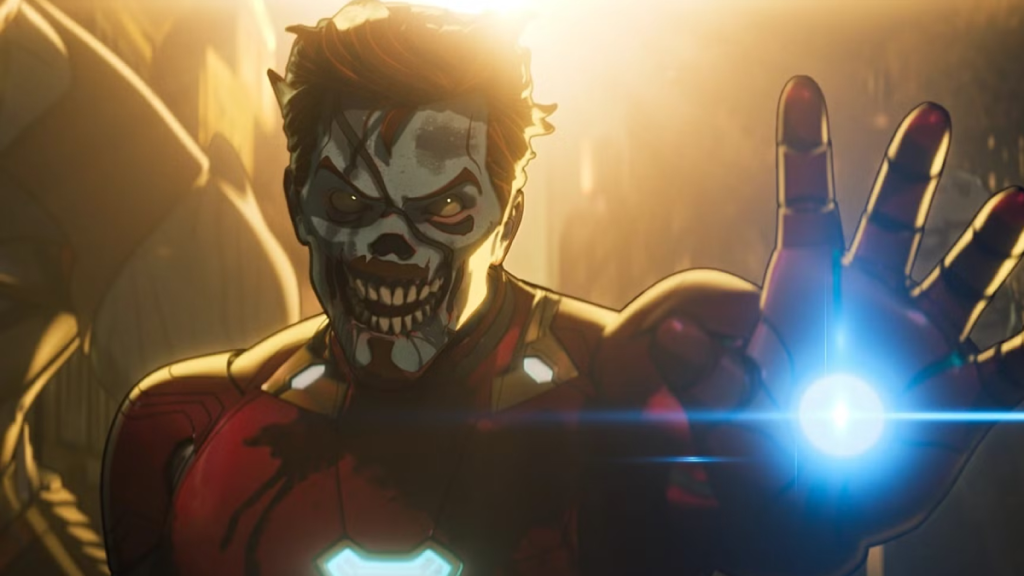
The Marvel Zombies animated series is darker than anything the MCU has attempted before — here's a full breakdown of every episode, Wanda's Queen of the Dead arc, Kamala's mental prison, and what Riri's final signal actually means.
Introduction: This Is Not a Cartoon. It Is a Horror Story.
Let me set expectations immediately, because the TV-MA rating on Marvel Zombies is not decorative.
I finished the series and needed a few minutes before I could articulate anything coherent about it. Not because it's confusing — the story is actually remarkably well-structured for something operating at this scale of bleakness — but because it commits to its worst moments with a sincerity that the MCU, animated or otherwise, doesn't usually allow itself.
This is not What If...? with extra gore. It's a genuinely dark, genuinely emotionally complex story about grief and sacrifice and what happens when the thing doing the consuming is recognizable as the people you loved. It uses the zombie premise not as a gimmick but as a sustained metaphor for loss, for the way grief warps the people it doesn't kill outright, and for the specific horror of watching something you trusted become something you can't recognize.
It also has some of the most brutal animation sequences Marvel has produced. Those two things are not in tension. The show earns its violence by putting real emotional weight behind every death, every sacrifice, every moment someone chooses to spend themselves so someone else can continue.
I'm giving it 8.5/10, and my only hesitation about going higher is that the ending left me in a state that I'm not sure "enjoyment" covers as a descriptor.
Full spoilers for all four episodes follow. Everything.
The What If...? Foundation: Why That Cliffhanger Matters
Before diving into the series proper, the backstory deserves acknowledgment, because the animated series is a direct continuation of something the What If...? episode left unresolved in the most deliberately cruel way possible.
If you remember: Peter Parker, Scott Lang's severed head in a jar, and T'Challa flying toward Wakanda with hope intact, only to find a Zombified Thanos with five Infinity Stones waiting for them. The episode cut to black on that image and left it there.
The animated series picks up the weight of that cliffhanger and carries it forward without softening the implications. The quantum virus started by Hank Pym didn't stop. It metastasized. And the world we're entering five years after the outbreak is one that has processed that reality and built around it — not in triumph, but in exhausted, barely functional survival.
The crucial difference from Endgame — the show's most important structural choice — is that there is no Time Heist waiting at the end. No fix. No mechanism by which the losses can be walked back. This is a story about extinction, and it doesn't let you forget that the extinction is in progress throughout every episode.
Episode One: New Heroes in a Rotting World
The establishing shot of overgrown, abandoned New York City does exactly what it needs to do in the first sixty seconds: it communicates that five years is long enough for the world to start reclaiming what humanity built, and that reclamation is not gentle.
The young survivors — Kate Bishop, Riri Williams, and Kamala Khan — are not the polished, aspirational versions of themselves from their Disney+ introductions. They're harder. More careful. Operating with the specific economy of people who have learned to waste nothing, including hope, because the cost of having it disappointed is too high.
The show loves these characters enough to put them through genuinely terrible things, which is the correct approach. Watching Riri get bitten while protecting her friends is difficult precisely because the show has given you enough time to care about her before it does it. The desperation in her eyes as she instructs FRIDAY to prioritize Kamala's survival is the episode's emotional centerpiece — not the action around it, but that specific moment of someone choosing, clearly and consciously, to spend themselves.
The Blade reveal — now operating as the avatar of Khonshu, voiced by F. Murray Abraham in a casting choice that generates immediate chills — is the episode's best "wait, what?" moment. And then the North Institute sacrifice lands.
Yelena and Melina using recovered Hydra mind-control technology to hold back a zombie army while the others escape with the Project Lifeshot transmitter is the episode's thesis statement delivered as action sequence: in this universe, heroism is almost always a one-way transaction. You give everything. Someone else gets to continue. The show isn't cynical about this — it treats each sacrifice as genuinely meaningful — but it refuses to pretend the math is anything other than what it is.
Episode Two: Wenwu's Last Gift and Zemo's Betrayal
The Shang-Chi outbreak day flashback is structured around a single unbroken long take through the chaos of San Francisco, and it's the series' most technically impressive sequence. Following the camera through the city as the infection spreads, watching the familiar world come apart at the seams in real time, grounds the abstract horror of "zombie apocalypse" in specific, human-scale detail.
The moment that lingers is Wenwu passing the Ten Rings to a bitten Shang-Chi.
Everything complicated about their relationship — the absence, the manipulation, the damage done, the love underneath all of it that neither of them was entirely equipped to express — gets compressed into a single act. Wenwu isn't passing down a legacy in that moment. He's buying his son time. The rings' power slowing the infection's progress is a practical intervention dressed as paternal sacrifice, which is exactly the kind of thing their relationship has always been: love expressed through what you can do rather than what you can say.
The precedent it establishes matters for the rest of the series: magical artifacts and cosmic objects are the only things operating at the virus's level. Regular heroism, however genuine, isn't enough against this particular threat.
Then Zemo.
The Raft as a sanctuary is one of those narrative setups where the show correctly predicts that the audience wants to trust it despite knowing better, and then rewards that trust with exactly the betrayal it implied from the beginning. Zemo has been feeding heroes to a zombified Namor and his Talokanil forces as tribute — not out of malice exactly, but out of the specific moral collapse that comes from deciding that the survival of your community justifies any cost paid by people outside it.
Kamala's fight with Namor is where the series most clearly announces that it will not be pulling its animation punches. The hard-light construct expanding inside his skull is a moment of violence that Marvel has not previously committed to in this format, and it works because the show has established that the stakes justify it. This isn't gratuitous — it's the correct visual language for a fight where the alternative is losing everything.
Losing Jimmy Woo and John Walker as the Raft sinks makes the victory hollow in the exact way it should. Zemo's cowardice didn't just cost lives — it cost the group resources and people they could not spare, for the protection of a sanctuary that was already morally bankrupt.
Episode Three: T'Challa's Sacrifice and the Queen of the Dead
The resolution of the Thanos fight — finally shown here after being teased since the What If...? episode — recontextualizes everything that came before it in the best possible way.
T'Challa's decision to detonate the vibranium reactor is the ultimate expression of what the show has been building about heroism: it works, and the working of it creates consequences nobody anticipated. The explosion stopped Thanos. It also trapped the entire planet inside a radiation bubble, cutting it off from any external signal or assistance. The Nova Corps couldn't hear. The Guardians couldn't locate. Every moment of feeling alone in the first two episodes was literal — they were cosmically isolated by the very act that saved them from immediate destruction.
That detail gives the story a specific tragic coherence. The world wasn't abandoned. It was sealed by its own salvation.
New Asgard arrives as a moment of apparent hope, and the show deploys Thor's broken silence with real skill. A god who has lost everything, sitting on a throne that used to mean something, reduced to something that can barely be called presence — it's the series' most effective use of a legacy character's diminishment.
And then Wanda.
The Queen of the Dead is the show's most ambitious character concept, and it largely works because it's rooted in something emotionally coherent rather than just escalating the threat level for scale. Wanda as a zombie isn't just more dangerous than the average infected — she's a predator with strategy, with grief that has curdled into something that can reshape reality, with the specific horror of someone whose powers were always tied to her emotional state now operating those powers through an emotional state of pure loss.
The feast reveal — the food prepared for the survivors having an origin that the show makes you figure out slightly before it tells you — is the episode's cruelest moment, and intentionally so. Wanda isn't just feeding on bodies. She's using the language of hospitality and care as a trap. She's weaponizing the thing that desperate people most want to believe in.
Her true form as a rotting, cosmic horror version of the Scarlet Witch is visually striking, but the real horror is functional: she's been "ripening" the world, accelerating toward a state where her god-army can harvest it completely. The lie about being cured is a betrayal of Kamala's hope that the show has been building toward since the beginning — Kamala's capacity for hope has been her defining quality, and Wanda knows exactly how to target it.
Episode Four: Paris, the Anchor, and the House of M Ending
The finale operates at a scale the series has been building toward, and it mostly earns that scale by keeping the emotional stakes personal even as the visual spectacle goes cosmic.
The revelation about Bruce Banner is the episode's most interesting piece of world-building: the sorcerers used him to absorb the raw infinity energy from the Wakandan explosion, transforming him into something they call "The Anchor" — a zen, luminous, god-adjacent being whose power is substantial enough to function as the final line before complete collapse. The fact that even this isn't enough is the episode's thesis delivered as plot point.
The battle in Paris features zombified Giant-Man, Wasp, and a red-lightning-wielding Thor, and the show commits to showing you what it means when the infected include people operating at that power level. It's not survivable through heroism or sacrifice in the traditional sense. The numbers don't work. The power differential doesn't work. Watching characters get torn apart or vaporized one by one has an exhausting cumulative effect that feels intentional — the show wants you to feel the attrition.
When Wanda absorbs the Hulk's infinity energy, the genuine "end of everything" feeling the sequence generates is earned rather than manufactured, because you've watched the show spend four episodes demonstrating that there are no remaining reserves. Nothing left to draw on. This is what the bottom actually looks like.
And then Kamala surrenders.
The transition into the perfect world is jarring in the best way — bright colors, warmth, the specific texture of a happy domestic moment that the rest of the series has trained you to read as wrong. Kate and Riri laughing. Her mother calling her for dinner. Everything exactly as it should be.
The details that crack the illusion are the show's most precise writing. The absence of Captain Marvel posters on Kamala's walls isn't incidental — in a reality shaped by the Queen of the Dead, there are no other gods permitted. The worship goes one direction. The perfect world is a Hex built on Kamala's bangle and Wanda's grief, a mental prison that is beautiful because it has to be convincing to serve its purpose.
The ending that truly matters is Riri's signal.
Cutting through at the last possible moment — hacked together from whatever remains of her tech, coming from somewhere in the real world where she is infected but operational, fighting — it's the series' final statement on hope. Not triumphant hope. Not the hope that everything will work out. The specific, fragile hope that one person is still out there, still aware, still trying to make a signal that reaches somewhere.
Riri knows the truth. Kamala is dreaming. And the world is still rotting.
Whether that's enough to build a future on is a question the series intentionally leaves open.
What the Series Gets Right About Grief
The zombie premise in Marvel Zombies works because the show understands what zombies have always been most useful for as a narrative device: they are the people you loved, wearing faces you recognize, doing things those people would never do.
The specific horror isn't infection. It's the moment of recognition — seeing Thor on a throne but knowing he's gone, watching Wanda offer food and understanding what the food is, looking at Giant-Man in battle and knowing what Scott Lang was. The infected are not strangers. That's the point.
Grief operates the same way. It doesn't eliminate the person you're mourning — it leaves their absence in the shape of them, which you keep encountering in unexpected moments. The show uses its monsters to externalize that experience, and the result is horror that resonates at a frequency beyond the visual.
Kamala's mental prison is the final version of this argument: the most effective grief trap is the one that gives you everything back, perfectly, in a form you can't distinguish from reality. The dream isn't torture. It's indistinguishable from the life she wanted. And that is exactly what makes it a prison.
What the Show Sets Up and Leaves Open
Riri's signal is a promise, whether the series continues in another format or not.
She's infected, which means she's operating on a timer. But she's also Riri Williams — someone whose entire character is built around solving problems that should be unsolvable through engineering and sheer refusal to accept limitations. If anyone can find a way to get a signal out of a rotting world and reach the one person who might be able to do something with it, it's her.
The questions worth carrying forward: Can Kamala be pulled out of the Hex without destroying her? Does Wanda's version of grief have any remaining human element that could be reached? And is the radiation bubble around Earth potentially, paradoxically, the thing that keeps the infection contained enough that some form of recovery is still theoretically possible?
The show doesn't answer these. But it asks them in a way that suggests they're answerable, which is the most hope it's willing to extend.
FAQ: Marvel Zombies Animated Series Questions Answered
Is Marvel Zombies connected to the main MCU continuity? It exists within the multiverse — specifically continuing from the What If...? animated episode rather than the main MCU timeline. Events here don't directly affect the prime MCU, but the characters are variants of the ones we know.
Do you need to watch the What If...? zombie episode first? Yes, and strongly so. The animated series picks up directly from that episode's cliffhanger, and much of the emotional weight of the T'Challa sacrifice depends on knowing what he was attempting to prevent.
What is the House of M connection? In Marvel Comics, House of M is a storyline where Wanda Maximoff reshapes reality into a perfect world based on grief. The finale's mental prison draws directly on that premise, with the Hex functioning as this story's version of Wanda's reality-warping grief given physical form.
Is Riri Williams still alive at the end? Infected but operational — she's using her technology to send a signal, which implies she's found some way to maintain function despite the virus. Whether that's sustainable is the season's biggest open question.
Will there be a Season 2? As of the series' release, no second season has been officially confirmed. The ending's open structure suggests the story is intended to continue in some form.
Conclusion: Sometimes the Monsters Win, and That's the Point
Marvel Zombies ends in a place that doesn't resolve. Kamala is dreaming. Riri is infected and signaling into the dark. The world outside the dream is still rotting. And the show holds that image without blinking.
That's not a failure of storytelling. That's the story choosing to be honest about what it's depicting: a world where the heroes did everything right, sacrificed everything they had, and still didn't win in any conventional sense. Where the most hopeful thing left is one signal from one person who shouldn't still be operational, reaching toward one person who doesn't know she needs to be reached.
The show earns this ending because it has spent four episodes demonstrating that the universe it's depicting is one where heroism is real and meaningful and still not enough. That's a harder argument to make than "the heroes prevail." It requires you to care about the characters before it takes them apart, which the show manages through genuine character work rather than borrowed affection from other MCU properties.
The grief is real. The sacrifice is real. The monsters are real.
And somewhere in a rotting Paris, Riri Williams is still making noise.
What did the ending do to you? And what's your read on whether Kamala can come back from the Hex? I need to talk about this with people who understand — drop your thoughts in the comments.
.png)


No comments:
Post a Comment