Wednesday, December 24, 2025

Pluribus Season 1 Ending Explained: Episode 9 Breakdown, The Atom Bomb, & What’s Next for Season 2


Pluribus Season 1 Finale: Identity, Betrayal, and The "Atom Bomb" Ending

Manusos Obrero almost died getting to her. After weeks of traveling, fighting, and surviving, he finally made it to Carol. But when he arrived, things didn't go exactly as planned. In fact, the reunion went so poorly that Carol eventually left him behind to fall completely into the illusion of the "Others'" happiness—until she learned the devastating truth that shattered her reality.

I can't believe it's been nine weeks, but we have finally made it to the end of this story. It feels like just yesterday we were introduced to this strange, quiet apocalypse. So, with all that being said, let's dive deep into this finale. We need to discuss that shocking ending, break down the major themes of identity, love, and betrayal, and analyze what happens when the people you claim to care about have a hidden agenda. Full spoilers ahead.

The Cost of Belonging: Kusumayu's Choice

Day 71, Hour 13, 31 minutes and 29 seconds.

We skip ahead in time 11 days from where we left off in Episode 8 to find a plane in the sky flying above. With it comes the return of one of the most quietly compelling characters of the show: Kusumayu.

She isn’t alone. Unlike Carol, who was isolated and struggling with Manusos, Kusumayu is surrounded by community. She is with her aunt and cousin—the same family members we met way back in Episode 2. Back then, Kusumayu was the outsider looking in, the only one in her village not part of the collective consciousness. She watched everyone else move in unison, sharing a silent bond she couldn't access. But now, on this big day, they’ve made her favorite lunch. As I predicted back in Episode 6, she has decided to stop fighting the tide and join the hive mind.

There is a fascinating, heartbreaking duality in her expression throughout this sequence. She tells her family she is excited, but we see her sweeping the same spot on the floor for half an hour. The look on her face says otherwise. Is this a look of anticipation? Is it the paralyzing fear of someone who knows they are about to die? Or perhaps it is the confusion of someone about to lose their individuality forever?

The Ritual and The "Severance" Connection

When the plane lands, a sealed container is transferred with the reverence of a sacred relic. It’s headed straight for Kusumayu. As the virus arrives, we get a massive Severance crossover moment (if you know, you know) with Kusumayu holding and petting a baby goat.

The village surrounds her, her aunt singing a soft chant that feels simultaneously comforting and deeply eerie. It’s a ritualistic atmosphere. They promise her it won’t hurt—that they will never hurt her. And as the container opens and she inhales the virus, it appears they are right. There is no pain. Within seconds, Kusumayu is gone, replaced by the collective.

She walks away from her old life, freeing the animals from their pens. But the most symbolic moment of the entire episode happens right here: the black and white baby goat—the one she was holding just moments ago—screams and charges toward her, bleeding. It runs as if it knows something is terribly wrong.

That goat represented Kusumayu: innocent, different, and unique. Just as the goat screams at the loss of its protector, the individual known as Kusumayu has been lost to the hive. This scene felt like a baptism and a funeral wrapped in one. She gave up her life to join the others, believing it was the only way to cure her loneliness. It makes me wonder: aside from Lakshmi and Kumba, will other infected characters choose to stay human, or will the crushing weight of loneliness force them to fold just like Kusumayu?

Manusos and Carol: The Awkward Reunion

Day 60, Hour 16, 40 minutes and 17 seconds.

Let’s rewind to 8 hours after Carol learned she would be getting a visitor. Back at Carol's house, Zosia and the others plan to vanish before Manusos arrives. They consider him a danger to the hive mind—an unpredictable variable they can't control.

When Manusos finally pulls up in the ambulance, honking his horn (which begs the question: what does Carol think of car horns after her trauma with train horns?), the tension is palpable. From cursing each other out on the phone to finally being face-to-face, their meeting is met with immediate, grinding awkwardness.

It’s not the heroic team-up we might have expected. Carol makes him leave his machete in the ambulance. Manusos refuses to talk inside the house, fearing hidden microphones. He even grabs Carol's phone and tosses it into the sewer because he thinks the others are listening!

I found this dynamic hilarious but also revealing. Carol is forced to stand there while her phone translates Manusos’s rants from the sewer grate. They eventually compromise in the backyard under an umbrella. Manusos is paranoid, claiming the others have "eyes from space" and can read lips. He calls them "evil soul takers" and believes they are better off dead.

This scene highlights the fundamental ideological gap between them. Manusos sees monsters that need to be exterminated. Carol disagrees—she admits they are weird, yes, but insists they are still human. She has seen their capacity for love, something Manusos is blind to.

The Alcohol Sensor: A Betrayal from the Past

The tension breaks—or worsens—when Manusos raids Carol's liquor cabinet and finds a hidden device in the corner. Carol immediately panics, assuming it's the others spying on her. She calls Zosia, accusatory and angry.

But she learns the truth, and it hits harder than any spy operation: it was a sensor planted by Helen, her deceased wife, back in 2011 when she froze her eggs.

We all know Carol likes a drink, and apparently, so did Helen. Helen planted that sensor to monitor Carol's drinking, likely deciding to hold off on having kids because she didn't trust Carol's sobriety. This small reveal shatters the pedestal Carol had put her late wife on. Helen didn't fully trust her. She didn't fully believe in her. Between this and the earlier reveal that Helen wasn't a fan of her books, Carol is realizing that the memory she has been clinging to isn't the whole truth. She is grieving a woman who kept secrets from her.

The Frequency: Cracking the Hive Mind

Later that night, the plot thickens. Carol discovers Zosia told Manusos everything—their weaknesses, their communication methods, the location of their resources. When Carol confronts her, Zosia goes into a violent seizure.

Carol realizes Manusos is behind it. She rushes to the neighbor's house to find Manusos experimenting on one of the others (Rick). He is using a handheld radio tuned to frequency 86.130. The sound coming from the radio is different this time—a shifting pitch indicating a change in the frequency waves.

Manusos is ruthless. He doesn't care if the seizures hurt them because, to him, "Rick" isn't human anymore. He believes he can "wake up" the real person inside if he disrupts the signal long enough.

This confirms a major theory we've held all season: The sound waves are indeed the glue of the hive mind.

Manusos is researching "standing waves"—vibrations in a system where some points remain fixed while others vibrate with maximum amplitude. His theory is that if he can disrupt the source, the output reduces to zero. He believes he can sever the connection. But where is the source? Is it the antennas the astronomers found? Is it beaming directly from space? This discovery transforms the show from a survival drama into a hard sci-fi puzzle that will surely define Season 2.

"Do You Want to Save the World or Get the Girl?"

While Manusos chases control and violence, Carol chooses connection.

She puts Manusos in the trunk (classic Carol behavior), drives him away, and ultimately leaves him with supplies so she can go back to Zosia. We finally get a translation of the episode title: "Do you want to save the world or get the girl?"

Carol drives off. She chooses the girl.

What follows is a gorgeous montage of Carol and Zosia traveling the world. We see them laughing, swimming, walking on the beach. It’s pure joy. Notice the colors: For the first time, Zosia is wearing yellow. Throughout the series, yellow has been Carol’s color, representing her fierce individuality. Now, Zosia wears it, symbolizing that they share that space.

However, later in the montage, Carol is wearing blue—the color the "Others" have worn all season. A subtle, powerful visual cue that she is aligning with them. We see her reading Ursula K. Le Guin's The Left Hand of Darkness—a sci-fi classic about gender, identity, and human connection. This isn't a throwaway detail. Carol is trying to understand how she can exist in this relationship without losing herself. Can she be part of a "we" and still be Carol?

The Heartbreak: The Hidden Agenda

The happiness is short-lived. In a ski lodge reminiscent of where Carol and Helen used to vacation, Carol asks Zosia what makes a person happy, admitting she never wants this feeling to end. Zosia tells her it will only get better.

And then, the other shoe drops.

As many of us suspected, this romantic getaway was a distraction. While Carol was falling in love, the others were accessing her frozen eggs to extract stem cells. They need these cells to complete Carol's transformation. It will take a month, maybe two.

The look on Carol's face is pure defeat. It is devastating. She thought she was being seen. She thought she was being loved for who she was. Instead, she was being studied and prepared, just like in the scene at the diner last week. The illusion of romance shatters. Zosia and the others will always protect her, but they will also always want to assimilate her. They cannot accept her as she is.

The Ending: "You Win"

Day 74, Hour 18, 30 minutes.

Four days after the betrayal, Manusos is back at Carol's house, researching electromagnetics and standing waves. He hears a helicopter approaching.

Zosia returns Carol to the driveway. There are no words between them, just a look that speaks volumes. This is it. The trust is broken. The romance is over. Carol is wearing black now. If yellow was individuality and blue was assimilation, black is mourning. It is darkness, self-control, and authority.

She walks up to Manusos, defeated but resolved, and says two words: "You win."

Manusos asks what is in the container Zosia dropped off. In a fantastic callback to the conversation with the DHL guy earlier in the season, Carol reveals it: It’s an atom bomb.

The final shot of Season 1 is a nuclear weapon sitting in front of Carol's house, next to the most dangerous man in the world. Does she want to use it? Maybe to blow up the giant antenna broadcasting the signal? Maybe to wipe out a city of "Others" to send a message? Either way, Carol is done running. She is done loving. She is ready to fight.

Season 1 Verdict and Season 2 Predictions

This finale gave me almost everything I wanted. Seeing Manusos, Carol, and Zosia share scenes was electric. The clash of personalities—Manusos’s militaristic pragmatism vs. Carol’s emotional skepticism—was perfect. Carol’s arc—from a misanthrope who hated the world, to finding love, to being betrayed by that love, and finally returning to save the world she once hated—was a perfect full circle journey.

My only gripe? I selfishly wanted more scenes between Zosia and Manusos directly. I wanted to see them argue their philosophies. I also hate that we might have to wait a long time for the next chapter. Based on recent interviews with Vince Gilligan and the writers, a 2026 shoot date seems likely, meaning we might not see Season 2 until late 2027 or even 2028.

For Season 2, I anticipate Carol and Manusos working together to weaponize that bomb or the frequency against the hive. We need to learn more about the "aliens" or the origin of the signal. The scope is going to expand, and with a nuclear weapon in play, the stakes have never been higher.

Overall, Pluribus Season 1 was easily one of my top 10 shows of the year. It wasn't flawless, but it used silence, science, color theory, and brilliant acting (especially from Ray C. Horn) to tell a deeply human story about connection and the cost of belonging.

What did you think of the finale? Did the atom bomb ending shock you? Do you think Carol can actually be saved, or is her transformation inevitable? What are your theories on the "Source" of the signal? Share your thoughts, theories, and favorite moments in the comments section below!

Sunday, December 21, 2025

The Reckoning of Pandora: Avatar: Fire and Ash Ending Explained & Full Breakdown


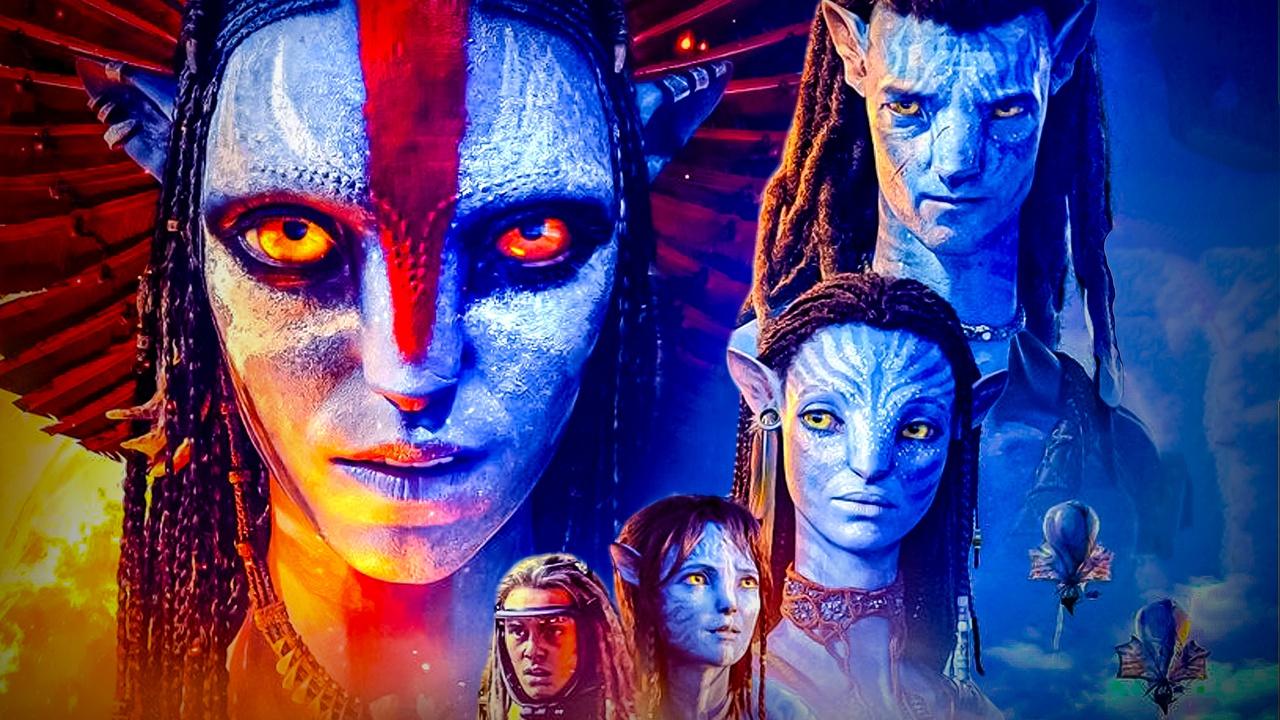
The world of Pandora has always been a place of breathtaking beauty and spiritual harmony, but James Cameron’s third installment, Avatar: Fire and Ash, introduces a darker, more volatile side of the moon. This isn't just a continuation of the Sully family's journey; it is a fundamental shift in the conflict between the Na'vi, the RDA, and the planet itself. The lush jungles and vast oceans we have come to love are now contrasted against a landscape of scorched earth and volcanic fury.

In this deep dive, we’re breaking down the shocking finale, the introduction of the terrifying Ash People, and the massive implications for the future of the franchise as the stakes move from survival to a total war for the soul of Pandora.

The Rise of the Ash People: A New Kind of Na’vi

For the first time, we encounter a Na’vi clan that challenges our understanding of the species. Led by the merciless Varang, the Mangkwan (Ash People) are a nomadic tribe living in the volcanic regions of Pandora. Unlike the Omaticaya or the Metkayina, the Ash People have a broken relationship with Eywa. They do not see the Great Mother as a benevolent provider, but as a harsh judge who abandoned them to the fires of the volcanic wasteland.

Driven by historical trauma and the brutal reality of their environment, they view fire as the only "pure" force—a tool for destruction that paves the way for a new world. Their alliance with Colonel Miles Quaritch creates a "hell on Pandora" scenario. This alliance is purely transactional: the RDA provides the high-tech weaponry and tactical aerial support, while the Ash People provide the local ferocity and "fire-resistant" biology needed to finally dismantle Jake Sully’s resistance. This tribal division proves that the Na'vi are not a monolith; they are as capable of hatred and treachery as the humans they fight.

The Evolution of Kiri: A Living Connection to Eywa

One of the most pivotal arcs in Fire and Ash belongs to Kiri. While The Way of Water hinted at her unique abilities, this film pushes them to a terrifying limit. Kiri isn't just "gifted" or "highly sensitive"; she is rapidly becoming a conduit for the planet's collective consciousness. She experiences the pain of Pandora in a way that is both beautiful and agonizing.

During the film's climax, we see Kiri demonstrate a level of control over Pandoran flora and fauna that borders on the divine. This isn't just about commanding a few vines or fish; she orchestrates a massive, bioluminescent surge of the planet itself against the Ash People’s volcanic strongholds. Her ability to manipulate the environment is a sign that Eywa is directly intervening in the war through her. However, this raises a haunting question for the sequels: Is Kiri losing her individual identity? As she merges more deeply with the spirit of the world, her "humanity" (or Na’vity) seems to be slipping away, replaced by something ancient, cold, and immensely powerful.

The Spider Dilemma: A Son of Two Worlds

Spider continues to be the emotional "pivot point" of the entire saga. In this chapter, his relationship with both Jake and Quaritch reaches a devastating breaking point. Having been rejected by Neytiri—who still sees him as the son of a monster—and used as a tactical pawn by his biological father, Spider’s loyalties are fractured beyond repair.

The ending of Fire and Ash suggests that Spider’s unique biology—his ability to adapt to Na'vi culture while possessing a human tactical mind—will be the key to either peace or total destruction. He is caught in a purgatory between two species, belonging to neither. When he saves certain characters at the end of the film, it isn't out of loyalty to the Sullys, but out of a desperate need to find his own moral compass. He is no longer just a "human kid in a mask"; he is the bridge between two warring species, and his ultimate choice in the coming films will likely decide the fate of both Earth and Pandora.

Breaking Down the Climax: Fire Meets Water

The final battle is a masterclass in elemental warfare, showcasing James Cameron’s obsession with the contrast between life-giving water and destructive fire. We see the Metkayina’s oceanic forces clashing with the fire-based tactics of the Ash People in a spectacle that redefines the scale of the franchise. The scale is massive, involving hundreds of combatants and experimental RDA tech, but the stakes remain deeply intimate.

The loss felt by the Sully family is channeled into a "primal" version of Jake Sully. He is no longer the strategic military commander we saw in the first film; he is a father with nothing left to lose, fighting with a ferocity that even scares his allies. The defeat of the RDA flagship and the temporary retreat of Varang and Quaritch into the volcanic mists leaves Pandora in a state of fragile victory. However, the introduction of fire has permanently scarred the landscape. The biological "networking" of the trees has been severed in key areas, meaning the spiritual connection to Eywa is physically dying in the volcanic regions.

Detailed Theories for the Future: What Happens in Avatar 4 and 5?

James Cameron has confirmed that the scripts for the next two films are already finished, and the ending of Fire and Ash sets the stage for a dramatic escalation.

  1. The Generational Time Jump: Strong rumors suggest that Avatar 4 will feature a significant time jump. We will see Lo'ak, Kiri, and Tuk as fully matured adults, taking over the mantle of leadership from Jake and Neytiri. This allows the story to move from a family survival story to a grand political epic.

  2. The Descent of Earth: With the RDA's "Bridgehead" city growing and the "Star People" facing total extinction on a dying Earth, the conflict must eventually look upward. There is a strong possibility that the final films will take the Na'vi to the stars—perhaps even to the ruins of Earth itself—to show the consequences of the "human way."

  3. The Redemption or Damnation of Quaritch: Quaritch is no longer the two-dimensional villain he once was. His interactions with the Ash People suggest he is starting to respect the Na'vi's strength, even if he still intends to conquer them. Could he eventually turn against the RDA to protect the moon he was reborn on? Or will his obsession with Jake Sully lead to a final, mutual destruction?

  4. The Secret of the Tulkun: The sentient whales of Pandora still hold secrets regarding the planet's history. Fire and Ash hints that the Tulkun may have a "recorded memory" of a previous war with the Ash People, suggesting that this cycle of violence has happened before.

Conclusion: The War Has Only Just Begun

Avatar: Fire and Ash is more than just a sequel; it’s a transition. It moves the story away from the "noble" tropes of the first two films and into a gritty, complex exploration of war, environmental collapse, and the grey areas of morality. There are no easy answers here; both sides are bleeding, and both sides are capable of atrocities.

As the Sully family prepares for the next inevitable wave of the RDA, one thing is clear: the fire has been lit, and the ash will settle on everyone—human and Na’vi alike. The battle for Pandora is no longer just about land; it's about whether the planet can survive the darkness within its own people.

What are your thoughts on the Fire and Ash ending? Do you think the Ash People are truly evil, or just misunderstood survivors of a harsh world? Is Kiri becoming a hero or a threat? Leave a comment below and let’s discuss the future of Pandora!

Saturday, December 20, 2025

Pluribus Season 1, Episode 8 Breakdown: The "Charm Offensive" and the Cost of Connection


Description: A comprehensive, long-form analysis of Pluribus Episode 8 "Charm Offensive." Explore the psychological manipulation of Carol, the "Joining" endgame, and why that game-changing kiss with Zosia matters.

The penultimate episode of Pluribus Season 1, titled "Charm Offensive," pushes the boundaries of what it means to be human in a world dominated by a collective consciousness. As we head toward the finale, the stakes have shifted from mere survival to a complex psychological battle of wills. This episode isn't just a bridge to the end; it's a profound look at isolation, manipulation, and the desperate need for touch in a post-individual world.

Understanding the "Charm Offensive": The Psychology of Control

The title of the episode serves as a roadmap for the Others' strategy. A "charm offensive" is defined as a campaign of flattery and friendliness designed to achieve the support or agreement of others. In this episode, the Others aren't using force; they are using intimacy. By luring Carol into a sense of normalcy through shared activities—croquet, massages, and nostalgic dinners—they are attempting to erode her resistance not with a bang, but with a whisper.

This is a classic "love-bombing" tactic scaled up to a global level. The Others recognize that Carol is the last pillar of the old world. They don't want to break her; they want her to want to belong. Every pleasant interaction is a brick in a velvet prison. The horror of "Charm Offensive" lies in how attractive the prison looks—who wouldn't want a world without war, hunger, or loneliness? But as Carol correctly identifies, a peace bought with the price of a soul is no peace at all.

Manousos: The Unyielding Individual in a Soft World

While Carol is being courted by the hive mind, Manousos remains the ultimate foil. Despite nearly dying in his trek through the Darien Gap—one of the most dangerous terrains on Earth—he refuses to yield. His stint in the hospital in Panama highlights the stark difference between him and Carol. Manousos treats the Others with professional coldness, even demanding an itemized bill for his care.

His interaction with the medical staff is a masterclass in defiance. By demanding to pay, he is insisting on the concept of "self" and "debt." In the Joining, everything is free because everything is shared; by insisting on a transaction, Manousos is reaffirming his status as an independent agent. His determination to reach Carol suggests that he might be the anchor she needs to remember her mission, especially as she begins to drift into the Others' comfortable embrace. He is the rugged, jagged edge that refuses to be smoothed over by the collective's "charm."

Carol’s Secret Research: Mapping the Hive’s Biology

Carol isn't just playing along; she’s collecting data. Her whiteboard has become a repository of terrifying truths, a map of an enemy she is starting to understand too well. In this episode, we learn critical details about how the Joining functions on a biological level:

  • The Sleep Cycle and "Cuddle Puddles": Carol discovers the "cuddle puddle"—a communal sleeping arrangement where the Others use collective body heat and physical proximity to maintain their connection. This isn't just for comfort; it seems to be a biological requirement for the "mesh network" to stay synchronized. It’s a literal manifestation of the loss of personal space.

  • Bio-Electromagnetic Communication: The Others communicate via the body’s electromagnetic field. This allows for instantaneous shared perception across the entire hive. Carol realizes that when she speaks to one, she is being heard by billions. The privacy of the mind has been completely eradicated.

  • The Logistics of a Unified Species: From using trains to transport food to rebuilding entire structures like Carol’s favorite writing spot, the Others have mastered logistics. Without the "friction" of human ego, competition, or bureaucracy, they can move mountains. This raises a haunting question for the audience: is human efficiency only possible when we stop being human?

The Rebuilt Diner: Kindness or Memory-Theater?

One of the most poignant and unsettling moments is the reconstruction of Lauchlin’s, the diner where Carol wrote her first book. For the Others, this is a grand romantic gesture—a gift to their "Queen." For Carol, it’s a "memory-theater" version of reality.

The presence of Bri, the waitress from Carol's past, highlights the horror of the Joining. Bri isn't really Bri; she is a vessel for a memory. She moves like Bri and speaks like Bri, but the soul is gone, replaced by a segment of the collective acting out a role. This scene forces us to ask: Is a perfect imitation of love better than a lonely reality? Carol’s rejection of the fantasy shows she still recognizes the strings being pulled, even if those strings are made of silk. She sees the "red flags" that the others are trying to hide behind nostalgia.

The Kiss: A Game-Changing Moment of Vulnerability

The climax of the episode—the kiss between Carol and Zosia—is the series' most controversial and complex moment to date. It is a collision of Carol’s extreme vulnerability and the Others’ tactical empathy.

When Zosia shares her memory of mango ice cream, we see a flicker of the individual she once was. Or do we? This is the central mystery of the episode. Is Zosia finally breaking away from the collective, or is the collective simply using Zosia's body and memories to provide the specific type of intimacy Carol craves?

When Carol reciprocates the kiss, the camera work changes—the world seems to blur. She isn't just kissing Zosia; she is potentially opening a backdoor to her own mind for the seven billion souls behind Zosia to enter. It’s a moment of profound human weakness. In her loneliness, Carol reached out for a hand, and she might have found a tether that will pull her into the hive forever.

The Terrifying Truth: The Kepler-22b Connection

The episode drops a massive bombshell regarding the "GIANT ANTENNA" project. The Others aren't just content with Earth; they are looking to the stars. The signal from Kepler-22b suggests that this alien RNA sequence is part of a multi-world "gift-sharing" program.

The Others view themselves as missionaries of a peace-inducing virus. Their goal isn't just to unite Earth, but to rebroadcast the signal into deep space, "saving" other civilizations the way they believe they saved ours. This transforms the show from a localized post-apocalyptic drama into a cosmic horror story. The "Joining" is an interstellar infection that views individual consciousness as a disease to be cured.

Conclusion: Caught Between a Rock and a Hard Place

As "Charm Offensive" closes, we are left with a Carol who is more connected, yet more compromised, than ever before. She is enjoying the massages, the food, and the companionship, even as she writes "THEY ARE NOT MY FRIENDS" on her board. The duality of her situation is heartbreaking.

With the news that a "visitor" (likely Manousos) is arriving soon, the domestic peace she’s found with Zosia is about to be shattered. Will Manousos see Carol as a victim to be rescued, or has she already become part of the problem? Pluribus continues to challenge our definitions of love and autonomy. If the world is at peace, does it matter if that peace is manufactured? As we prepare for the Season 1 finale, one thing is clear: the "right" way to put the world back together is becoming harder to define with every heartbeat Carol shares with the collective.

SEO Keywords: Pluribus Episode 8 recap, Carol and Zosia kiss, Pluribus season 1 breakdown, Charm Offensive analysis, Vince Gilligan Pluribus, Manousos Pluribus character, the Joining explained, Kepler-22b Pluribus theory, Pluribus season 1 finale predictions.

Friday, December 19, 2025

The Ultimate Breakdown: Stranger Things 5 Vol. 2 Theories and Hidden Trailer Clues


Description: Dive into our massive, deep-dive breakdown of the Stranger Things 5 Volume 2 trailer. We explore the Christmas release, the secret of Dimension X, Will’s hidden powers, time travel theories, and the final battle for Hawkins.

As we approach the holiday season, the tension in Hawkins has reached a breaking point. With the final episodes of Stranger Things 5 Volume 2 set to drop on Christmas Day, the latest trailer has left fans reeling with more questions than answers. From the haunting echoes of Diana Ross’s "Upside Down" to the revelation that everything we knew about the parallel dimension might be a lie, the stakes have never been higher.

In this comprehensive breakdown, we’re peeling back every layer of the final footage to uncover the hidden clues, lore connections, and world-ending theories you might have missed.

The Auditory Clues: Why Diana Ross Matters

The trailer is masterfully scored to Diana Ross’s "Upside Down," a track we previously heard Robin play in the opening of the season. This isn't just a stylistic choice; it’s a thematic anchor that hints at the literal inversion of reality. The lyrics—focusing on a world turning "inside out" and "round and round"—reflect the current state of Hawkins. The town is no longer just being invaded; it is being assimilated.

If you look closely at how the Duffer Brothers structure their storytelling, they often use sudden "bangs" or sharp transitions to signal shifts in reality. This trailer follows that pattern with surgical precision, syncing gunfire, explosions, and dimensional rifts to the beat. This suggests that the barrier between our world and the Upside Down hasn't just thinned—it has completely dissolved. We are no longer looking at two separate worlds; we are looking at a singular, chaotic collision.

The Aftermath of the "Sorcerer" Episode: Will’s Ascension

The trailer picks up in the direct aftermath of the recent game-changing events. We see Will Byers standing over the red rift glowing from beneath the metal plates of the "Maxi." This confirms that the rift isn't just a gateway; it’s an active, growing wound in the heart of the town that is bleeding energy from a source much older than Vecna.

Will’s role is becoming increasingly central, moving away from the victim trope into a position of untapped power. As the first person to ever survive the Upside Down, his connection to Henry Creel is no longer just a "feeling"—it is a tactical advantage. In Dungeons & Dragons lore, the "Sorcerer" draws power from an inherent gift or a bloodline. The footage suggests Will is finally harnessing the particles still inside him, effectively "hacking" the hive mind to turn Vecna’s own network against him.

"Everything We Assumed Is Wrong": The Dimension X Reveal

Perhaps the most chilling line in the trailer comes from Dustin: "Everything we’ve ever assumed about the Upside Down has been dead wrong." This is a massive pivot for the series. For years, the characters (and the audience) believed the Upside Down was a dark reflection of Hawkins created or "frozen" when Eleven sent Henry Creel there in 1979.

However, new evidence suggests the Upside Down is merely a "buffer zone"—a temporary construct. The real threat lies deeper in Dimension X. This is the primordial, fiery realm Henry first discovered, filled with the cloud-like entities and ancient structures seen in his origin story. If the Upside Down is a snapshot of 1983, it implies that the dimension is literally a "stuck" memory. The latest clues suggest our heroes will have to "unfreeze" this logic. To stop the corruption, they cannot just fight the monsters in the present; they must travel back to the origin point of the curse—the events of 1959—to sever the connection at its root.

The Return of Kali (Eight) and the Power of Memory

The trailer hints at a massive, long-awaited reunion. Eleven is seen seeking help from Kali, her "sister" from Season 2. While many fans felt Kali’s story was a standalone arc, her return now makes perfect narrative sense. Kali’s ability to create mental illusions is the perfect counter to Vecna’s mind-warping powers. While Eleven provides the raw telekinetic force, Kali provides the "mental shield" necessary to navigate Vecna’s psyche without being consumed by it.

Furthermore, the "White Door" appearing in the mindscape suggests a journey through the "First Shadows" of Henry's mind. This door looks strikingly like the entrance to Mike’s basement, symbolizing Eleven’s first experience of a real home and safety. This suggests that the final battle won't be fought with physical weapons, but with the "logic of memory." By forcing Vecna to confront his own suppressed humanity—represented by the white doors and childhood relics—the group may be able to weaken his control over the Mind Flayer.

The "Final Stand" Pairings: Psychological Stakes

The footage highlights specific groups heading into the heart of the danger, each representing a different emotional core of the show:

  • Dustin and Steve: Their "If you die, I die" pact confirms that the Duffers are leaning into the high stakes of their brotherhood. They are seen infiltrating Hawkins Lab, which has now become a focal point for a massive energy sphere. This sphere appears to be a "dimensional anchor" that is physically holding the two worlds together.

  • Nancy and Jonathan: They are investigating a "fleshy wall" that looks like a biological barrier. This suggests that the Upside Down is literally "growing" over our reality like a cancer. Their mission seems to be finding the "heart" of this growth to stop the spread.

  • Max and Holly: Navigating the realm of "Camazotz" (a reference to A Wrinkle in Time), Max seems to be acting as a protector for the youngest Wheeler. Theories suggest Max’s consciousness is hiding in a "dead zone" or a cave within Vecna's mind—a place he is afraid to enter because it contains the trauma he can't control.

The Time Travel Factor: November 1983 and 1959

There is a significant, intentional focus on a newspaper from November 1983. This confirms the "Time Loop" theory that has been circulating for years. If the Upside Down is stuck on the day Will went missing, then the only way to "reset" the world is to go back to that day and change a singular event.

The introduction of the "Dimension Door" concept implies that the group isn't just running through the woods; they are hopping through points in time. The popcorn bag Lucas is holding reads "This Way Up," which many believe is a coded message about the "Rightside Up"—a restoration of the original timeline. If the heroes can reach the moment Henry Creel was first corrupted in the Nevada desert or the Hawkins play in 1959, they might be able to prevent the "First Shadow" from ever taking hold, effectively erasing the horror of the last four seasons but potentially at a great personal cost.

Conclusion: The Beginning of the End

The final episodes of Stranger Things promise a cinematic conclusion that spans across dimensions, decades, and the very fabric of reality. As the "Upside Down" prepares to merge permanently with our world, the only thing certain is that the Hawkins we knew will never be the same. The "Christmas Gift" the Duffers are giving us appears to be a bittersweet goodbye to the characters we've grown up with.

Will Eleven and Kali’s combined powers be enough to shatter Vecna’s hold? Or will the "New World" Henry Creel envisions—a world without time or human rules—finally come to pass? We’ll find out when Volume 2 arrives this Christmas.

What are your theories for the finale? Does the "Camazotz" theory hold weight, or is there a bigger monster waiting in the depths of Dimension X? Is time travel the only way out, or is the cost too high? Let us know your deepest theories in the comments below!

Stay tuned for our full, deep-dive episode reviews and Easter egg hunts following the Christmas Day premiere. The gate is closing, but the story is far from over.

Thursday, December 18, 2025

Avatar: Fire and Ash – The Ultimate Recap & Lore Guide Before the Next Chapter


Description: Prepare for Avatar: Fire and Ash with this deep-dive recap. Explore the secrets of Eywa, Kiri's miraculous origin, the rise of the hostile Ash People, and what James Cameron’s next chapter means for the future of Pandora.

The world of Pandora is expanding. With the upcoming release of Avatar: Fire and Ash, James Cameron is set to take us into the darker corners of the moon we’ve grown to love. But before we meet the "Ash People" and witness the next stage of the war between the Na'vi and the RDA, there is a massive amount of history, biology, and character drama to catch up on.

Whether it’s been a while since you saw the original film or you’re still theorizing about the events of The Way of Water, this is the definitive long-read guide to everything you need to know before the fire starts.

The Living Heart of Pandora: Understanding Eywa

To understand the conflict on Pandora, you first have to understand the world itself. Pandora isn’t just a moon; it’s a biological supercomputer. Located in the Alpha Centauri system, orbiting the gas giant Polyphemus, this world is home to the Na'vi—ten-foot-tall, blue-skinned beings who live in total harmony with their environment.

Everything on Pandora is linked through a global neural network. The roots of the trees act like electrochemical synapses, similar to the neurons in a human brain. The Na'vi recognize this consciousness as their deity, Eywa. This isn't just a religion; it's a tangible, biological reality. Through their "queue" (the neural link in their braids), the Na'vi can connect to animals, plants, and even the memories of their ancestors.

This neural network also serves as a "Spirit Realm." When a Na'vi dies, their consciousness and memories are uploaded into the collective memory of the planet. This explains how characters like Jake can "visit" the deceased in visions—they are essentially accessing a biological simulation of their loved ones’ souls stored within the roots of the world.

The Human Invasion: Why Earth Wants Pandora

By the year 2148, Earth is a dying world. Overpopulation and resource depletion have pushed humanity to the brink, leading a megacorporation known as the RDA to colonize Pandora. Their primary goal? A room-temperature superconductor called Unobtanium.

This mineral is the backbone of Earth’s economy and interstellar travel. However, the largest deposits of Unobtanium are located directly beneath the Na'vi’s most sacred sites, such as the Omatikaya clan's Home Tree. This fundamental greed is what sparked the original war, turning a scientific mission (The Avatar Program) into a full-scale military invasion. In the years since the first war, the RDA has shifted its focus from simple mining to full-scale colonization, building a massive fortress-city called Bridgehead to prepare Pandora as a new home for the human race.

The Journey of Jake Sully: From Marine to Toruk Makto

The heart of the saga belongs to Jake Sully. Originally a paralyzed ex-Marine sent to replace his deceased twin brother in the Avatar Program, Jake was meant to be a bridge between cultures—or a spy for the military.

However, after being saved by Neytiri, the daughter of the Omatikaya clan's leaders, Jake's perspective shifted. He learned the "Way of the Na'vi," eventually falling in love with both Neytiri and the moon itself. When the RDA destroyed Home Tree, Jake did the unthinkable: he bonded with the Toruk, the apex predator of the skies, becoming the legendary Toruk Makto. He united the clans and successfully drove the RDA off the moon—for a time. Now a father, Jake has transitioned from a legendary rebel to a weary protector, struggling with the impossible task of keeping his family safe in a world that is burning.

The Next Generation: The Mystery of Kiri and Spider

Fast forward fourteen years, and the story shifts to the Sully family. Jake and Neytiri have four children: Neteyam, Lo’ak, Tuk, and their adopted daughter, Kiri.

Kiri is perhaps the most significant mystery heading into Fire and Ash. She was born from the "comatose" Avatar body of Dr. Grace Augustine. With no biological father, the implication is that Kiri was conceived by Eywa herself—a biological miracle. Kiri possesses a unique, almost supernatural connection to Pandora, capable of controlling the flora and fauna without a physical link. Scientists suggest she may have a "wireless" connection to the planet's neural network, allowing her to sense the heartbeat of Pandora in ways even the TsahĂŹk (spiritual leaders) cannot.

Living alongside them is Miles "Spider" Socorro, a human boy left behind when the RDA fled. Despite Neytiri’s lingering resentment toward humans, Spider became a part of the family—even though he is the biological son of the villainous Colonel Miles Quaritch. Spider represents the bridge between species, but he is also a point of deep friction within the Sully household.

The Way of Water and the Return of Quaritch

The peace was shattered when the "Sky People" returned. Leading the charge is a "Recombinant" version of Colonel Quaritch—an Avatar body implanted with the Colonel's memories and personality. He is a ghost in a blue body, obsessed with hunting Jake Sully.

To protect his people, Jake took his family into hiding among the Metkayina, the Sea Clan. This introduced us to the "Way of Water," showing how the Na'vi adapt to different biomes. It also introduced the Tulkun, sentient, whale-like creatures that share a deep spiritual bond with the Sea Clan. The conflict culminated in a tragic battle at sea where the Sullys were victorious but paid a heavy price: the death of their eldest son, Neteyam. This loss has fractured Neytiri, leading her into a dark place of rage and vengeance that will likely have massive consequences in the upcoming film.

Enter the Ash People: The Mangkwan Clan

The title Fire and Ash introduces us to the Mangkwan, also known as the Ash People. Unlike the Omatikaya or Metkayina, the Ash People are described as a "hostile" and "aggressive" tribe. Led by a powerful and cynical leader named Varang, this clan has endured immense hardship—specifically a volcanic eruption that destroyed their Hometree and killed many of their people.

Because of this disaster, the Mangkwan have turned their backs on Eywa. They no longer follow the "Three Laws" of the Na'vi; they use human weapons, they pillage other clans for resources, and they view fire as the only "pure" force in the world. Rumors suggest that Varang may even ally her people with the RDA, seeing them as a tool to gain power over the moon that she believes has abandoned her.

What to Expect in 'Fire and Ash'

James Cameron has hinted that this third installment will be the darkest yet. We will see the "dark side" of the Na'vi, proving that not all indigenous people on Pandora are heroes. As Jake and Neytiri struggle to mourn Neteyam, they must navigate a three-way war between their allies, the colonizing RDA, and the vengeful Ash People.

The film is expected to explore the "dynamic range" of emotion—from the beauty of new Pandoran landscapes to the heart-wrenching reality of a family falling apart under pressure. Kiri will likely be the key to it all, as her powers develop and she faces a world where the very balance of nature is being weaponized.

Final Thoughts

The Avatar series is more than just a visual spectacle; it’s a story about the cost of greed and the power of connection. As we prepare for Fire and Ash, the stakes have never been higher. Jake Sully is no longer just a warrior; he’s a father and a leader who realizes that he can no longer run from the fight.

What do you think is the secret behind Kiri's powers? And how will the "Ash People" change the war for Pandora? Let us know your theories in the comments below!

The Ultimate Deep Dive: 'Welcome To Derry' Season 1 Complete Breakdown & Ending Explained


Description: Uncover the terrifying secrets of Derry's past in this massive, deep-dive Season 1 recap of 'Welcome to Derry.' From the tragic Black Spot Massacre to the shocking time-loop twist involving a future Loser, we break down every Easter egg, gruesome death, and Pennywise origin detail in the IT prequel.

For a new generation, the sheer terror of Pennywise the Dancing Clown first manifested in 2017 when Bill SkarsgĂ„rd’s chilling portrayal dragged poor Georgie into the sewer in Andy Muschietti's IT. The visceral image of the yellow slicker and the red balloon became instant iconography. But for others, that nightmare began decades earlier with Tim Curry's iconic, gravelly-voiced performance in the 1990 miniseries. And of course, for the original constant readers, it all started back in 1986 when Stephen King's monumental novel first hit bookstore shelves, forever changing the landscape of horror with a tome that explored childhood trauma as much as it did monsters.

However, the lore of Pennywise—and indeed of IT itself—runs far deeper than just the sewers beneath the 1980s. This creature isn't merely a clown; it is an ancient, shape-shifting evil, a malicious cosmic entity whose roots stretch beyond Earth into the Macroverse itself, existing in a void outside our understanding of space and time. HBO's prequel series, Welcome to Derry, finally peels back the curtain on the "interludes" of King's novel that many fans have only dreamed of seeing adapted.

In the book, these interludes are historical entries written by Mike Hanlon, the librarian and historian of the Losers Club, documenting Derry’s cycle of violence. We aren't just watching a scary clown scare kids; we are witnessing historical documents of trauma brought to life: the Black Spot fire, the Bradley Gang massacre, and the Kitchener Ironworks explosion. If you’ve finished the season and your jaw is still on the floor, or if you just want to understand how this connects to the movies, you’re in the right place. Let’s break down the tragic, terrifying, and mind-bending events of Welcome to Derry Season 1 in excruciating detail.

1961: The Nightmare Begins with "The Music Man"

The series opens not with a jump scare, but with a thematic masterstroke that sets the intellectual stage for the horror to come. It’s late 1961, and the town is watching the film The Music Man in the local theater. This particular film plays a crucial role in the episode's subtext. The Music Man is about Harold Hill, a smooth-talking, corrupt salesman who preys on a town's fears of "trouble" to sell them something they don't need—a boy's band. It is a perfect mirror to IT: a corrupt figure who expertly exploits the anxieties of a community, manufacturing crises to feed itself.

We are immediately introduced to the new generation of victims through Matty, a neglected boy trying to hitchhike out of town. Matty’s story sets a grueling tone for the show, signaling that Welcome to Derry will be darker and more psychological than its predecessors. He is picked up by a strange family—a mother, father, daughter, and son—who seem "off" from the start. They claim to be heading to Portland, but as the drive continues, the atmosphere curdles.

The tension builds during a bizarre spelling game in the car. The mother forces the boy to spell increasingly disturbing words like "strangulation," "vasectomy," and "cadaver." It’s a scene of mounting dread, where the mundane becomes threatening. The horror crescendos when the family begins chanting "O-U-T" over and over, their faces twisting in mania.

In a sequence that rivals the darkest moments of the franchise, the pregnant mother suddenly declares the baby is ready to come "O-U-T." She births a creature right there in the car. But this is no human baby. It is a winged, demon-baby creature with crooked eyes—Pennywise in larval form. The image of the creature being swung around by its umbilical cord while the family laughs hysterically is pure nightmare fuel. It leaps at Matty, marking him not just for death, but as bait. It’s grotesque, disturbing, and establishes immediately that this series is not holding back. Matty’s disappearance becomes the catalyst for the entire season's mystery.

The Cold War Paranoia

What makes this setting so potent is the backdrop of the Cold War. The fear of nuclear annihilation is palpable in 1962. We meet Major Leroy Hanlon (yes, that Hanlon family) and General Shaw at the Air Force base. The show brilliantly intertwines the cosmic horror of IT with the very real existential dread of nuclear war. The town isn't just afraid of the dark; they are afraid of the sky falling.

General Shaw reveals a sinister government plot that adds a layer of sci-fi conspiracy to the supernatural horror: they aren't just studying IT; they want to weaponize it. They believe if they can harness the creature's ability to generate pure fear, they can use it to incapacitate enemies and end the Cold War. This introduces a "human villain" element that rivals the monster itself—men who think they can leash a god.

Major Hanlon becomes a key player because of a unique medical condition: a brain injury to his amygdala has left him incapable of feeling fear. In a show about a monster that eats fear, a man who cannot feel it is the ultimate anomaly. He becomes the government's "Special Project," the only man capable of walking into IT's lair without becoming a meal.

The New Losers Club & Their Customized Traumas

We are introduced to our core group of kids, each with a specific vulnerability that IT ruthlessly exploits. Unlike the original Losers Club, whose fears were often classic movie monsters, this generation's fears are deeply rooted in body horror and grief:

  • Lily: A tragic figure dealing with the trauma of her father’s gruesome death at a jar/pickle factory. Rumors swirl around town that his remains were spread into pickle jars, a horrific urban legend that IT weaponizes. This leads to a terrifying hallucination in a grocery store where the shelves close in on her, and the jars explode to form an octopus-like monster made of pickled limbs and her father's face. It is a visceral representation of her inability to escape her grief.

  • Teddy: A boy from a strict Jewish household, plagued by historical trauma passed down from his father. His fear is intellectual and historical. IT manifests to him as a grotesque face stretching out of a lampshade, a cruel mockery of the horrific stories about the Holocaust and human skin lampshades his father discussed. It turns his home, a place of safety, into a museum of atrocities.

  • Phil: The skeptic obsessed with the atomic age and planes. He represents the logic that IT destroys. He believes in science and mechanics, but his logic crumbles before the supernatural reality of Derry.

  • Marge: Insecure about her thick glasses and desperate to fit in with the popular "Patty Cakes" clique. Her insecurity leads to a body-horror sequence in the school woodshop that is difficult to watch. She hallucinates her eyes swelling up (mimicking a parasite video she saw in class) and attempts to "fix" them with a saw. The horror lies in the fact that the wounds regenerate instantly, trapping her in a cycle of self-mutilation without release.

  • Ronnie: The projectionist's daughter, tough and street-smart. Her fear manifests in a "womb" nightmare where her bed transforms into a fleshy, living organ. The sheets turn red, a heartbeat thumps through the mattress, and the bed attempts to swallow her whole—a Freud-level metaphor for her guilt over her mother dying in childbirth. It forces her to relive the moment of her own birth as a moment of destruction.

  • Will Hanlon: The new kid, son of Major Leroy Hanlon. He is smart, brave, and a future father to Mike Hanlon. His fear is losing his father, which IT exploits during a fishing trip by appearing as a burnt, water-logged version of Leroy. This prophetic vision of his father burning is a cruel foreshadowing of the Hanlon family's eventual fate in the 1980s timeline.

Cosmic Easter Eggs & The Theater Massacre

The show wastes no time dropping Easter eggs for the constant readers. We see "Burt the Turtle" on a marquee—a nod to Maturin, the cosmic turtle and IT's ancient enemy. Lily even wears a turtle bracelet, a talisman that seemingly protects her from IT's direct influence multiple times, acting as a shield during the grocery store attack and the theater massacre. This suggests that good cosmic forces are also at play in Derry, however subtle.

Speaking of the theater, the premiere delivers a massacre that sets the stakes for the season. The kids sneak in to watch a movie, hoping for answers, but the screen erupts. The "IT baby" returns, grown and lethal, bursting through the movie screen in a meta-moment of horror. It brutally murders Teddy, Phil, and Susie. The brutality is shocking—Susie's arm is bitten off, and Teddy is ripped in half. The adults, naturally, see nothing but the aftermath. The police blame Ronnie’s father, Hank, setting up a tragic racial injustice plotline. Hank is an innocent man framed by a town that needs a scapegoat, proving that in Derry, the human capacity for evil and prejudice is just as dangerous as the clown.

The Origins of Bob Gray & Mrs. Kersh

One of the most controversial yet fascinating aspects of this season is the expanded backstory of Bob Gray. In the books, Pennywise is just a mask. Here, we get the origin of the mask. We flashback to 1908 and meet Bob Gray—not as a monster, but as a genuine, grieving carnival performer. He’s a man mourning his wife, Periwinkle, and trying to raise his daughter, Ingrid, while keeping the show afloat.

This recontextualizes the Pennywise persona entirely. Pennywise wasn’t always a clown; IT stole the identity of a man who brought joy to children to better hunt them. The scene where the entity lures the real Bob Gray into the woods—using a creepy child who claims his mother is hurt—is tragic. Bob goes to help, driven by empathy, only to be consumed by the void. It explains why the clown form is so persistent; it’s a stolen skin, worn by a cosmic predator because it works. It captures the prey's trust before devouring them.

Even more twisting is the revelation of Mrs. Kersh (Ingrid). The creepy old woman we know from IT Chapter 2 is revealed to be Bob Gray’s daughter. Traumatized by her father’s disappearance and manipulated by IT, she spends her life feeding the monster, believing it is her "Papa" returned to her. She becomes a Renfield-like character to IT's Dracula.

In a heartbreaking twist, we learn she was the one who tipped off the racist mob about Hank's location, hoping the bloodshed would summon "Papa." She traded an innocent man's life for a reunion. When she finally embraces the clown, begging him to stay, Pennywise drops the act. He laughs, telling her he ate her father decades ago, and shows her the Deadlights inside his throat. It’s a sick, twisted dynamic that adds a layer of human tragedy to the cosmic horror, explaining why Mrs. Kersh is so deranged in the future timeline. She isn't just a monster; she is IT's longest-suffering victim.

The Black Spot Massacre: A Tragedy of Hate

Book readers knew this was coming, but seeing it unfold was gut-wrenching. The "Black Spot"—a nightclub built by black soldiers to find sanctuary in a segregated town—becomes the epicenter of hate and horror.

General Shaw and the government push their plan to weaponize fear, while the racism in Derry reaches a boiling point. Orchestrated by IT to create a feast of fear, a white supremacist mob locks the doors of the Black Spot and sets the club on fire. This scene is terrifying because the monsters at the door are human neighbors.

Inside, it is pure chaos. Pennywise arrives, not just to feed, but to revel in the misery. This sequence features perhaps the most menacing version of Bill SkarsgĂ„rd’s Pennywise we’ve ever seen. He thrives in the environment of hate. He literally eats a woman’s face in the burning building, delivering dark humor ("Do I have something on my face?") amidst a hate crime. It highlights IT's parasitic nature; it doesn't just create fear, it rides the waves of human violence.

The emotional peak of the season happens here with Rich. Rich was the innocent heart of the group, a kid who just wanted to play drums and be a "knight" for Marge. When the fire traps him and Marge, he finds a refrigerator—the only fireproof shelter. Realizing only one can fit, he makes the ultimate sacrifice. He stuffs Marge inside, telling her, "Knights protect maidens," and stays outside as the roof collapses. It is a devastating, heroic death that drives home the stakes: no one is safe, not even the "good" kids. Rich’s death is the emotional anchor that rallies the remaining Losers for the finale.

The Time Loop Paradox: The Ending Explained

The finale, titled "Winter Fire," creates a massive expansion to the mythology that changes how we view the entire franchise. Pennywise freezes over Derry, creating a winter hellscape in spring to trap his victims. The surviving kids—Will, Marge, Ronnie, and Lily—along with the adults, mount a final stand on the frozen lake.

But the shocking twist comes when Pennywise corners Marge on the ice. He freezes time, leans in, and reveals he knows who she is—or rather, who she becomes. He calls her "Marge Tozier."

This changes everything.

Pennywise is experiencing time non-linearly. He knows that in the future (specifically 2016/2019), the Losers Club will defeat him. One of those Losers is Richie Tozier, Marge’s future son. Pennywise attempts to kill Marge now to prevent Richie from ever being born.

It’s a Terminator-style time paradox. IT is trying to break the cycle of its own death by pruning the family trees of the Losers Club before they can bear fruit. This revelation opens the door for Seasons 2 and 3. We aren't just watching a prequel; we are watching a creature fighting a war across time, trying to rewrite history to ensure its survival. It elevates IT from a hungry predator to a calculated strategist fighting for its own existence.

The Defeat (For Now)

The day is saved thanks to the "Shine" abilities of Dick Halloran (yes, the future chef from The Shining). Halloran uses a special "box" technique—a mental construct to trap the ghosts haunting him—and channels the power of the Maturin Root tea Rose gave him. This connection to the cosmic Turtle allows him to mentally wrestle with IT.

Combined with the kids using a mystical dagger (a shard of the original object that caged IT millennia ago), they manage to wound the creature. The visual effects here are spectacular, showing Pennywise transforming into a giant, winged, bird-like form—a deep-cut reference to the novel where Mike Hanlon sees IT as a giant bird. They force IT back into hibernation, ending the cycle... but only for 27 years.

Conclusion & Mid-Credits: What’s Next?

The season ends on a bittersweet note. The Hanlon family survives, but at a cost. The adults, despite having every reason to flee, decide to stay in Derry—a decision that seals their tragic fates as seen in the movies (Mike's parents dying in a fire). We see Will Hanlon writing letters to Ronnie, setting up the lineage of Mike Hanlon, while Ronnie leaves for Montreal, sparing her from the town's future horrors. It explains why Mike Hanlon is the only one who stays in Derry in the future; it is a family legacy of guardianship.

The Mid-Credits Scene: The show jumps forward to 1988. We see an older, completely broken Ingrid (Mrs. Kersh) in the asylum. She is painting a picture of her "Papa." She hears a commotion and walks out to see a woman hanging—it is Beverly Marsh's mother. A young girl, Beverly Marsh (played again by Sophia Lillis), stands there. Ingrid looks at her and says, "No one who dies here ever really dies." It is a chilling bridge to the 2017 film, confirming that the pieces are set for the Losers Club to return.

Welcome to Derry Season 1 successfully bridged the gap between historical drama and cosmic horror. It proved that the terror of Pennywise isn't just about jump scares; it's about the generational trauma that infects a town. With the time-loop twist, the stakes for Season 2 are massive. We will likely jump back to the 1930s (the Bradley Gang) or 1908 (the Ironworks), seeing IT try to rewrite history to save itself from the Losers Club.

The clown is down, but the nightmare is far from over.

Tuesday, December 16, 2025

Avengers: Doomsday Trailer Leak: Steve Rogers Returns & The Road to Secret Wars


After months of silence, rumors, and five-hour-long livestreams of empty chairs that tested the patience of even the most hardcore fans, the moment the Marvel community has been waiting for is finally here. The first teaser trailer for Avengers: Doomsday has leaked online, sending shockwaves through the fandom.

While this footage is technically a cinema exclusive attached to showings of Avatar: Fire and Ash—part of a unique four-trailer strategy Marvel is reportedly testing—the internet does what it does best. Now, we have our first grainy, handheld look at the future of the MCU. And let's be real—it changes everything we thought we knew about the Multiverse Saga.

This isn't just a simple teaser meant to hype up a title card; it is a fundamental confirmation of one of the wildest theories out there. We aren't just getting the debut of Robert Downey Jr.'s Dr. Doom; we are getting the impossible return of the First Avenger. Let's dive deep into every detail revealed in the footage, from Steve Rogers' new life to the terrifying implications of the "Time Runs Out" adaptation.

The Steve Rogers Teaser: "Steve Rogers Will Return"

If you’ve been following the leak cycle, you know that Marvel is reportedly releasing four different teasers, each attached to different weeks or screenings of Avatar 3. The first of these is entirely centered around Steve Rogers, a character we all thought had said his final goodbye.

The teaser is about a minute long, but it packs a massive emotional punch that feels distinct from the CGI-heavy spectacles of recent phases. It opens with a shot that feels like a direct visual callback to the first Avengers movie: Steve riding a motorbike. But the context has shifted entirely. He isn't riding through a war zone, a SHIELD helicarrier, or a futuristic city under siege. Instead, he pulls up to a quiet, sun-dappled suburban house—the very same one we saw him enter to dance with Peggy Carter at the end of Avengers: Endgame.

He heads inside, and the camera lingers on a specific object with heavy significance: his Captain America suit, folded neatly and resting on a table. This isn't just Easter egg placement; it confirms that this version of Steve is Captain America in this timeline. He didn't just hang up the shield; he brought the mantle with him. But here is the kicker, the moment that is breaking the internet: he isn't alone. The camera pans to reveal him looking over a child—his son.

Turns out, the wild theories (and that cheeky She-Hulk reference) were right—Steve Rogers didn't just retire to a quiet life; he started a family. The teaser ends not with an explosion, but with the ominous ticking of a Doomsday clock and a tagline that will send shivers down your spine: "Steve Rogers will return in Avengers: Doomsday."

The Divergent Timeline Theory & The "James Rogers" Connection

This footage essentially confirms a major theory regarding MCU time travel mechanics: Steve Rogers’ decision to stay in the past at the end of Endgame did not happen in the main 616 loop. Instead, it caused a divergent timeline. According to insiders, this "new" timeline is what eventually births the Fantastic Four universe and, ultimately, Doctor Doom.

This child is likely James Rogers, a character from the animated Next Avengers film and various comics, adapted here to raise the personal stakes for Steve. His existence is the physical manifestation of Steve's "selfish" choice—a choice that might have destabilized the multiverse.

There is a strong chance that the movie opens with Doom showing up at Steve and Peggy’s doorstep. Imagine the stakes: Doom isn't just coming to conquer a world; he's coming to punish Steve for breaking time. This setup allows casual fans who haven't watched a single Disney+ show to jump right back in. You take the emotional ending of the second-highest-grossing movie of all time (Endgame) and use it as the launchpad for the biggest villain in Marvel history.

From Kang to Doom: The Pivot

We have to address the elephant in the room. This movie has been on a crazy journey over the last five years. Despite what some retrospective videos might try to tell you, Dr. Doom was not the plan all along.

The original plan was Avengers: Kang Dynasty, set to star Jonathan Majors as the time-traveling conqueror. But after the legal issues surrounding Majors and the lukewarm critical reception to Ant-Man and the Wasp: Quantumania, Marvel made a hard, decisive pivot. They retooled the entire project, swapping the time-traveling tyrant Kang for the scarred sorcerer Doom. They brought back the Russo Brothers—the architects of Infinity War and Endgame—to direct, and made the unprecedented move of casting the face of the MCU, Robert Downey Jr., as the villain.

Whatever you think of the casting—whether you see it as a desperate nostalgia play or a brilliant subversion—you have to admit: it worked. The hype is back in the stratosphere.

Who is this Doctor Doom?

With RDJ under the mask, it is clear Marvel is taking Doom in a different direction than the comics, but the roots of the character remain.

In the comics, Victor Von Doom was born in Latveria to his mother, Cynthia, and father, Werner. Tragically, both died due to persecution, forging Victor into a man who sought victory and control at all costs. He mastered science and sorcery, eventually trying to save his mother’s soul from the demon Mephisto. In many versions of the origin, it was an unstable experiment to contact her that exploded, scarring his face (though some versions say he impatiently put a hot mask on his face—let's hope the movie skips that part).

The MCU seems to be blending this tragic backstory with Multiversal lore. We know from the Fantastic Four post-credits scene descriptions that Doom is already active in the timeline Steve Rogers created. That film reportedly ends with a flash-forward to "Four Years Later," where we see Franklin Richards (Reed and Sue’s ultra-powerful son) with Doom.

The prevailing rumor is that RDJ’s Doom will be a complex anti-hero/villain who views himself as the only one capable of saving the multiverse from total collapse. He wants to control all realities, but in his mind, it is control for the greater good. Having the face of the MCU’s greatest hero (Tony Stark) on the multiverse’s greatest villain is a narrative goldmine. It forces the Avengers to hesitate, to question their own eyes, and adds a layer of psychological horror to the conflict. Is he a Tony Stark variant? Or is he a Victor Von Doom who simply shares the same face, perhaps due to a cosmic connection?

The "Time Runs Out" Storyline

The plot of Avengers: Doomsday appears to be heavily adapting Jonathan Hickman's masterpiece, the "Time Runs Out" comic book arc.

In the comics, this storyline deals with the collapse of the Multiverse via "Incursions"—events where two universes collide, destroying both Earths unless one is destroyed first. The Illuminati (a secret society of pragmatic heroes including Iron Man, Dr. Strange, and Mr. Fantastic) discover this threat early. To save their own universe (the 616), they start making impossible, horrific choices: building bombs to destroy other inhabited worlds to keep their own alive.

This leads to a massive moral split in the hero community. In the comics, Captain America refuses to trade lives, famously saying, "We don't trade lives." The Illuminati, deeming him too idealistic for the crisis, wipe his memory. When he eventually remembers, it leads to a scenario where the heroes are hunting each other while the multiverse dies around them.

Adapting the Conflict

In Doomsday, we might see Steve Rogers (the moral compass) clashing with a new Illuminati or perhaps Doom himself, who represents the ultimate pragmatist. Doom's solution isn't to save everyone—it's to save what he can, under his rule.

Leaks suggest Doom comes to the main MCU Earth with a proposition: he plans to save the timeline by merging all realities into one. This is the setup for Battleworld—a patchwork planet made of the surviving fragments of destroyed universes.

This lines up perfectly with reports that Secret Wars will end with a "soft reboot" of the MCU. Marvel seems to be using this story to streamline their messy multiverse into a single, cohesive continuity moving forward, likely merging the X-Men and Fantastic Four permanently into the main timeline.

The Mutant Factor: Avengers vs. X-Men?

We also know that the X-Men are playing a huge role here. The Fantastic Four rocket was seen entering the 616 universe at the end of Thunderbolts, and we have had teases of mutants throughout the recent phases.

In The Marvels, Monica Rambeau ended up in a universe with Kelsey Grammer’s Beast and a variant of her mother, Maria Rambeau, as the hero Binary. It is highly likely that Doomsday will feature a clash between the MCU’s Earth-616 and the Fox X-Men universe.

This gives Marvel a chance to do a mini-adaptation of Avengers vs. X-Men. We are talking about legendary actors like Patrick Stewart and Ian McKellen potentially giving their final performances. The conflict writes itself: The X-Men want to save their universe from an incursion; the Avengers want to save theirs. Only one can survive.

Conclusion: A "Hail Mary" for the MCU?

Let's be honest—Marvel has had a rough couple of years. The Disney+ shows have been hit-or-miss, box office returns have stabilized rather than grown, and general audience interest has dipped. Avengers: Doomsday feels like a Hail Mary.

They are pulling every lever they have left. They are bringing back the Russo Brothers. They are bringing back Robert Downey Jr. And now, as this leaked teaser confirms, they are bringing back Steve Rogers.

It’s a massive gamble that risks undoing the perfect endings of Endgame, but looking at the pieces on the board, it might just pay off. Seeing the face of the man who saved the universe in Endgame now threatening to conquer it as Dr. Doom—and seeing Steve Rogers have to stand against him one last time—is a hook that is impossible to ignore.

Marvel needs this to be a massive success. Based on this leaked teaser, they aren't pulling any punches.

What do you think? Is bringing Steve Rogers back a stroke of genius or a sign of desperation? Let me know your theories in the comments below!

CLOSE TO MY HEART

Pluribus Season 1 Ending Explained: Episode 9 Breakdown, The Atom Bomb, & What’s Next for Season 2

  Pluribus Season 1 Finale: Identity, Betrayal, and The "Atom Bomb" Ending Manusos Obrero almost died getting to her. After weeks...

ANYONE LIKED IT