
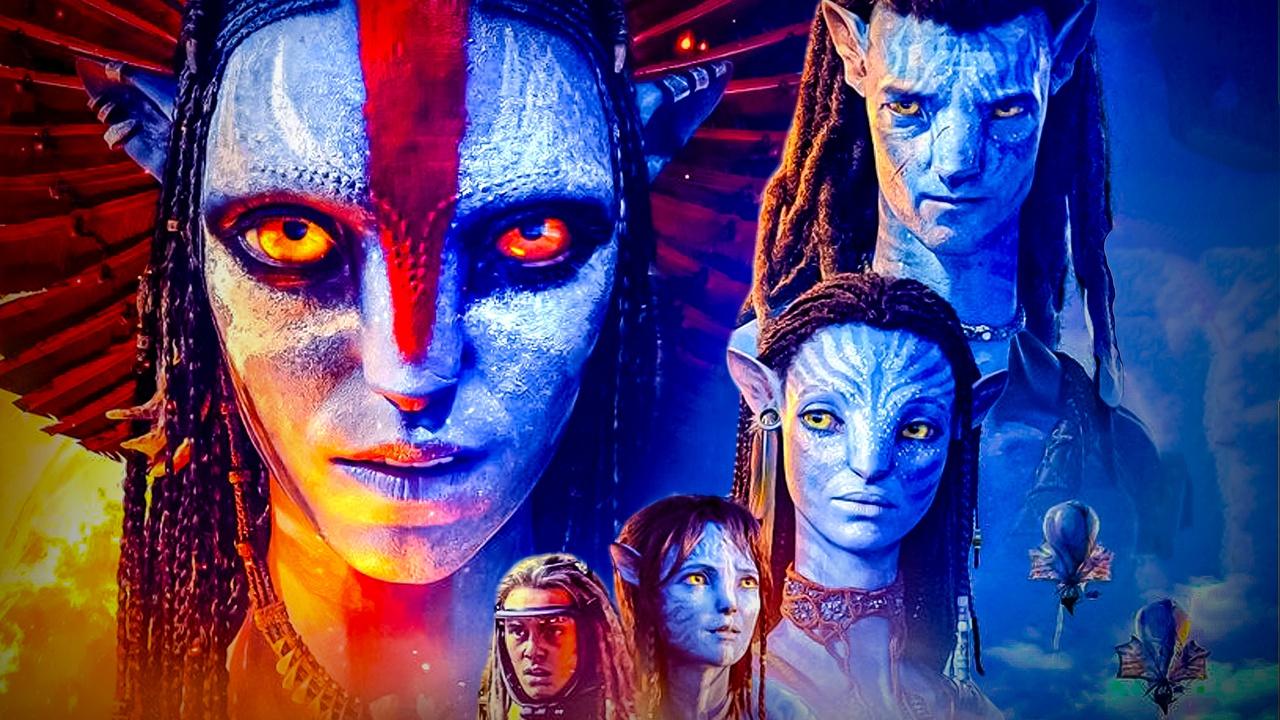
Avatar: Fire and Ash takes Pandora somewhere darker than we've ever seen. Here's a full breakdown of the Mangkwan, Kiri's terrifying evolution, Spider's impossible situation, and what it all means for Avatars 4 and 5.
Introduction
James Cameron just made a film that doesn't feel like a sequel. It feels like a reckoning.
The first Avatar gave us wonder. The Way of Water gave us beauty. Fire and Ash gives us something neither of those films were willing to — genuine moral ambiguity, a Pandora that isn't pristine and healing, and characters we love pushed into versions of themselves that are harder to root for.
I've been sitting with this film for a few days now, and every time I think I've processed it, something else surfaces. The Mangkwan. Kiri's shift. Spider stuck in his impossible purgatory. That climax where fire and water collide and nobody walks away clean.
This isn't the Pandora you fell in love with in 2009. And that, I think, is exactly the point.
Let's get into all of it.
The Mangkwan: The Na'vi We Were Never Prepared to Meet
The single most significant thing Fire and Ash does for the franchise is introduce a group of Na'vi that the audience isn't automatically supposed to like.
Every Na'vi clan we've encountered before this — the Omaticaya, the Metkayina — has been coded as spiritually connected, ecologically attuned, and fundamentally sympathetic. They live with Pandora. They listen to Eywa. They are, in the visual and thematic language the franchise established, the good guys by default.
The Mangkwan break that entirely.
These are people who live in volcanic wastelands, who have spent generations in an environment so hostile that the usual Pandoran spirituality — the bioluminescent network, the gentle communion with living things — simply doesn't function the same way. Eywa's presence, in the regions the Ash People inhabit, is muted or absent. And after enough time in that silence, you stop expecting the planet to answer you back.
Varang is the key to understanding them. She is not a villain in the traditional sense. She doesn't want to destroy Pandora or serve the RDA out of ignorance. She wants recognition. Her people have survived conditions that would have broken any other clan, and their reward for that survival has been continued isolation and neglect. When she looks at the Omaticaya and the Metkayina — with their lush forests and rich reefs and their intimate relationship with Eywa — the emotion isn't envy so much as fury at a cosmic unfairness she has had to live inside her entire life.
Their alliance with Quaritch is a hard scene to sit with, and it's supposed to be. Because it makes complete sense once you understand where they're coming from. The RDA offers resources, power, and most importantly, acknowledgment. Sometimes that's enough to align people who share very few values otherwise.
What the Mangkwan force the film to ask — and what no previous Avatar film has asked this directly — is whether any group of people who have been abandoned long enough can be judged by the same moral standards as those who weren't. That's not a comfortable question. It's a necessary one.
Kiri: Beautiful, Terrifying, and Slipping Away
Kiri has always been the character in this franchise with the highest ceiling and the most potential to break your heart. Fire and Ash begins delivering on both of those promises simultaneously.
Her connection to Eywa has deepened past anything we've seen before — and the film is smart enough to frame that not purely as a gift, but as something that comes with a cost that's becoming harder to ignore.
The climax sequence, where Kiri channels something vast and planetary through herself to counter the volcanic assault, is visually extraordinary. It's also genuinely unsettling if you're paying attention to her face during it. This isn't Kiri communing with nature in the way she did as a child — curious, wondering, reaching out toward something warm. This is Kiri becoming a conduit for something ancient and enormous that doesn't particularly share her scale of concern.
Eywa is not a person. Eywa doesn't experience individual loss the way the Sully family does. Eywa sees in geological time and planetary scope. As Kiri merges more deeply with that consciousness, the version of her that feels things on a human scale — that loves her family specifically, that gets scared, that makes jokes — starts to feel like it's being diluted.
The question the film plants and refuses to answer is whether this is evolution or erosion. Is Kiri becoming more than human, or is she losing the specific things that made her Kiri?
Cameron has set this up beautifully over two films now. By Avatar 4, if Kiri has fully crossed whatever threshold she's approaching, we may be looking at a character who loves her family in the way a mountain loves the valley it overlooks — completely, but from a distance that makes true closeness impossible.
That would be genuinely tragic. And I suspect that's exactly where this is going.
Spider: The Character the Franchise Needed and Nobody Treats Fairly
Let's talk about Spider, because I think he's the most emotionally honest character in the entire film and he keeps getting used as a plot mechanism rather than treated as a person — both by the narrative and by the other characters within it.
His situation is objectively brutal. He is a human child raised among Na'vi who, with one prominent exception, will never fully accept him. His biological father is Miles Quaritch — a man who has been reborn in an alien body and is using his own son's emotional need for paternal connection as a strategic resource. His adoptive family loves him but can't fully protect him from the way the world reads him.
Neytiri's relationship with Spider remains one of the most painful throughlines in the sequel trilogy. She is not a cruel person. She is a mother who watched her firstborn die and who associates Spider's biology with the people responsible for that. The fact that she knows, intellectually, that it isn't Spider's fault doesn't dissolve the visceral emotional reality. Her distance from him isn't villainy — it's grief doing what grief does when it has nowhere healthy to go.
What Spider does in the final act isn't about choosing a side. That framing undersells what the film is doing with him. He makes choices based on what he can live with morally — not what benefits the Sully family, not what benefits Quaritch, but what allows him to look at himself and recognize someone worth being. That's an incredibly mature dramatic arc for a character who is still, technically, a teenager.
He is the bridge between species in this franchise. The question of whether that bridge ever gets to rest — whether Spider eventually gets to just exist rather than constantly function as a connection point between two worlds — is one I hope the final two films actually answer.
The Elemental Climax: What Fire vs. Water Actually Means
The collision between the Metkayina's oceanic combat mastery and the Mangkwan's volcanic warfare is the kind of sequence that justifies the theatrical experience. Cameron's direction is extraordinary, the practical and visual effects work in concert rather than competition, and the choreography of two completely different fighting philosophies meeting in the same space is genuinely inventive.
But the spectacle is in service of something emotional, and that emotional truth is the darker one.
Jake Sully goes primal in this sequence, and it's not triumphant. It's frightening. The composed, strategic leader the Sully family rallied around in the first two films is gone for stretches of this climax. What's there instead is a man who has had too much taken from him, fighting with a ferocity that his enemies can match and his family can only watch.
Victory, when it comes, doesn't feel clean. The volcanic regions of Pandora bear visible spiritual damage — the neural network is fractured or absent in the areas most affected by the Mangkwan's long habitation and the battle's aftermath. Pandora can be hurt. Eywa can be diminished. That's new information for the franchise, and it carries serious weight going forward.
The family is intact at the end. But the film earns none of the relief that sentence might suggest. Intact isn't the same as okay. Surviving isn't the same as healing. And the scars — on Pandora, on the Sully family, on Spider, on Kiri — aren't going anywhere.
Mistakes Fans Are Making When Interpreting the Mangkwan
It's worth pushing back on the impulse to simply categorize the Ash People as villains and move on. Here are a few interpretive mistakes worth avoiding:
- Treating their alliance with Quaritch as proof of evil. Desperate people make alliances with whoever offers them something. The Mangkwan aren't ideologically aligned with the RDA — they're tactically aligned, for now, with someone who acknowledged them.
- Ignoring the legitimate grievance at the center of their anger. They weren't born into volcanic wastelands by choice. The spiritual geography of Pandora disadvantaged them specifically, and no other clan stepped in.
- Expecting them to be redeemable in a conventional, quick sense. The kind of generational resentment the Mangkwan carry doesn't dissolve in one film. Their arc, if it comes, will be slow.
- Missing the mirror they hold up to the main characters. The Sully family and the Mangkwan have more in common than either would admit — both are defined by survival, both have been shaped by loss into harder versions of themselves.
Theory Room: Where Does the Franchise Go From Here?
With scripts for both Avatar 4 and Avatar 5 reportedly complete, the setup Fire and Ash provides is rich enough to fuel speculation for years.
The Time Jump Theory
Reports suggest Avatar 4 will move the timeline forward significantly — enough to present Lo'ak and Kiri as adults rather than teenagers. Watching characters we've seen grow up become battle-hardened, changed people carries a specific kind of emotional weight that the franchise hasn't had access to yet. It also creates space for the show to ask harder questions about what the Sully children have become in the years between films.
The Earth Question
The RDA's presence on Pandora has always been framed by the implication that Earth is dying. As the conflict escalates and the human presence on Pandora becomes less sustainable, the possibility of the Na'vi eventually engaging with a ruined Earth — as rescuers, as witnesses, or as something else entirely — becomes more plausible. Cameron has seeded this possibility carefully enough that it doesn't feel like a stretch.
The Tulkun Memory Theory
The Tulkun were one of the most compelling introductions in The Way of Water — intelligent, ancient, carrying memories across centuries. The possibility that they have recorded experiences of earlier conflicts involving the Ash People or earlier versions of the inter-clan violence we see in Fire and Ash would give the franchise access to history it hasn't shown us yet. If the cycle of volcanic-versus-oceanic conflict is genuinely ancient, the Tulkun may be the only witnesses still alive who remember how it started.
Kiri as the Wildcard
Every theory about where the franchise goes has to account for Kiri as an unpredictable variable. If she continues her trajectory, she becomes something the other characters — including her parents — can't fully predict or control. Whether that makes her the salvation of Pandora, its next great crisis, or both simultaneously is the question Avatar 4 will have to start answering.
FAQ: Avatar Fire and Ash
Who are the Mangkwan in Avatar: Fire and Ash? The Mangkwan, also called the Ash People, are a Na'vi clan who inhabit Pandora's volcanic regions. Disconnected from Eywa's usual network due to their harsh environment, they have developed a culture centered on fire and survival, and enter into an alliance with Quaritch and the RDA in Fire and Ash.
What is happening to Kiri in Fire and Ash? Kiri's connection to Eywa continues to deepen, but the film frames this as potentially dangerous. During the climax, she channels planetary-scale energy through herself in a way that raises questions about whether she is evolving into something beyond individual identity, or losing herself in Eywa's vast consciousness.
Why does Neytiri struggle to accept Spider? Neytiri's complicated relationship with Spider is rooted in grief — specifically in the loss of her firstborn son Neteyam. Spider's human biology connects him, in her emotional reality, to the people responsible for that loss, even though she recognizes intellectually that he is not responsible.
Is Varang a villain? Varang is an antagonist in the traditional sense, but the film invests significant effort in making her sympathetic. Her motivations are rooted in generations of legitimate grievance, not pure malice. Whether she can be reached — or whether the damage is too deep — is a question the franchise leaves open.
When does Avatar 4 release? No confirmed release date has been announced as of this writing, but Avatar 4 is expected to follow Fire and Ash within a few years, continuing the story with a significant time jump forward.
Does Pandora lose in the Fire and Ash climax? The Sully family and their allies survive, but the victory is costly. The spiritual network in the volcanic regions is damaged, and the emotional and physical toll on every main character is significant. It is survival, not triumph.
Conclusion
Avatar: Fire and Ash is the film in this franchise that earns the word "difficult." Not difficult to watch — difficult in the way that good art is difficult, because it refuses to let you stay comfortable.
The Mangkwan are a mirror held up to the Na'vi we love, asking what any people become when the universe stops answering them. Kiri is becoming something extraordinary and possibly something lonely. Spider is carrying a burden no teenager should have to carry, and doing it with more grace than most adults would manage. And Jake Sully — steady, grounded Jake — has cracks in him now that won't close on their own.
Pandora feels real in a way it didn't before, because real places get hurt and stay hurt. The ash doesn't just settle and disappear. It accumulates.
Cameron has built something here that is genuinely unpredictable, which at this point in a franchise that's been running for sixteen years is its own kind of achievement. The final two films have a lot to answer for — and based on what Fire and Ash sets up, I think they might actually deliver.
Drop your theories in the comments. I especially want to hear where you think Kiri ends up by Avatar 5. Because I genuinely have no idea, and that uncertainty is one of the most exciting things this franchise has ever given me.
.png)


No comments:
Post a Comment