
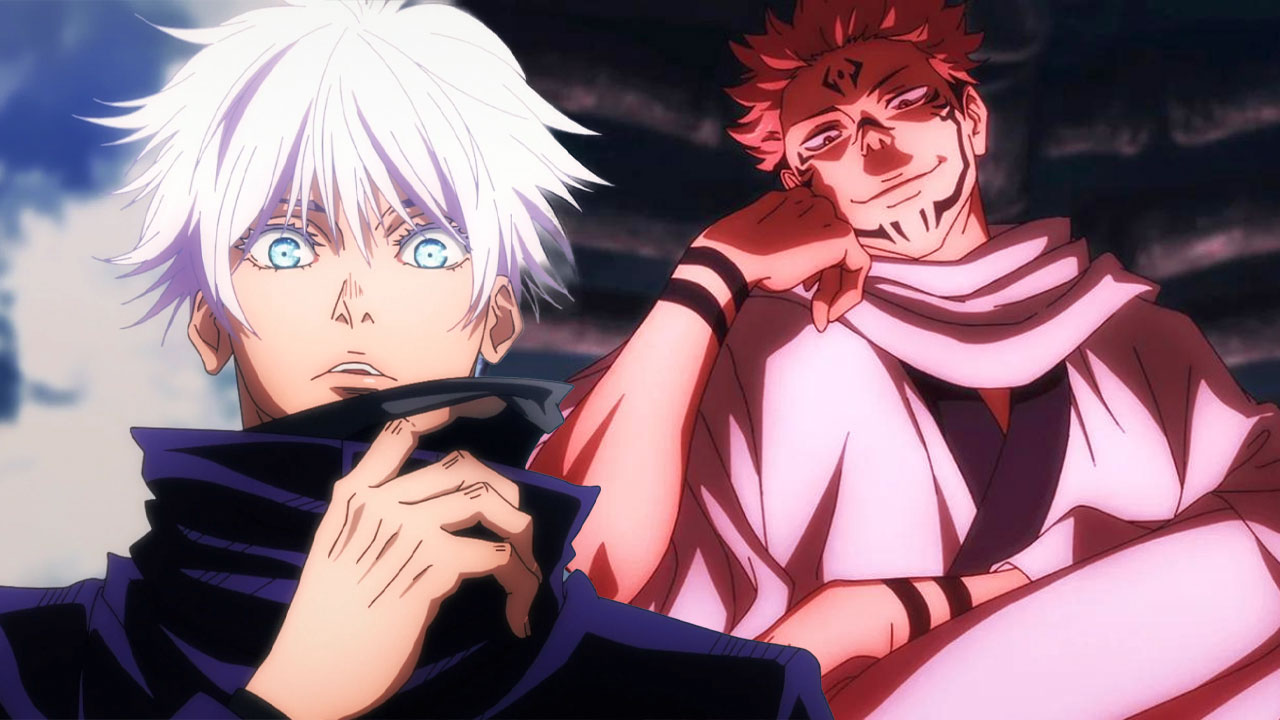
Jujutsu Kaisen Season 3 is here and the world has fundamentally changed. Complete recap of every major arc — from the Gojo-Geto breakup to Shibuya's carnage — plus what to expect in the Culling Game. Spoilers throughout.
There is a specific kind of grief that comes with finishing Jujutsu Kaisen's Shibuya Incident arc, and it is not like the grief that other shonen anime produces.
It is not the clean, heroic sadness of a character dying in triumph. It is not the "they went out fighting" catharsis that the genre has trained audiences to expect. Shibuya is the grief of watching people you spent two seasons caring about get dismantled — methodically, cruelly, sometimes absurdly quickly — by a world that has decided that fairness is an irrelevant concept.
If you are still staring at the ceiling processing any of it, that is entirely appropriate. Gege Akutami designed it to feel exactly this way.
Season 3 is coming, and it is not going to give you a recovery period. The Culling Game begins where Shibuya ended, and the world it takes place in has none of the institutional structures, none of the protections, and none of the hope that characterized even the darkest moments of the first two seasons.
Before stepping into that world, it is worth understanding how we got here — every arc, every death, every butterfly effect that turned a story about a high school student swallowing a cursed finger into a post-apocalyptic survival horror set across a ruined Japan.
This is the full story, from the beginning to where Season 3 picks up. Consider it a guide for the uninitiated, a refresher for the veterans, and a eulogy for everything the series used to be.
How This World Works — And Why It Is Already a Disaster
Before any character shows up, the foundational mechanics of the Jujutsu Kaisen universe need to be understood, because they are the source of everything that goes wrong.
Human beings — non-sorcerers, referred to dismissively in this world as "monkeys" — generate cursed energy as a byproduct of their emotions. Fear, anxiety, grief, anger, the accumulated stress of ordinary life — all of it leaks out as an invisible energy that accumulates and eventually coalesces into Curses. These are not metaphorical. They are physical entities. They are sentient, they are predatory, and they kill thousands of people every year while remaining invisible to the civilian population that created them.
The only people who can perceive and combat Curses are Jujutsu Sorcerers — individuals who can channel their own cursed energy as a weapon. They exist to stand between an oblivious public and the monsters that public's collective suffering generates.
The dark irony embedded in the premise is total. Ordinary people produce the monsters that kill them. The sorcerers who protect them do so under the authority of a corrupt institutional hierarchy — the Higher-Ups — who are more interested in maintaining political control than in actually protecting civilians. And the sorcerers themselves are burning through lifespans at a rate that makes "career" feel like an inappropriate word for what they do.
Nanami Kento — one of the series' most beloved characters, whose death we will get to — described sorcery as a "marathon of death where the prize is watching everyone you care about die before you do." He was being accurate, not melodramatic.
This is the world Yuji Itadori was born into without knowing it, and the world that Satoru Gojo and Suguru Geto were shaped by before any of the present-day events began.
The Breakup That Ended the World — Hidden Inventory Arc
To understand why Shibuya happened, you have to go back to 2006. Not to Yuji. To Gojo and Geto.
They were teenagers when the Hidden Inventory arc takes place. The strongest duo in the sorcerer world — arrogant, genuinely powerful, confident in a way that the young and talented can be before reality starts pushing back. Their assignment: protect Riko Amanai, the Star Plasma Vessel, a girl designated to be absorbed by Master Tengen, an immortal sorcerer whose cursed technique requires periodic "merging" with a compatible individual to prevent his evolution into something dangerous.
Riko was a regular girl who wanted to live. The mission treated her life as a logistical problem. It was supposed to be a simple bodyguard operation. It was not simple.
Toji Fushiguro — The Man Who Broke the Strongest Duo
Toji Fushiguro is one of the most important characters in the entire series despite appearing only in flashback, because what he did to Gojo and Geto in this arc determined the shape of everything that followed.
He was born with the Heavenly Restriction — a condition that eliminated his cursed energy entirely. In a world built on cursed energy, this should have been a death sentence for a sorcerer's career. Instead, Toji's body compensated with superhuman physical capabilities that had no ceiling. Speed, strength, and spatial awareness that operated at a level no amount of cursed technique could easily match.
He was hired to kill Riko. He nearly killed both Gojo and Geto in the process.
The aftermath split in two directions that never converged again.
Gojo's near-death experience forced a breakthrough — he mastered Reverse Cursed Technique, unlocked his full potential, and ascended to the status of "The Honored One." The strongest sorcerer alive, essentially untouchable from that point forward.
Geto watched religious cultists applaud Riko's death while standing in the rubble of his previous worldview. He had protected someone only to watch the people she was supposed to serve celebrate her murder. The contradiction between the sorcerer world's stated purpose and its actual priorities fractured something in him that never healed.
Gojo became a god. Geto became something else — a man who reached a conclusion that the only sustainable solution was the elimination of everyone who could not use sorcery. The "monkeys" who generated curses and then cheered the deaths of the people protecting them.
The tragedy is total. The man Gojo loved most became the villain he eventually had to execute personally. That execution, and the sentimentality that surrounded it, is what made Shibuya possible.
Love as the Most Twisted Curse — JJK 0
Before Yuji, there was Yuta Okkotsu.
Yuta enters the story as a teenager being haunted by Rika Orimoto — his childhood sweetheart, who died in an accident and whose spirit attached to him with enough destructive force to qualify as a Special Grade Vengeful Spirit. He was not just grieving. He was a walking catastrophe, and the Higher-Ups wanted him executed before he could level a city block by accident.
Gojo intervened. This is a pattern.
What JJK 0 revealed about Yuta's situation is the series' central thematic statement delivered in its most concentrated form: he was not being haunted by Rika. He was binding her to the living world through his own enormous cursed energy, through the sheer force of his inability to let her go. His grief had become her prison. Love, expressed through the inability to release someone, had become the most terrible curse either of them carried.
The resolution — Yuta understanding this and releasing Rika — is the series at its most hopeful. But the climax introduces the complication that shapes everything following it.
Suguru Geto launches the Night Parade of 100 Demons against Shinjuku and Kyoto, using civilian chaos as cover for an attempt to steal Rika's power. He is defeated. And then Gojo finds him afterward in a dark alley, alone, and kills him personally.
What Gojo did not do — out of grief, out of sentimentality, out of the specific weakness that even the strongest people carry — was ensure the body was properly disposed of through official jujutsu channels.
That moment of hesitation allowed Kenjaku — an ancient sorcerer whose cursed technique involves transplanting his brain into other bodies — to take possession of Geto's corpse. Kenjaku wearing Geto's face, using Geto's techniques, operating with centuries of accumulated strategic patience — this is the architect of Shibuya. And he only exists in that position because Gojo could not fully let go of his best friend.
The Boy Who Wanted to Help People — Season 1
Yuji Itadori is, on paper, an anomaly. Physically gifted beyond any rational explanation, raised by a grandfather whose dying request — help people, so that when you die, you are surrounded by others, and it is a proper death — gave him a moral compass simple enough to actually follow.
He swallows a finger. One of Ryomen Sukuna's twenty cursed fingers, the remnants of the King of Curses who was dismembered a thousand years ago and whose power could not be fully destroyed. Sukuna takes up residence inside Yuji as a passenger who cannot be fully evicted, and Gojo — who is constitutionally incapable of letting straightforward situations remain straightforward — intervenes to give Yuji a delayed execution rather than an immediate one.
The plan: Yuji consumes all twenty fingers, Sukuna reaches his full power within a controllable vessel, and then Yuji is executed with Sukuna inside him, eliminating the threat permanently. It is not a plan with a happy ending for Yuji. He accepts it anyway.
Season 1 introduces the core trio — Yuji, Megumi Fushiguro (more on his family in a moment), and Nobara Kugisaki — and the Disaster Curses they are being trained to handle. Hanami, Jogo, Dagon, Mahito. Born from human fears of specific forces: the forest, volcanoes, the ocean, other people.
Mahito is the one who matters most for where the story goes.
Mahito and Junpei — The Lesson Yuji Learned Too Late
Mahito's power — Idle Transfiguration, the ability to reshape human souls and therefore human bodies — is philosophically calibrated to be the perfect antagonist for Yuji specifically. Yuji's entire arc is built around protecting people, giving them proper deaths, ensuring that the power he carries is never used to harm innocents.
Mahito found Junpei Yoshino — a bullied, lonely kid on the margins of the world — and made him feel seen. Made him feel powerful. Made him feel like he belonged somewhere. And then, when it was strategically useful, killed him in front of Yuji with casual, theatrical cruelty.
The specific nature of Junpei's death — Mahito transfiguring him mid-scene, turning a person Yuji was desperately trying to reach into something else, something that could not be saved — was designed to teach Yuji something the sorcerer world had been trying to avoid teaching him: not everything can be saved. Some things have to be exterminated. The distinction between a human being and a curse cannot always be honored in the heat of a fight.
Yuji learned it. He never fully recovered from the lesson.
Shibuya — The Night Everything Broke
This is where the series becomes something else entirely. Not a shonen anime with darker-than-average content. Something genuinely different — a story in which the institutional structures collapse, the powerful figures fail, and the audience's emotional investment in specific characters becomes the weapon the narrative uses most effectively.
The Shibuya Incident is a trap. Kenjaku spent years building it, and it works.
The Sealing of Satoru Gojo
Satoru Gojo is, functionally, the reason the sorcerer world has not fallen to the curses and to Kenjaku's agenda. He is not just powerful — he is a deterrent. His existence keeps the balance because no combination of curses or sorcerers is capable of defeating him.
Which means the only way to change the situation is to remove him from it.
The trap at Shibuya involves thousands of civilian hostages, a Prison Realm — a special grade cursed object capable of sealing anything that enters its effective range — and the precise exploitation of Gojo's one vulnerability: he cares about people. He can be maneuvered by threatening the civilians he is protecting in ways that force him into a geographic position he would not otherwise occupy.
He fights brilliantly. He uses a domain expansion measured in fractions of a second — a genuine display of the inhuman precision his abilities operate at — to protect as many people as possible. He is, by any objective measure, performing beyond what should be possible.
It is not enough. The Prison Realm closes. Gojo disappears.
The safety net of the world is gone.
The Deaths — In the Order They Break You
What follows is a sequence of character deaths that the series executes with a specific, almost clinical cruelty — each one structured to maximize the emotional cost to Yuji and to the audience.
Nanami Kento survives things that should have killed him multiple times during Shibuya. He fights through the chaos with the specific exhausted competence of someone who has long since stopped expecting to make it out, and keeps going anyway. When Mahito finds him — depleted, injured, past the point of meaningful resistance — there is no dramatic final speech. There is quiet, there is a look at Yuji, there is "you've got it from here," and then there is nothing.
The series gives Nanami a death that matches his character exactly: without performance, without spectacle, without the dramatic framing that would make it feel earned in the conventional sense. It just happens. The way real losses happen.
Nobara Kugisaki goes out fighting in a way that is consistent with everything she has been since the series introduced her. Mahito's Idle Transfiguration is a power designed to be unanswerable in the time it operates, and Nobara encounters it at a moment when the answer is simply not available. Yuji watches. There is nothing he can do. Her fate is left technically ambiguous for reasons that feel more like narrative mercy than genuine uncertainty.
Sukuna's Rampage is the most devastating sequence in the arc and potentially in the series' history, because it implicates Yuji directly in a way that his own choices never have.
Force-fed ten fingers while Yuji is unconscious, Sukuna takes control without the suppression that has defined their cohabitation. He uses his Domain Expansion. Thousands of people in Shibuya die — not in battle, not as casualties of conflict, but as deliberate expressions of Sukuna's contempt for the situation he has been placed in. He erases them because he can, because Yuji's values are an insult to him, and because demonstrating that insult is the cruelest thing he can do.
Yuji regains consciousness in the aftermath. He is standing in the middle of what his body produced while he was absent from it. Every one of those deaths is attached to his hands in the only way that matters to him — they happened because of what he carries inside him.
His grandfather wanted him to help people. He is surrounded by the people his existence destroyed.
The World After Shibuya — What Season 3 Inherits
The post-Shibuya world is not the world of Season 1 or Season 2. The institutions have failed or been compromised. The Higher-Ups have used the chaos to consolidate political power in ways that serve no one except themselves.
Gojo is declared an accomplice in the Shibuya incident — a purely political designation designed to prevent any attempt at his rescue from receiving institutional support. Principal Yaga is sentenced to death. And in the most dramatically uncomfortable move the series has made, Yuta Okkotsu — who the audience spent an entire film learning to love — is appointed to find and execute Yuji Itadori.
Two protagonists. On a collision course. For institutional reasons that serve nobody's actual interests.
The Culling Game — What It Is and Why It Matters
Kenjaku's endgame was never simply chaos. The Shibuya Incident was a step toward something larger — the activation of a ritual called the Culling Game, designed to force a forced evolution of the human population by merging them with Master Tengen.
Across Japan, ten massive "colonies" have been established. Inside each one, individuals with newly activated cursed techniques — some genuinely new sorcerers, some ordinary people awakened by Kenjaku's machinations, some ancient sorcerers from a thousand years ago whose consciousnesses have been implanted into modern bodies — are forced to participate in a lethal competition governed by strict rules.
The rules are not arbitrary. They are the mechanism. Players must accumulate points by killing other players. Refusing to engage results in death by the game's own enforcement. The colonies are designed to produce violence, and the violence is designed to produce something Kenjaku needs.
The Hunger Games is a reasonable cultural reference point, but the Culling Game has a layer of strategic complexity that goes further — because some of the participants have access to techniques developed over centuries, and the rules of the game can technically be amended through accumulated points, which means the heroes' best approach involves playing well enough to change the rules rather than simply surviving.
This is the world Season 3 enters. Not the Jujutsu High we knew. Not the institutional framework that gave the first two seasons their structure. A game played on the ruins of a society that has functionally collapsed.
What to Expect in Jujutsu Kaisen Season 3
The Culling Game arc that Season 3 adapts is the point at which the series fully commits to the direction the Shibuya Incident set up. A few things worth knowing going in:
The fights are different. Season 1 introduced cursed techniques as a concept. Season 2 demonstrated what those techniques look like at elite levels. The Culling Game features ancient sorcerers operating at levels the modern world has not seen, using techniques developed over lifetimes that make the earlier encounters look like practice. The intellectual component of combat — reading techniques, finding exploits, operating within and against the rules of the game — becomes as important as raw power.
Megumi's arc gets significantly darker. His sister Tsumiki has been drawn into the Culling Game, and his attempts to navigate the situation force him into a series of choices that change him in ways the series does not soften. His family history — Toji Fushiguro's son, raised without the father who sold his own cursed technique to an enemy clan — takes on direct relevance as his own situation deteriorates.
Yuji's position is structurally impossible. He is a wanted man, designated for execution by the institution that trained him, hunted by someone the audience trusts, carrying the guilt of Shibuya, and now required to participate in a game designed by the man who caused everything he is grieving. His only available option is forward motion.
Gojo is still in the box. The safety net is still gone. Whatever happens in Season 3 happens without him.
Tips for Watching Jujutsu Kaisen Season 3
A few suggestions for approaching the new season with the right frame:
- Rewatch the final episodes of the Shibuya arc before Season 3 premieres. The emotional context of where these characters are carries directly into the new arc, and the specifics of what each person lost matter for understanding their choices going forward.
- Pay attention to the Culling Game rules as they are established. Unlike earlier arcs where the conflicts were primarily physical, the Culling Game has a strategic layer that rewards attentive viewing. Characters make choices based on rule exploitation rather than pure power.
- Do not expect the tone to shift toward optimism. The series has made its tonal commitment clear. Season 3 will have moments of connection and even humor, but the underlying register is survival horror, not shonen adventure.
- Megumi deserves your full attention. His arc in the Culling Game is the season's emotional center alongside Yuji's, and the two storylines interact in ways that pay off significantly later.
- The new sorcerers introduced in the Culling Game are worth tracking. Several characters who appear as opponents or complications in the early game become significant to the story's later development.
FAQ: Jujutsu Kaisen Season 3
Where does Season 3 pick up chronologically? Immediately after the Shibuya Incident arc that concluded Season 2. The Culling Game is Kenjaku's next step following the successful sealing of Gojo, and Season 3 covers the initial stages of that game and the heroes' attempts to navigate or dismantle it.
Is Gojo coming back in Season 3? Without providing specific spoilers: Gojo's situation is addressed in the manga chapters that Season 3 adapts. The Prison Realm and its implications become active plot elements rather than background conditions.
What happened to Nobara — is she actually dead? The series left her fate deliberately ambiguous after the Shibuya Incident. Season 3 does not immediately resolve this ambiguity, which the fandom has had strongly mixed feelings about for understandable reasons.
Who is Kenjaku and what does he actually want? Kenjaku is an ancient sorcerer whose cursed technique involves transplanting his brain into other bodies, effectively granting him a form of immortality across centuries. He is currently occupying Suguru Geto's body. His ultimate goal involves using the Culling Game to force the evolution of the Japanese sorcerer population and eventually merge that evolved population with Master Tengen — a process whose endgame he has been working toward for well over a thousand years.
What is the Culling Game exactly? A ritual competition established by Kenjaku across ten colonies in Japan. Participants — individuals with cursed techniques, both newly awakened and ancient — must earn points by eliminating other participants. Refusing to participate results in death by the game's enforcement mechanism. The rules can technically be amended by players who accumulate sufficient points, which becomes central to the heroes' strategy.
Do I need to watch JJK 0 before Season 3? Yes, strongly recommended. Yuta Okkotsu's role in Season 3 requires understanding who he is and what he has been through, and his relationship with the current situation — including his assignment to execute Yuji — carries significant emotional weight that the film establishes.
Final Thoughts
What Jujutsu Kaisen has done across its first two seasons is unusual in the context of the shonen genre, and Season 3 is the point at which the full scale of that ambition becomes undeniable.
The series took a genre built on the premise that the protagonist's determination eventually overcomes all obstacles, that bonds forge strength, that sacrifice is meaningful and honored by narrative outcomes — and it systematically dismantled each of those promises. Not cynically, not for shock value alone, but in service of a story that is genuinely trying to say something about what it costs to live in a world where the forces arrayed against you do not care about your growth arc or your emotional readiness.
Gege Akutami built a world where the most powerful protector can be removed by a box. Where the most reliable mentor can be executed during a pause in combat. Where the most determined student can wake up in a mass grave of his own making. Where love, taken to its extreme, becomes a curse that binds the people you care about to suffering they cannot escape.
And then Season 3 asks: what do you do next? When the institutions have failed, when the protectors are gone or compromised, when the world is literally a game designed to produce casualties — what do you do next?
You play. Because refusing to play is death, and playing is at least a chance.
Welcome to the Culling Game. Keep your cursed energy sharp.
.png)


No comments:
Post a Comment