
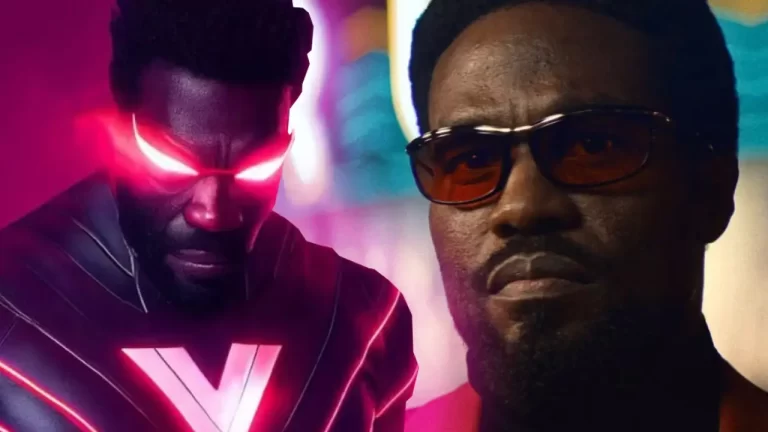
The Wonder Man miniseries finale just delivered one of the MCU's most surprisingly emotional endings. Full breakdown of Simon's mutant theory, Trevor Slattery's problem, the DODC's villain arc, and where they go next.
Getting Wonder Man to the screen was, by any honest account, a minor miracle.
This project survived the writers' and actors' strikes. It survived the internal restructuring at Marvel Studios that quietly killed or indefinitely shelved several other projects in development. It survived the skepticism that follows any MCU property that does not have an obvious, pre-sold audience waiting for it. For a stretch of time that felt longer than it probably was, Wonder Man existed primarily as a rumor that kept not dying rather than as something you could actually watch.
And now that the finale has aired and the credits have rolled on the full miniseries?
The wait was worth it. The detours were worth it. The production hell was worth it.
What landed on screen is something the MCU has genuinely needed for a while — a small, intimate, character-driven story that is not trying to set up anything cosmic, not trying to advance the Multiverse Saga's chess pieces, and not trying to make you feel the weight of fifteen years of franchise continuity. It is just two broken men finding something in each other that neither of them can find anywhere else, and flying into a California sky to Harry Nilsson while the government tries to figure out what to do about them.
But beneath the emotional simplicity of that ending, there is a significant amount happening — a power reveal that changes what we understand about Simon Williams, a villain arc for the DODC that has real implications for the Mutant Saga, and a setup for the West Coast corner of the MCU that feels less like deliberate franchise architecture and more like a natural consequence of where these characters ended up.
Let's go through all of it.
The Finale — What Actually Happened and Why It Worked
The needle drop that opens the finale — Phantom Planet's "California" — sets a tone of chaotic optimism that the episode earns rather than assumes. The situation is objectively bad. The resolution is genuinely uncertain. And yet something in the musical choice communicates that these particular characters in this particular mess are going to be okay, because okay is relative when you are a fugitive in the California sky with a reformed fake Mandarin.
The Agent Cleary betrayal is the finale's sharpest narrative move. We have seen Cleary before — he appeared in No Way Home and Ms. Marvel as a bureaucratic antagonist with institutional authority and limited human flexibility. Here, he completes his arc into something more specifically villainous: voiding Trevor's immunity deal because the collateral damage was inconvenient, treating a legal agreement as a convenience rather than a commitment.
It is also the moment the series needed to force Simon's hand.
The entire miniseries has been building toward one specific character failure — Simon's inability to reconcile the two versions of himself. "Simon the struggling actor trying to rebuild a career" and "Wonder Man the person with terrifying powers who keeps breaking things" have been in constant conflict, and his attempt to keep them compartmentalized has been making him worse at both. He cannot be fully present in either identity because maintaining the separation requires constant effort.
Breaking Trevor out of the DODC facility collapses that compartmentalization. You cannot split-self your way through a federal facility breach. You are either Wonder Man or you are not, and Simon finally stops trying to be something in between.
The series' emotional argument — that heroism is not about the costume or the capability but about choosing to own your own mess — lands cleanly in that sequence.
The Forensics Scene — A Power Reveal That Changes Everything
The detail most worth sitting with from the finale is the one that arrived quietly and without fanfare: the forensics analysis of the debris from Simon's power usage reveals that the material was not melted. It was fused. The distinction matters enormously.
Melting is thermal — the application of heat energy above a material's melting point. It leaves specific forensic signatures. Fused matter suggests something operating at the atomic or molecular level — particles being compressed or bonded by a force that is not simply thermal energy.
Simon Williams, in the comics, operates on ionic energy — a fictional energy state that the comics use to explain his invulnerability, strength, and resurrection capability. The MCU adaptation has been deliberately vague about the precise mechanism, but the forensics scene suggests the show has made a specific choice: his powers are not simply strength and durability. He is manipulating matter at a fundamental level, potentially without fully understanding or controlling the mechanism.
That is a significantly more alarming power set than "very strong man who is hard to hurt." And it connects directly to the show's other major theory.
Is Simon Williams the MCU's First Mutant Protagonist?
The "Marvel Spotlight" format that Wonder Man used — standalone storytelling without heavy integration into the broader franchise continuity — allowed the show to plant seeds without needing to water them immediately. But the seeds are visible if you are looking for them, and the mutant theory is the most compelling thing the show has buried in plain sight.
The evidence, assembled:
The puberty trigger. The most explicit data point. Simon's powers first manifested during adolescence. In mutant physiology, this is the standard mechanism — the X-gene activates during periods of high hormonal and emotional stress, typically in the teenage years. This is how Rogue's absorption ability first appeared. It is how Cyclops's optic blasts emerged. It is how Jean Grey's telekinesis began. The specific staging of a pubescent power emergence is not a coincidence in a franchise that is actively building toward the X-Men.
The fire flashback. Young Simon, caught in a fire. His clothes burn. His skin does not. No respiratory damage despite sustained smoke exposure. This is not the profile of a lab accident or a government experiment — it is the profile of someone whose body was already doing something different before any external intervention.
The emotional component. His powers fluctuate with his emotional state. Control is tied to psychological stability. This is, again, the defining characteristic of mutant power expression in Marvel mythology — powers as an extension of the self rather than a tool the self operates. The dramatic conflict between Simon's emotional life and his power output is not just good characterization. It may be the show's way of explaining why his powers work the way they do.
The hiding. His references to concealing his "bad side" from everyone except his immediate family read differently in the context of the above. He was not hiding a personality flaw or a temper problem. He was hiding something biological that he knew — from a young age — would change how the world treated him.
The counterargument is that Simon's comics origin is explicitly ionic energy experiment rather than mutation, and the MCU has historically kept comic origins roughly intact. But the franchise is in the process of integrating mutants into a world where they previously did not exist, and creating a character whose powers read as mutant in every meaningful way — while leaving the official designation ambiguous — is exactly the kind of soft-launch approach Marvel has used before. Kamala Khan's comic origin was changed specifically to make her a mutant in the MCU, establishing precedent for origin modifications in service of the larger mutant narrative.
Simon Williams as the first mutant protagonist the audience has genuinely followed — not Ms. Marvel's retroactive reveal, not Namor's brief confirmation, but a full character study of someone learning to live with what their body is — would be a significant and narratively coherent choice.
The DODC's Villain Arc — The Scariest Subtext in the Show
The Department of Damage Control has been a recurring presence across several MCU properties, functioning primarily as a bureaucratic antagonist — the institutional face of government overreach in a world that has not figured out how to regulate superpowered people.
Wonder Man clarifies something about the DODC that retroactively reframes its appearances in Ms. Marvel, She-Hulk, and No Way Home.
In Episode 3, a throwaway line reveals that the DODC's prison is half-empty and the department is facing budget cuts. This is not worldbuilding texture. It is the explanation for everything. The DODC does not hunt enhanced individuals because they represent public safety threats. It hunts them because it needs to justify its own existence — its budget, its military contracts, its institutional footprint.
An empty prison is a defunded department. A full prison is a demonstration of necessity.
The implications of this for the Mutant Saga are genuinely chilling. When the X-Men are formally introduced to the MCU — when the public becomes aware that there is an identifiable, biologically distinct population of enhanced individuals — the DODC will have a financial incentive to treat that population as a resource. Every mutant in a cell is a justification for a budget line. Every capture is a demonstration of mission-critical function.
Agent Cleary, by the finale's end, is not looking at Simon as a person or a legal problem. He is looking at him as a defense contract — a multi-billion dollar justification for the department's continued operation and expansion. The show is building a villain for the Mutant Saga that is not ideologically motivated, not personally hateful, and not cartoonishly evil. It is institutionally motivated. It is a bureaucracy that has found a revenue model in persecution.
That is, as the kids say, uncomfortably realistic.
Trevor Slattery's Situation — Everything That Can Go Wrong Has
Ben Kingsley has been one of the MCU's most reliable comic assets since his initial appearance, and Wonder Man finds the absolute best use of the character by leaning into the specific tragedy beneath the comedy.
Trevor is a man who has been genuinely trying. The immunity deal represented something real for him — a chance to be useful, to contribute, to exist in the world without being defined entirely by the mess he made of it. Watching Cleary void that deal because Trevor's chaotic contribution to the situation was inconvenient is funny and devastating simultaneously.
But the finale leaves Trevor with a problem that the comedy cannot fully absorb.
He broadcast the Ten Rings logo to a global audience while publicly associating himself with a fugitive. The federal government already wants him. But the more immediate and arguably more dangerous problem is Xialing.
Shang-Chi's sister now runs the Ten Rings as a legitimate organization — or at least as legitimately as the Ten Rings can operate. She has been working to transform it from her father's legacy weapon into something with actual purpose and direction. Trevor Slattery using that brand for what amounts to a personal publicity stunt — without authorization, during a federal incident, on global broadcast — is not the kind of thing an organization trying to rebuild its reputation can quietly absorb.
Destin Daniel Cretton's involvement as a creator on Wonder Man carries the Shang-Chi universe's DNA directly into the show's storytelling. The Ten Rings connection is not decorative. The real Ten Rings coming to collect from Trevor is not just a plausible sequel hook — it is the logical consequence of what the finale set in motion.
Whether that plays out in a Shang-Chi sequel, in a Simon and Trevor continuation, or somewhere in the West Coast corner of the MCU is unclear. But Trevor's situation is unresolved in ways that feel intentional rather than accidental.
The West Coast Hub — What Marvel Is Building
The finale's geographic choice — keeping Simon and Trevor in California rather than sending them east toward the established MCU infrastructure of New York — feels like a structural decision rather than a narrative convenience.
The MCU's West Coast presence has been accumulating quietly across several properties:
Shang-Chi is based in San Francisco. She-Hulk is practicing law in Los Angeles. Moon Knight's operations, while international in scope, have West Coast connections. White Vision is somewhere out there, unmoored and rebuilding. And now Simon Williams — a Hollywood actor with ionic energy powers and a federal warrant — is a fugitive somewhere in the California sky.
The West Coast Avengers in Marvel Comics have a long and specific history as the franchise's more eccentric, less formally structured counterpart to the main Avengers team. They are not the first line of defense against cosmic threats. They are the people who handle the weird, the local, the complicated — the situations that require more flexibility and less institutional authority than the main team tends to bring.
That description fits every character currently being assembled in this geographic corner of the MCU. None of them are the primary Avenger type. All of them have complicated relationships with authority and institutional structures. Most of them are dealing with something personal alongside whatever external threat requires attention.
Whether Marvel is building toward a West Coast Avengers project explicitly or simply allowing a natural clustering of characters to create the conditions for one is not clear from the available information. But the clustering is visible and it is not accidental.
Where Simon Fits in the Larger MCU Going Forward
The honest answer about Simon's place in the next Avengers film is that Doomsday is already carrying more characters than any single film can meaningfully service. Adding Simon to that ensemble — especially at this stage of his development, as a character who has just figured out how to be himself, let alone how to be a team player — would do neither Simon nor the film any favors.
The more interesting possibility is Spider-Man 4, which Destin Daniel Cretton is directing and which appears to be positioning itself as a more street-level, grounded story set against a background of enhanced individual regulation and vigilante politics. A film about Peter Parker navigating the legal and social landscape of being Spider-Man in a world that has complicated feelings about powered people is the exact environment in which a fugitive Wonder Man — known, wanted, and operating outside institutional sanction — would fit naturally.
Two people trying to figure out how to do the right thing in a world that has made doing the right thing technically illegal. The tonal compatibility is obvious. The character dynamic has potential. And Cretton's existing relationship with Simon's world makes the connection less like a franchise cameo and more like a genuine creative throughline.
Tips for Getting the Most Out of a Rewatch
Wonder Man rewards a second viewing in specific ways that the first viewing cannot fully access:
- Watch the power fluctuations. Every time Simon's emotional state becomes turbulent, track what his powers do. The correlation between psychological stability and power control is consistent throughout and supports the mutant reading of his biology.
- Pay attention to Trevor's acting instincts. Ben Kingsley is doing something genuinely skilled — playing a man who uses performance as a survival mechanism, who has spent so long performing that he has lost track of where the performance ends and the person begins. His most honest moments are in the scenes where he stops trying to manage the situation.
- The DODC scenes hit differently once you understand the budget line motivation. The bureaucratic antagonism reads as petty on first viewing. On rewatch, knowing the institutional incentive structure, it reads as systemic and therefore much more frightening.
- The needle drops are doing thematic work. The music choices throughout the series are not just vibe-setting. Each one is commenting on the emotional state of the characters in ways that pay off on reflection.
FAQ: Wonder Man Finale and MCU Future
Is Simon Williams a mutant in the MCU? The show has not confirmed this officially, but the evidence — puberty-triggered powers, biological rather than experimental origin markers, emotional-state-dependent control — strongly suggests the show is building toward this classification. Nothing has been explicitly denied either, which in Marvel storytelling is often as meaningful as a confirmation.
What happens to Trevor Slattery after the finale? He is a wanted man who publicly broadcast the Ten Rings logo without authorization. The federal government wants him, and Xialing's organization has a legitimate grievance about brand misuse. Both threads are unresolved and appear intentional.
Is Wonder Man getting a second season? No official confirmation has been made. The "Marvel Spotlight" branding suggests a standalone format rather than an ongoing series, but the open ending clearly positions both characters for future appearances in other MCU properties.
Where does Wonder Man fit in the MCU timeline relative to Doomsday and Secret Wars? The show appears to take place in the ongoing present of the MCU, but its deliberate detachment from the Multiverse Saga's main storyline makes precise placement difficult. Simon is unlikely to appear in Doomsday given that film's already enormous ensemble, but Spider-Man 4 and potential West Coast Avengers content are more plausible venues.
What is the DODC's role in the Mutant Saga? Based on Wonder Man's portrayal, the DODC has a financial incentive to classify and detain enhanced individuals — they need full prisons to justify their budget. This positions them as a natural antagonist in a mutant storyline, motivated by institutional self-preservation rather than ideology.
Why was the Wonder Man show delayed so long? The project survived the 2023 writers' and actors' strikes, as well as significant internal restructuring at Marvel Studios during a period when several streaming projects were cancelled or indefinitely shelved. The delay resulted in a more refined final product rather than a compromised one, which is not the typical outcome of production hell.
Final Thoughts
Wonder Man is the MCU miniseries that was never going to get credit for what it actually accomplished, because what it accomplished was quiet.
It did not save the universe. It did not advance the Multiverse Saga in ways that will require a recap before the next Avengers film. It did not deliver the kind of spectacle that generates social media conversation for weeks. It delivered two broken people finding something in each other worth protecting, and it did it with enough honesty and specificity that the emotional beats actually land.
The Simon and Trevor bromance works because the show earns it — it is built on shared failure rather than shared glory, which is a fundamentally more durable foundation for friendship and for storytelling. Simon is not an Avenger by the end. He is a fugitive who has accepted what he is and chosen to use it for something. That is enough. That is actually plenty.
The mutant seeds, the DODC villain arc, the West Coast geography, the Ten Rings thread — all of these are forward-looking without being demanding. You do not need to care about any of them to be satisfied by what Wonder Man delivered as a standalone piece of storytelling. But if you do care, the architecture for what comes next is visible and coherent.
Two friends flying into the California sky. Harry Nilsson playing. The government scrambling below them.
Sometimes that is exactly the ending that was needed.
.png)


No comments:
Post a Comment