
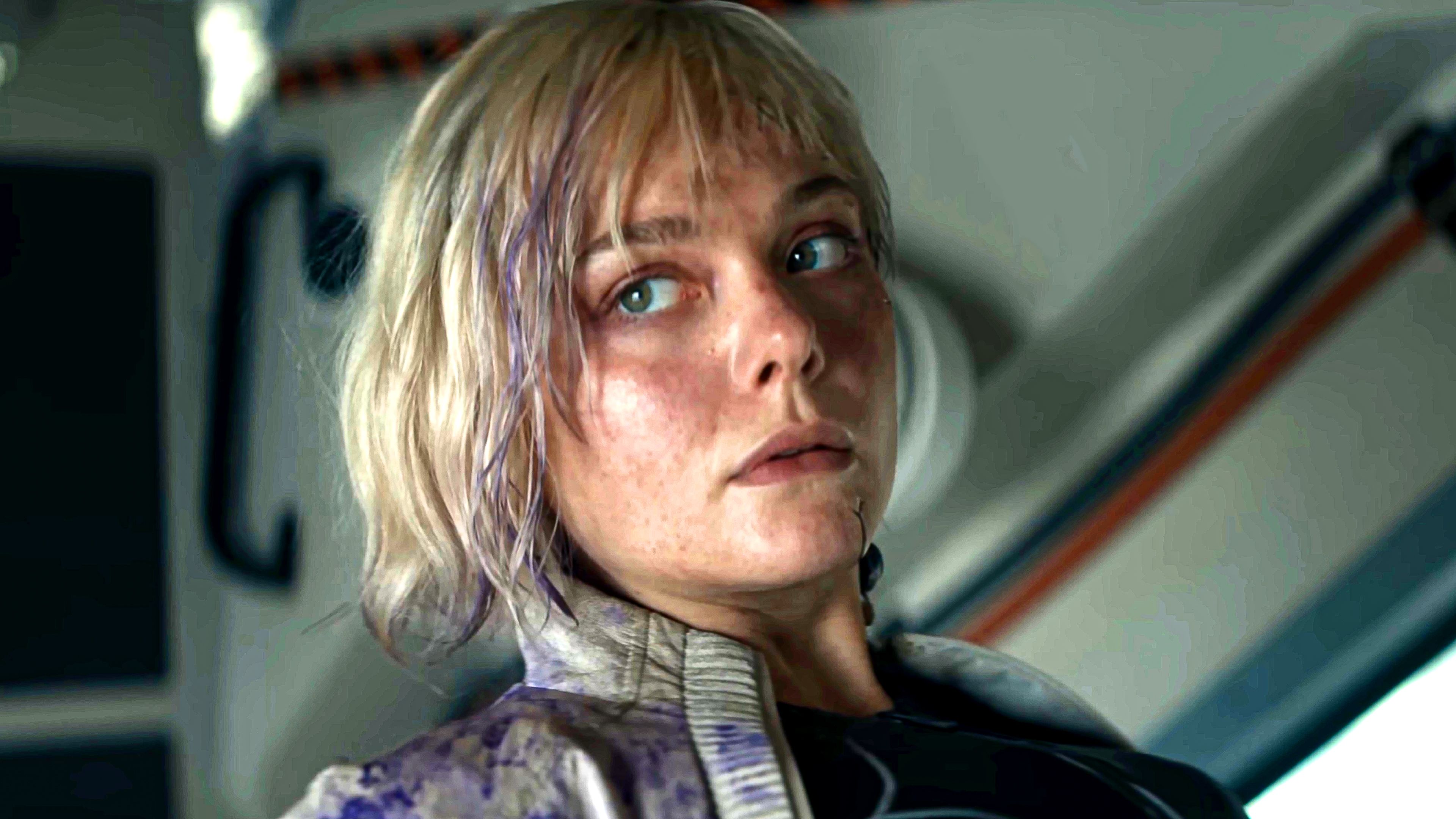
Dan Trachtenberg's Predator: Badlands flips the entire franchise on its head. Here's a deep dive into every Easter egg, Alien connection, lore detail, and what that jaw-dropping "Mother" ending actually means for the future.
Introduction: Nobody Was Ready for This
When Prey landed in 2022, it quietly reset the bar for what a Predator movie could be. Dan Trachtenberg stripped everything back to its essentials — a hunter, a prey, a landscape — and let tension and craft do the heavy lifting. It worked so well that anticipation for whatever came next was almost uncomfortably high.
Predator: Badlands not only met that anticipation — it demolished the framework entirely.
This isn't a movie about soldiers being picked off in the jungle. It isn't even, strictly speaking, a movie about humans at all. Trachtenberg made the call to center the entire story on a Yautja protagonist — a narrative risk that sounds bizarre on paper and plays out as one of the more emotionally resonant blockbusters in recent memory. Part Mad Max, part Shadow of the Colossus, with DNA from the 1987 original woven through every frame — Badlands is the kind of film that demands a second watch just to catch what you missed the first time.
So let's go through all of it. Every Easter egg, every lore callback, every detail that made long-time franchise fans lose their minds — and the ending that has everyone asking what comes next.
Full spoilers throughout.
A New Language, A New World: The Opening That Sets Everything Up
Those Opening Drums
The shift in the 20th Century Studios fanfare into Yautja percussion at the very start is a deliberate choice that signals immediately: this is different. It echoes what David Fincher did with Alien 3, using the studio's familiar opening as a tone-setter rather than just a formality. If you caught that reference, you were already in the right headspace for what followed.
The title crawl — "Yautja are prey to none, friend to none, predator to all" — is lifted directly from the expanded lore, and it's a sharp way to reframe the entire franchise mythology before a single scene plays.
The Constructed Language Is a Bigger Deal Than It Sounds
The most quietly impressive creative decision in Badlands is the Yautja language. Linguist Briton Watkins built a system that actually functions within the physical constraints of a Yautja's mandibles — it's not just clicks and growls arranged for atmosphere. It's a working language, with grammatical structure, tonal variation, and internal consistency.
Why does this matter? Because it transforms the Yautja from movie monsters into members of a civilization. Small details reinforce this: safety warnings on Deck's equipment (translated roughly as "stand well back"), range limits on the plasma caster, operational protocols. These creatures have their own version of workplace safety standards. That "utilitarian realism" — the idea that even apex predators have logistics to manage — makes Genna feel like a lived-in universe rather than a movie set.
Deck: The Underdog the Franchise Needed
Why a Runt Makes Perfect Sense as a Hero
The creative team's choice to make the protagonist the smallest, least respected member of his clan was a gamble. Audiences have spent decades fearing the Yautja. Asking them to emotionally invest in one required a very specific kind of character construction — someone whose struggles are immediately recognizable regardless of species.
Deck works because his central problem is universal: he wants his father's approval, and his father doesn't think he's good enough. That dynamic, transplanted into a society of interstellar hunters, doesn't feel diluted. It feels heightened. The stakes of family rejection are the same whether you're navigating a high school lunch table or trying to prove yourself in a clan of seven-foot alien killers.
The "Lone Wanderer" Arc
The influence of The Book of Eli, Kurosawa's wandering samurai films, and even Robert E. Howard's Conan stories runs clearly through Deck's journey. He's cast out, travels through hostile territory, faces challenges that seem designed to destroy him, and is slowly forged into something his father's hierarchy never anticipated.
The plasma swords are worth noting specifically — the Star Wars energy-blade aesthetic is unmistakable, and Trachtenberg leans into it deliberately. Deck isn't equipped like a traditional Yautja hunter. His loadout is improvised, personal, and slightly unconventional. That externalizes his position within the clan: he doesn't fit the standard template, so his gear doesn't either.
What Njohrr Represents
Deck's father, Njohrr, functions as more than an antagonist. He represents the failure mode of the clan's entire value system — strength enforced through fear and dominance, with no room for growth that doesn't conform to his specific definition of worth. The tragedy of their dynamic is that Njohrr isn't wrong about Deck by the clan's established standards. Deck genuinely doesn't fit the mold. But the mold is the problem.
The film doesn't spell this out as a moral lesson. It just shows you what happens when a system built on rigid hierarchy meets someone whose strengths operate outside that hierarchy's categories.
Genna: The Death Planet That Makes Perfect Ecological Sense
Why the Setting Is Character, Not Background
Genna — named as a nod to Gehenna, the biblical place of punishment and purification — isn't just a hostile environment. It's an active participant in Deck's story. Every element of its ecology puts specific pressure on him in ways that matter to his arc.
The Razorgrass demands constant precision. One careless step carries real consequence. In a film about a hunter who everyone underestimates, placing him in an environment that punishes carelessness and rewards adaptability is thematically coherent rather than just visually interesting.
The Bone Bison — essentially walking fortresses — introduce a recurring idea: that Genna's creatures aren't obstacles to be overcome so much as resources to be understood. Deck's willingness to learn from his environment rather than simply dominate it is what distinguishes him from the hunters who write him off.
The Kalisk: Subverting the Franchise's Most Famous Line
The Predator franchise's most quotable line — "If it bleeds, we can kill it" — gets quietly dismantled by the Kalisk. An apex predator that regenerates and produces no blood that can be tracked removes the one reliable diagnostic tool hunters use to assess vulnerability.
The design language here draws from Studio Ghibli's ancient, untouchable creatures — things that feel genuinely primordial rather than simply dangerous. The Kalisk doesn't feel like a movie monster. It feels like something the planet grew over thousands of years, and the distinction matters. Deck isn't fighting a creature designed to be defeated. He's fighting something that has survived everything else Genna has thrown at it.
His eventual solution — using environmental understanding rather than brute force — is the film's thesis made literal.
Adaptation as Survival
The moment Deck harvests Bone Bison plating to repair his damaged armor is one of Badlands' best beats. It's economical storytelling: in a single action, we learn that Deck is resourceful, that he understands Genna's systems, and that he's willing to improvise in ways his clan's training never anticipated.
Using an acid-spitting lizard as an improvised weapon takes that further. Deck isn't bringing his clan's toolkit to Genna. He's building a new one from what the planet offers. That survivalist ingenuity connects directly to what made the 1987 original so compelling — the pleasure of watching someone adapt to circumstances they weren't prepared for.
Deck and Thea: The Partnership That Holds the Film Together
Why This Alliance Works
A seven-foot alien hunter and a damaged Weyland-Yutani synthetic shouldn't have emotional chemistry. And yet the relationship between Deck and Thea (Elle Fanning) is the beating heart of Badlands. Understanding why requires looking at what both characters are.
Deck is a tool his clan has decided is defective. Thea is a tool her creators have discarded as compromised. Both are operating outside the systems that defined them, trying to establish what they're actually worth when nobody is assigning them value. That parallel gives their partnership a foundation that doesn't require explanation — it's just there, in how they navigate problems together.
The buddy-dynamic plays with genre conventions in interesting ways. Thea handles communication and interpretation; Deck handles the physical dimension of survival. Neither could get through Genna alone. The film never over-explains this — it just shows you, repeatedly, that two discarded tools are more functional together than either is separately.
The Alien Universe Connections
The Aliens easter eggs in Badlands range from subtle to genuinely startling.
The pulse rifle sound effects lifted directly from the 1986 film are pure auditory nostalgia — small enough that casual viewers might miss them, significant enough that franchise fans will catch them immediately.
The Weyland-Yutani logo appearing when Thea's eyes roll back is a harder hit. It's visually arresting, it's unsettling in the way the best Alien imagery is, and it reminds you that Thea's apparent loyalty exists within a corporate architecture that has never prioritized the wellbeing of anything it created. That Thea has moved beyond her programming to something that resembles genuine connection makes the logo moment both a callback and a complication.
Tessa and the Question of Earned Trust
The arrival of Tessa — a synth who has remained loyal to Weyland-Yutani's framework — creates a pointed contrast. Tessa's loyalty is programmed. Thea's connection to Deck has been tested by actual experience and chosen repeatedly under pressure.
The film uses this comparison to articulate something about what "family" actually means in the context of Badlands. A clan built on hierarchy and fear produces Njohrr. A bond built on shared survival and mutual respect produces Deck and Thea. The film doesn't moralize about this. It just shows you which produces better outcomes.
The Easter Egg Treasure Hunt: What to Look for on Rewatch
Trachtenberg clearly built this film for multiple viewings. The trophy room alone is worth pausing on repeatedly.
The T-Rex skull is the most prominent set piece — a signal that the Yautja's hunting history extends to prehistoric Earth in ways the lore has always suggested but rarely shown.
A human spine in the collection carries the weight of the entire franchise's history in a single prop. It's not played for shock. It's just there, one trophy among many, which is somehow more effective.
What appears to be a Xenomorph skull — in the same trophy room — is the kind of detail that Disney's acquisition of both franchises now makes possible. Whether it's canonical or simply a knowing wink to the audience, it lands as both.
The holographic figure resembling Naru from Prey during Deck's star map sequence is the connective tissue that makes the entire modern trilogy feel like a planned universe rather than a series of reboots. If that reading is correct, Naru's hunt centuries earlier is known, recorded, and filed in Yautja records — which reframes what her victory actually meant.
The Cinema Callbacks
The wound-cauterization sequence echoes Rambo almost beat-for-beat — a survivalist necessity that also functions as a demonstration of pain tolerance and will.
The Kalisk's defeat through liquid nitrogen inverts the Terminator 2 T-1000 sequence: where Cameron used freezing to reveal a monster's vulnerability, Trachtenberg uses it to stop something the franchise promised couldn't be stopped by conventional means.
The "one-shot" tracking sequences during the crash landing carry the DNA of modern prestige gaming cinematography — specifically the continuous-camera approach popularized by God of War (2018). It's a choice that grounds the action in a specific spatial reality: you always know where you are, which is not something action cinema always prioritizes.
The Ending: What "Mother" Actually Means
The Final Duel Inverted
The climactic fight in Badlands is a deliberate inversion of the most iconic sequence in Aliens. Where Ripley faced the Alien Queen using a power loader — human ingenuity in a mechanical exoskeleton against a biological apex predator — Badlands gives us Deck, the "monster" from our perspective, fighting a synthetic in a mech suit.
The franchise's most celebrated underdog moment, reframed with the alien as the underdog, is the kind of structural mirror that rewards anyone who came in with full franchise literacy.
Bud's contribution to the final fight — violent, efficient, darkly comic — manages to honor both the franchise's R-rated roots and the film's broader character work without compromising either. It's harder to pull off than it sounds.
Njohrr's Dishonorable Move
When Deck's father uses his cloaking device during their duel — a violation of the Yautja code of honorable combat — the film makes its final argument cleanly. The clan's existing leadership doesn't embody the values it claims to uphold. Deck, the runt who never fit the hierarchy, is more genuinely Yautja than the clan leader who defined the rules.
Deck's use of the sandstorm to expose his father's silhouette is the perfect counter: no technology, no violation of principle — just environmental awareness and patience. The hunter who learned to read Genna wins by reading Genna one final time.
"Mother" and the Matriarchal Reveal
The expanded Yautja lore has always established that females hold the actual power in Yautja society — larger, stronger, and politically dominant, with the hunt-focused males operating within a social structure ultimately governed by the females. Badlands spent its entire runtime in that male hierarchy. The arrival of "Mother" at the climax opens the door to everything the film hasn't shown yet.
Deck has just killed a clan leader. That's either an extraordinary achievement or an unforgivable violation depending on who's judging. "Mother" isn't arriving to celebrate. She's arriving to assess. The shift from planetary survival story to galactic political drama is exactly the kind of escalation that turns a good franchise entry into a launchpad.
Honest Critique: Where It Doesn't Quite Land
No film in this franchise is without its rough edges, and Badlands has a few worth acknowledging.
The Deck and Thea banter occasionally tips into territory that feels calibrated for a younger audience than the film's overall register suggests. It's not a dealbreaker, but the tonal inconsistency is noticeable in stretches.
The mid-film pacing sags during the longer traversal sequences through the Razorgrass. The environment is visually striking, but several of these sequences could be trimmed without losing character development or plot momentum.
The Weyland-Yutani exposition, while necessary for audiences coming in without deep Alien franchise familiarity, runs slightly heavy in places. Thea's backstory could have been distributed across more scenes rather than delivered in concentrated blocks.
These are real criticisms, but they don't change the fundamental achievement: Badlands is the most ambitious thing the Predator franchise has attempted, and it earns most of what it reaches for.
Tips for Getting the Most Out of Your Rewatch
- Watch with subtitles on — the translated Yautja dialogue contains details that don't get visual emphasis but add significant context to Deck's relationships
- Freeze on the trophy room — give yourself real time to catalog what's there; the skull details reward close inspection
- Pay attention to Deck's gear changes — his loadout at the end of the film versus the beginning tells his entire arc in prop form
- Track how Thea's language shifts — her speech patterns change subtly across the film in ways that reflect her changing relationship with Deck
- The star map sequence — pause and look carefully at the holographic figures; the Naru resemblance is unmistakable once you know to look
Frequently Asked Questions
Is Predator: Badlands connected to the 1987 original? Yes, through shared franchise lore rather than direct plot connection. The trophy room contains clear callbacks to the original film's timeline, and the expanded universe continuity is treated as intact.
Is Badlands set in the same universe as the Alien films? The Weyland-Yutani connections — Thea's origin, the logo appearance, the pulse rifle audio — strongly suggest yes. Disney's ownership of both franchises makes direct crossover increasingly plausible in future entries.
Who is "Mother" at the end of Badlands? Based on the Yautja expanded lore, "Mother" refers to the matriarchal leadership structure that governs Yautja society above the clan level. Female Yautja are significantly larger and more powerful than males, and they hold political authority over the broader civilization. Deck killing his clan leader has almost certainly triggered a review from that level of the hierarchy.
What is the Kalisk, and is it from existing Predator lore? The Kalisk appears to be a creature original to Badlands rather than drawn from existing Dark Horse Comics lore. Its regenerative biology and resistance to conventional tracking methods make it a deliberate challenge to the franchise's established logic about how prey is identified and hunted.
Will there be a sequel to Predator: Badlands? Nothing has been officially confirmed, but the "Mother" cliffhanger is constructed specifically to demand continuation. The shift to galactic Yautja politics represents a scale increase that a single film can't contain.
Is Badlands appropriate for younger Predator fans? The film carries its R-rating legitimately — the violence is significant, and several sequences are genuinely intense. The emotional core is accessible to younger audiences, but the content level is consistent with the franchise's history.
Conclusion: Three for Three, and the Franchise Is Finally Going Somewhere New
Dan Trachtenberg has now made the best entry in the Predator franchise (Prey), followed immediately by the most ambitious one. That's a remarkable run, and Badlands suggests he's working with a genuine long-term vision rather than simply producing sequels.
What the film accomplishes — making a Yautja emotionally compelling without softening what the Yautja are, connecting the Alien and Predator universes without making either smaller, and leaving the franchise pointed at genuinely unexplored territory — is the work of someone who cares about the material as much as the audience does.
The "Mother" reveal isn't just a cliffhanger. It's a promise that the most interesting parts of this universe are still ahead. After Badlands, I believe it.
.png)


No comments:
Post a Comment