
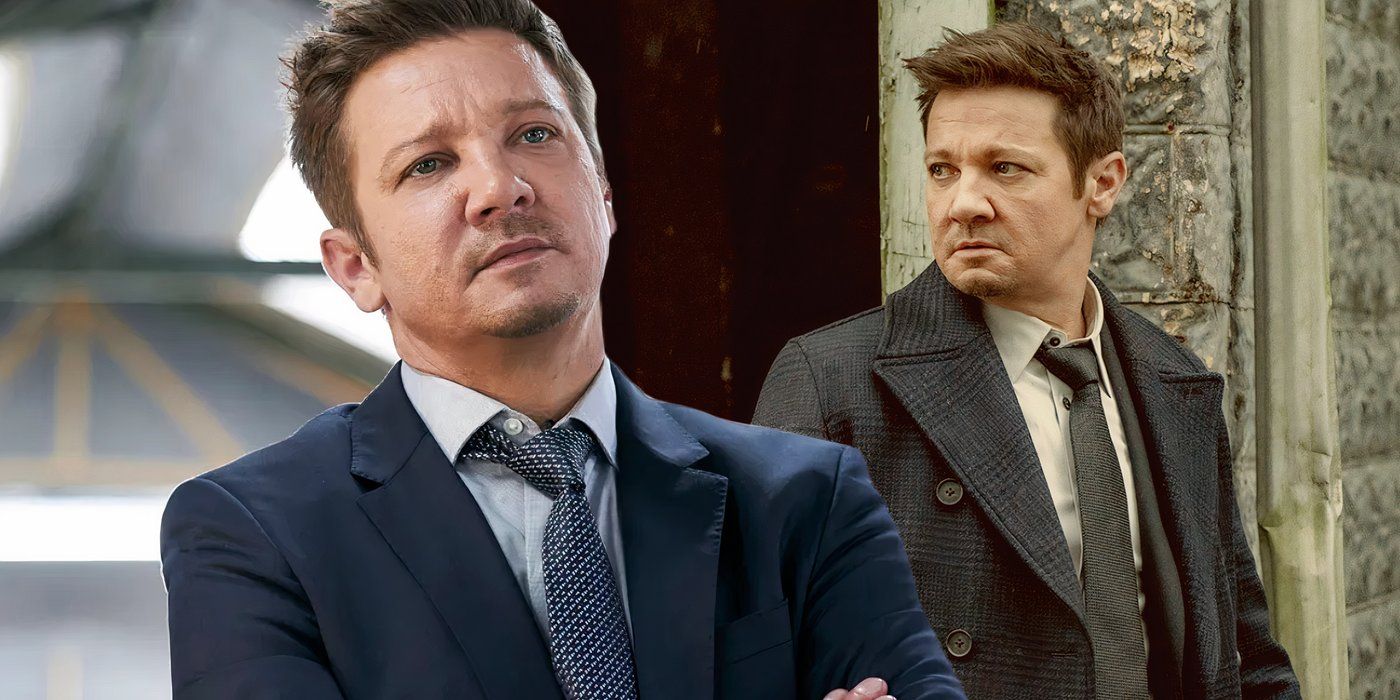
The Mayor of Kingstown Season 4 finale left us gutted. Here's a full breakdown of Kyle's transformation, Frank Moses's terrifying rise, Warden Hobbs's power play, and what the railyard ending means for the McLuskys going into Season 5.
Introduction: This Season Actually Broke Something
Mayor of Kingstown has never been gentle. It was built on the premise that good intentions and institutional rot can exist in the same building — sometimes even in the same person — and that the gap between them is where everyone gets chewed up. Season 1 established the tone. Seasons 2 and 3 pushed deeper into the machinery. Season 4 did something different.
Season 4 didn't just escalate the violence or introduce a more dangerous antagonist. It systematically dismantled the last few things the audience had left to hold onto. The finale, "Belly of the Beast," arrives not as a climax but as a kind of accounting — here is what this show has cost, and here is what you have left.
The answer to that second part is: not much.
This breakdown covers everything from Frank Moses's cold economic model of criminal enterprise to Kyle's transformation at the railyard, Warden Hobbs's calculated use of institutional violence, and what any of this leaves for Season 5. Spoilers for the full season throughout.
Frank Moses: A Different Kind of Villain for a Different Kind of Problem
Why the Russian Vacuum Mattered
The removal of Milo and Constantine left something specific behind: not just a power vacuum, but a vacancy in a particular style of power. Milo operated with personality — brutality wrapped in ego, in performance, in the specific psychology of someone who needed to be feared as a person, not just as a force. That made him navigable. Mike could find leverage because Milo had human weaknesses.
Frank Moses arrived and made that entire approach obsolete.
Moses doesn't see Kingstown as a territory. He sees it as an underperforming asset that he has acquired at a discount. His language, his manner, his decision-making framework — all of it is corporate. He isn't running a criminal organization in the traditional sense; he's running an extractive enterprise that happens to use violence as a cost-reduction tool. When his operation marks victims with their own inventory system, it's not theater. It's logistics.
Why Mike Can't Negotiate With a Spreadsheet
The fundamental problem Moses creates for Mike isn't strength — previous antagonists were physically formidable, organizationally powerful. The problem is incommensurability. Mike's entire skillset is built on the ability to find what someone wants and use that want as a fulcrum. He is a translator, a mediator, a man who converts intractable human conflicts into temporary, workable arrangements.
Moses doesn't want anything Mike can provide. He isn't seeking recognition, respect, territory acknowledgment, or any of the currencies that flow through Mike's usual negotiations. He wants market efficiency. Mike sitting across from Moses isn't just stressful — it's watching someone bring a language to a conversation the other person doesn't speak and has no interest in learning.
The discovery of the Russian victims — catalogued, marked, discarded — signaled to the department that the old grammar of Kingstown's underworld is gone. Whatever comes next is going to require a different kind of response. And the season ends without that response identified.
Kyle McLusky: The Hardest Story of the Season
What Anchor Bay Was Designed to Do
Anchor Bay, as an institution, has never been about rehabilitation in Mayor of Kingstown — the show has been explicit about that from the beginning. It's a pressure system. It applies force to human beings until they conform to the shape the institution requires. The question for anyone entering it isn't whether they'll be changed, but whether what comes out will still be recognizable.
Kyle entered Anchor Bay for a crime he didn't commit. That injustice — unearned, unresolved — sits under everything that follows. He wasn't placed in a brutal environment because of something he chose. He was placed there by the failure of the exact system he had spent his career trying to work within honestly.
That context matters for understanding what Anchor Bay did to him. It wasn't just physical pressure or the daily calculation between victimhood and predation. It was the lived proof that his belief — that the system operates with some relationship to justice — was wrong. Not wrong sometimes. Wrong as a structural feature.
Merle Callahan: The Man Who Wanted to Break a McLusky
Callahan understood something about the McLusky mythology that most of the season's antagonists didn't bother to think about. The family's power in Kingstown rests on a perception — that Mike is the dark one, the compromised one, the man who got his hands dirty so Kyle didn't have to. Kyle, in that framework, represents the possibility that the family's involvement in Kingstown's machinery hasn't contaminated everything. He's the proof of concept that the McLuskys aren't just another species of predator.
Callahan wanted to disprove that. Specifically and personally. He didn't want to kill a McLusky; he wanted to demonstrate that under sufficient pressure, the "clean" one becomes indistinguishable from the rest.
The tragedy is that he was right. Not because Kyle is weak — the opposite is true. He survived conditions designed to destroy him. But survival inside Anchor Bay required becoming the thing Callahan wanted to prove he was. Every day in general population was a forced election between predator and prey, and Kyle chose, repeatedly, the only option that kept him alive.
When Kyle joins Stevie in the beating — when you see his face during it — the show isn't asking you to condemn him. It's asking you to understand what the environment required and sit with the cost of that requirement.
Mike Standing Back
The moment at the railyard where Mike steps back and lets Kyle handle the interrogation of Billy is the season's quietest devastation. Mike has spent the entire series trying to maintain Kyle as an exception — the one McLusky who doesn't have to carry the weight of what this family's survival actually requires.
Standing back isn't abdication. It's recognition. Mike sees, finally, that Kyle has already crossed the threshold Mike was trying to protect him from. The crossing happened in Anchor Bay, in conditions Mike couldn't control, and it's irreversible. What Kyle does with Billy and later with Callahan is the expression of something Anchor Bay built and left running.
The Railyard: What Kyle's Violence Actually Means
The Callahan confrontation at the railyard is staged as catharsis — the person who wanted to break Kyle is delivered to him, and Kyle doesn't spare him anything. Taunting, deliberate, methodical. Everything Callahan did to Kyle in Anchor Bay, externalized.
But the show frames it precisely enough that catharsis isn't the only available reading. What we're watching is also the McLusky cycle completing another rotation. Mike's history of violence, the costs it extracted, the justifications built around it — all of that is now Kyle's history. The youngest McLusky, the one who was supposed to be different, ended the season at the same railyard where the season began, in the same position Mike has occupied for years.
The cycle isn't just continuing. As the original article put it: it's accelerating. Each generation seems to arrive at the same place faster than the last.
Warden Nina Hobbs: What Institutional Evil Looks Like When It Wears a Badge
The Distinction That Makes Hobbs Effective
Previous wardens on Mayor of Kingstown were corrupt in recognizable ways — they took money, looked the other way, served their interests while nominally performing their function. Hobbs operates at a different level because her corruption is systemic rather than transactional. She isn't bending rules for personal gain; she's redesigning the rules so that the institution itself generates her power.
Playing the Crips, the Aryan Brotherhood, and the Colombian Cartel against each other isn't just manipulation — it's a resource management strategy. She's using the facility's existing tensions as an operational tool. The violence between factions isn't a problem she's failing to manage; it's a mechanism she's running.
The Lockdown Lift Was Not an Error
When Hobbs lifted the lockdown in the final episodes, the show is careful to make clear what this was and wasn't. It wasn't incompetence. It wasn't a miscalculation of the situation inside Anchor Bay. It was a deliberate decision made with full understanding of the probable outcome.
She let the factions thin each other out. The resulting violence — and everyone who died in it — is not collateral damage from a policy choice. It's the policy.
This is what makes Hobbs the season's most disturbing antagonist in some ways, more disturbing even than Moses. Moses operates outside the law's structure. Hobbs operates inside it, with its full protection and authority, and uses both to inflict outcomes that the law exists ostensibly to prevent. She has the badge to hide behind. That's not a metaphor; it's a structural advantage that makes accountability nearly impossible.
The Riot: Losses That Hit Differently
Kevin Jackson's Death
The losses inside Anchor Bay during the riot carry different emotional registers, and the show is precise about distributing them.
Kevin Jackson's death is the one that lands as genuinely senseless — not because other deaths aren't tragic, but because Kevin represented the specific tragedy of someone trying to navigate an impossible system honestly. He wasn't a predator. He was a person who had made compromises to survive inside Kingstown's machinery but hadn't been consumed by it yet. The arrangement with Bunny was transactional, pragmatic, not malicious.
Bogota killing Kevin in the infirmary while Cindy watches is devastating not just as a loss but as a statement. The riot was supposed to shake things loose — to create the kind of disruption that occasionally reshuffles Kingstown's power arrangements in productive ways. Instead, it killed the wrong person. The chaos is indiscriminate in a way that targeted violence isn't, and Kevin was in its path.
Mike and Bunny: The Fracture That Matters Most
The riot's fallout — Rafael stabbed multiple times, Cortez missing, Kevin dead — creates a specific problem for Mike that goes beyond logistics. His relationship with Bunny has functioned as the closest thing to a genuine partnership Mike has in Kingstown. It's never been clean, never been uncomplicated, but it's been real in a way that most of Mike's arrangements aren't.
The chaos in Anchor Bay has introduced fracture points in that partnership that didn't exist before. Bunny's people suffered inside the facility while Mike's ability to protect them proved limited. That limitation has consequences. The trust that allowed Mike to operate with Bunny as a stabilizing relationship may not survive what this season required both of them to absorb.
What Season 4 Left Standing — and What It Didn't
The final accounting of Season 4 is severe by any measure:
Kyle is no longer the clean McLusky. That version of him is gone, and the show is clear-eyed about the permanence of that change. The question isn't whether he can go back — he can't — but what forward looks like for a man carrying Anchor Bay and a railyard murder into his attempt at being a husband and father.
Mike is more isolated than at any previous point in the series. His operational relationships have been strained or broken, the network of arranged peace he maintains has been disrupted, and his own brother's transformation is both personal loss and institutional failure. The thing Mike was trying to prevent, he couldn't prevent.
Frank Moses is still out there. The season introduced him as a threat and ended without resolving him — which is the correct narrative choice but leaves Season 5 with an antagonist whose corporate brutality doesn't respond to any of Mike's established tools.
The "missing third man" from Sarah's ambush remains unidentified, hanging over everything as an unresolved threat that could surface anywhere.
What the Railyard Means as a Symbol
The show's decision to end the season at the railyard — where it began, where the first Russian bodies were found — is deliberate in ways worth sitting with.
Railyards are transitional spaces. Things pass through them; they're not destinations. They're places of transfer, of cargo moving from one state to another, of machinery that doesn't stop for anyone. Mayor of Kingstown has used that imagery since Season 1 as a way of expressing what Kingstown itself is: a place where human beings are processed through systems that don't acknowledge their humanity.
Coming back to the railyard at the end of Season 4 suggests that whatever transition the series has been processing across four seasons — whatever cargo it's been moving — has arrived somewhere. Kyle at the railyard is a McLusky who has been fully processed by Kingstown. The question Season 5 will have to answer is what that looks like in practice, and whether it can be anything other than more of the same.
Common Questions After the Season 4 Finale
Who is Frank Moses and is he based on anyone real? Frank Moses is a fictional character created for the show. His characterization as a corporate-minded criminal who treats violence as a business expense is original to Season 4. He represents a specific evolution in the show's antagonist design — moving from personality-driven villains to systemic ones.
Did Kyle actually kill Callahan at the railyard? Yes. The season ends with Kyle's confrontation with Callahan — the man who orchestrated his systematic abuse in Anchor Bay — resulting in Callahan's death. The scene is staged to show Kyle's transformation is complete and irreversible.
What happened to Cortez in the Season 4 finale? Cortez's status is left deliberately ambiguous in the finale — he is listed as missing in the aftermath of the riot. This unresolved thread is almost certainly setup for Season 5.
Is Mayor of Kingstown renewed for Season 5? As of this writing, Paramount+ has not made a formal Season 5 announcement. The Season 4 finale leaves significant unresolved storylines — including Frank Moses, the missing third man from Sarah's ambush, and Kyle's uncertain future — that strongly suggest continuation was planned.
What is the "missing third man" from Sarah's ambush? The ambush that targeted Sarah earlier in the season involved multiple participants, and the finale confirms that one of them has not been identified or located. This thread is left open as a significant hanging threat going into a potential Season 5.
Has Kyle become irredeemable after Season 4? The show frames this as an open question rather than a settled one. What Kyle did at the railyard is real and permanent. Whether there's a version of him that can rebuild something functional — as a father, a husband, a person — is what the series would need to explore if it continues.
Tips for Getting More Out of a Season 4 Rewatch
The season rewards a second viewing specifically for the Hobbs material — her early interactions with faction leaders carry different weight once you understand what she was engineering. The decisions that look like administrative choices in episodes 2 and 3 are revealed as setup for the riot's structure by episode 8.
Kyle's physical performance across the Anchor Bay arc is worth close attention. The change in how he holds himself — his posture, his stillness, his eye contact — tracks the transformation more precisely than the dialogue does. By mid-season, the Kyle of Season 1 is legible only in brief, increasingly rare moments.
The railyard scenes across the full season create a visual through-line. Each appearance carries forward the weight of the previous one. Watching them in sequence makes the finale's return feel less like a narrative callback and more like an inevitability the show was building toward from the first episode.
Conclusion: The McLuskys and the Cost of Staying
Mayor of Kingstown has always been, underneath the violence and the institutional machinery, a show about what staying in a place like Kingstown requires you to become. Mike stayed. His mother stayed. And in Season 4, Kyle — who had the most reasons to leave and the clearest path out — was dragged back in by a system that doesn't allow clean exits.
The season's argument, made through four episodes of accumulating damage, is that Kingstown doesn't just consume people. It reproduces itself through them. The McLuskys aren't fighting the darkness; they're carrying it forward, generation to generation, each one arriving at the railyard a little faster than the last.
Season 5, if it comes, will need to answer whether there's any version of this story that doesn't end exactly the same way. The evidence from Season 4 is not encouraging. But that's also precisely why this show is worth watching — it takes that question seriously and refuses to offer easy comfort about the answer.
.png)


No comments:
Post a Comment