
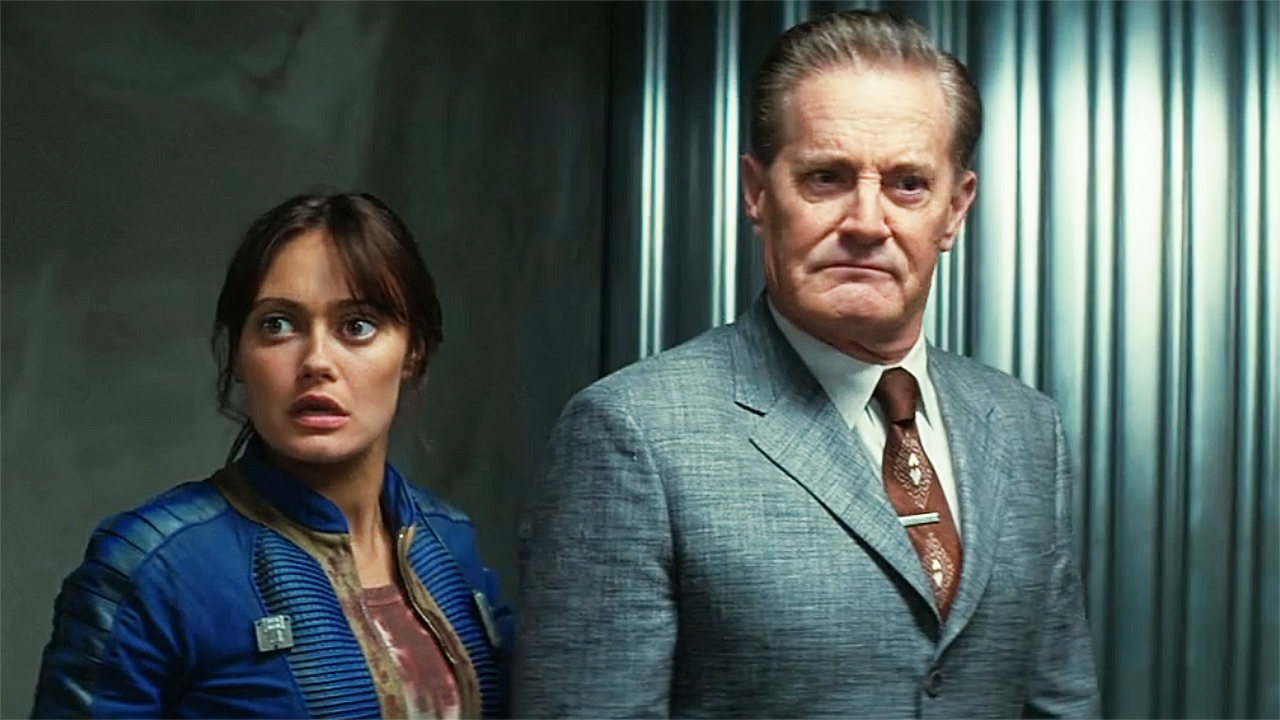
Fallout Season 2 Episode 7 is a game-changer. Full breakdown of the Cold Fusion dilemma, Lucy's dystopian horror in Vault 31, the New Vegas reveal, Mr. House's return, and what it all means for the finale.
There are episodes of television that advance the plot. And then there are episodes that fundamentally change what the show is about.
"The Hand Off" is the second kind.
Up until this point in Fallout Season 2, the central question has been archaeological — piecing together what happened, tracing the history of the catastrophe, following the threads of deception backward toward their origins. Episode 7 closes that chapter and opens a much more frightening one. The question is no longer what happened. The question is what happens next, and who gets to decide.
Every major storyline converged here in ways that felt both narratively earned and genuinely unexpected. The Cold Fusion technology moved from MacGuffin status to something with real, world-altering weight. Lucy's psychological horror in Vault 31 escalated into something that belongs in a conversation about the show's darkest material. The New Vegas reveal landed with the specific emotional impact that only years of player investment can produce. And Mr. House — green-lit, ancient, patient, and terrifying — confirmed that the biggest player in the Mojave has been waiting 200 years for exactly this moment.
Grab something from your inventory. We need to talk about all of it.

The Cold Fusion Dilemma — Why This MacGuffin Is Different
The Fallout franchise has always structured itself around a central technology that everyone needs and nobody should probably have. The Water Chip. The G.E.C.K. Project Purity. Each one functions as both a practical survival necessity and a moral test — who gets this, and what do they do with it, tells you everything about what kind of world the survivors are building.
Cold Fusion is different from all of its predecessors, and "The Hand Off" makes this explicit.
Every previous MacGuffin addressed scarcity within the post-war context — clean water, agricultural renewal, purified water for the Capital Wasteland. Cold Fusion addresses the scarcity that caused the Great War itself. It represents the end of the resource competition that drove the Resource Wars, the Canadian annexation, the bombs. It is not a tool for surviving the apocalypse. It is a tool for making another apocalypse unnecessary.
Which is precisely what makes it so dangerous in the hands of any organization with military capacity and institutional ambition.
The Ghoul — Cooper Howard, 200-plus years old and barely holding himself together — understands this in a way that the episode communicates through physical performance rather than exposition. Watching him in this episode is painful in the specific way that watching someone carry knowledge they cannot share is always painful. He knows what happens when you give ultimate power to the people who promise to use it responsibly. He was there. He made that mistake personally. The centuries of radiation damage written into his face is not just makeup — it is a visual argument about the cost of misplaced trust.

Cooper and Maximus — The Mirror He Cannot Look Away From
When Cooper faces Maximus, who is holding the Cold Fusion and radiating the particular confidence of someone who still believes that the right organization can fix the world, the episode is doing something structurally elegant.
Cooper is looking at himself. Not metaphorically — quite literally. Maximus in his Brotherhood power armor, certain that following the right chain of command leads to the right outcome, is the pre-war Cooper Howard who made the handoff to the government at McCarran and believed he was doing the right thing. Young. Idealistic. Wearing institutional authority like it means something.
Cooper has two centuries of evidence about what it means.
His North Star has always been simple and human — find his wife, find his daughter, hold onto whatever is left of the person he was before the bombs. But the path there requires navigating the same institutional machinery that destroyed everything he was trying to protect, and he knows that handing Cold Fusion to a militaristic order — any militaristic order, however well-intentioned its members — produces the same result every single time.
Power concentrates. Individuals get crushed. The promise of safety becomes the reality of control.
The episode leaves this tension unresolved, which is the correct choice. There is no clean answer here, and the show is smart enough not to manufacture one.

Lucy in Vault 31 — Dystopian Horror at Its Most Effective
If the Cooper storyline is the episode's philosophical weight, Lucy's storyline in Vault 31 is its emotional horror, and it delivers on that register with genuine skill.
She is with her father. Hank. The man she has been looking for. And something is profoundly, uncannily wrong.
The Brain Control Interface reveal — the mechanism by which Vault 31 maintains its cheerful, productive, compliant population — is not a surprise in the sense of being unexpected. The Fallout franchise has documented Vault-Tec's experiments across decades of games and supplementary material, and forced behavioral modification is well within the established range of what the corporation was willing to do. What makes the scene land is the specific horror of the execution.
Nat King Cole's "When You're Smiling" playing over workers who are smiling — genuinely, contentedly, emptily — because they have been relieved of the memories that would have given them reasons not to is a piece of tonal construction that earns the chill it produces. The song is warm and familiar and optimistic. The images are deeply wrong. That gap between the audio and the visual is where the horror lives.

Hank's Utilitarian Nightmare — The Evil of Banality
What makes Hank a more unsettling antagonist than a conventional villain is the absence of theatrical menace in his motivation.
His argument for the Brain Control Interface is utilitarian in the most technically coherent sense. Trauma causes conflict. Conflict causes war. Remove the trauma — remove the memories that carry the grief and the anger and the loss — and you remove the preconditions for war. A society of people who cannot remember what hurt them will never hurt each other over those hurts.
This is not a new argument in speculative fiction. It is, in fact, one of the oldest and most persistent strains of dystopian thinking — the idea that suffering is the engine of violence, and that eliminating suffering by eliminating the capacity to suffer is an act of mercy rather than atrocity.
Lucy's counter-argument is the correct one and the more human one: that is not living. Existence without the capacity for sadness, without access to the memories that make loss meaningful, without the ability to feel the full emotional weight of a life — that is not peace. That is an operational state. The people in Vault 31 are functioning. They are not alive in any sense that matters.
The driving lesson sequence crystallizes the specific nature of Hank's evil. In a world where cars do not run — where petroleum-powered transportation has been extinct for over 200 years — he is constructing a simulation of pre-war suburban normalcy and asking Lucy to inhabit it with him. He is not delusional about the wasteland. He knows what is out there. He is simply refusing to let it be real inside his controlled environment, and he is using that refusal to bind Lucy to a fantasy version of their relationship.
The banality is the point. He is not a monster who knows he is a monster. He is a father who wants things to be nice, and who has decided that the definition of "nice" includes the removal of inconvenient realities from the people he loves.

Steph's Backstory — The Canadian Annexation in Horrifying Detail
The expanded backstory for Steph in this episode is doing two things simultaneously that are worth separating and appreciating individually.
First, it is providing character depth for someone who has functioned primarily as a political operator — giving her a history that explains the ruthlessness without excusing it. She was a victim of the same imperial machinery she now navigates. The Resource Wars were not abstractions to her. They were the texture of her childhood.
Second, it is grounding the pre-war history of the Fallout universe in something with genuine emotional weight rather than terminal entry text. We have always known about the annexation of Canada. We have read the documents, walked through the references, pieced together the political history from in-game sources. Seeing it rendered with a human face — Steph, surviving, scavenging, caught in a conflict she did not choose and could not stop — transforms historical knowledge into emotional understanding.
The environmental details scattered through the sequence are exactly the kind of fan service that earns the term rather than inviting its dismissive connotations:
The Abilene Baby Powder — a junk item that every Fallout player has walked past in their inventory a thousand times without thinking about — appears as the last piece of domestic normalcy in a war zone. Its presence transforms a recognizable object into a symbol of everything the war was destroying at the human scale while the politicians argued about pipeline access.
The 13 Commonwealths flag registers as both historical detail and visual metaphor — the deep red of the pre-war United States' expanding imperial project, the country that annexed its northern neighbor to keep its energy supply secure for a few more years. The flag is not waving triumphantly. It is simply present, the way that the consequences of political decisions are simply present in the lives of the people who had no vote in making them.
The Pork n' Beans can connects Steph's childhood hunger to her present-day ruthlessness in a single image. She learned to survive by taking what she could find. That lesson did not stop being useful when the bombs fell.

The New Vegas Reveal — Why This Moment Landed So Hard
It would be easy to dismiss the New Vegas Strip reveal as fan service — a calculated moment designed to generate a specific reaction from players of Fallout: New Vegas and not much more.
It is fan service. It is also significantly more than that, and the distinction matters.
Fallout: New Vegas is not simply a beloved game in a franchise. It is, for many players, the defining Fallout experience — the entry that most completely realized the franchise's capacity for political complexity, moral ambiguity, and genuine consequence. The Mojave, the NCR, Caesar's Legion, Mr. House, the Courier's choice — these are not just game memories. They are a specific kind of intellectual and emotional investment that players carried for years after the credits rolled.
Seeing the Strip rendered in live-action, capturing the decayed glamour with production design that clearly involved people who understood what they were referencing, is not a simple nostalgia trigger. It is a confirmation that the show is taking seriously the full scope of the universe it is operating in — that the Mojave, and what happened there, is not background texture but active history with present-day consequences.
The Atomic Wrangler. The posters. The specific visual language of a place that was simultaneously the most advanced and most morally complicated settlement in the post-war West.
And then Mr. House.

"The House Always Wins" — What Cooper's Past Handoff Actually Cost
The McCarran Airport sequence — Cooper meeting with the pre-war shadow government, making the handoff of Cold Fusion technology in the belief that the right people with the right power could fix the world — is the episode's structural and thematic center.
For New Vegas players, McCarran is loaded with meaning. It was the operational heart of the NCR's Mojave campaign, the place where the logistics of the largest post-war civilization attempted to extend its reach into contested territory. Seeing it in pre-war glory — functional, busy, representing the last gasp of institutional confidence before the bombs — produces a jarring temporal dissonance that the episode uses deliberately.
Cooper was here. He made the handoff. He thought he was saving something.
The details of House's presence in the present-day scenes are earned rather than decorative:
The Lucky 38 still standing over everything — 200 years of architectural persistence as a statement about House's patience and planning. He built something designed to survive the apocalypse, and it did.
The Securitrons, inactive but present, their design pulled directly from the game with the specific fidelity that comes from genuine respect for the source material. Their inactivity is the episode's most quietly threatening image. House is not using them yet. He is waiting for the precise right moment, and 200 years of waiting has not made him impatient.
The Hoover Dam snowglobe — for anyone who played New Vegas, the specific emotional resonance of that object is difficult to explain to non-players and requires no explanation for those who spent hours collecting them for House's penthouse.
The face on the monitor. Green-lit, ancient, watching. "The House Always Wins" has always been both a marketing slogan and a genuine threat, and seeing House confirm his continued presence and capacity makes clear that the finale is going to involve the most patient and most calculating player in the Mojave making his move.

The Episode's Central Theme — Why History Keeps Repeating
The title "The Hand Off" operates on multiple levels that the episode unpacks carefully.
There is the literal handoff — Cooper giving the Cold Fusion technology to the pre-war government at McCarran, believing in the institution's capacity for responsible stewardship. There is the potential handoff in the present — Maximus, Cooper, and the same technology, the same choice, the same institutional forces waiting to receive it.
And there is the thematic argument the title is making about the franchise's most famous declaration: War. War never changes.
What the show is doing with that phrase — what this episode in particular clarifies — is that it is not simply a statement about human nature or geopolitical inevitability. It is a statement about institutional behavior. Individual people change. Cooper changed. Lucy changed. Maximus is changing, visibly, across the season. But the organizations — Vault-Tec, the Enclave, the Brotherhood, the shadow government at McCarran, and now whatever House has been building in the Lucky 38 for 200 years — those do not change. They absorb individuals and continue pursuing the same objectives by the same methods regardless of who staffs them.
The "Little America" sign, rusting in the wasteland in the episode's closing imagery, is the visual punctuation on this argument. The country Cooper was trying to save is gone. What replaced it is what always replaces it — the rust, the ruin, and the people who were never given the choice about whether to participate.

Where the Characters Stand Heading Into the Finale
Cooper Howard / The Ghoul
He is running out of time in the most literal biological sense. The radiation that has sustained him for 200 years is not a renewable resource, and the physical toll of this episode is visible in every scene he appears in. The specific tragedy the finale seems to be building toward is the one that would hurt most — Cooper finding his wife and daughter and losing his mind to ferality in the same moment. To reach the destination and be unable to recognize it.
Lucy
The yellow dress is not a fashion choice. It is a declaration. Lucy is rejecting the Vault — rejecting the curated fantasy Hank tried to trap her in, rejecting the hollow happiness of the Brain Control Interface's version of peace. She is going back into the wasteland as herself, which means she is going to have to make the decision about the Cold Fusion that the episode has been positioning her to make. Destroy it and end the cycle? Use it and risk becoming another link in the chain? She is the show's moral center, and the finale is going to test whether that center holds.
Norm
The most underrated character in the show is becoming something difficult to watch in the best possible way. He is solving the puzzle of Vault 31 with increasing ruthlessness, and the question the show is quietly asking is whether solving institutional evil requires becoming institutional. If he takes control of Vault 31, does he become the jailer? Is there a version of dismantling the machine that does not involve operating it long enough to shut it down?
Mr. House
The Securitrons are inactive. For now.
FAQ: Fallout Season 2 Episode 7
What is Cold Fusion and why does everyone want it? In the Fallout Season 2 context, Cold Fusion technology represents essentially unlimited clean energy — the resource that the pre-war world went to war over and ultimately destroyed itself trying to control. Whoever controls Cold Fusion controls the rebuilding of civilization, which makes it the most powerful and most dangerous object in the post-war world.
Who is Mr. House and why does his return matter? Robert Edwin House is the pre-war CEO of RobCo Industries and the person who predicted the nuclear war with sufficient accuracy to prepare for it. He preserved Las Vegas — the New Vegas Strip — and his own consciousness in a life-support system in the Lucky 38 casino, and is the central faction leader of Fallout: New Vegas. His return in Season 2 confirms that the show is engaging seriously with the New Vegas timeline and its consequences.
What is the Brain Control Interface in Vault 31? A system that removes traumatic memories from Vault inhabitants to create a compliant, productive, conflict-free population. The episode frames it as Hank's solution to the problem of human suffering causing human violence — philosophically coherent, ethically monstrous, and consistent with the worst of Vault-Tec's historical experiments.
What was the Canadian annexation and why does Steph's backstory matter? The United States annexed Canada prior to the Great War to secure access to oil pipeline infrastructure needed to sustain the American economy. The annexation is referenced throughout the Fallout games but rarely depicted directly. Steph's backstory provides a human-scale view of what that political decision cost the people caught inside it.
What are the Securitrons and what does their inactivity suggest? Securitrons are Mr. House's robotic security force — wheeled robots with screen displays showing his face. Their inactivity in the present-day New Vegas scenes suggests that House has not yet determined that the moment to act has arrived. Given that he has been waiting and planning for 200 years, the moment he does activate them will carry enormous consequence.
What does "The Hand Off" title mean thematically? The title refers to the pre-war handoff of Cold Fusion technology from Cooper Howard to the shadow government at McCarran, and to the parallel situation in the present. More broadly, it refers to the show's central argument that institutions repeat the same errors regardless of the individuals within them — that the "handoff" of ultimate power always produces the same result.
Final Thoughts
What "The Hand Off" achieves, and achieves well, is the transition from a mystery the audience is solving to a tragedy the audience is watching unfold with foreknowledge.
We know, now, what Cooper did. We know what it cost. We can see the exact same machinery assembling itself around Maximus, around the Cold Fusion, around the institutional players positioned to receive it. And we know — because the show has been arguing it consistently and honestly — that knowing the pattern exists does not automatically produce the wisdom to break it.
That is a genuinely sophisticated thing for a prestige adaptation of a video game franchise to be saying. It is also entirely consistent with what the best Fallout games have always been about — not the violence, not the exploration, not the post-nuclear aesthetic, but the question underneath all of it: what do you do when you understand how the cycle works and cannot figure out how to stop it?
The finale has its pieces positioned. Cooper is running out of time. Lucy is stepping up. Norm is becoming something. Mr. House is watching.
War never changes. But the people fighting it do. Whether that difference is enough is the question the season has been building toward, and the answer is going to hurt regardless of what it is.
.png)


No comments:
Post a Comment