
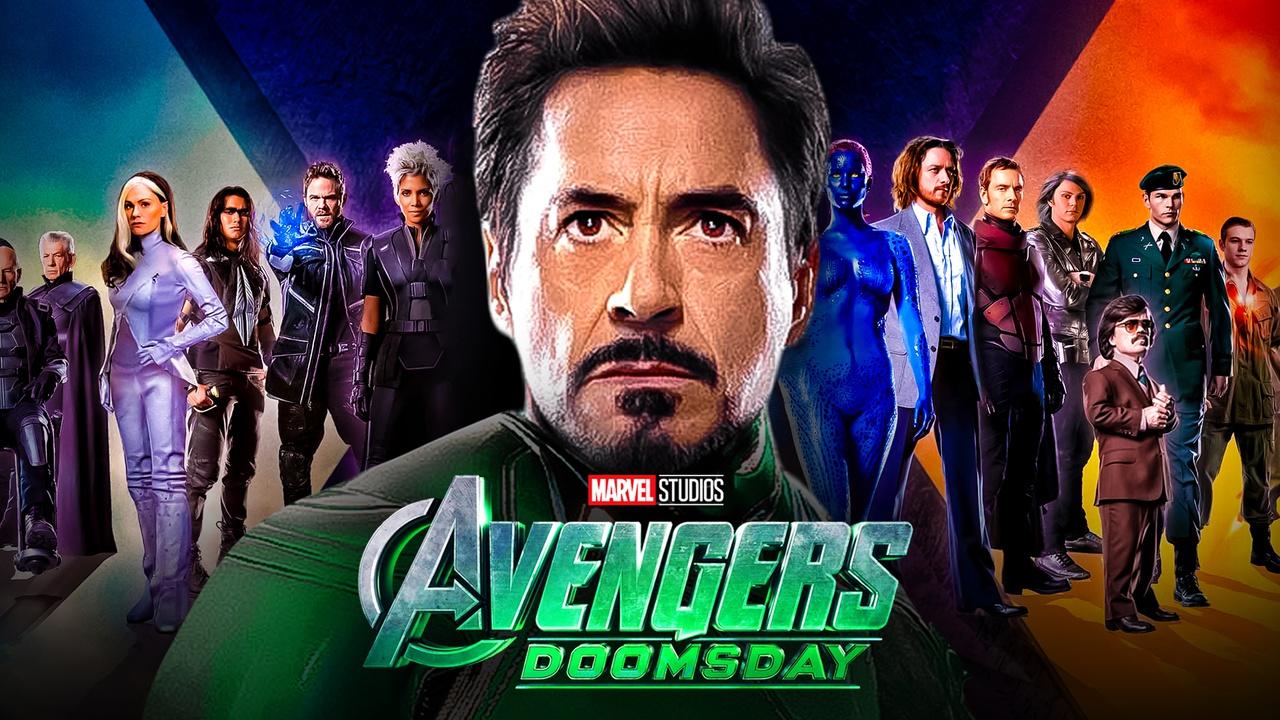
The Avengers: Doomsday teasers aren't trailers — the Russo Brothers called them "stories" and "clues." Here's a full breakdown of Steve Rogers, Thor's prayer, the X-Men ruins, and Doom's terrifying endgame across the multiverse.
Introduction: Marvel Isn't Selling You a Movie. It's Preparing You for a Funeral.
Most superhero marketing works the same way. You get the action beats, the one-liner, the villain glaring from a throne, a release date. The goal is excitement. The promise is spectacle.
The Avengers: Doomsday teasers are doing something categorically different.
The Russo Brothers said it themselves on social media: these aren't trailers. They're "stories." They're "clues." And the hashtag #DoomsdayHasBegun isn't the kind of breathless marketing language that usually gets plastered on a blockbuster campaign. It reads more like a warning label.
Four separate narrative fragments. Four different corners of the MCU. Four stories about people who are already grieving — before the main event has even started. If you approach these teasers looking for excitement, you'll find some. But if you sit with them long enough to actually look at what's on screen, what you'll find underneath is something closer to dread.
This isn't a "superhero vs. villain" film being constructed. This is an autopsy of the multiverse — conducted before the patient has officially died.
Let's go through every fragment, every visual detail, and what the full picture looks like once you connect them.
Steve Rogers: A Selfish Choice and Its Consequences
The first teaser hits you somewhere specific: the nostalgia center. Steve Rogers, back in the late 1940s, on a rural road in soft afternoon light. After everything — the decades of sacrifice, the suspended life, the cost of being Captain America — this should feel earned. This should feel like the happy ending Endgame gestured toward without fully delivering.
It doesn't feel like that. And the more carefully you look at it, the clearer the reason becomes.
The Farm Is Not a Refuge. It's a Hiding Place.
The visual language of Steve's sequence is doing quiet, persistent work. That rural road isn't paradise — it's isolation. The framing keeps him small against the landscape, not at peace within it. And then there's the detail that's generated more discussion than almost anything else in the teasers: secondary tire tracks veering abruptly into a field.
Someone arrived in a hurry. Or someone was taken. Neither interpretation is comfortable.
When Steve walks into the house and folds his Captain America uniform into a chest, the instinct is to read it as retirement — the symbol of a man finally putting down what he's been carrying for decades. But the sequence doesn't feel like relief. It feels like burial. He's not putting the uniform away because he's done with it. He's trying to make himself believe he's done with it.
The multiverse, as the MCU has established at considerable length, does not allow that kind of clean exit.
The Infant, the Bike, and the "Victor" Theory
Then there's the child.
The way Steve looks at that infant isn't simply paternal warmth. There's something haunted in it — the specific expression of someone who knows, clearly and consciously, that they shouldn't be where they are. He stayed in a timeline that was never supposed to contain him. He created a branch reality by choosing his own happiness over the timeline's integrity. He knows this.
Now look at the bike parked outside: a Triumph. A brand whose name is a direct synonym for victory.
The theory that's taken hold in fan communities, and that has more textual support than most: this child is the MCU's version of Victor Von Doom.
Follow the logic. Steve Rogers — the MCU's foundational moral hero — stays in the past for love, generating a forbidden timeline. In that timeline, he fathers a son. That son grows up in a branched reality that shouldn't exist, shaped by a father who was trying to hide from his own legacy, in a world that was always structurally unstable. The conditions for producing someone who becomes obsessed with order, control, and the elimination of chaos — someone who decides to remake the multiverse according to his own design — are all present.
The Shakespearean dimension of this, if it's intentional, is remarkable. Steve Rogers' one act of genuine selfishness — staying behind, choosing personal happiness over cosmic responsibility — becomes the origin point of the entity that ends everything. The man who defined heroism as self-sacrifice created, through the one moment he didn't sacrifice, the thing that destroys the world he protected.
That's not just irony. That's tragedy in the classical sense.
Thor's Prayer: When the God of Thunder Has Nothing Left to Offer
The tonal shift from Steve's quiet farmhouse to Thor's fragment is abrupt and intentional. Whatever warmth the first sequence offered — however complicated — evaporates immediately.
Thor is praying. The God of Thunder, reduced to pleading.
What the Visual Details Are Actually Saying
The gladiator cut is back — the shortened hair that the MCU has consistently used to signal Thor at his lowest, stripped of status and identity and the family structures that give him context. He's holding Stormbreaker. And Stormbreaker, in the previous film, was being used by Love.
If the weapon is back in Thor's hands, the implication is direct: Love is gone. Not away. Not missing. Gone in whatever way the film's universe defines that word.
He's clutching a stuffed animal with the same intensity he once held Mjolnir. This is not a warrior preparing for battle. This is a father in the specific, devastating state of grief that follows when the thing you were supposed to protect has been taken and you couldn't stop it.
The Bargain and Why It Won't Work
Thor's offer — to trade thunder for warmth, to give up his power in exchange for his daughter's safety — is the kind of bargain that myths are built around. And myths built around those bargains almost never resolve the way the person making the deal intends.
In a film called Doomsday, the word "bargain" should carry a particular weight. Someone is always collecting on the other end of those arrangements. And the film's title is not subtle about how negotiations with cosmic forces tend to conclude.
The X-Men: Coming Home to a Graveyard
The third teaser is the one that confirms the scale of what Doom has already done before this story begins.
The X-Mansion isn't being besieged. It's already in ruins — not the fresh destruction of an active attack, but the weathered, overgrown remains of something that fell a long time ago. Whatever battle was fought here is over. This is the aftermath.
"Fiat Lux, Fiat Vis" — Let There Be Light, in the Dark
The motto visible on a broken window — Fiat Lux, Fiat Vis, "Let there be light, let there be strength" — is the kind of detail the production design team doesn't include accidentally. Placed in a sequence defined by darkness and collapse, it functions as an epitaph rather than an aspiration. The institution built on that principle is gone. The ideals survive only in the inscription on what remains.
The chess game is doing the heaviest lifting in this fragment. A black king — representing either Xavier or Magneto depending on your interpretation — is in a position with no legal moves remaining. When it topples, it's not a defeat imposed from outside. It's a voluntary resignation. The question being asked in that image isn't tactical. It's philosophical: who will we be when we die?
Cyclops and the War He Knows He's Already Lost
James Marsden's return as Scott Summers is one of the teaser's most emotionally loaded moments, and it works precisely because of what the performance doesn't give you.
He's standing over a severed Sentinel head. In any other context, that's a victory image — the hero surveying a defeated enemy. But Cyclops doesn't look like someone who has won. He looks like someone who has been fighting long past the point where fighting had a realistic chance of changing anything, because the alternative was accepting a loss he can't accept.
If Doom has been specifically targeting the children who represent each timeline's future — and the pattern across all four teasers strongly suggests this — then Nathan Summers, Cable, is the obvious target from the X-Men's corner of the multiverse. A father fighting a war he knows is already decided, looking for a son who may already be beyond reach: that's the emotional logic of what Cyclops looks like in this sequence.
Wakanda and Talokan: The Alliance Built From What's Left
The final fragment takes the longest to process, partly because of its visual scope — a desert that used to be an ocean — and partly because of what that geography implies about what Doom has already done.
The Talokan people have lost their ocean. Their entire civilization, built on and sustained by water, has been stripped of its foundation. The likely mechanism: an incursion. A multiverse collision that drained or destroyed the environment that made their existence possible.
A Survivalist Alliance
The armor that Shuri and M'Baku are wearing tells you what the situation requires. It blends Wakandan technology with Talokanil vibranium — not because this was always the plan, but because two peoples who have lost significant portions of what made them distinct are now sharing resources to survive. When your ocean is gone and their city is threatened, the concept of exclusive cultural technology becomes a secondary concern to the concept of living through the next incursion.
Shuri's line — "I've lost everyone that matters to me" — lands differently depending on how much you've been paying attention to the theory about what Doom is collecting. We know she lost T'Challa. We know she lost Ramonda. But the theory that's gaining traction concerns Toussaint — young T'Challa, the heir, the future of the Wakandan royal bloodline.
If Doom is specifically targeting the children who represent the continuation of each major timeline's legacy, Toussaint is an obvious acquisition. Taking him doesn't just wound Shuri personally. It removes Wakanda's future king from a timeline that won't be able to replace him.
The Ship and the Storm Theory
When Shuri salutes the Fantastic Four's ship, the surface reading is that she's greeting Reed Richards and the scientific expertise he represents. But a theory circulating in the fan community — and one that the visual framing supports — suggests the person she's actually responding to is Storm.
If Ororo Munroe is leading the survivors of a collapsed X-Men timeline to Wakanda, the scene transforms entirely. It stops being a diplomatic greeting and becomes something more desperate: the last members of a destroyed world arriving at the doorstep of people who understand what it means to watch your world come apart.
Doom's Endgame: He's Not Invading. He's Curating.
When you lay all four fragments next to each other, a pattern emerges that reframes everything about what Doom is doing and why.
He isn't conquering timelines. He's harvesting them. Specifically, he's collecting what the fan community has started calling "Anchor Beings" — the individuals who represent the future of each timeline's most significant legacy:
- Steve's son — the moral legacy of the hero who defined the MCU's first era
- Love — the cosmic legacy, connected through Thor to Eternity itself
- Nathan Summers — the mutant legacy, the future of the X-Men's bloodline
- Toussaint — the royal legacy, the continuation of Wakanda's ruling line
This isn't random destruction. This is deliberate, methodical acquisition. Doom is taking the building materials of the old multiverse to construct something new — the Battleworld that comics readers will recognize as the next logical step in this narrative.
The countdown at the end of the teasers isn't marketing theater. Within the fiction the film is constructing, it's the timer on a controlled demolition. The lights of the MCU as it has existed are going out, on a schedule, according to a plan.
Common Questions Fans Are Asking Right Now
Is Steve Rogers really the father of Victor Von Doom in the MCU? Nothing is confirmed yet, but the teaser supports the theory strongly. The Triumph motorcycle, the "haunted father" framing, and the established logic of Steve's branched timeline all point in that direction. If confirmed, it would be one of the most significant retcons in MCU history — reframing Endgame's ending as the origin of its greatest villain.
Why is Thor holding Stormbreaker if Love was using it? The implication is that Love has been taken or killed before this story begins. Thor's prayer and the stuffed animal he's clutching both point toward grief rather than preparation. The weapon returning to his hands is the visual confirmation of that loss.
What happened to the Talokan ocean? The desert geography in Wakanda's teaser fragment strongly implies an incursion — a multiverse collision that destabilized or destroyed the underwater environment sustaining Talokan civilization. This would explain why the Talokan people are forming a survivalist alliance with Wakanda rather than operating from their own base.
Are the X-Men ruins from before or during this film's events? The weathered, overgrown state of the X-Mansion suggests the destruction happened significantly before this story begins. This isn't an active battle — it's a location being revisited after collapse. Whatever happened to the X-Men's headquarters is part of the established history this film enters, not something it depicts happening.
What is Battleworld and why does it matter? In Marvel Comics, Battleworld is a planet assembled by Doctor Doom from the fragments of destroyed universes during the Secret Wars storyline — the most likely source material for where the Doomsday/Secret Wars films are heading. Doom collects the pieces of worlds he's destroyed and builds a new reality in which he is the uncontested ruler.
Is RDJ's Doom the same character as the classic comics version? The MCU is almost certainly adapting rather than directly translating the comics version. Robert Downey Jr.'s casting as Doom rather than a return as Tony Stark suggests a character built from familiar emotional territory — genius, ego, the capacity for both creation and destruction — rather than a straight comics adaptation.
What are "Anchor Beings" in this context? The term comes from fan theory rather than official Marvel materials. It describes the individuals who represent the future of their respective timelines — the children, heirs, and successors who carry each universe's legacy forward. Doom targeting them is a way of controlling the future of the multiverse by eliminating the people who would otherwise inherit and continue it.
What to Watch For Between Now and Release
If the Russo Brothers are serious about the teasers functioning as clues rather than conventional promotion, the details worth tracking in future marketing:
- Any visual confirmation of the child's identity in Steve's timeline — name, setting details, anything that connects to known Doom mythology
- Thor's daughter's fate and whether any future teasers show Love as a captive rather than simply absent
- Cyclops' specific mission — is he looking for Cable, or has he already accepted that search is over and shifted to something else entirely
- Storm's presence in Wakanda-adjacent footage, if the theory about her leading X-Men refugees holds
The Russo Brothers have a specific track record with this kind of layered, pre-release world-building. They did it with Infinity War. The difference here is that Infinity War's marketing built anticipation. This one is building grief.
Conclusion: This Is What the End of an Era Looks Like
What makes the Doomsday teasers genuinely unsettling — beyond any individual theory or detail — is the emotional register they're operating in.
These fragments don't feel like the opening moves of a story. They feel like eulogies for stories that are already ending. Steve hiding from a legacy that's about to catch up with him. Thor bargaining with forces that don't negotiate in good faith. The X-Men surveying the ruins of what they built. Shuri carrying losses that keep accumulating faster than she can process them.
If Doctor Doom is the architect of all of this — if the "Anchor Beings" theory is correct and he's been methodically dismantling the future of the multiverse to build his own — then what we're watching in these teasers is the moment just before the controlled demolition goes off. The last quiet seconds when the building is still standing and you can still almost convince yourself it will stay that way.
The MCU has been building toward this for nearly two decades. The Russo Brothers are apparently committed to making sure we feel the weight of what's about to fall.
#DoomsdayHasBegun. The countdown is real. And based on everything in these four fragments, none of us are as ready as we think we are.
.png)


No comments:
Post a Comment