
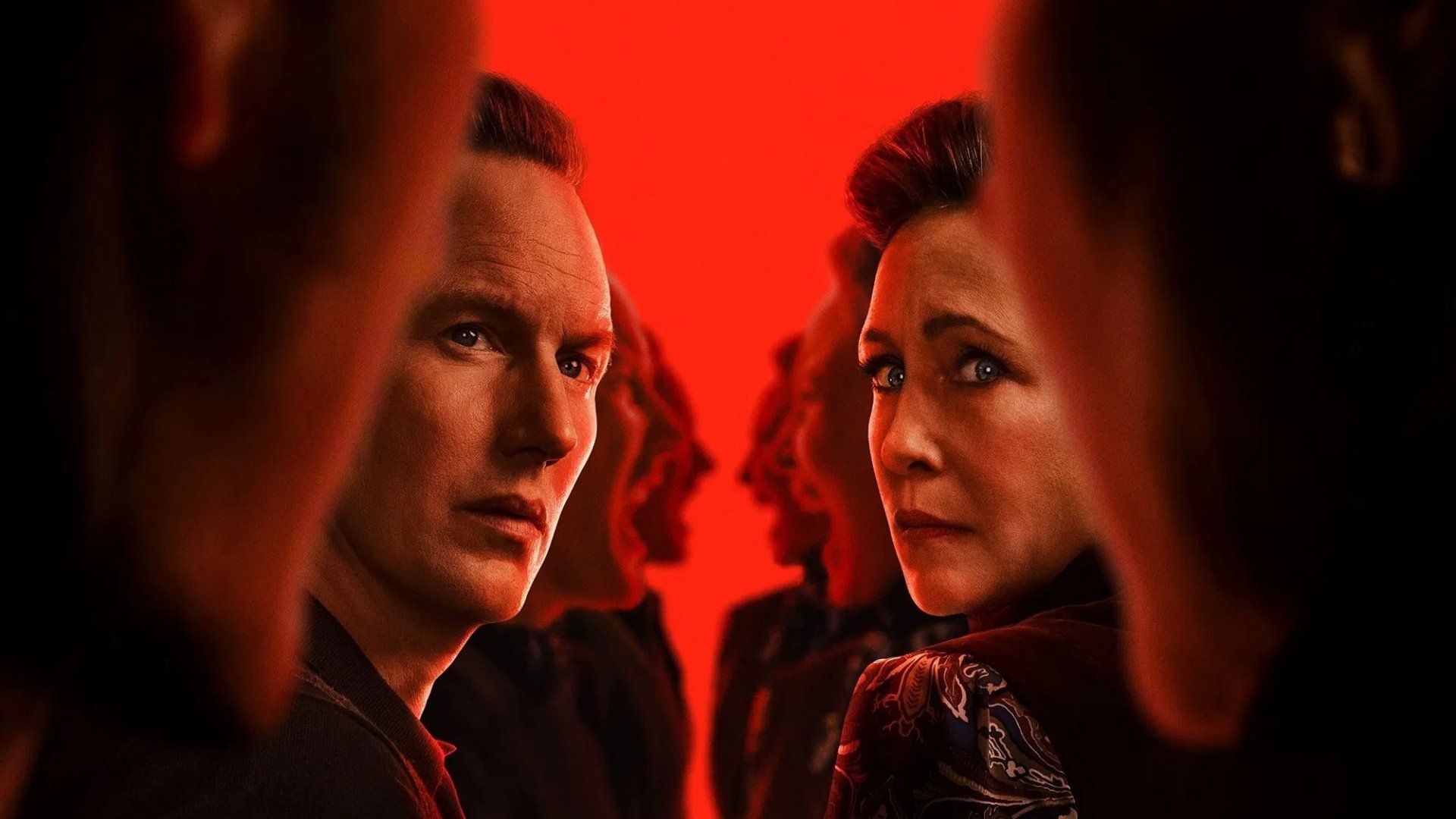
Want to watch the Conjuring Universe in the right order? This complete chronological breakdown covers every film — from 304 AD to 1981 — with lore explained, spoilers flagged, and genuine fan insight throughout.
Introduction: Why Watching These Movies "In Order" Changes Everything
Let me be honest with you — I've rewatched this franchise more times than I'd care to admit to a therapist.
There's something about the Conjuring Universe that keeps pulling me back. Maybe it's the atmosphere. Maybe it's the lore. Or maybe it's because James Wan built something genuinely rare in modern horror: a connected mythology that actually rewards paying attention.
But here's the problem. If you watch these films in release order, you're basically solving a jigsaw puzzle while someone hands you the pieces backwards and blindfolded. The release timeline jumps across decades, introduces characters mid-story, and drops lore bombs that only make sense if you already know the backstory.
Watching them chronologically? That's a different experience entirely. It transforms a collection of "scary movie nights" into one long, tragic, genuinely chilling epic about the war between faith and darkness — spanning almost 1,700 years.
This guide breaks it all down. Every movie. Every major lore connection. Explained clearly, with some real opinions mixed in, because that's more fun than a dry list.
Quick note on spoilers: Everything here contains spoilers for all films except Last Rites. If you haven't finished the franchise yet and you hate surprises — bookmark this, go watch, then come back.
My personal franchise rating: 8.5/10. The mainline Conjuring films are among the best horror movies made in the past two decades. Some of the spin-offs drift into "checking boxes" territory, but when this universe is firing on all cylinders, it's genuinely hard to beat.
Part One: The Ancient Roots — Where the Evil Actually Began
Most people think of the Conjuring Universe as a 1970s story. Ed and Lorraine Warren, haunted houses, cassette recorders. But the real origin goes back nearly two thousand years. And understanding that history makes every Warren case hit so much harder.
304 AD — The Blood of St. Lucy
Here's something the movies drop quietly but it matters enormously: the reason Lorraine Warren and Sister Irene (from The Nun films) can perceive the supernatural isn't random. It's inherited.
St. Lucy — the patron saint of the blind — was martyred in 304 AD. Pagans tried burning her, failed, gouged out her eyes, and eventually killed her. Her eyes became holy relics. Her surviving family carried what the lore calls a "divine spark" — a bloodline connected to holy light itself.
Lorraine Warren and Sister Irene are almost certainly descendants of that line.
Think about what that means. Every time Valak targets Lorraine or Irene specifically, it isn't random. That demon isn't just terrorizing whoever wanders into a haunted building. It's hunting a specific bloodline because that bloodline carries something it wants — or something it fears.
That reframe makes the whole franchise feel less like a haunted house anthology and more like a multi-generational spiritual war. Which, honestly, is exactly what it is.
1692–1863 — Bathsheba Sherman and the Cursed Land
Before the Warrens ever stepped foot in Harrisville, Rhode Island, that land was already poisoned.
Bathsheba Sherman was not just the neighborhood eccentric. In 1863, she sacrificed her own infant to Satan — a week-old baby — in an act of deliberate, devoted evil. When she was discovered, she climbed a tree near the dock, declared her love for the devil, cursed every soul who would ever live on that land, and hanged herself. At exactly 3:07 AM.
That time — 3:07 — becomes a recurring marker throughout the franchise. It's the "witching hour," the inverse of 3:00 AM (traditionally associated with Christ's death at 3:00 PM). The curse she placed didn't just attach to the house. It sank into the soil. For over a century after her death, mothers on that property were driven to murder their own children.
That is genuinely one of the most disturbing pieces of world-building in modern horror. And it makes the Perron family's situation — which we'll get to — feel less like "bad luck" and more like walking into a trap that was set a hundred years before they were born.
Part Two: The Mid-Century Horrors (1940s–1950s)
1943 — The Doll That Ruins Childhoods
Annabelle starts with grief, which is maybe the saddest origin story in the franchise.
Samuel Mullins was a toymaker. In 1943, his young daughter Bee was killed in a road accident. He and his wife were shattered. And in their desperation to hear from her again, to feel any connection to what they'd lost, they opened a door they couldn't close.
A demonic entity — Malthus — heard their prayers. It presented itself as Bee's spirit, asked permission to inhabit the doll Samuel had made, and they said yes.
This is one of the most important thematic threads in the entire Conjuring Universe: evil needs an invitation. It can't just barge in. It needs consent, vulnerability, a crack in the door. The Mullins didn't invite a demon. They invited what they thought was their daughter. But the result was the same.
Once inside the doll, the demon wasn't comforting. It was predatory. The porcelain Annabelle doll became a "conduit" — not the thing itself, but a magnet for demonic energy. It draws darkness toward it like a bruise draws pressure.
Also, can we just acknowledge — who was buying these dolls? Even before the possession, that thing looks like it belongs in a nightmare. The 1943 porcelain version is somehow worse than the raggedy Ann doll from the real case.
1952–1956 — Sister Irene vs. the Marquis of Snakes
The Nun and The Nun II cover this stretch, and together they give us the most complete picture of Valak we get in the whole franchise.
In The Nun, set in 1952 at the Abbey of St. Carta in Romania, WWII bombing had cracked an ancient seal. Whatever had been containing Valak since the Dark Ages was broken. Valak — the Defiler, the Marquis of Snakes — got loose.
Sister Irene, a novitiate who hasn't even taken her final vows yet, is the one who has to face it. The fact that she succeeds is remarkable. She uses a relic containing holy blood to banish Valak, and it works. Temporarily.
Because here's the twist that the ending gives us: Maurice — "Frenchie" — the French-Canadian farmer who helped Irene survive, has been marked. An upside-down cross appears branded on his neck. He's been tagged for later.
By The Nun II in 1956, Valak is riding Maurice like a puppet through Europe, hunting for St. Lucy's eyes — the relics that could restore its full angelic power. Irene stops it again, in a scene involving wine miraculously becoming blood that genuinely earned its dramatic weight.
But Valak isn't gone. It's dormant. Waiting inside Maurice, patient in the way that only ancient evil can be patient. And it will keep waiting until the Warrens come along, decades later.
Part Three: The Golden Era — Enter the Warrens (1970s)
This is the heart of the franchise. Everything before this is prologue. Everything here is the main event.
1970–1971 — Two Cases That Define Everything
The Warrens take the Annabelle case in 1970. Ed immediately recognizes she isn't haunted by a ghost — she's a conduit, drawing demonic energy and giving it a focal point. They put her in a blessed glass case and lock her in their artifact room. Problem contained. Mostly.
Then 1971 brings the Perron case, and this is where The Conjuring truly earns its reputation as one of the best horror films of its era.
The Perron family moved into that Harrisville farmhouse without knowing it sat on Bathsheba's cursed ground. The things that happen to them — especially to Carolyn Perron — build slowly, then hit all at once. Watching Ed Warren perform an unauthorized exorcism, a layman with no official Vatican sanction, running entirely on faith and love and desperation — it's riveting. It's also the clearest statement the franchise makes about what the Warrens actually are.
They're not powerful because of credentials. They're powerful because they refuse to stop.
Around this same period, they encounter Maurice — Frenchie — and attempt to help him. The brief black-and-white footage of his exorcism glimpsed in The Conjuring lands differently once you've seen The Nun films. You know what he went through in Romania. You know he was just a genuinely decent person who happened to be in the wrong monastery at the wrong time. It adds real sadness to the edges of an already emotional story.
1972 — Annabelle Comes Home: The Artifact Room Unleashed
Annabelle Comes Home is the franchise's most purely fun entry, and I mean that as a genuine compliment.
While the Warrens are away, their daughter Judy and her babysitters accidentally release Annabelle from her case. What follows is essentially a greatest hits tour of the artifact room — the Ferryman, the Hellhound, the Black Shuck, and more.
But underneath the "creature feature" energy, this movie makes an important point: the Warrens' house is genuinely one of the most dangerous locations on earth. They've been collecting these objects and containing them, which is admirable and necessary. But they've also assembled the world's most concentrated source of demonic energy and then moved their family into it.
That tension — doing necessary, important work at enormous personal cost — is something the franchise handles better than it gets credit for.
Part Four: The Final Confrontations (1977–1981)
1977 — Enfield, England, and Valak's Return
The Conjuring 2 is my personal favorite film in the entire franchise. The atmosphere in that council house in Enfield is genuinely suffocating. The Hodgson family's situation feels both supernatural and heartbreakingly human — a single mother, struggling financially, suddenly dealing with something she has no framework to understand.
Bill Wilkins, the spirit of the man who died in that house, is one of the franchise's most memorable presences. The "Crooked Man" sequence remains one of the most visually inventive horror scenes of the decade. And the entire film builds toward Lorraine's realization that has been in front of her the whole time.
Knowing a demon's name gives you power over it.
She shouts V-A-L-A-K into the dark, and the thing retreats.
It's a payoff that works because the whole franchise has been building toward it. Valak has been hunting Lorraine's bloodline since 304 AD. And in that moment, she turns the hunt around.
1981 — The Devil Made Me Do It: When Humans Are the Monster
The final case in chronological order takes a sharp turn in tone — and that's actually the point.
The Devil Made Me Do It follows Arne Johnson, who became the first person in American legal history to attempt a demonic possession defense in a murder trial. It's less of a haunted house story and more of a paranormal detective thriller, and that shift works well as a franchise conclusion.
The antagonist here isn't Valak or a centuries-old curse. It's Isla — the Occultist — a human woman who deliberately weaponized dark ritual for revenge. The ritual required three souls: a murder, a suicide, and a victim. It's cold, calculated, and in some ways more frightening than anything demonic because it came from a human choice.
Ed Warren — older, dealing with serious health complications — is still out there. Still working. Still the partner Lorraine Warren relies on completely. Their bond, which the franchise has spent multiple films building, becomes the most powerful force in the story.
Even against a human occultist engineering supernatural murder, the Warrens' greatest weapon remains what it's always been: they simply won't quit on each other.
Why the Conjuring Universe Actually Works
The easy answer is "jump scares and atmosphere," but that's underselling it.
What James Wan built — and what the extended universe has built on — is a mythology with genuine internal consistency. The rules matter. Evil needs permission. Bloodlines carry weight across centuries. Faith isn't magic but it's also not nothing.
The Warrens work as protagonists because they're fighting a war they didn't start, they can't fully win, and they don't get to quit. Every case costs them something. And they keep going anyway.
That's not just horror. That's actually a compelling human story about vocation and sacrifice, wrapped in one of the most atmospheric horror franchises Hollywood has ever produced.
FAQ: Conjuring Universe Questions, Answered
Do I have to watch all the spin-offs to understand the main story? Not strictly. Annabelle: Creation and The Nun films add significant lore depth, but the two main Conjuring films tell a complete story on their own. Think of the spin-offs as expanded backstory rather than required reading.
Are Sister Irene and Lorraine Warren confirmed relatives? The franchise strongly implies it through the St. Lucy bloodline connection, but it hasn't been made fully explicit in dialogue. The visual and thematic parallels are clearly intentional.
Is there a real Annabelle doll? Yes. The real Annabelle is a Raggedy Ann doll, not the porcelain version in the films. She's housed in a locked case at the Warren Occult Museum. The films changed her appearance for obvious reasons — a Raggedy Ann doesn't quite have the same visual impact.
Which movie should I start with if I'm new to the franchise? Chronologically, Annabelle: Creation (set in 1943). Experientially, The Conjuring (1971 case) is the best entry point. It's the one that makes you want to watch everything else.
Will there be more Conjuring Universe films? Last Rites has been announced as the conclusion to the main Warren storyline. Beyond that, the expanded universe could continue with spin-off characters and cases.
Conclusion: One Tapestry, Not Just a Collection of Scares
When you watch the Conjuring Universe chronologically, something shifts. What looked like a series of horror movies starts to look like a single, continuous story — one that spans seventeen centuries, multiple continents, and the lives of people who had no idea they were part of something that started long before they were born.
St. Lucy's bloodline. Bathsheba's curse. A toymaker's grief and a demon's patience. A young nun who stopped an ancient evil twice. A married couple who turned paranormal investigation into a vocation and protected families that no one else could help.
It's terrifying, yes. The Nun's face, the creak of that Harrisville farmhouse, the shadow of the Crooked Man — these images stick with you. But the franchise is also, quietly, about courage and love and the idea that darkness — no matter how old or how powerful — isn't the last word.
Which is a surprisingly hopeful thing to take away from a franchise about demonic possession.
Now the real question: are you Team Valak (the ancient, unstoppable cosmic threat) or Team Annabelle (the quietly patient conduit who started it all)? Drop your answer in the comments — and tell me which scene you genuinely couldn't sleep after. For me, it's still the rocking chair scene in The Conjuring. Every time.
.png)


No comments:
Post a Comment