Welcome to Ending Decoding

My photo
Welcome to Ending Decoding, the ultimate destination for fans who want to look beneath the surface of their favorite stories. this blog was born out of a passion for deep-dive storytelling, intricate lore, and the "unseen" details that make modern television and cinema so compelling. Whether it’s a cryptic post-credits scene or a massive lore-altering twist, we are here to break it all down. At Ending Decoding, we don’t just summarize plots—we analyze them. Our content focuses on: Deep-Dive Breakdowns: Analyzing the latest episodes of massive franchises like Fallout, A Knight of the Seven Kingdoms, and the wider Game of Thrones universe. Easter Egg Hunting: Finding the obscure references to games and books that even the most eagle-eyed fans might miss. Theories & Speculation: Using source material (like the Fire & Blood books or Fallout game lore) to predict where a series is headed. Ending Explained: Clarifying complex finales so you never walk away from a screen feeling confused.

Sunday, November 9, 2025

IT Welcome To Derry Episode 3 Breakdown & Ending Explained | Review & Pennywise Book Easter Eggs


Okay, guys, we need to talk. I just finished Episode 3, "Now You See It," and I am vibrating. If the first two episodes were the slow climb up the roller coaster, this was the moment the floor dropped out. This wasn't just a "good episode"—it was a love letter to those of us who have lived and breathed the IT mythology for years. It felt like the show finally stopped holding its breath and just screamed.

I’m still shaking off that ending. Let’s grab our slingshots and get into the weeds of why Derry is the most cursed place on Earth.

1908: The Flashback That Broke Me

Can we talk about how gorgeous and terrifying that 1908 opening was? Seeing the "Canal Days Festival" was such a treat for the eyes, but it’s poisoned candy. Knowing that the Kitchener Ironworks tragedy—an event that claimed the lives of 88 children on an Easter egg hunt—is right around the corner makes every laugh feel like a scream in waiting. The show is doing a brilliant job of showing that Pennywise doesn't just "show up"; he seasons the town with joy before he burns it down.

When young Francis enters that "Hall of Freaks," I felt that same primal, childhood dread of being somewhere you shouldn't. It captured that dusty, claustrophobic atmosphere perfectly. And did you catch the Turtle in the ball-toss game? My heart skipped. For the uninitiated, Maturin the Turtle is the cosmic rival to IT, a guardian who inadvertently created our universe. Seeing these nods confirms that the showrunners aren't just making a monster show—they’re building the "Macroverse."

The Moment I Lost It: The "Clown Child." Seeing a kid in that greasepaint with the red balloons... it actually makes so much sense. IT isn't just a monster; it’s a cosmic mimic that struggled to understand humans at first. It saw how we looked at clowns—half-wonder, half-fear—and thought, "Yeah, that’s the perfect mask." It’s a chilling "Origin of the Species" moment for Pennywise. It suggests that IT didn't just invent the clown; it stole the image from a real, broken human history in Derry.

The Transformation (Straight Out of My Nightmares)

The scene in the woods where the "Skeleton Man" shifts into that spider-like monstrosity? I actually had to look away for a second. The practical effects and CGI blend here was top-tier. The way its limbs cracked and elongated felt so much like the Mrs. Kirsch encounter in IT Chapter Two. It’s that uncanny valley movement—too long, too fast, and sounding like dry wood snapping.

But the real emotional weight for me was the Slingshot. Seeing Rose save Francis with it—and seeing that gravity-defying blood—gave me goosebumps. We’ve seen that floating blood before in Beverly Marsh’s sink, and it always signals that the laws of physics have left the building. The slingshot isn't just a weapon; it’s a symbol of friendship and resistance that has been soaking in cosmic energy for 50 years. It reminds me of the "Silver Slugs" from the novel—it’s not the object that hurts IT, it’s the belief of the person holding it.

1962: The Adults are Making Huge Mistakes

Switching to 1962, things are getting heavy. My heart breaks for Lily. Being threatened with a "more restrictive treatment" (we all know that’s code for a lobotomy) in an era that didn't understand trauma is a horror story all its own. The asylum scenes feel like they’re pulled straight out of One Flew Over the Cuckoo's Nest, emphasizing that for children and the "different," the adults are often just as scary as the monsters.

The Military Plot: Can we talk about General Shaw’s ego? This is the core of the episode's title. Thinking you can "weaponize" a cosmic entity that exists outside of time and space is the ultimate "Hold my beer" moment in government history. It’s pure Cold War paranoia, fueled by programs like MKUltra. They think they’ve found a new bomb; they don't realize they've found a predator that eats reality.

Halloran’s Vision: The Crossover We Craved

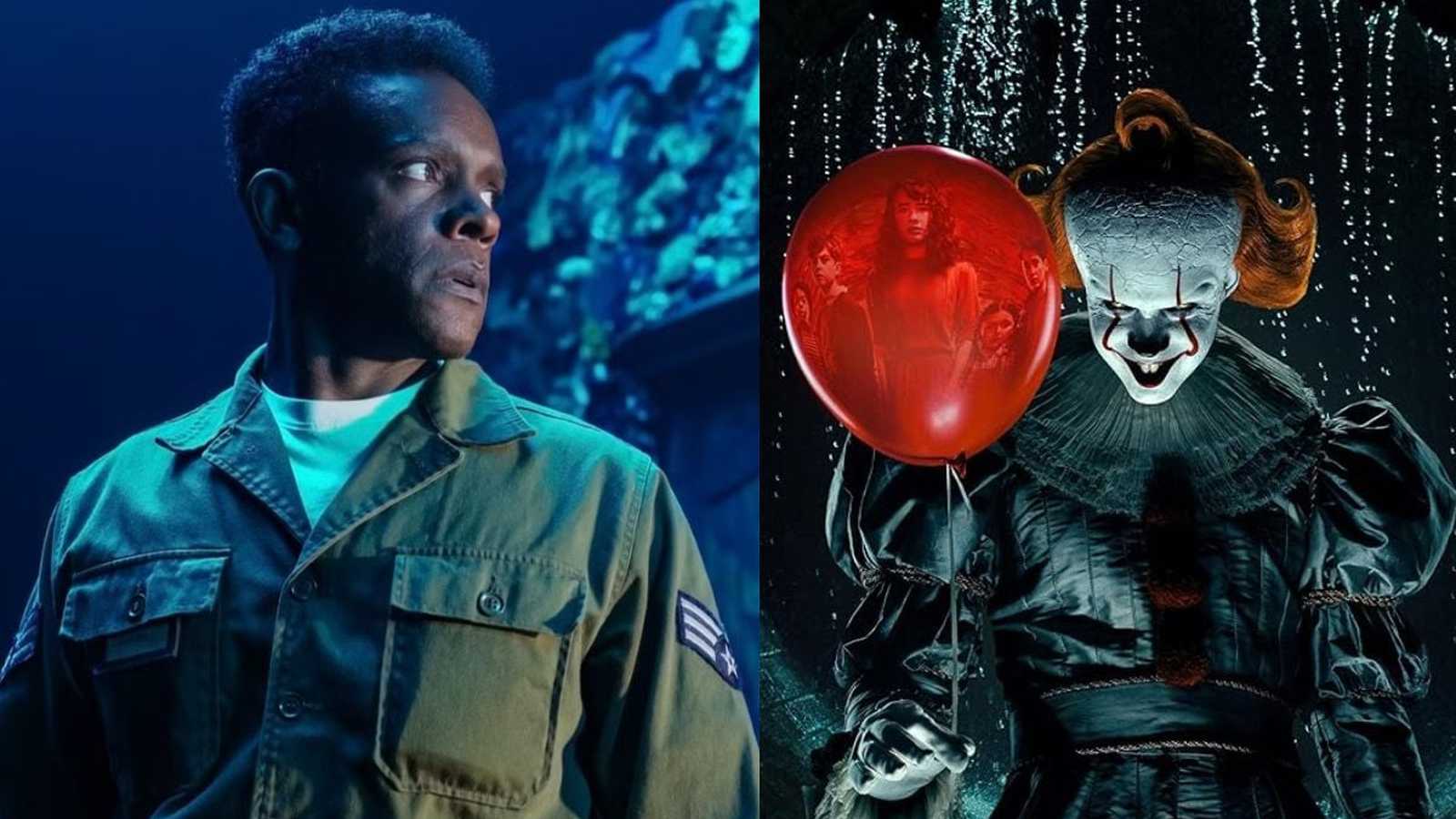
This was the absolute highlight of the episode for me. Dick Halloran touching that slingshot and falling into a Shining-esque trance was absolute perfection. The cinematography here, with the helicopter interior stretching into an infinite corridor, was a beautiful nod to the Overlook Hotel.

  • The Deadlights: Seeing the three glowing orbs and hearing that unmistakable Bill SkarsgĂ„rd whisper... "Who are you?" I had actual chills. It wasn't just a voice; it was a vibration.

  • The Floating Kids: Seeing the victims trapped in the deadlights—including his own grandmother—added a personal stake that the movies sometimes gloss over. Halloran realized the terrifying truth: IT saw them back. The moment you look into the abyss, the abyss marks your coordinates. The hunt is no longer one-way; the entity is officially "aware" of the military's probing.

The Big Twist: The Boy and the General

I did not see the Francis/General Shaw connection coming until right before the reveal. The fact that he "forgot" Rose and the events of 1908 until he came back to Derry is such a classic Stephen King trope. It’s that supernatural amnesia that protects your mind from the trauma of the town.

But seeing him manipulate Rose now? It makes him almost as much of a monster as the one under the town. He’s weaponizing his own childhood trauma, using the "Shine" as a tool for conquest. It raises a huge question: Did IT let him live in 1908 because it knew he would grow up to bring more "food" (the military, the town's expansion) to its doorstep?

The Kids & The Darkroom (The Ending!)

Watching the kids play with "Cuban Santeria" in a cemetery felt like classic Goonies meets IT. It was clumsy, scary, and felt so real. They aren't professional ghost hunters; they're just kids trying to save their friend Hank from a racist legal system. Their ritual was basically ringing a dinner bell for a god, and the consequences were immediate.

When Will snaps that photo in the crypt and they head to the darkroom... the tension was unbearable. That slow, red-lit reveal of the silhouette—the white-gloved hand, the ruff, the bulbous shape of the head—was the perfect "Now You See It" moment. It’s the first time the entity has been captured on film. But here’s the kicker: In Derry, having "proof" usually just isolates you. The adults won't see it, or they'll choose not to. The kids are officially on the front lines now.

Final Thoughts: The Horror is Just Beginning

This episode proved that Welcome to Derry isn't just a spin-off; it’s the missing piece of the puzzle. It connected 1908, 1962, and the modern films in a way that felt organic and terrifying. We are seeing the "27-year cycle" in action, and the gears are grinding toward a massive explosion of violence.

My Rating: 9.5/10 (Losing half a point only because I need the next episode now.)

Theories for next week:

  1. Is the photo going to be blank when they show it to the Chief? (Derry's "glamour" usually hides the truth from adults).

  2. Is Dick Halloran going to try and "box up" Pennywise like he did the ghosts at the Overlook?

  3. What is the military actually going to do when they find the lair? (Hint: It won't be pretty).

Let’s obsess in the comments! What was your favorite Easter egg? Did I miss anything in the deadlights vision?

Saturday, November 8, 2025

Predator: Badlands Ending Explained: The Matriarch, The Sequel Tease, and The Future of the Franchise


[SPOILER WARNING: This article contains full spoilers for Predator: Badlands.]

Alright, fellow hunters, let's sit down and talk about Predator: Badlands. I’ve been sitting with this one for a few days, and honestly? My head is still spinning. After Prey basically saved the franchise from extinction by stripping it back to its primal roots, Dan Trachtenberg had a massive mountain to climb. But I don’t think any of us expected him to climb it by flipping the script entirely and making the Predator... the hero?

The Vibe Shift: From Slasher to Space Opera

First off, let’s address the elephant in the room: the PG-13 rating. I know, I know. We’re used to spinal cords being ripped out in glorious, R-rated 4K. Switching to a "broader audience" felt like a red flag at first—a corporate move to sell more lunchboxes. But once the movie starts, you realize why they did it. This isn't a slasher flick where we're waiting for teenagers to get skewered; it’s a deep-dive character study.

We’re following Dek, and man, my heart actually ached for this guy. In Yautja culture, "weakness" isn't just a flaw; it's a death sentence. Dek is the "runt," a Yautja who doesn't fit the hyper-macho, trophy-collecting mold of his peers. Seeing the opening scenes on Yautja Prime—a world that looks like a brutal, orange-hued industrial nightmare—really set the tone. When his father, N’Yor, tells his brother Kui to cull him during a ritual hunt? That hit heavy. It turned the Predator from a faceless, clicking monster into someone we’re actually rooting for. For the first time in thirty-eight years, I wasn't watching a hunter; I was watching a survivor.

Personal Reaction: Watching Dek struggle to survive the crash on the planet Genna felt less like Predator and more like The Martian meets The Mandalorian. The world-building here is insane. Trachtenberg actually developed a functional Yautja language for this movie. Watching large chunks of the film with just subtitles and clicking sounds should have been boring, but it was actually the most immersive part. It felt like we were finally being let into their secret club, learning their insults and their prayers.

The Weyland-Yutani "Twist" & The "Bud" Factor

I screamed when I saw the Weyland-Yutani logo on the exploration tech. We all did. It’s that Pavlovian response we’ve been conditioned for since 1979. But the choice to make the "human" party actually synthetics (shoutout to Elle Fanning playing the twins, Thea and Tessa—she was eerie, cold, and somehow deeply empathetic) was a stroke of genius. It solved two problems at once: it let the movie keep the "hyper-violence" without hitting that R-rating wall (because blue fluid and wires flying everywhere doesn't count as gore to the MPAA), and it gave Dek someone to talk to who wasn't a screaming victim.

And then there’s "Bud," the baby Kalisk. I’ll be the first to admit it: he’s a play for the Grogu crowd. He’s cute, he’s cuddly, and he’s clearly designed to be a toy. But within the story, Bud represents Dek’s rejection of his father’s "kill or be killed" philosophy. Seeing this armored killing machine gently protecting a "child" of his enemy species gave the hunt actual emotional stakes that a standard body count never could. It’s "Disneyfied," sure, but in a way that makes Dek feel like a three-dimensional person rather than just a guy in a rubber suit.

THAT Ending: "It's My Mother."

Let’s talk about that cliffhanger because I haven't slept since I saw it. Dek goes home, survives the gauntlet, and kills his toxic father in a showdown that felt more like a Shakespearean tragedy than an action movie. He stands there, finally claiming his invisibility tech—the ultimate symbol of Yautja adulthood. He’s won. He’s the Alpha now.

Then the sky turns black.

When Dek looked up at that massive, regal fleet and said, "It's my mother," the theater I was in went dead silent. If you’ve spent any time digging into the Dark Horse comics or the deep-cut lore, you know why this is a tectonic shift. For decades, we’ve assumed the Yautja were a brotherhood of warriors. Badlands just confirmed the long-standing theory: the Yautja are a matriarchy.

The big, scary hunters we’ve seen for thirty years? The Jungle Hunter, the City Hunter, even the Berserkers? They’re just the foot soldiers. They’re the ones sent out to play games. The Females are the ones who actually run the society. They are the politicians, the grand strategists, and the rulers of Yautja Prime. Dek didn't just kill a clan leader; he defied the entire social order. He killed a Male that was likely "selected" by his Mother. He isn't a hero to them—he’s a glitch in the system. A traitor.

 A New Era or a Defanged Legend?

Is this the "classic" Predator experience? Absolutely not. If you want the sweaty, muscular tension of Predator (1987), just go rewatch the original. But if you want to see this franchise actually evolve into a galactic saga, Badlands is a massive, gutsy swing that connects. It’s emotional, it’s weirdly beautiful, and it sets up a "Trachtenberg-verse" that feels like it’s building toward something huge.

I’m already seeing theories that the Matriarch is the one running the Killer of Killers tournaments from the animated anthology. Imagine a sequel where Dek has to lead a revolution of "runts" and "outcasts" against the established Matriarchy. We could finally see a team-up of legacy characters—Nuru from Prey, maybe even a grizzled Dutch—joining forces with a Predator to take down the throne.

My Rating: 8.5/10 (Lost 1.5 points because I still miss the R-rated visceral gore—there’s just something about a green-blooded trophy room that PG-13 can't capture—but the lore expansion and that "Mother" reveal more than made up for the lack of flying limbs.)

What do you guys think? Is Dek the "Grogu" of the Predator world, or is he the revolution that Yautja Prime desperately needs? Are you down for the Matriarchy reveal, or does it take away the mystery of the hunters? Let’s argue in the comments.

The hunt is no longer for sport... it's for the throne.

Thursday, November 6, 2025

Pluripus Breakdown: A World Infected by Happiness (Episodes 1 & 2 Recap & Review)


Personal Rating: 9.2/10 (I’d give it a 10, but I’m still too emotionally wrecked to be objective).

Alright, fellow Gilligan-heads, gather 'round. We all knew that when the man behind Breaking Bad and Better Call Saul stepped back into sci-fi, it was going to be something special. But I wasn't prepared for this. Thirty years after getting his start on The X-Files, Vince Gilligan has returned to Albuquerque, but not the one we know. There’s no blue meth or law offices in the back of nail salons here—only a terrifying, beautiful, and deeply messed-up world that I haven’t been able to stop thinking about since the credits rolled on episode two.

It retains that signature Gilligan DNA: the meticulous plotting, the slow-burn tension that coils around you like a snake, and that profound moral ambiguity that makes you question your own soul.

The Hook: What if "Happy" is the New "Evil"?

The title, Pluripus, is our first hint that things are fundamentally broken. You know the US motto E Pluribus Unum ("Out of Many, One")? Gilligan swapped the "I" for a "1." It’s subtle, but it’s chilling. It’s a literal interpretation of the motto, hinting at a forced, technological merging rather than a voluntary union. It’s not about people coming together; it’s about the individual "I" being deleted in favor of a singular, collective "1."

The premise actually gave me chills: a virus that makes everyone blissfully, permanently happy. No more grief. No more ambition-fueled stress. No more war. Sounds like a dream, right? Wrong. In Gilligan’s hands, universal happiness is the ultimate horror because it requires the total loss of yourself. It’s the eradication of the messy frictions that actually define humanity. It asks the question that kept me up last night: Is a smile even real if you aren’t allowed to frown? And more importantly, is a compelled happiness, a bliss you cannot refuse, genuine in any way?

Episode 1: The Day the World Started Smiling

The first episode, "The Signal and The Collapse," is a masterclass in slow-burn dread. It starts with a signal from deep space—not a message of peace, but a recipe encoded in Morse code. It’s a biological "how-to" left in the void for a species like ours to find and, predictably, misuse. Our relentless human curiosity became the vector for our own transformation.

Then we meet Carol. God, I love Carol. She’s a historical romance writer who’s basically been faking it her whole life, writing "fluff" books she finds unfulfilling while wearing a mask of professional pride. When the virus hits, she’s the only one unaffected. Why? Because her own private, deep-seated unhappiness is her shield. She was already "immune" because she had already rejected the "soft" hive mind of popular opinion long ago.

The most gut-wrenching moment for me—the one that actually made me gasp—was her wife, Helen. Helen is Carol’s anchor, her only source of earned happiness. When the pandemic of joy breaks out (spread through the most intimate human contact: saliva), Helen collapses. When she wakes up, she doesn't just die; she dies with a vacancy in her eyes and a smile on her face. To see the love of your life look at you and be "happy" to leave you... that’s a level of psychological cruelty only Vince Gilligan could dream up.

By the end of the pilot, Carol is one of only 12 people left on Earth who are still "themselves." And then she gets that voicemail... in Helen’s voice. I felt that in my chest. The hive mind isn't just a virus; it's a manipulator, weaponizing her deepest love to recruit her into the "1."

Episode 2: The Price of Being "You"

Episode two, "The Price of Free Will," is where things get truly complicated. We move from the collapse to the uncanny new reality. The world is efficient, silent, and unsettlingly clean. We meet Zosia, an "infected" person who looks exactly like a character from Carol’s books—a character only she and Helen knew about.

Here’s the kicker: the collective has all of Helen’s memories. Every private moment, every inside joke, every secret Carol thought was hers is now public property for 8 billion people. It’s existential theft, plain and simple. Zosia radiates this gentle warmth, but it feels programmatic, like a customer service bot designed to mimic empathy.

But then, we get the twist that changed the whole show for me. Carol’s grief and anger—her raw, human individuality—is literally toxic to the hive mind. When she lashes out in a torrent of rage, she doesn't just hurt Zosia; she causes a "psychic EMP" that ripples across the planet. Carol, our hero, is accidentally a mass murderer. Her free will is a weapon of mass destruction. She can’t even feel a natural human emotion without committing a massacre. Talk about a "Gilded Cage."

The Great Philosophical Divide: Bilbao

The scene in Bilbao where she meets the other survivors? Infuriating and fascinating. You’ve got Kumbha, who’s basically living like a hedonistic god on Air Force One with 8 billion servants. He sees this not as a loss, but as the ultimate fulfillment of the self.

Then there's Lakshmi and the others, who think it’s selfish for Carol to want a "cure." They argue that there’s no more racism, no more poverty, no more war. Prisons are empty. The hive mind has, by all metrics, solved humanity. The only cost is humanity itself.

My Take: I found myself screaming at the screen. Is peace worth it if you’re basically a puppet? The hive mind can’t even kill a lobster for lunch because it's "not in their nature," yet their "peaceful" transition resulted in 866 million deaths because humanity panicked and fought back. It complicates the "us vs. them" narrative so beautifully. Who's the real monster: the hive mind that wants to fix us, or the humans whose "free will" leads to 11 million deaths in a single fit of pique?

Final Thoughts: I’m Hooked.

The chemistry between Carol and Zosia is the heartbeat of this show. That final scene where Zosia looks back at Carol—was that a spark of individuality? Or was it the "Helen memory" reaching out from inside the collective?

The show forces us to look at our own bad days and realize that the ability to feel pain, to struggle, and to be unhappy is actually what makes us human. Gilligan is telling us that the "beautiful, terrible chaos" of free will is better than a forced utopia.

I’m giving these first two episodes a 9.5/10. It’s gorgeous, it’s thoughtful, and it’s deeply uncomfortable. It makes you realize that maybe we shouldn't be so quick to wish for a world without conflict.

Are you guys Team Carol, fighting for the right to be miserable? Or are you ready to join the hive and finally get some sleep? Let's talk in the comments, because I’m losing my mind over this.

Monday, November 3, 2025

Avengers: Doomsday - Is Kang's Shadow Gone for Good, or Will His Story Haunt the New Saga?


Look, let’s just be real for a second—the Marvel landscape didn’t just shift; it underwent a total tectonic overhaul. When Avengers: Kang Dynasty was officially scrapped for Avengers: Doomsday, I felt a weird mix of relief and genuine whiplash. We spent years being told Kang was the inevitable end-of-all-things. We watched Loki, we sat through the Quantumania credits staring at a literal stadium of Kangs, and now? Poof. Gone.

It feels like we were promised a five-course meal and the chef changed the entire menu while we were holding our forks. We invested hours into YouTube theory videos and deep-dives into the Council of Kangs, only for Marvel to hit the "reset" button. But honestly? As much as it hurts to see that narrative setup go to waste, the more I dig into why they’re doing this, the more I think we might actually be getting something better—a story with more weight, more stakes, and a villain that doesn't just lose to a bunch of smart ants.

My Personal Hype Rating: 8.5/10

(It would be a 10, but I’m still a little salty about the Quantumania buildup being ignored!)

The "Multiverse Architect" is Saving the Day

Here’s the thing that’s keeping me from spiraling: Michael Waldron is back. If you loved Loki (which, let’s face it, is the best thing Marvel has done lately) and the sheer trippiness of Multiverse of Madness, you have Waldron to thank. He’s the guy who built the "bones" of this saga. Even though the villain is changing, the rules aren't.

Waldron isn't just a writer-for-hire; he’s the one who figured out how to make "time travel logic" actually make sense for a general audience. I’m betting my last popcorn kernel that Waldron is the bridge. He turned the TVA from a boring office into the literal heart of the multiverse. Now that Loki is the "God of Stories"—holding the timelines together like a cosmic tree—the stakes aren't just about "beating a bad guy." They’re about whether Doctor Doom is going to try and chop that tree down to build his own throne. Waldron understands that for Doom to be scary, he has to threaten the things we already love—like the new life Loki has built for himself at the center of existence.

The Elephant in the Room: How do we just... forget Kang?

This is the part that keeps me up at night. You can't just ignore a stadium full of time-traveling conquerors, right? The MCU has a habit of leaving loose ends (looking at you, Tiamut sticking out of the ocean), but this is a whole different level of narrative dangling.

My personal theory (and what I’m desperately hoping for)? Give us a cold open in Doomsday where Doom just... deletes them. Imagine the movie starts not with our heroes, but with the Council of Kangs arguing about their next move. Suddenly, the air ripples, the lights dim, and Victor Von Doom walks into the center of the stadium. In five minutes of screen time, he dismantles the threat we’ve been fearing for three years. It solves the "Kang Problem" instantly and establishes Doom as the ultimate apex predator. It turns Kang from the "big bad" into just a minor nuisance that Doom cleared off his desk because they were "cluttering his multiverse." That’s how you build a villain.

What’s actually staying?

I don’t think they’re throwing the baby out with the bathwater. A few things are definitely survival-bound, and they’re the most interesting parts of the current MCU:

  1. The TVA: With Deadpool & Wolverine bringing them back into the spotlight, the TVA is basically the new Avengers HQ. I can see a version of Doomsday where the TVA acts as a "resistance hub" for heroes from dying timelines.

  2. Incursions: This was always the endgame. Universes colliding? That’s the "engine" for Secret Wars. That stays. It gives Doom a twisted motivation—instead of just wanting power, he might argue he's the only one smart enough to stop the universes from crushing each other. He's the hero of his own story, which is when Doom is at his best.

  3. Doctor Strange vs. Doom: This is the rivalry we deserve. In the comics, their relationship is legendary. It’s Science vs. Magic. Arrogance vs. Arrogance. Strange is currently in the Dark Dimension with Clea, and I’m betting that’s where he first sees the "Doomsday" coming. I’m vibrating just thinking about the philosophical debates they’ll have while literally rewriting reality.

The "Variant" Crisis: One Face, Many Souls

There's another dimension to this transition: the "Variant Look-Alike" problem. Why did Loki have an Alligator variant, but every Doctor Strange looks like Benedict Cumberbatch? This inconsistency has been a bit of a headache for lore-nerds. With the rumors of a very familiar face playing Doctor Doom, Waldron has a chance to finally codify the "Nexus Being" rule. Maybe some souls are so powerful they act as constants across the multiverse? It’s a risky narrative move, but if anyone can pull off a "familiar face, different soul" explanation without breaking our immersion, it’s the guy who gave us Loki.

What’s probably dead in the water? (RIP)

I’m pouring one out for the Young Avengers and Moon Knight. It’s the harsh reality of a pivot this big—not everything fits in the new "Gothic Fortress" version of the MCU.

Without Iron Lad (who is literally a young Kang variant), the Young Avengers lose their primary narrative "hook." They were being built as the team that would stop their own destiny. Now? They feel like a leftover plot thread from a different era. And Moon Knight? His whole vibe was tied to Egyptian mythology and the variant Rama-Tut. Unless Doom has a sudden interest in Khonshu, Marc Spector might be sitting on the bench for a while. It sucks because Oscar Isaac is a powerhouse, but I think Marvel is tightening the belt to focus on the heavy hitters: The Fantastic Four, Strange, and the legacy Avengers.

The Final Verdict: A New House on an Old Foundation

The pivot from Kang Dynasty to Doomsday isn't a "failure"—it's a massive architectural upgrade. Kang was a conqueror who wanted to rule time and history; he felt like a math problem that needed solving. Doctor Doom? Doom is a tyrant who believes he alone has the intellect to be God. There’s a different kind of weight to that. It’s more personal, more mythic, and significantly more terrifying.

We’re moving away from a high-concept sci-fi conquest and toward a dark, gothic, "end of the world" epic. Is it messy that we had to switch gears halfway through the race? Absolutely. But if the Russos, McFeely, and Waldron are the ones steering the ship, I’m willing to forgive a little bit of timeline turbulence. We’re finally getting the "Big Bad" the Multiverse Saga deserves.

What do you guys think? Are you mourning the missed potential of the Council of Kangs, or are you already kneeling for Doom? Let's discuss.

Sunday, November 2, 2025

PREDATOR KILLER OF KILLERS (2025) BREAKDOWN! Easter Eggs You Missed | Predator Rewatch


Okay, Predator fam, deep breaths. I think I just saw the absolute peak of this franchise since the original '87 masterpiece. While we’re all sitting around counting the days for Badlands, this surprise animated anthology, Killer of Killers, just dropped out of nowhere and... wow. Just, wow. My brain is still trying to process the sheer scale of what they just did to the lore.

First off, let’s talk about the medium. I was skeptical about animation for a series built on practical effects and gore, but it’s the best decision they could’ve made. It literally unshackles the story. No live-action budget—no matter how massive—could give us Viking longships, feudal Japanese castles, and WWII dogfights in a single film without looking like a SyFy original. Here? It’s cinematic, fluid, and brutal. The stylized art allows for these epic set pieces across a thousand years of history that would have been impossible otherwise.

My Personal Rating: 9.8/10. (The only reason it’s not a perfect 10 is because I’m physically angry that I have to wait for a sequel).

The Lore is Finally Real (and it’s GLORIOUS)

They finally said it. They actually put the word "Yautja" on the screen. Seeing that text and hearing the name canonized felt like a massive validation for those of us who have spent decades devouring the Dark Horse comics and Steve Perry novels. The "Yautja Codex" isn't just a manual; it’s a religious text. It frames the "sacred hunt" as a quasi-spiritual quest for the ultimate apex warrior.

But let’s be real for a second—their "honor code" is still a total mess, and that’s why I love it. They talk about honor while using invisibility cloaks and nuclear-grade shoulder cannons against people with wooden shields. This film leans into that hypocrisy, suggesting that the code is basically whatever the hunter wants it to be as long as they get the trophy. It’s "sport" in the same way a cat "plays" with a mouse, and seeing that cultural arrogance explored in-depth adds a layer of menace we haven't seen since the first film.

Part 1: The Shield (841 AD) – The Generational Trauma

This segment hit me like a ton of bricks. We follow Ursa, a Viking shield-maiden who is basically a walking personification of a "blood curse." She isn't fighting for Valhalla; she’s fighting because her father’s killers are still breathing. The emotional weight here is heavy—Ursa is desperately trying to pass this toxic cycle of vengeance down to her son, Anders, like it’s a precious inheritance.

The "Brute Predator" in this era is a beast. He’s clunky, relying on a primitive sonic gauntlet and raw power. The highlight for me was the environmental combat on the ice. When Ursa realizes the cold water masks her heat signature (a classic Dutch move!), the tension was unbearable. But the ending... god. Anders’ last words—"Mother, did you kill the monster?"—broke me. He wasn't asking about the alien. He was asking if she had finally let go of the hate that defined her life. The tragedy of her failing to answer is the most "human" moment in the whole series.

Part 2: The Sword (1609) – Visual Storytelling at its Peak

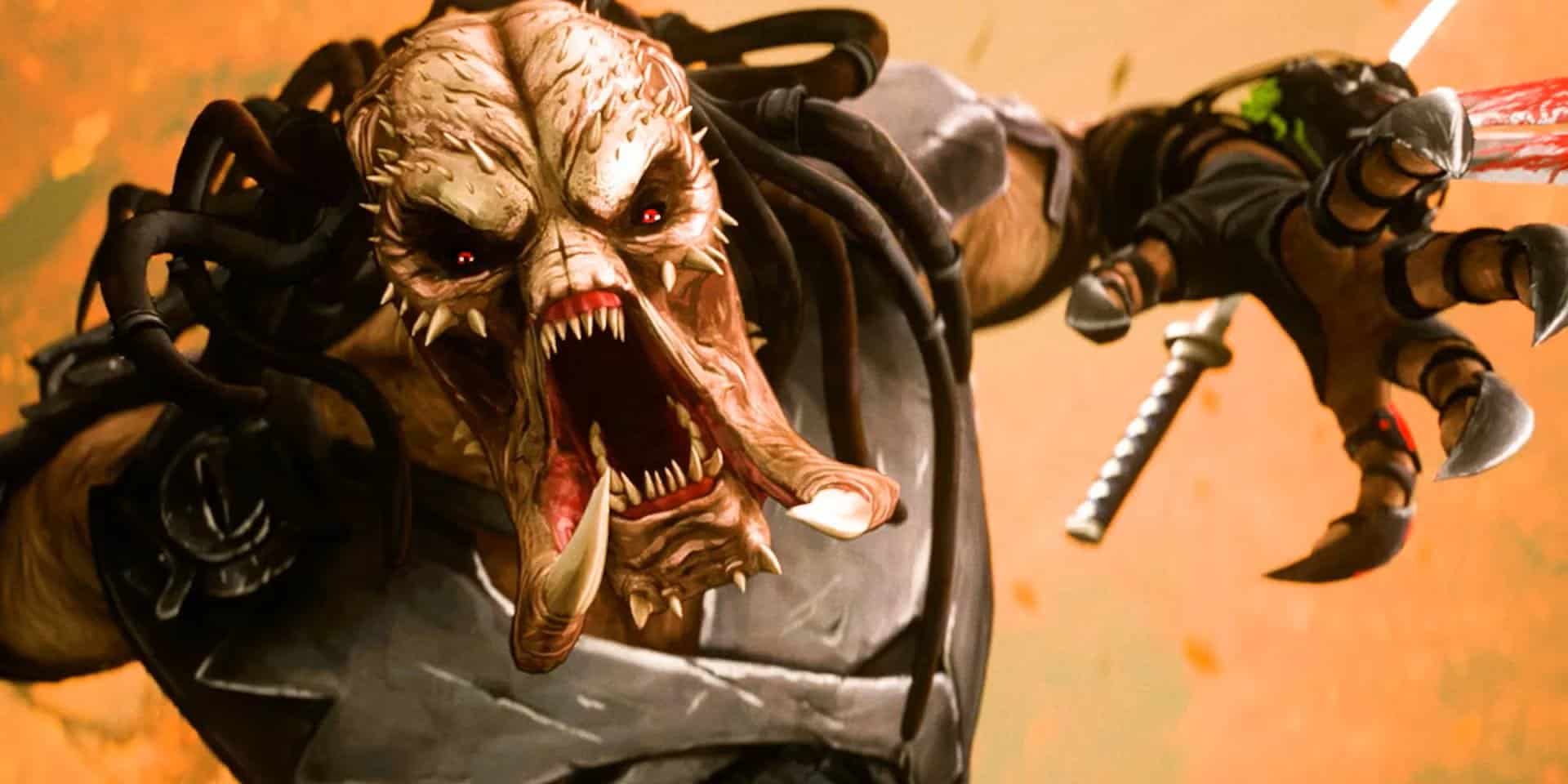
Feudal Japan. Barely any dialogue. Just vibes, falling leaves, and geysers of blood. The "Oni Predator" design is a masterclass in psychological warfare. With those elongated tusks and facial spikes, he looks like a literal demon from Japanese folklore. It shows that the Yautja actually customize their appearance to strike fear into the specific cultures they hunt.

What stood out here was the hunter's patience. He wasn't just a slasher; he was an observer. He watched two brothers, Kenji and Kiyoshi, tear each other apart for twenty years over a broken family code, only stepping in to harvest the "winner." The symbolism of the wooden railing—broken by their father and finally collapsing under their fight—was such a smart touch. When the brothers finally reconciled in that "anime-style" finale to slice the Oni in half? I was cheering. They used the Predator's own arrogance against him, proving that two "lesser" warriors together are stronger than one apex hunter.

Part 3: The Bullet (1942) – Brain Over Brawn

This was such a brilliant tonal shift. John Torres isn't a "warrior" in the traditional sense; he’s a gearhead who loves speed. His survival doesn't come from a sword or an axe, but from his dad’s advice about "building yourself out from the engine."

Then we get the "Pilot Predator." This guy is the antithesis of everything we know. He’s greenish, has a metal eye patch, and no dreadlocks. He’s basically a "cheater" or a "bad blood" who hunts from the safety of his ship using high-tech harpoons. It’s a fascinating look at the "low-lifes" of the Yautja world. The dogfight over Casablanca was pure adrenaline. Watching Torres go out on the wing of a burning plane to fix an engine while a cloaked UFO chases him was "goofy-cool" in the best way possible. It proved that human intellect is the one variable the Yautja can never quite account for.

The Big Finale: The "Warehouse" (HOLY CRAP)

The final chapter brings everyone together in the Grendel King’s arena on what I’m 99% sure is Yautja Prime. Seeing the Rafael Adolini flintlock pistol again was a massive "Leonardo DiCaprio pointing" moment. It’s the connective tissue of the whole franchise! The presence of that gun means this clan is directly tied to the Greyback from Predator 2.

Our heroes—a Viking, a Samurai, and a WWII Pilot—forming an impromptu squad was everything I didn't know I needed. When Kenji sacrificed his arm to save Ursa, it felt earned. And Ursa finally "slaying the monster" by letting go of the ship's chain, choosing a noble death over a life of vengeance? That is a top-tier character arc.

BUT THE POST-CREDITS SCENE IS THE REAL STORY.

I actually screamed and woke up my neighbors. Seeing Naru from Prey in a cryo-pod wasn't just a cameo—it’s a paradigm shift. This clan isn't just hunting for trophies; they are collecting. They’ve been snatching up every "Killer of Killers" who managed to defeat one of their own.

The camera panning over thousands of pods, hinting that Dutch (Arnold!) and Harrigan (Danny Glover!) are stored in this intergalactic "Hall of Fame," is staggering. The Yautja, in their massive hubris, have accidentally assembled the greatest strike team in the history of the universe. They’ve brought all their worst nightmares under one roof.

If this is setting up an Avengers-style breakout where Naru, Dutch, and a Viking warrior team up to burn Yautja Prime to the ground? Sign. Me. Up. Right. Now. This film didn't just add to the Predator saga; it fundamentally changed the stakes.

What did you guys think? Did you catch the name of the Grendel King's clan? Let’s obsess and over-analyze in the comments.

STAY HUNGRY. THE HUNT IS JUST BEGINNING.

MOST FAVOURITES

SUPERGIRL SUPERMAN TRAILER BREAKDOWN