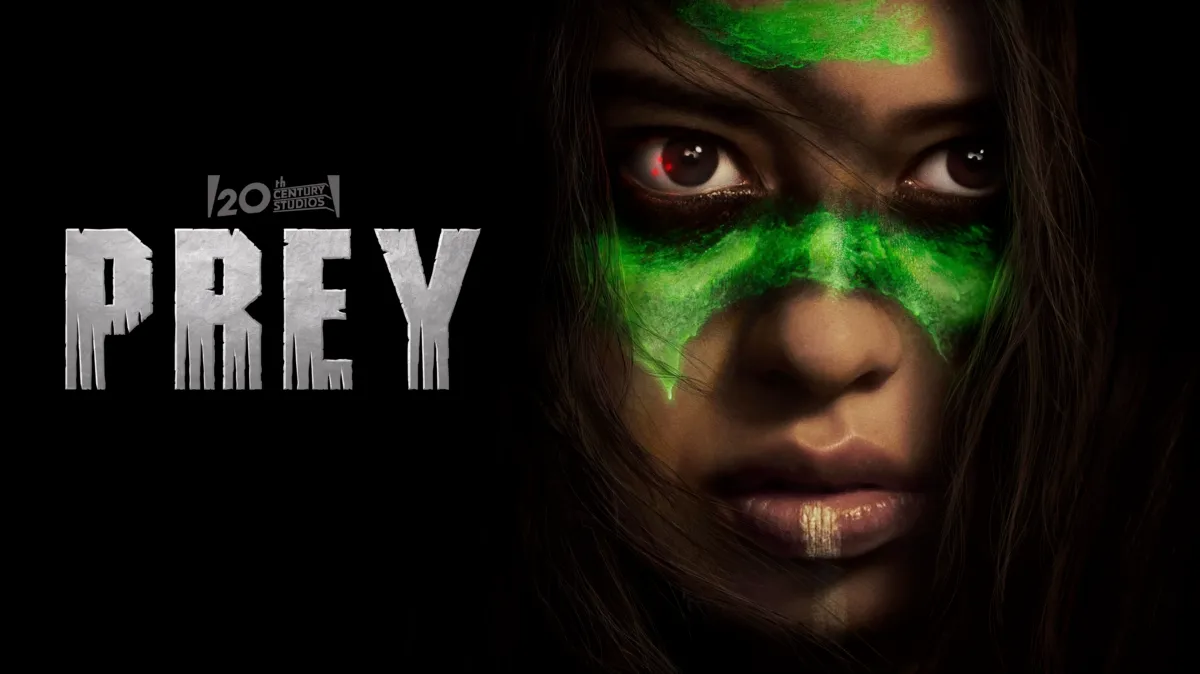
Description: A deep-dive analysis of Prey (2022). Explore the Feral Predator, Naru's journey, hidden details, and every Easter egg connecting to the Predator universe.
Introduction: A Return to Form
After a series of sequels and reboots that struggled to recapture the magic of the original, Prey (2022) arrived as a fresh, visceral, and critically acclaimed take on the Predator franchise. It's a "return to form" precisely because it strips the concept back to its primal core: the hunt. Gone are the convoluted lore, hybrid creatures, and warring factions of lesser entries. Instead, Prey presents a clean, tense narrative of survival.
Setting the story in the Northern Great Plains in 1719, the film pits a single, determined hunter against the galaxy's most dangerous predator. The unforgiving wilderness itself becomes a third character, and the film brilliantly delivers a focused story that not only stands on its own but also masterfully connects to the larger franchise lore. This in-depth breakdown explores the film scene-by-scene, uncovering the hidden details, clever callbacks, and rich linguistic and cultural nuances you might have missed.
A New Legend: Setting and Folklore
The film opens not with a bang, but with a whisper of legend. We hear narration in the Comanche language from our protagonist, Naru, who recounts an old story: "A long time ago, it is said, a monster came here." This tale of a Mu pizzi (a mythological giant or monster from Comanche folklore) serves a dual purpose. It not only foreshadows the terrifying experience she is about to endure but also frames her entire encounter as the birth of a new legend.
This storytelling choice brilliantly mirrors the folklore tale Anna tells in the original 1987 film, where she speaks of an "old demon" that skins men. Prey confirms this implication: Yautja visitors have been the source of "bogeymen" legends across human cultures for centuries, their hunts becoming woven into the fabric of our darkest myths.
The camera soars over the stunning, sprawling landscape, shot primarily on Stoney Nakota First Nation lands in Alberta. The cinematography emphasizes the beauty, but also the isolation and danger of this world. We are introduced to Naru, played with fierce intensity by Amber Midthunder, accompanied by her loyal dog, Sari. (Sari is played by a Carolina Dog named Coco, a breed also known as an "American Dingo," which is one of the oldest in existence, making its inclusion period-accurate).
Naru is not a typical warrior. She's an observer, a tracker, and an innovator. We see her practicing with her tomahawk, a weapon she has cleverly attached to a rope. This simple invention, mocked by other hunters as a "leash," is a powerful symbol of her ingenuity and refusal to conform to traditional roles. It's the first of many signs that her mind is her greatest weapon. Her tracking is interrupted by a sound from the sky, and Naru glimpses the cloaked Yautja ship. Through the lens of her culture, she interprets this fiery vision as the "Thunderbird," a powerful mythological creature and a sign that she is ready for her kutamiya—the big hunt to prove herself. This dramatic irony, where the audience knows the terrifying truth, fuels her entire initial quest.
Behind the Hunt: The Making of Prey
The film, directed by Dan Trachtenberg, was a concept in the works since 2016. The original idea was a simple, powerful story about someone trying to prove themselves against a great threat. This concept later evolved, and it became clear that it could fit perfectly—and even elevate—the Predator universe. Trachtenberg's vision was to create a film that was largely visual, relying on action, environment, and performance over heavy dialogue to tell the story.
Significantly, the character of Naru is a spiritual tribute to Billy from the first Predator film. Billy was the stoic, mysterious tracker who sensed the Jungle Hunter's presence long before the others. He met an unseen end after challenging the creature face-to-face. Prey gives that "spiritual successor" a full, rich story, honoring the legacy of a fan-favorite character.
To ensure authenticity, the production brought on Jhane Myers, a member of the Comanche and Blackfeet nations, as a producer. Her consultation was vital, infusing the film with period-accurate details of Comanche life, including the design of the camp, the tribe's horse culture, specific hunting strategies, and social dynamics. This dedication to authenticity led to the development of the first-ever full Comanche language dub for a feature film. This dub is more than a novelty; it's a landmark for representation in Hollywood and offers a deeply immersive way to experience the film, centering the Comanche perspective completely. The score, by Sarah Schachner (known for Assassin's Creed: Valhalla), further enriches the world, incorporating vocals and flute from Native American musician Robert Mirabal.
A New Kind of Hunter: Naru's Journey
Naru is not just a warrior; she's a healer, and this is the source of her true strength. Her tribe sees this as a support role, but the film shows us it's the foundation of her keen observational skills. We see her mother, Aruka (Michelle Thrush), preparing medicine, and Naru points out a missing ingredient: an orange tatsiya (flower). This flower, which Naru notes "cools the blood," becomes a critical plot point. It's a brilliant piece of connective tissue to the 1987 film. Where Dutch used simple mud to hide his heat signature, Naru discovers a pharmacological solution. It's a perfect example of parallel tactical evolution.
Her brother, Tabe (Dakota Beavers), is a skilled hunter who has already completed his kutamiya. Their relationship is complex—he teases her and is dismissively protective, yet he's the first to see her tactical mind at work. His later admission that her plan to hunt the mountain lion was the right plan is a key moment of validation for her. Naru's arc is about proving her skills to a tribe that sees her only as a healer. She demonstrates her intelligence repeatedly. Her "failed" hunts for the deer and rabbit aren't just failures; they are part of her learning process. Each "miss" leads to an innovation, like the perfection of her rope-axe, proving her defining trait is adaptability.
The Feral Predator: A Redesigned Threat
This film introduces a new incarnation of the Yautja, dubbed the "Feral Predator." With Stan Winston's studio no longer handling the design, the practical effects were managed by Alec Gillis and Tom Woodruff Jr. of Amalgamated Dynamics Inc., both of whom worked on the original 1987 film.
Trachtenberg wanted a fresh, more terrifying look. This Yautja is "feral" in its design—taller, leaner, less armored, and more creature-like. Its face is less humanoid, with mandibles inspired by potato bugs, and its mask is a bare, intimidating bone-like skull rather than polished metal. This design cleverly justifies its different appearance, as it exists 300 years before the "Jungle Hunter." This isn't just a different individual; it could be a different subspecies or clan, one that values raw, brutal hunting over the more "sporting" code of its descendants.
Played by former basketball player Dane Deleagro, this Predator's technology is also subtly different. It's more primitive: a bolt gun instead of a plasma caster, a physical shield, and proximity mines. This creature is established as the new apex predator in a brilliant "food chain" sequence. An ant is eaten by a mouse, which is eaten by a rattlesnake. The Feral Predator then kills and skins the snake. This isn't just a cool scene; it's the Predator's own kutamiya. It's studying the planet's ecosystem, figuring out the hierarchy, and establishing itself at the top. Notably, the snake (a pit viper) can see heat, giving it a brief glimpse of the cloaked hunter and cinematically reinforcing the Yautja's thermal-based vision and its potential weaknesses.
First Encounters: The Hunt Intensifies
Naru's tribe goes searching for a member taken by a mountain lion. Naru follows, finding the badly injured man and treating him with the orange tatsiya flower, reinforcing its properties to the audience. She knows something else scared the lion off its kill, showcasing her superior deductive reasoning.
Later, Naru and Tabe hunt the mountain lion. Naru has a solid plan: attack from a tree. But a fellow hunter's carelessness gets him killed. As Naru faces the lion, she's distracted by the Feral Predator's signature clicking and the shimmering red glow of its cloak. This distraction is a fatal, but educational, moment for her.
Naru's true trial by fire, and the film's second-act centerpiece, comes when she encounters a large grizzly bear. She takes refuge in a beaver dam, but the bear attacks. Just as she's about to be killed, the Feral Predator arrives. An incredible one-on-one battle ensues, a true clash of titans. The bear wounds the Predator, proving it's not invincible. But the Yautja brutally kills the bear, hoists it overhead, and showers itself in its blood, negating its cloak. This gives Naru her first clear look at the "monster," a terrifying, blood-soaked silhouette. This image burns itself into her mind, turning her quest for a "hunt" into a desperate fight for survival.
Fleeing down the river (a direct and powerful homage to Dutch in the original), Naru is spotted by the Predator. It targets her... and then lets her go. She is not seen as a threat. This is a crucial insult, a dismissal that fuels her resolve. Her quest changes: it's no longer about proving herself, but about surviving and protecting her people.
Unwelcome Visitors: The French Trappers
Naru is "rescued" by her tribe members, who drag her back, mocking her story of a monster. But the group is ambushed by the Feral Predator. This sequence brilliantly plays with audience expectations. The Yautja's iconic three-dot laser appears on a warrior named Wasapi. We expect the familiar blam of the plasma caster. Instead, the dots separate, and Wasapi is impaled by three bolts from a "Bolt Gun." It's a fantastic reveal of this Predator's different, more primitive arsenal.
The Feral Predator reveals itself and slaughters the warriors with terrifying efficiency, using new weapons like a massive, separating Combi-Stick. Naru, realizing survival is the true test, flees and gets her foot caught in a steel trap—a painful reminder of the other invaders in this land, the French fur trappers. The Predator corners her, but again, it backs off. She is trapped and helpless, and killing her would be "unsporting"—a glimpse of the Yautja code. This "honor," however, proves to be its ultimate downfall. The trappers arrive and capture her.
The Predator 2 Connection: A Legendary Easter Egg
In the trappers' camp, Naru meets a translator named Raphael (Bennett Taylor). This is Raphael Adelini, the very name engraved on the antique flintlock pistol given to Lieutenant Harrigan at the end of Predator 2. For fans of the franchise, this is a monumental reveal. In Predator 2, after Harrigan (Danny Glover) defeats the City Hunter, a group of other Yautja—the "Lost Tribe"—appears. Their elder, Greyback, gives Harrigan the 1715-dated pistol as a trophy, a sign of respect. Prey tells the origin story of that pistol.
Raphael shows Naru the Predator's glowing green blood, confirming they are all being hunted. The trappers, led by "Big Beard," use Naru and Tabe as bait, tying them to a tree. Naru knows this won't work: "a t-rex doesn't want to be fed, it wants to hunt."
The Feral Predator arrives, and the trappers spring their own trap, but they are hopelessly, comically outmatched. The Yautja unleashes its full arsenal:
Net Ball: A variation of the net from Predator 2, but this one tightens and slices its target into pieces.
Cut Clamp: A segmented, bladed whip used to free itself from a trap with brutal efficiency.
Wrist Shield: A segmented, expanding shield that is impervious to the trappers' musket balls and doubles as a deadly offensive weapon.
Proximity Mines: In a clever twist on the self-destruct trope, the Yautja detaches its wrist gauntlet, which releases three floating mines that obliterate the remaining trappers.
During the chaos, Naru frees herself and Tabe. She escapes to the trapper camp to free Sari, while Tabe goes for horses. Naru finds a wounded Raphael, who shows her how to load and fire the flintlock pistol. He is freezing cold, so she gives him the orange tatsiya flower. When the Feral Predator arrives, it scans Raphael but perceives him as dead due in part to the flower's blood-cooling effect. This is Naru's "mud moment." She sees the Predator's vision fail. She doesn't just have a theory; she has proof. This is where her final, brilliant plan is born.
The Final Showdown: Prey Becomes Hunter
Tabe heroically sacrifices himself to save Naru. It's his final act as a protective brother, a full acknowledgment of her strength as he gives his life for hers. Enraged and grieving, but ice-cold in her focus, Naru prepares for her final confrontation.
This is her "Dutch" montage, but based on pure intellect. She finds the despicable trapper leader, Big Beard, and uses him as bait. She eats the orange flower, masking her heat signature, and sets a bonfire to draw the Predator in. When the Yautja arrives, it walks right past her—the payoff for the tatsiya flower is a hugely satisfying moment. It sees only the armed man, Big Beard, as the threat.
After it kills him, Naru shoots the Predator in the back of the head with the flintlock pistol, knocking its bio-mask off, which she grabs. Her plan is in motion. The final fight isn't a brawl; it's a hunt. She uses her agility, her rope-axe, and the environment. She's not overpowering it; she's outsmarting it. She wounds it, and in a critical move, uses its own Wrist Shield to sever its arm—disabling its gauntlet and any chance of a self-destruct sequence.
She lures the hunter into a bog pit, a trap she herself escaped earlier. As the creature rises, she positions herself. The Feral Predator aims its Bolt Gun, but Naru has placed the stolen bio-mask perfectly. The mask's targeting laser, which guides the bolts, is aimed right back at the Predator's own head. This is the checkmate. She used its own technology against it. Recalling Tabe's words, she taunts it: "This is as far as you go." The Predator fires, and the bolt instantly kills it.
A New War Chief: The Film's Conclusion
Naru returns to her camp at dawn, painted in the Predator's green blood and carrying its head. The visual is immensely powerful—a complete reversal of her status. She lays the head at the chief's feet and gives him the flintlock pistol, where we clearly see the engraving: "Raphael Adelini 1715." This act closes the loop, explaining how this trophy eventually makes its way to the Lost Tribe.
Naru warns her tribe of the danger, and with her trophy as proof, she is anointed the new War Chief. The film's credits brilliantly retell her entire kutamiya in the style of Native American ledger art. Her story is now immortalized as a legend, just like the Mu pizzi story from the beginning. The film has come full circle.
But it doesn't end there. The animation continues, showing three Yautja ships descending from the sky, presumably coming to investigate their fallen hunter. Are they here for revenge? To retrieve the body? Or are they here to honor the warrior who defeated one of their own? It's a tantalizing cliffhanger that respects Naru's victory while acknowledging that for Earth, the hunt is far from over.


No comments:
Post a Comment